

Charles "Taze" Russell - Russellites in 1918...
Item # 726401
July 02, 1918
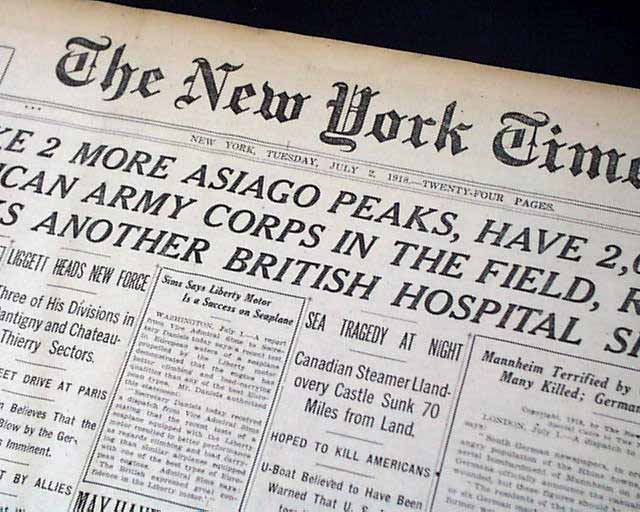
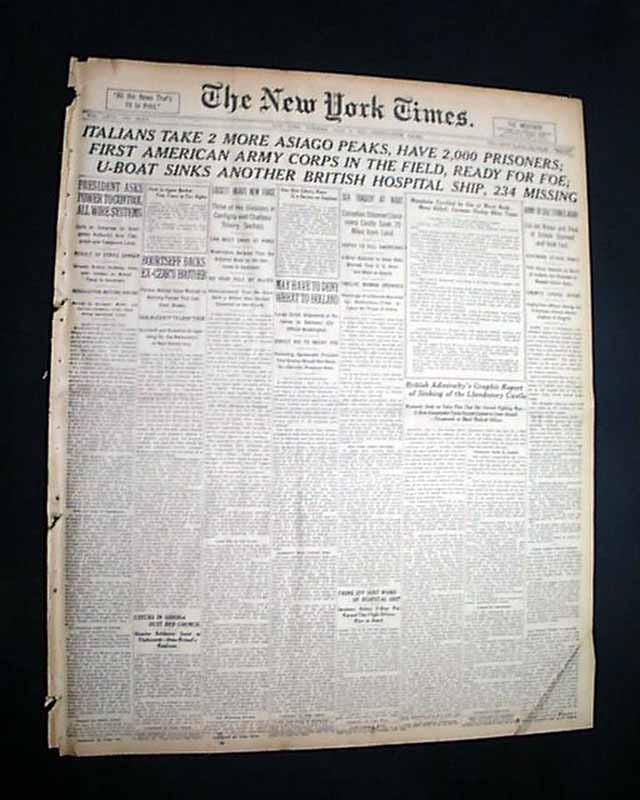
THE NEW YORK TIMES, July 2, 1918
* Rutherford & other Russellites in prison
* Pastor Charles Taze Russell followers
* Christian restorationist minister
* Founder of the Jehovah's Witnesses
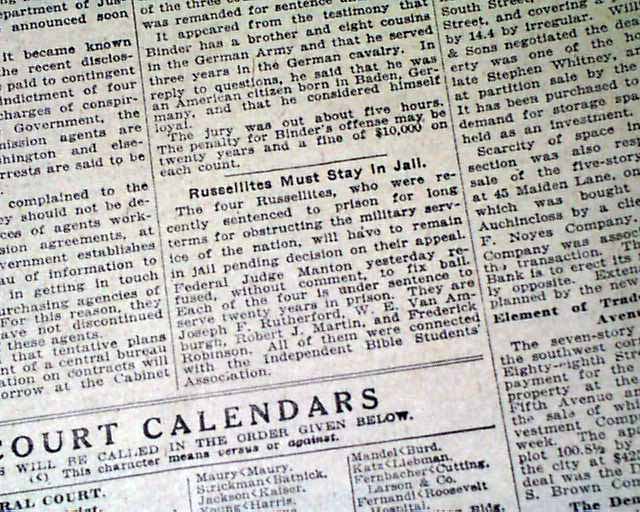
Page 20 has a brief and discrete report with small heading: "Russellites Must Stay in Jail" (see image)
Complete with 24 pages, light toning, some wear at the margins, more so on the last few pages, should be handled with care.
Note: This issue comes with an acid-free folder (gratis) for protection.
Background: The denial of bail for Joseph F. Rutherford and his seven associates on July 1, 1918, stands as a landmark moment in the history of American civil liberties and religious freedom, marking a peak in the government’s wartime suppression of conscientious dissent. Under the heavy-handed application of the Espionage Act of 1917, the Bible Student leadership was branded as seditious for distributing The Finished Mystery, a text that challenged the morality of the draft and the clergy’s support of World War I. Judge Martin T. Manton’s refusal to grant bail—forcing the immediate incarceration of the group in the Atlanta Federal Penitentiary—effectively paralyzed the Watch Tower Society’s operations and signaled a period of intense public hostility toward groups refusing to conform to the prevailing nationalist fervor. Historically, this event serves as a stark example of judicial overreach during "Red Scare" era anxieties; the subsequent reversal of the convictions in 1919 and the dismissal of all charges in 1920 not only vindicated the group legally but also catalyzed a massive reorganization of the movement. This transition from the leadership of Charles Taze Russell to the more centralized, defiant stance of Rutherford reshaped the group into the modern Jehovah’s Witnesses, leaving a lasting legacy on U.S. Supreme Court jurisprudence regarding the rights of religious minorities to abstain from patriotic ceremonies and military service.
* Rutherford & other Russellites in prison
* Pastor Charles Taze Russell followers
* Christian restorationist minister
* Founder of the Jehovah's Witnesses
Page 20 has a brief and discrete report with small heading: "Russellites Must Stay in Jail" (see image)
Complete with 24 pages, light toning, some wear at the margins, more so on the last few pages, should be handled with care.
Note: This issue comes with an acid-free folder (gratis) for protection.
Background: The denial of bail for Joseph F. Rutherford and his seven associates on July 1, 1918, stands as a landmark moment in the history of American civil liberties and religious freedom, marking a peak in the government’s wartime suppression of conscientious dissent. Under the heavy-handed application of the Espionage Act of 1917, the Bible Student leadership was branded as seditious for distributing The Finished Mystery, a text that challenged the morality of the draft and the clergy’s support of World War I. Judge Martin T. Manton’s refusal to grant bail—forcing the immediate incarceration of the group in the Atlanta Federal Penitentiary—effectively paralyzed the Watch Tower Society’s operations and signaled a period of intense public hostility toward groups refusing to conform to the prevailing nationalist fervor. Historically, this event serves as a stark example of judicial overreach during "Red Scare" era anxieties; the subsequent reversal of the convictions in 1919 and the dismissal of all charges in 1920 not only vindicated the group legally but also catalyzed a massive reorganization of the movement. This transition from the leadership of Charles Taze Russell to the more centralized, defiant stance of Rutherford reshaped the group into the modern Jehovah’s Witnesses, leaving a lasting legacy on U.S. Supreme Court jurisprudence regarding the rights of religious minorities to abstain from patriotic ceremonies and military service.
Category: The 20th Century


