

Ace Hi Liquor Store hangout in 1980 Los Angeles...
Item # 726391
August 15, 1980
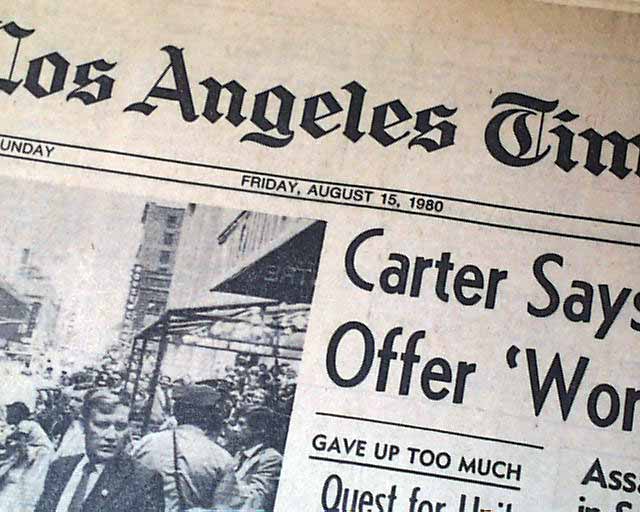
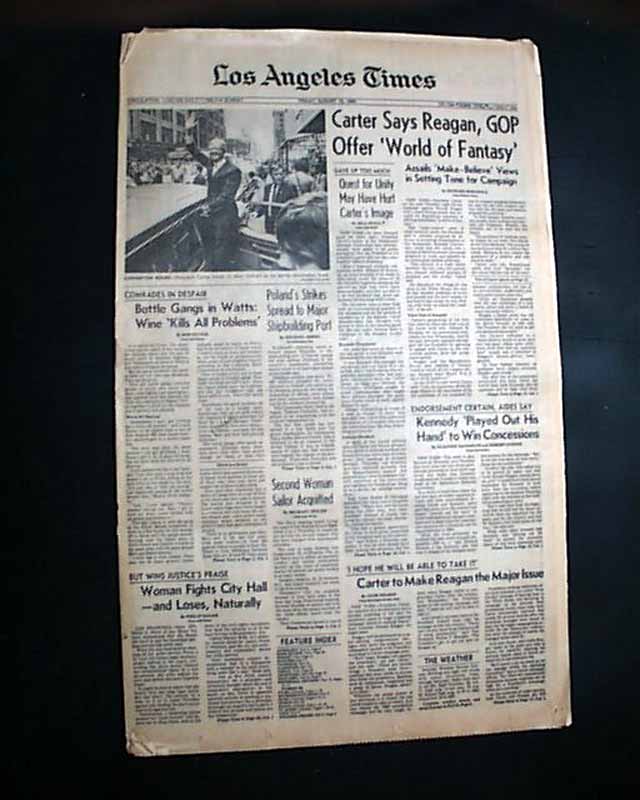
LOS ANGELES TIMES., Aug. 15, 1980
* Watts neighborhood in Los Angeles
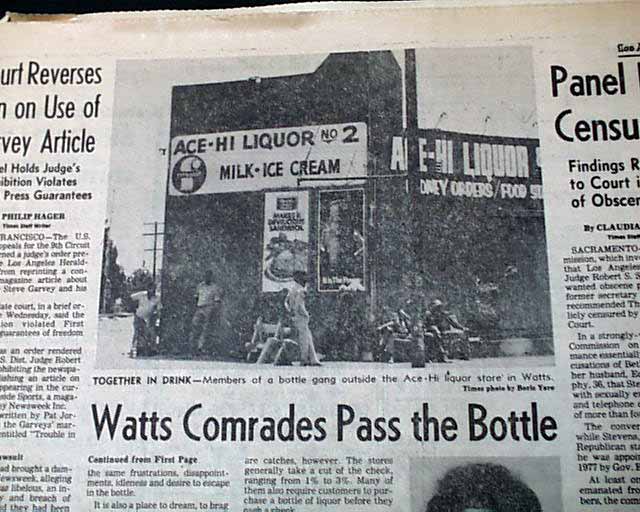
* Ace Hi Liquor Store gangs hangout
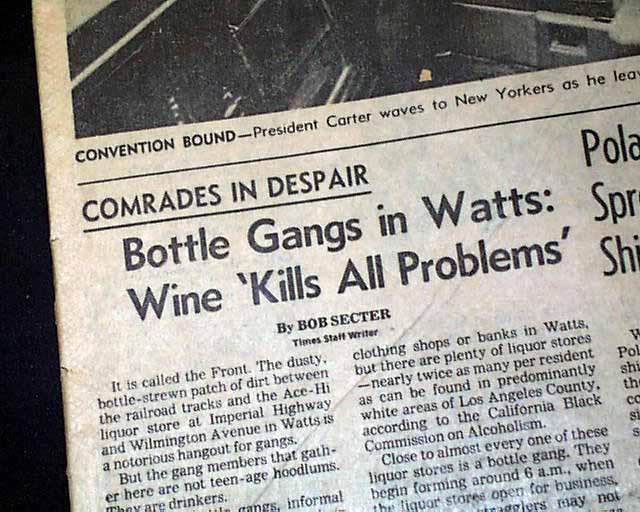
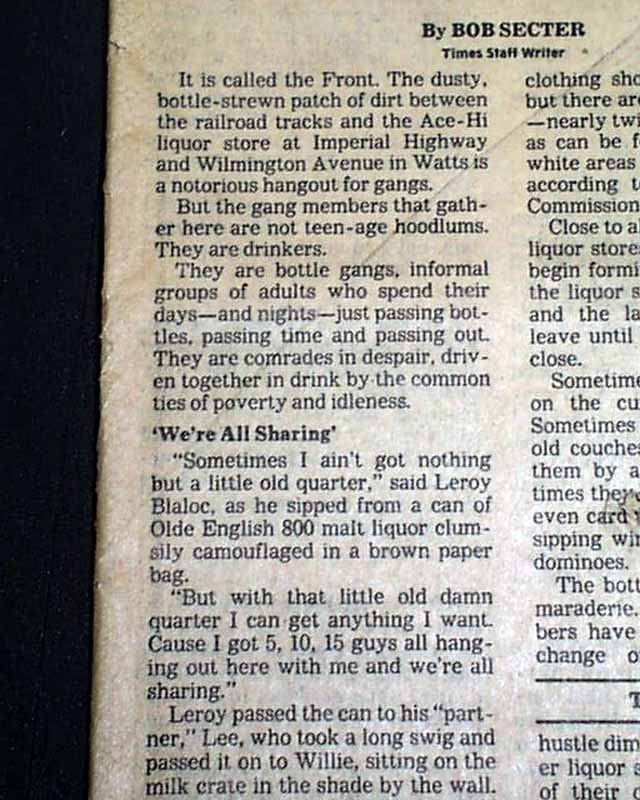
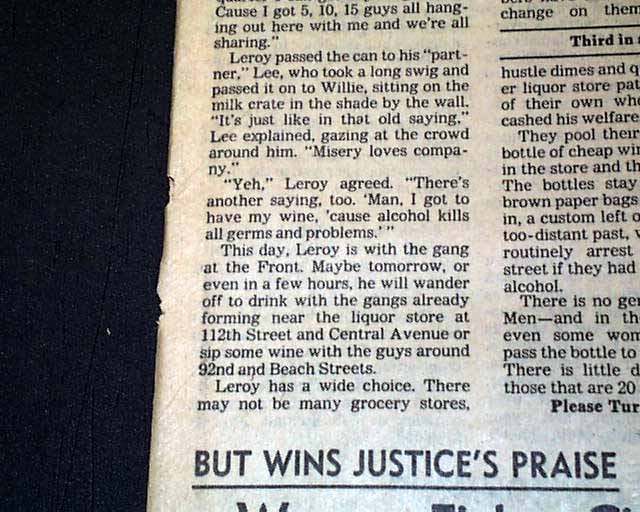
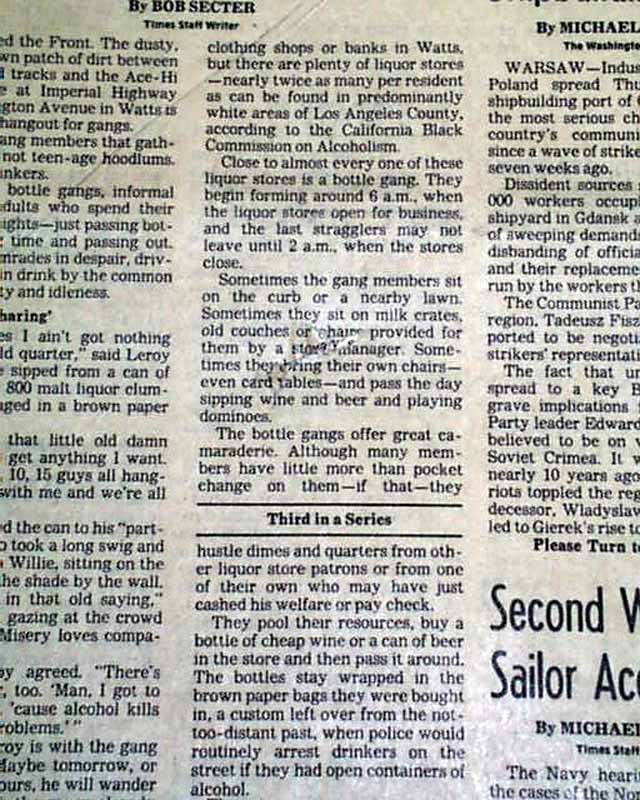
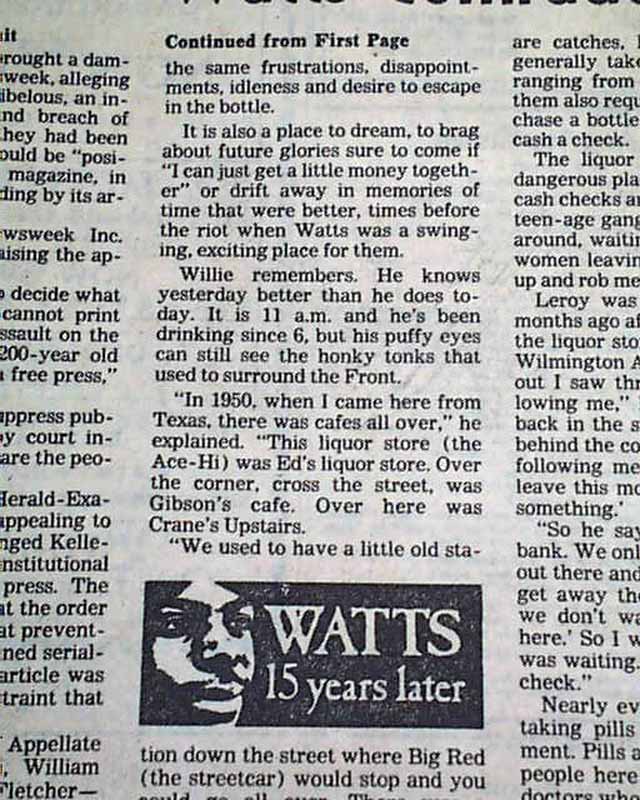
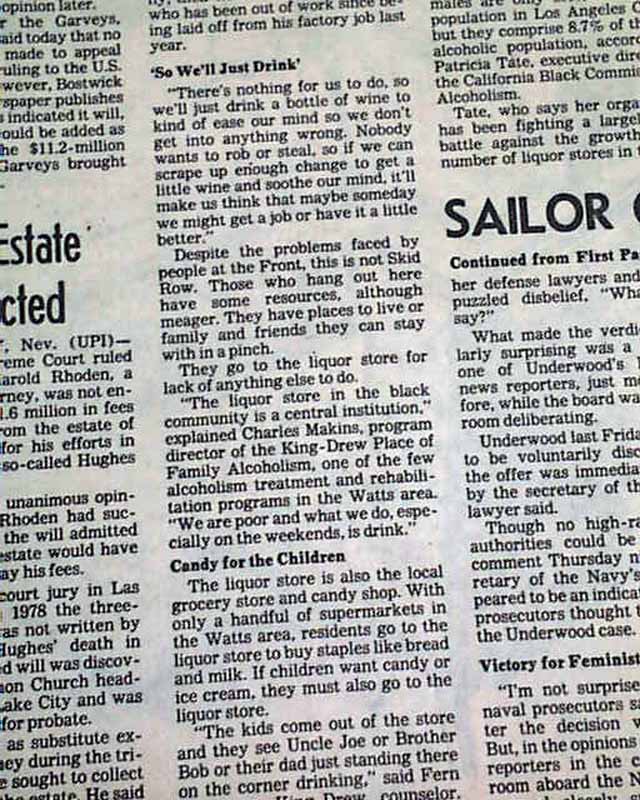
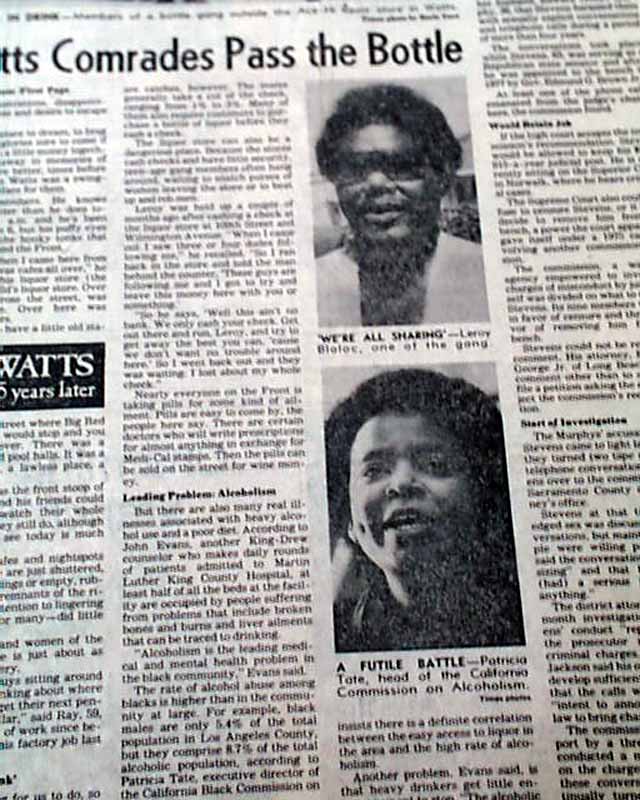
The front page has a two column heading: "Bottle Gangs in Watts: Wine 'Kills All Problems'" with lead-in: "Comrades In Despair" This editorial continues inside with a few related photos. (see images)
Complete 1st section only with all 24 pages, a little margin wear, generally in good condition.
Background: The publication of Bob Secter’s "Bottle Gangs in Watts: Wine 'Kills All Problems'" on August 15, 1980, serves as a seminal moment in urban journalism, capturing the profound social stagnation of South Central Los Angeles exactly fifteen years after the 1965 Watts Riots. By focusing on the Ace-Hi Market on Central Avenue, Secter illustrated a "fortress-like" economy where bulletproof plexiglass and "short-dog" bottles of fortified wine became the primary mediums of social interaction for men trapped in a cycle of double-digit unemployment and systemic neglect. The article’s significance lies in its raw, non-judgmental documentation of the "bottle gangs" as a coping mechanism for a community abandoned by mainstream commerce and political infrastructure. It famously transformed a local liquor store into a microcosm of the widening racial and economic chasm in America, providing a hauntingly accurate foreshadowing of the frustrations that would eventually boil over into the 1992 Civil Unrest. Through this lens, Secter moved beyond mere crime reporting to create a sociological autopsy of a city that was booming for some while leaving others to "kill their problems" in the shade of a storefront.
* Watts neighborhood in Los Angeles
* Ace Hi Liquor Store gangs hangout
The front page has a two column heading: "Bottle Gangs in Watts: Wine 'Kills All Problems'" with lead-in: "Comrades In Despair" This editorial continues inside with a few related photos. (see images)
Complete 1st section only with all 24 pages, a little margin wear, generally in good condition.
Background: The publication of Bob Secter’s "Bottle Gangs in Watts: Wine 'Kills All Problems'" on August 15, 1980, serves as a seminal moment in urban journalism, capturing the profound social stagnation of South Central Los Angeles exactly fifteen years after the 1965 Watts Riots. By focusing on the Ace-Hi Market on Central Avenue, Secter illustrated a "fortress-like" economy where bulletproof plexiglass and "short-dog" bottles of fortified wine became the primary mediums of social interaction for men trapped in a cycle of double-digit unemployment and systemic neglect. The article’s significance lies in its raw, non-judgmental documentation of the "bottle gangs" as a coping mechanism for a community abandoned by mainstream commerce and political infrastructure. It famously transformed a local liquor store into a microcosm of the widening racial and economic chasm in America, providing a hauntingly accurate foreshadowing of the frustrations that would eventually boil over into the 1992 Civil Unrest. Through this lens, Secter moved beyond mere crime reporting to create a sociological autopsy of a city that was booming for some while leaving others to "kill their problems" in the shade of a storefront.
Category: The 20th Century


