

The birth of Bob Dylan's extraordinary career in 1961...
Item # 726364
November 14, 1956
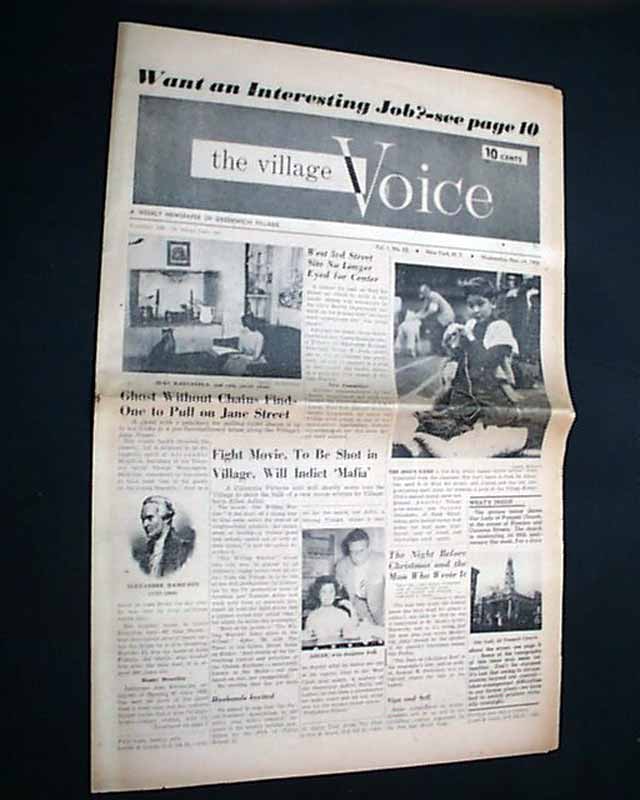
THE VILLAGE VOICE (weekly), Greenwich Village, New York, Nov. 14, 1956
* Editorial by Jerry Tallmer
* Off-Broadway in its infancy
* Eugene O'Neill - Jose Quintero
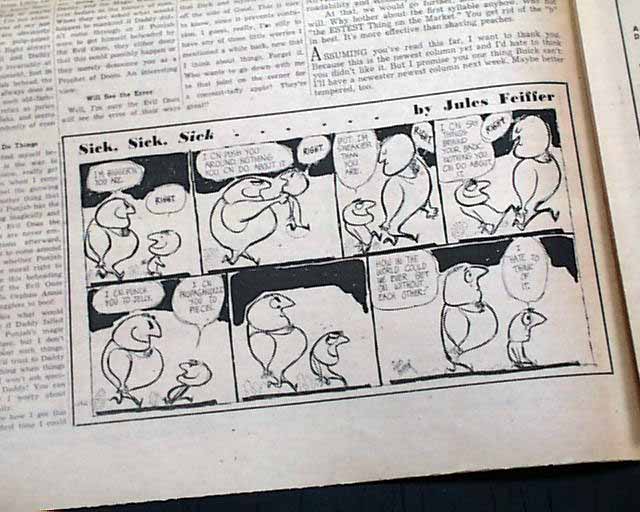
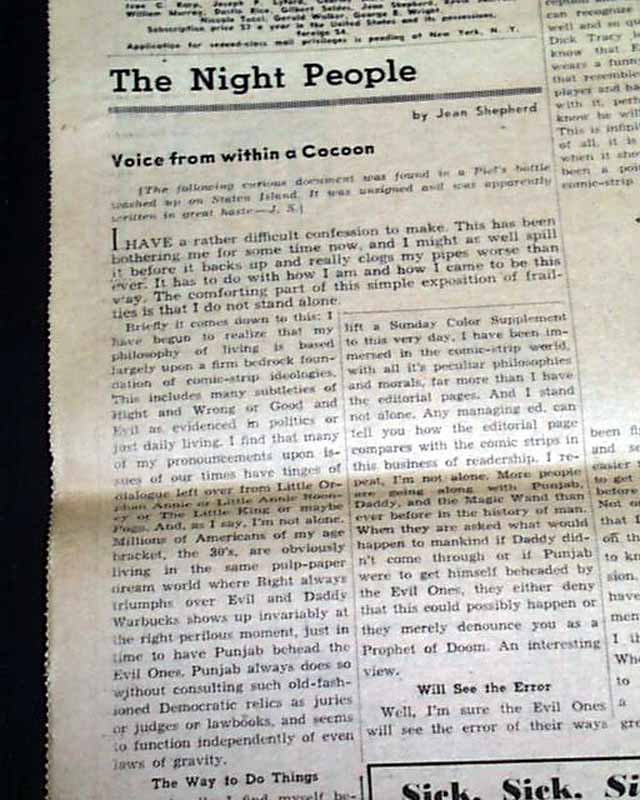
* Very early Jules Feiffer cartoon (4th)
First, it is worth noting that "The Village Voice" was an American news and culture paper, known for being the country's first alternative newsweekly. Founded just 6 years previous in 1955, the Voice began as a platform for the creative community of New York City.
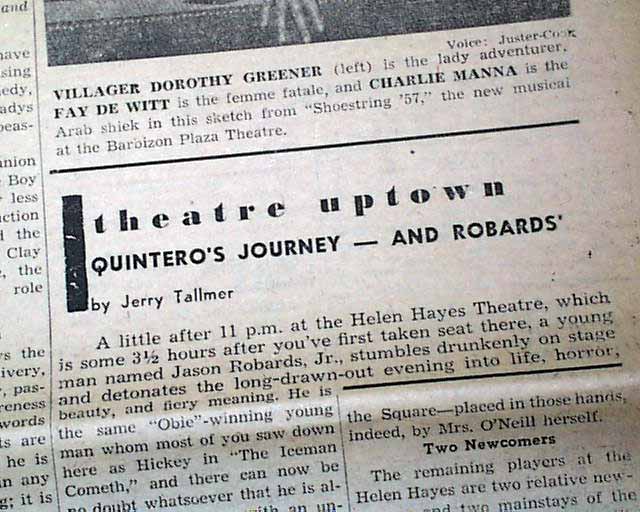
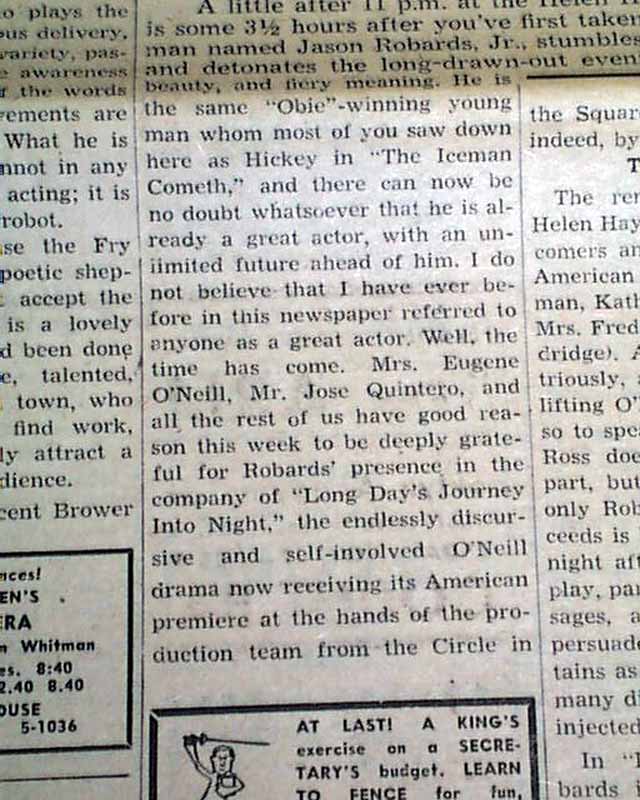
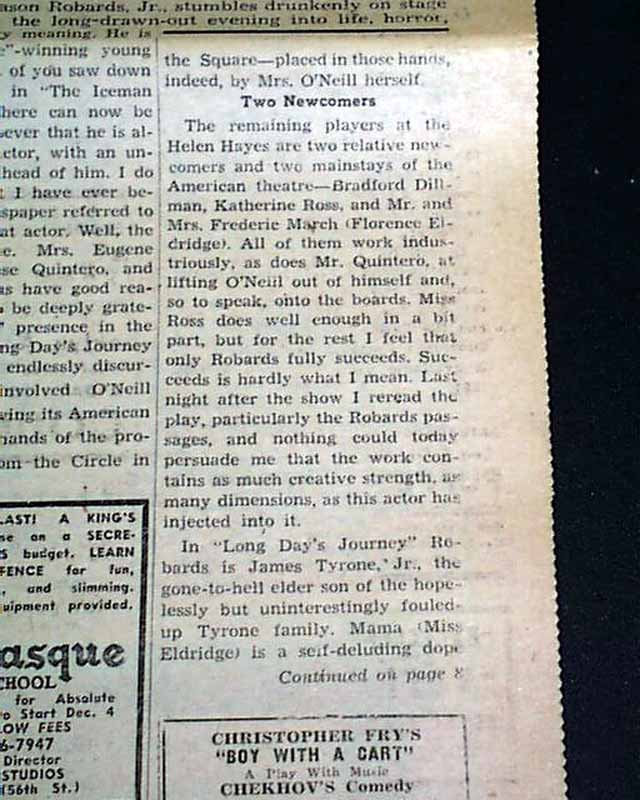
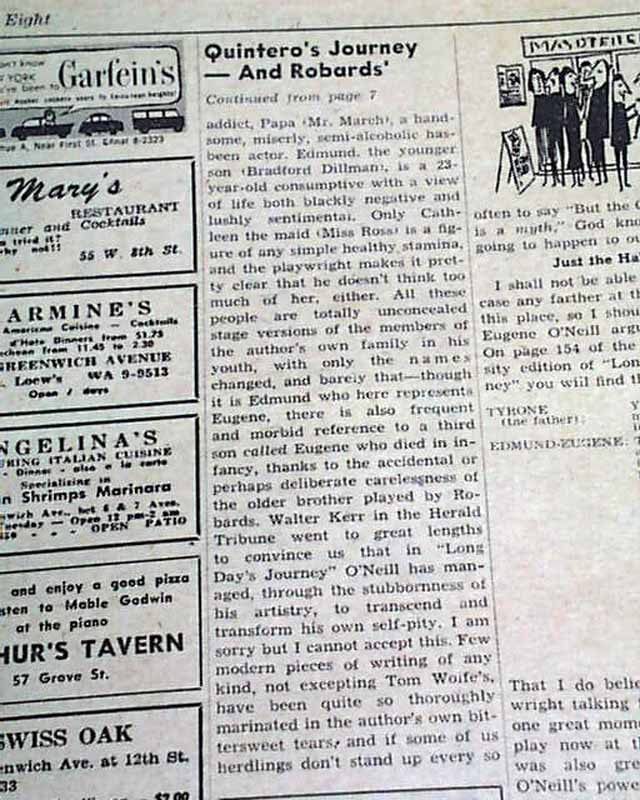
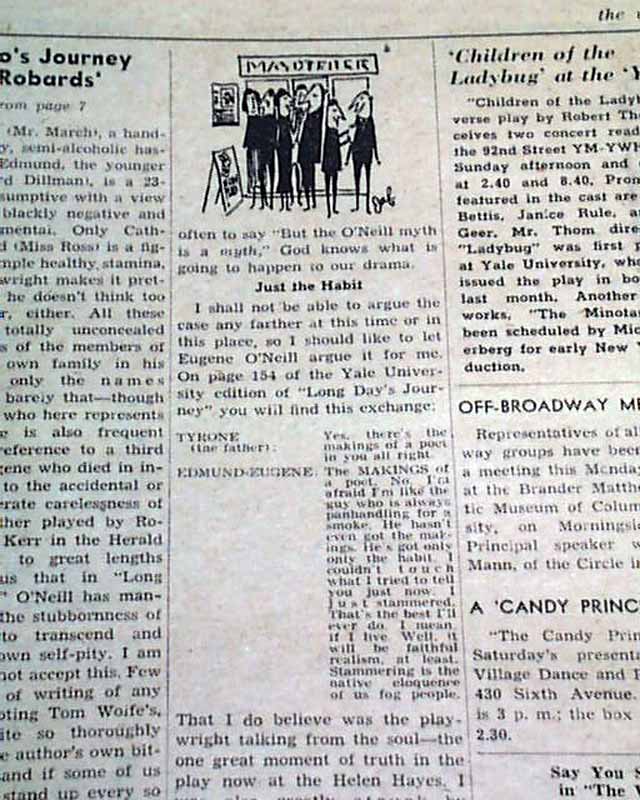
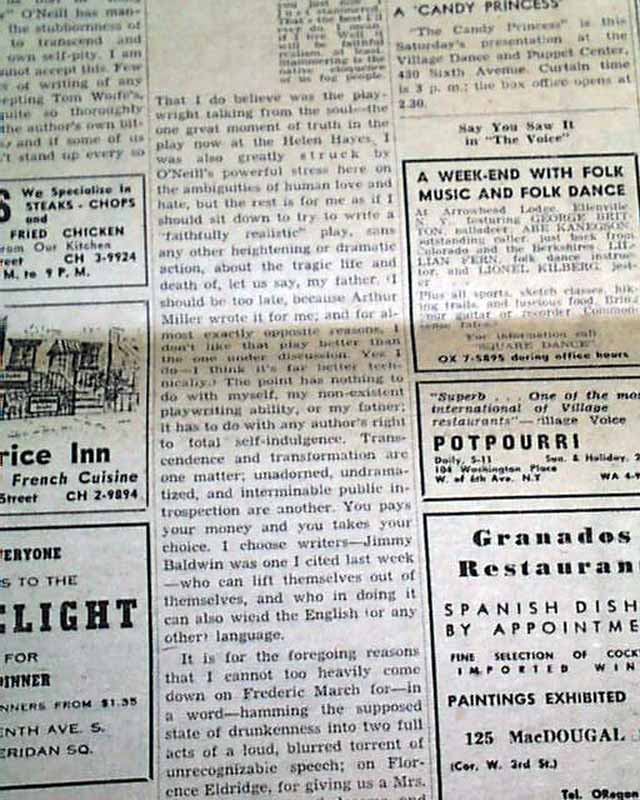
Beginning on page 7 is an editorial by Jerry Tallmer headed: "Quintero's Journey - And Robards" (see images)
And Page 4 has a very early Jules Feiffer cartoon headed: "Sick, Sick, Sick" (see images)
background: The November 14, 1956, Village Voice editorial "Quintero's Journey — And Robards" by Jerry Tallmer stands as a monumental document in American cultural history, marking the definitive arrival of Off-Broadway sensibilities onto the world stage and the resurrection of Eugene O'Neill’s legacy. Written just one week after the Broadway premiere of Long Day’s Journey into Night, Tallmer’s piece functioned as a manifesto for a new era of "shattering" realism, centered on the collaborative genius of director José Quintero and actor Jason Robards. By championing this production, Tallmer validated the transition of the "Circle in the Square" aesthetic—characterized by raw emotional intimacy and a rejection of commercial polish—to the Broadway mainstream, effectively ending O’Neill’s period of critical neglect and ushering in a posthumous Pulitzer Prize. The editorial solidified the Village Voice as the intellectual vanguard of the era and immortalized Robards’ interpretation of Jamie Tyrone as the gold standard for American tragic acting, proving that the gritty, avant-garde spirit of downtown Manhattan could redefine the standards of the global theatrical canon.
I suspect this to be an extremely rare item because there was really no reason to save it at the time.
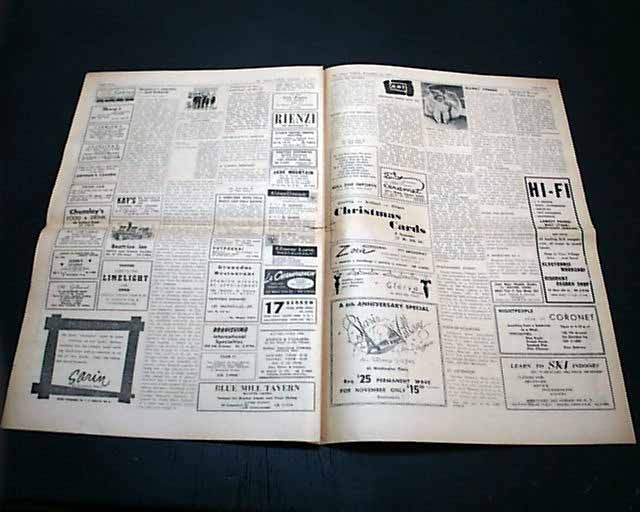
Complete in 12 pages, tabloid-size, one crease across the center, small archival mend, generlaly in very nice condition.
Provenance note: This issue comes from The Village Voice's own archives, part of their in-house collection used to create their digital archive.
Alert: Many issues of The Village Voice contain articles and/or photos which some consider offensive, and are certainly inappropriate for children. Please purchase with discretion.
* Editorial by Jerry Tallmer
* Off-Broadway in its infancy
* Eugene O'Neill - Jose Quintero
* Very early Jules Feiffer cartoon (4th)
First, it is worth noting that "The Village Voice" was an American news and culture paper, known for being the country's first alternative newsweekly. Founded just 6 years previous in 1955, the Voice began as a platform for the creative community of New York City.
Beginning on page 7 is an editorial by Jerry Tallmer headed: "Quintero's Journey - And Robards" (see images)
And Page 4 has a very early Jules Feiffer cartoon headed: "Sick, Sick, Sick" (see images)
background: The November 14, 1956, Village Voice editorial "Quintero's Journey — And Robards" by Jerry Tallmer stands as a monumental document in American cultural history, marking the definitive arrival of Off-Broadway sensibilities onto the world stage and the resurrection of Eugene O'Neill’s legacy. Written just one week after the Broadway premiere of Long Day’s Journey into Night, Tallmer’s piece functioned as a manifesto for a new era of "shattering" realism, centered on the collaborative genius of director José Quintero and actor Jason Robards. By championing this production, Tallmer validated the transition of the "Circle in the Square" aesthetic—characterized by raw emotional intimacy and a rejection of commercial polish—to the Broadway mainstream, effectively ending O’Neill’s period of critical neglect and ushering in a posthumous Pulitzer Prize. The editorial solidified the Village Voice as the intellectual vanguard of the era and immortalized Robards’ interpretation of Jamie Tyrone as the gold standard for American tragic acting, proving that the gritty, avant-garde spirit of downtown Manhattan could redefine the standards of the global theatrical canon.
I suspect this to be an extremely rare item because there was really no reason to save it at the time.
Complete in 12 pages, tabloid-size, one crease across the center, small archival mend, generlaly in very nice condition.
Provenance note: This issue comes from The Village Voice's own archives, part of their in-house collection used to create their digital archive.
Alert: Many issues of The Village Voice contain articles and/or photos which some consider offensive, and are certainly inappropriate for children. Please purchase with discretion.
Category: The 20th Century


