THE NEW YORK TIMES, March 27, 1953
* Jonas Salk announces a historic medical breakthrough
* Polio - Infantile Paralysis virus vaccine is a success
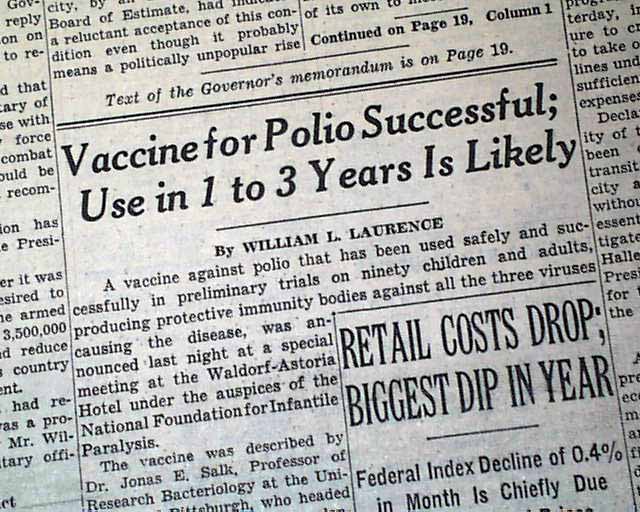
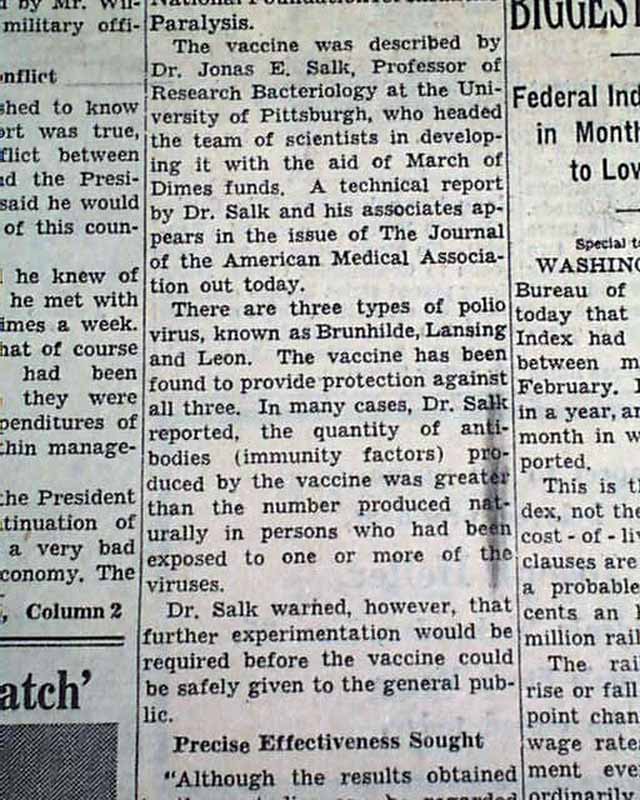
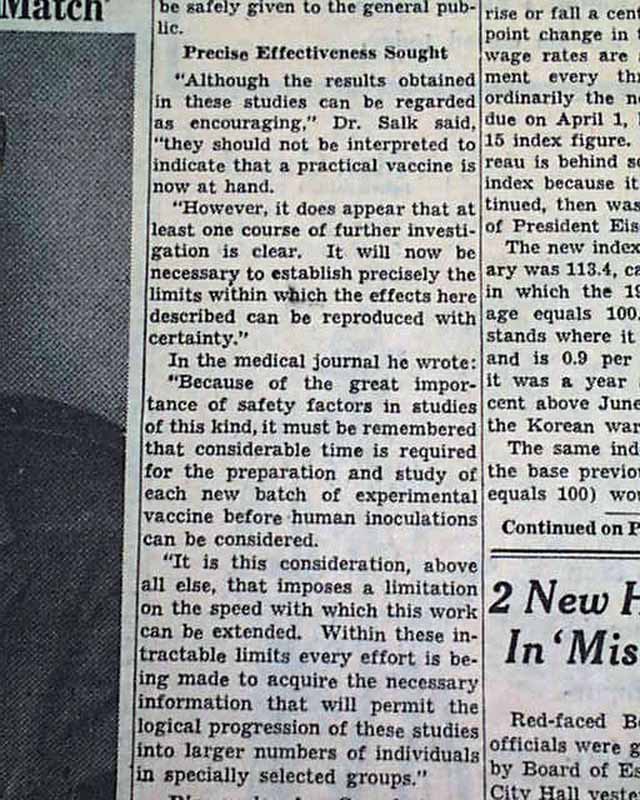
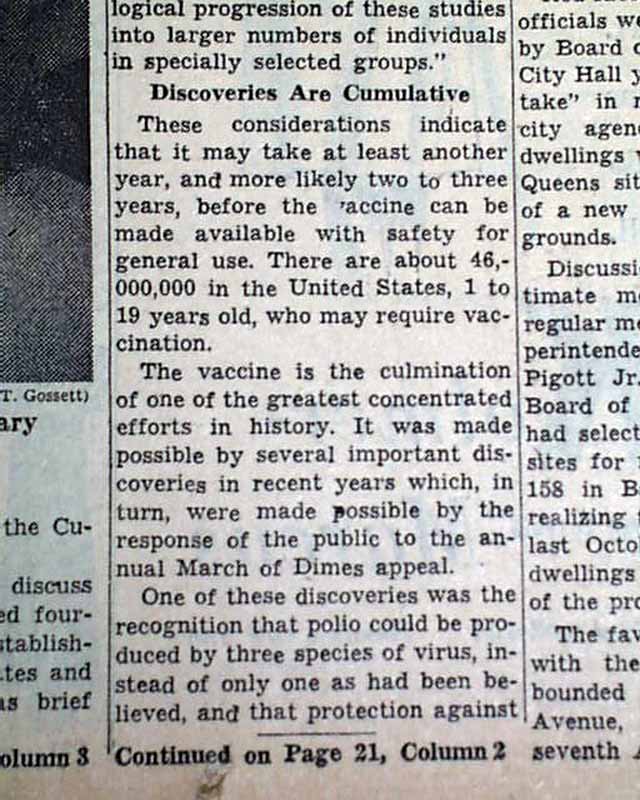
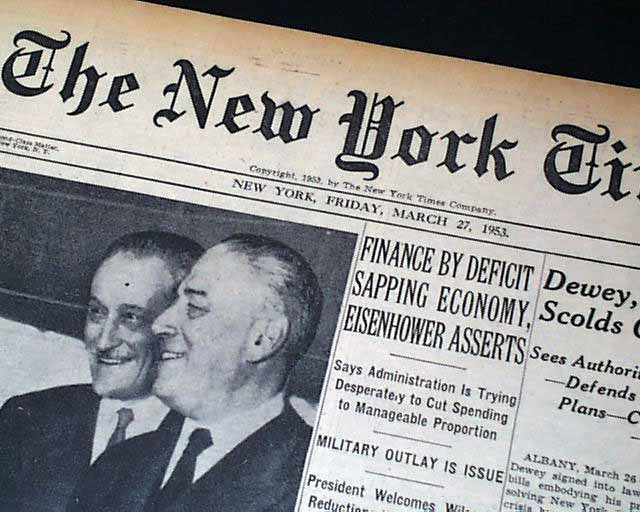
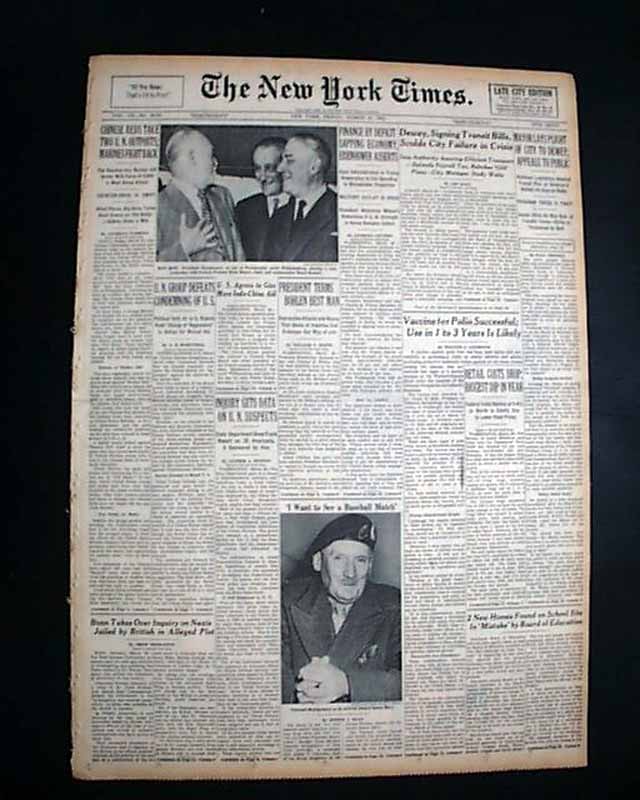
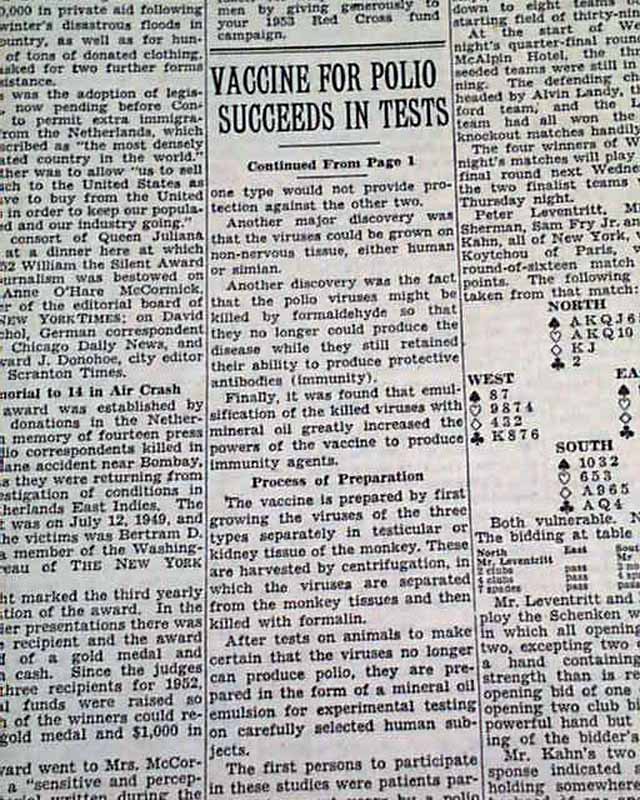
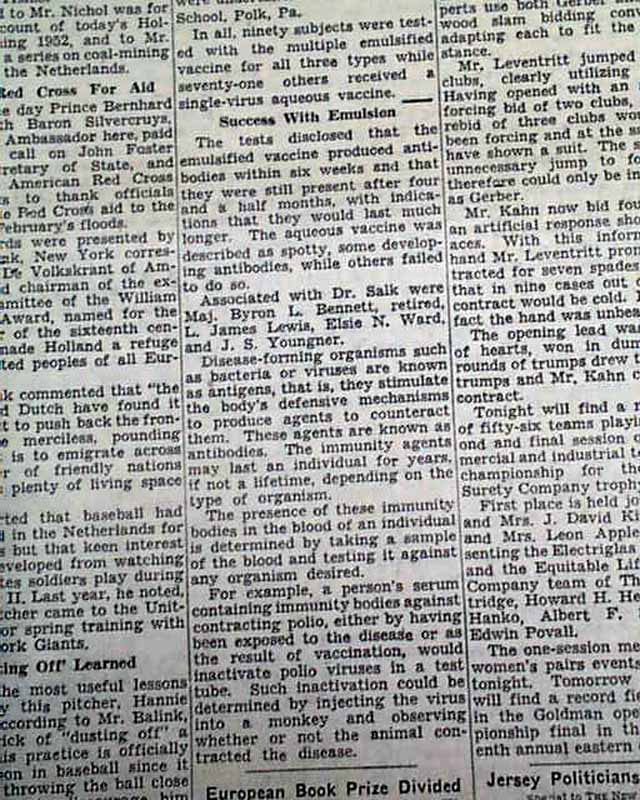
The front page has a historic announcement on the possible cure for Polio (Infantile Paralysis) by Jonas Salk with two column heading: "Vaccine for Polio Successful; Use in 1 to 3 Years Is Likely" (see images) And this was the very first time Jonas Salk's name was reported in this World's famous publication.
I suspect this to be an extremely rare item because there was really no reason to save it at the time.
Complete with all 46 pages, light toning at the margins, very nice condition.
Background: The announcement on March 26, 1953, marked a definitive turning point in the global crusade against polio, as Dr. Jonas Salk utilized a dual-pronged media strategy—including a formal scientific presentation at the Waldorf-Astoria Hotel and a nationwide CBS radio broadcast—to reveal that his "killed-virus" vaccine had successfully produced protective antibodies in human subjects. Speaking from the prestigious Waldorf-Astoria, which served as a primary hub for the National Foundation for Infantile Paralysis, Salk presented clinical data to the press and peers that validated his controversial use of formaldehyde-inactivated virus, a method many critics believed would be ineffective compared to live-virus alternatives. By confirming that the vaccine had been safely administered to a small group of volunteers, including himself and his own children, Salk replaced a decade of seasonal terror with tangible hope, providing the scientific and social momentum necessary to launch the massive 1954 Field Trials. This event did more than just introduce a medical breakthrough; it revolutionized public health by proving that a coordinated effort between private citizens, "March of Dimes" funding, and rigorous laboratory science could effectively conquer a terrifying epidemic.
The announcement on March 26, 1953, marked a definitive turning point in the global crusade against polio, as Dr. Jonas Salk utilized a dual-pronged media strategy—including a formal scientific presentation at the Waldorf-Astoria Hotel and a nationwide CBS radio broadcast—to reveal that his "killed-virus" vaccine had successfully produced protective antibodies in human subjects. Speaking from the prestigious Waldorf-Astoria, which served as a primary hub for the National Foundation for Infantile Paralysis, Salk presented clinical data to the press and peers that validated his controversial use of formaldehyde-inactivated virus, a method many critics believed would be ineffective compared to live-virus alternatives. By confirming that the vaccine had been safely administered to a small group of volunteers, including himself and his own children, Salk replaced a decade of seasonal terror with tangible hope, providing the scientific and social momentum necessary to launch the massive 1954 Field Trials. This event did more than just introduce a medical breakthrough; it revolutionized public health by proving that a coordinated effort between private citizens, "March of Dimes" funding, and rigorous laboratory science could effectively conquer a terrifying epidemic.
Other issues you may like
§ related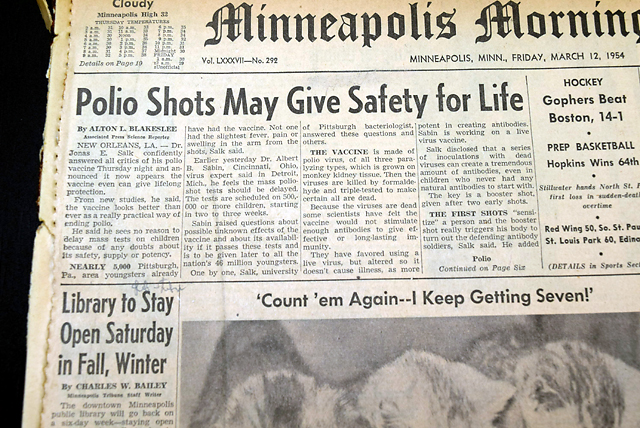
* Jonas Salk changes medical history
* Polio vaccine success announced
The front page has a historic and early...
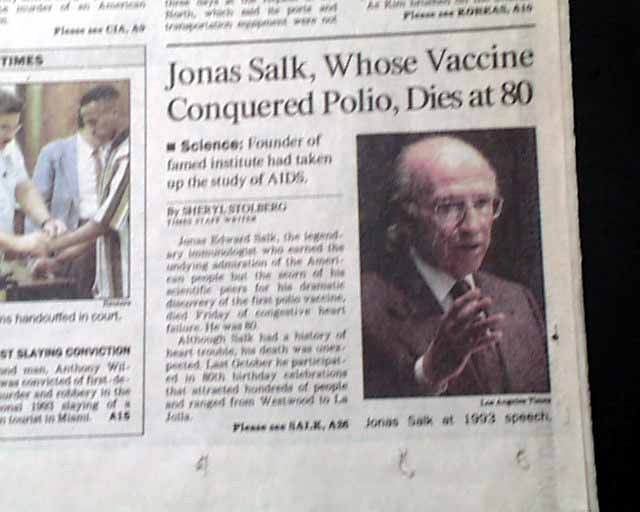
* Jonas Salk - American virologist Death
* Polio - Infantile Paralysis virus vaccine fame
The bottom of the front page has a...
* Jonas Salk
* Polio vaccine awaits final approval
This 8 page newspaper has a two...
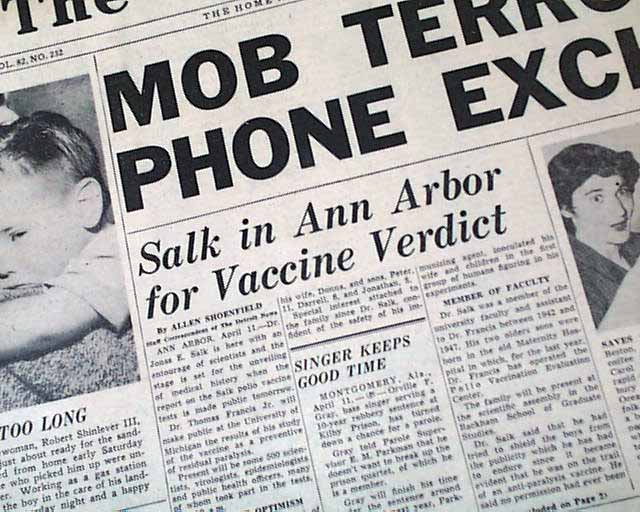
* Jonas Salk about to make medical history
* Polio vaccine success - 1st made public (day of)
The front page has a report on...