

Muhammed Ali refuses U.S. Army draft...
Item # 726250
April 28, 1967
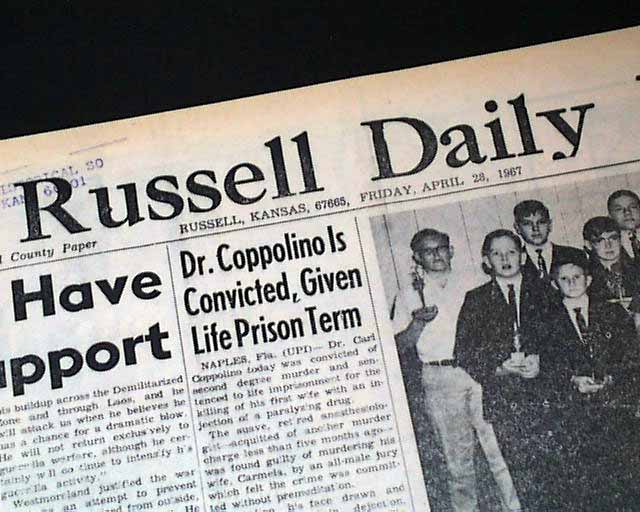
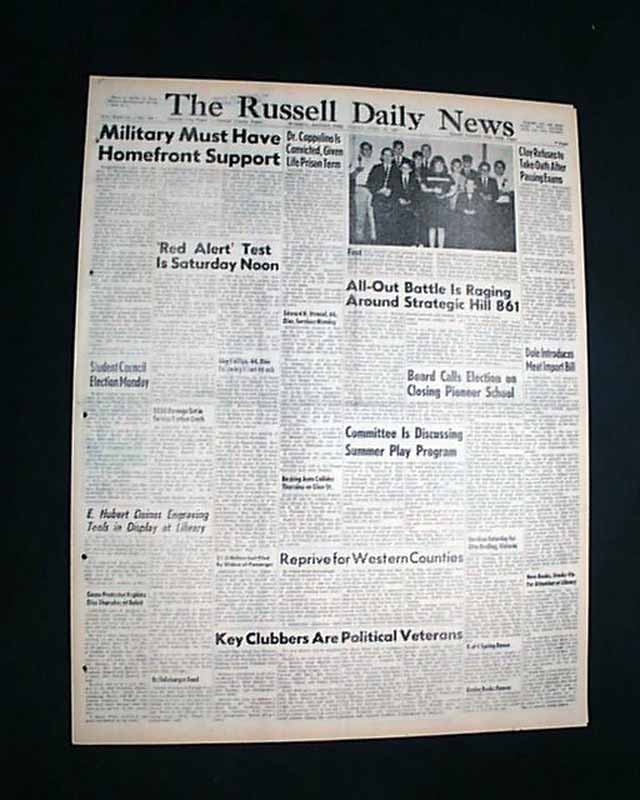
THE RUSSELL DAILY NEWS, Kansas, April 28, 1967
* Cassius Clay - Muhammed Ali
* Heavyweight boxing champion
* Refuses to enter the military draft
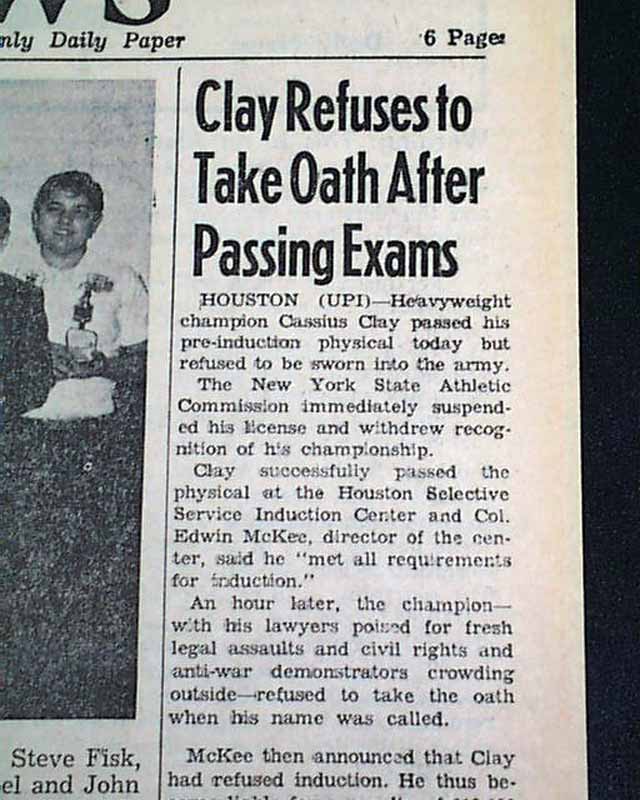
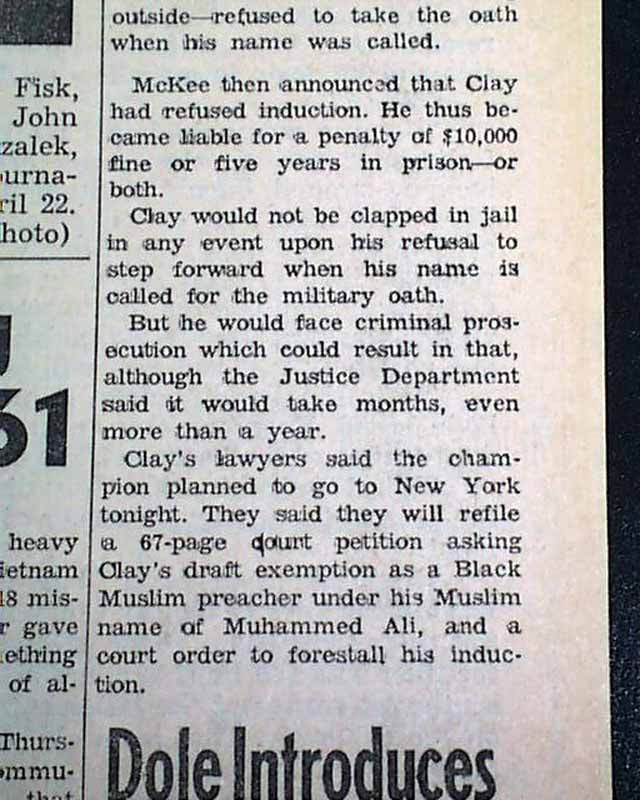
The top of the front page has a one column heading: "Clay Refuses to Take Oath After Passing Exams" (see images)
Complete with 6 pages, small library stamp in the masthead, some small binding holes along the spine, generally very nice.
Background: On April 28, 1967, Muhammad Ali—then still addressed by the U.S. government as Cassius Clay—cemented his legacy as a global icon of resistance by refusing induction into the U.S. Army at a Houston induction center. During the height of the Vietnam War, Ali reported for duty as ordered but remained motionless and silent when his name was called three separate times, even after being warned of the severe legal consequences. His refusal was rooted in his conviction as a minister of the Nation of Islam and a conscientious objector, famously asserting that his conscience would not allow him to "shoot my brother, or some darker people, or some poor hungry people in the mud for big powerful America" while Black Americans were being denied basic human rights at home. The backlash was instantaneous and severe: he was stripped of his world heavyweight title, denied boxing licenses across the United States, and subsequently convicted of draft evasion, receiving a five-year prison sentence. Although he remained free on appeal, the act of defiance forced Ali into a three-and-a-half-year athletic exile during the absolute prime of his career, a sacrifice that transformed him from a polarizing sports figure into a transcendent symbol of the anti-war movement and civil rights struggle, a stance ultimately vindicated by a unanimous Supreme Court reversal in 1971.
* Cassius Clay - Muhammed Ali
* Heavyweight boxing champion
* Refuses to enter the military draft
The top of the front page has a one column heading: "Clay Refuses to Take Oath After Passing Exams" (see images)
Complete with 6 pages, small library stamp in the masthead, some small binding holes along the spine, generally very nice.
Background: On April 28, 1967, Muhammad Ali—then still addressed by the U.S. government as Cassius Clay—cemented his legacy as a global icon of resistance by refusing induction into the U.S. Army at a Houston induction center. During the height of the Vietnam War, Ali reported for duty as ordered but remained motionless and silent when his name was called three separate times, even after being warned of the severe legal consequences. His refusal was rooted in his conviction as a minister of the Nation of Islam and a conscientious objector, famously asserting that his conscience would not allow him to "shoot my brother, or some darker people, or some poor hungry people in the mud for big powerful America" while Black Americans were being denied basic human rights at home. The backlash was instantaneous and severe: he was stripped of his world heavyweight title, denied boxing licenses across the United States, and subsequently convicted of draft evasion, receiving a five-year prison sentence. Although he remained free on appeal, the act of defiance forced Ali into a three-and-a-half-year athletic exile during the absolute prime of his career, a sacrifice that transformed him from a polarizing sports figure into a transcendent symbol of the anti-war movement and civil rights struggle, a stance ultimately vindicated by a unanimous Supreme Court reversal in 1971.
Category: The 20th Century


