

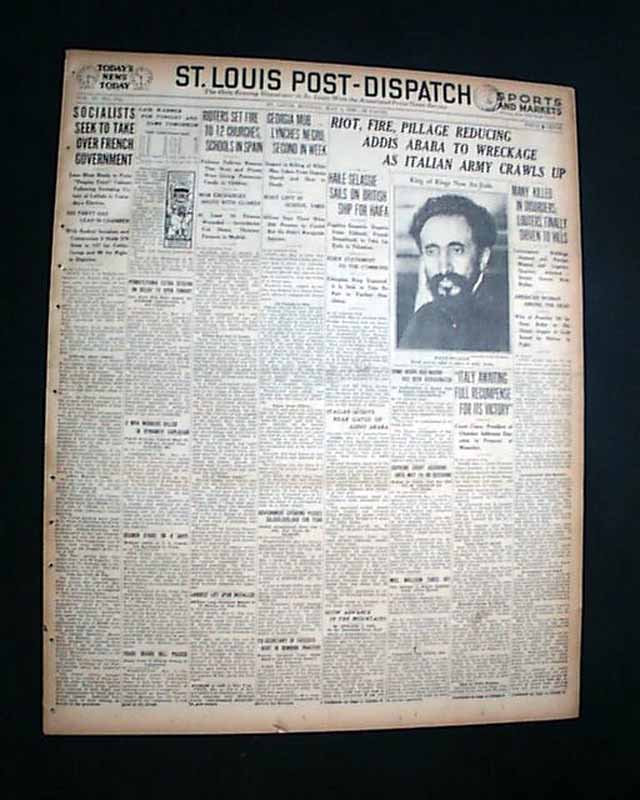
1936 Pavo, Georgia Negro lynching...
Item # 726049
May 04, 1936
ST. LOUIS POST-DISPATCH, May 4, 1936
* Pavo, Thomas County, Georgia
* Negro John Rushin lynching - lynched
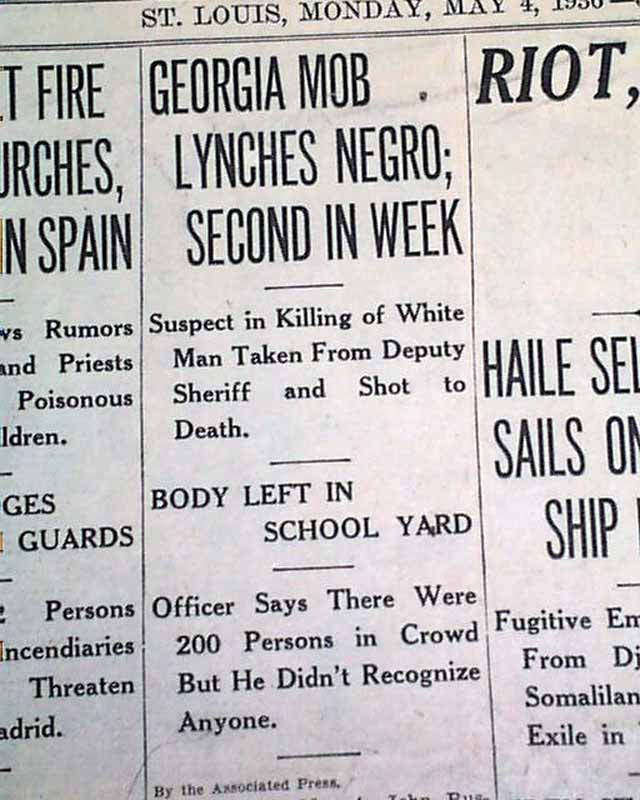
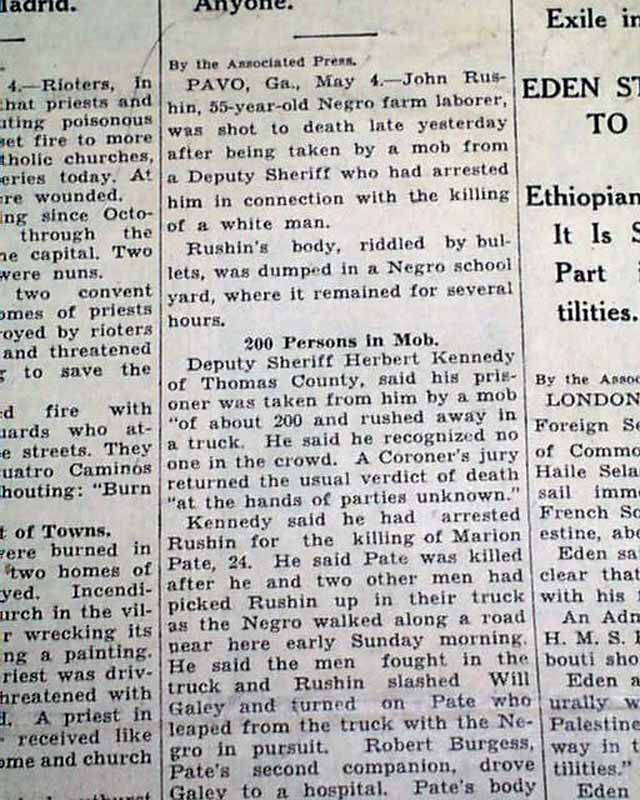
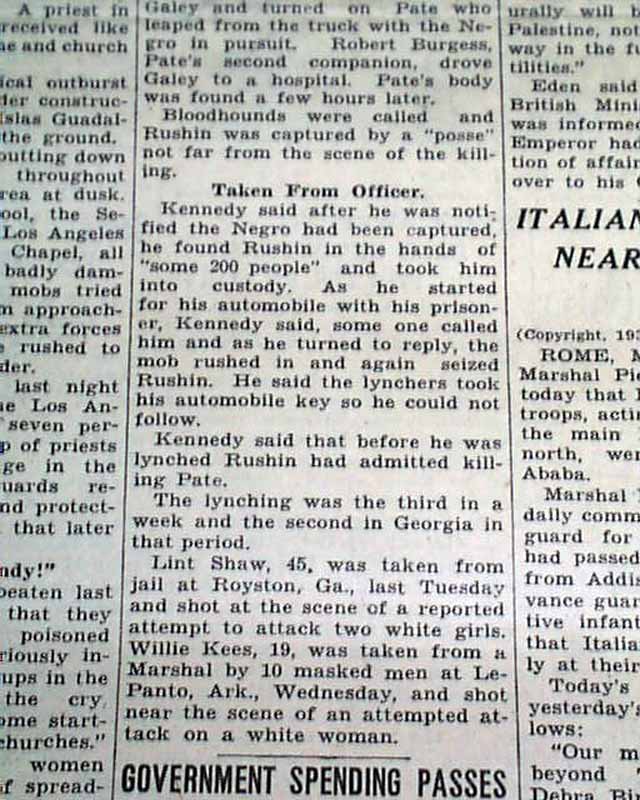
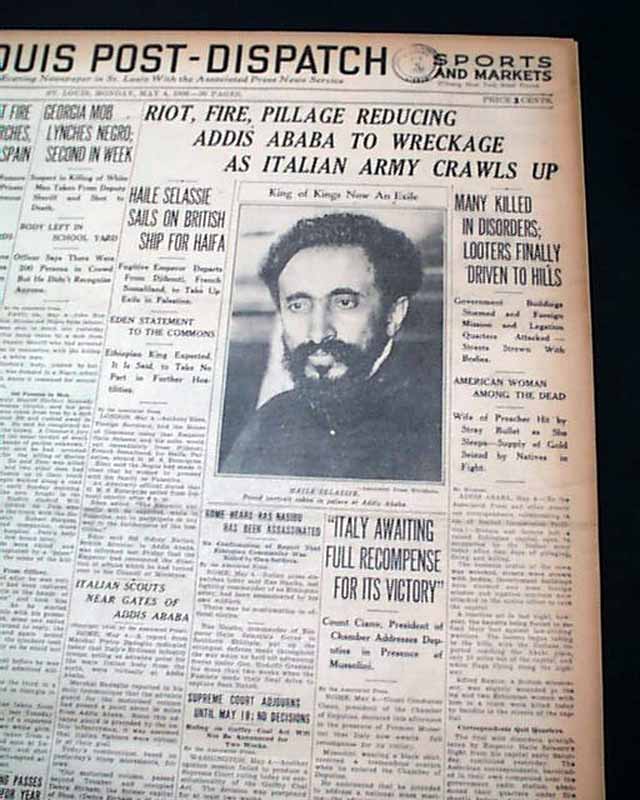
The top of the front page has a one column heading: "GEORGIA MOB LYNCHES NEGRO; SECOND IN WEEK" with subheads. (see images)
Complete with all 30+ pages, light toning at the margins, small binding holes along the spine, generally in nice condition.
Background: The lynching of John Rushin on May 3, 1936, was not merely a murder but a calculated act of psychological warfare that transformed the Georgia landscape into a theater of terror. After a mob of 200 men intercepted a deputy’s car with zero resistance—effectively proving that the badge offered no protection to Black lives—they executed the 55-year-old Rushin with a hail of gunfire near the Ochlockonee River. In a final, stomach-churning display of ritualistic cruelty, the mob dragged his mutilated, naked body to the yard of the Pavo Negro School, purposefully leaving his remains as a "lesson" for Black children to discover the following morning. This harrowing desecration served as the catalyst for the NAACP’s iconic "Lynch Flag" in New York City, turning a local schoolyard atrocity into a permanent stain on American jurisprudence and a foundational pillar of the modern Civil Rights movement.
* Pavo, Thomas County, Georgia
* Negro John Rushin lynching - lynched
The top of the front page has a one column heading: "GEORGIA MOB LYNCHES NEGRO; SECOND IN WEEK" with subheads. (see images)
Complete with all 30+ pages, light toning at the margins, small binding holes along the spine, generally in nice condition.
Background: The lynching of John Rushin on May 3, 1936, was not merely a murder but a calculated act of psychological warfare that transformed the Georgia landscape into a theater of terror. After a mob of 200 men intercepted a deputy’s car with zero resistance—effectively proving that the badge offered no protection to Black lives—they executed the 55-year-old Rushin with a hail of gunfire near the Ochlockonee River. In a final, stomach-churning display of ritualistic cruelty, the mob dragged his mutilated, naked body to the yard of the Pavo Negro School, purposefully leaving his remains as a "lesson" for Black children to discover the following morning. This harrowing desecration served as the catalyst for the NAACP’s iconic "Lynch Flag" in New York City, turning a local schoolyard atrocity into a permanent stain on American jurisprudence and a foundational pillar of the modern Civil Rights movement.
Category: The 20th Century


