

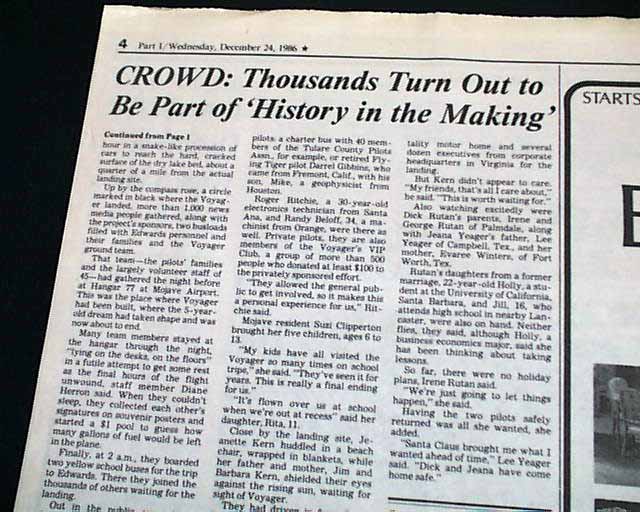
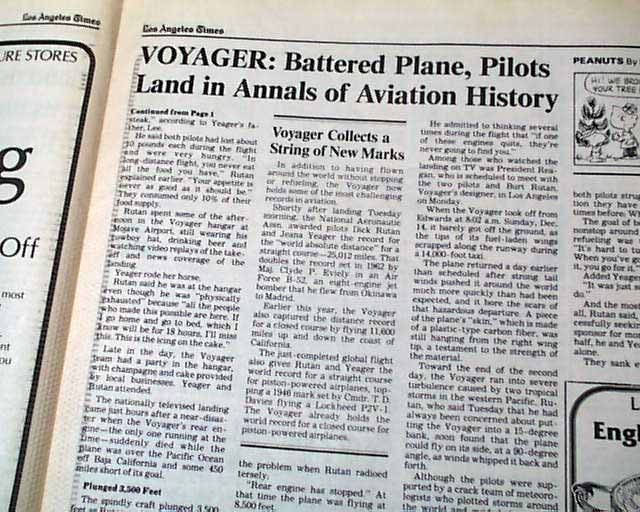
1986 "Rutan Voyager" airplane endurance flight...
Item # 725830
December 24, 1986
LOS ANGELES TIMES, Dec. 24, 1986
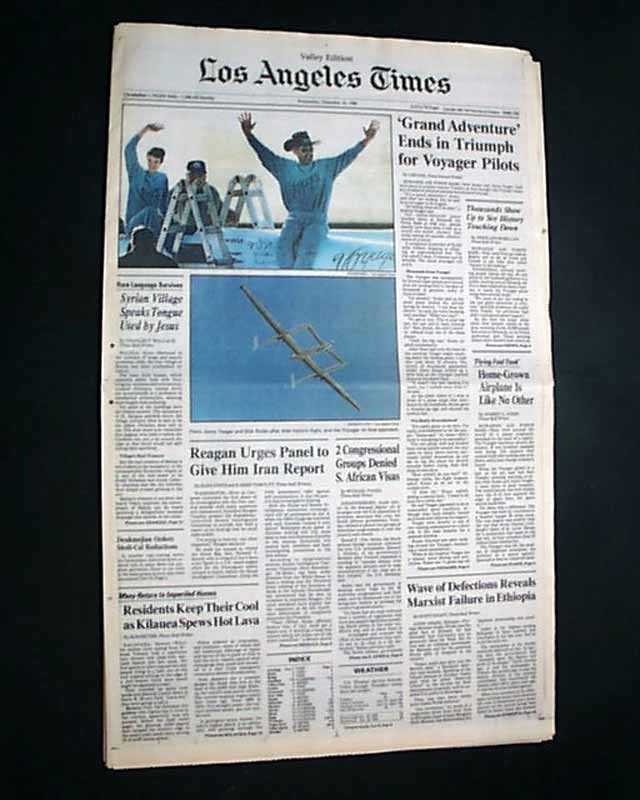
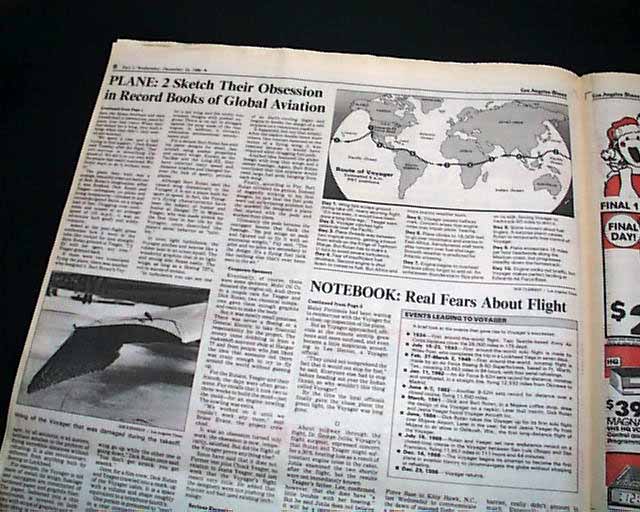
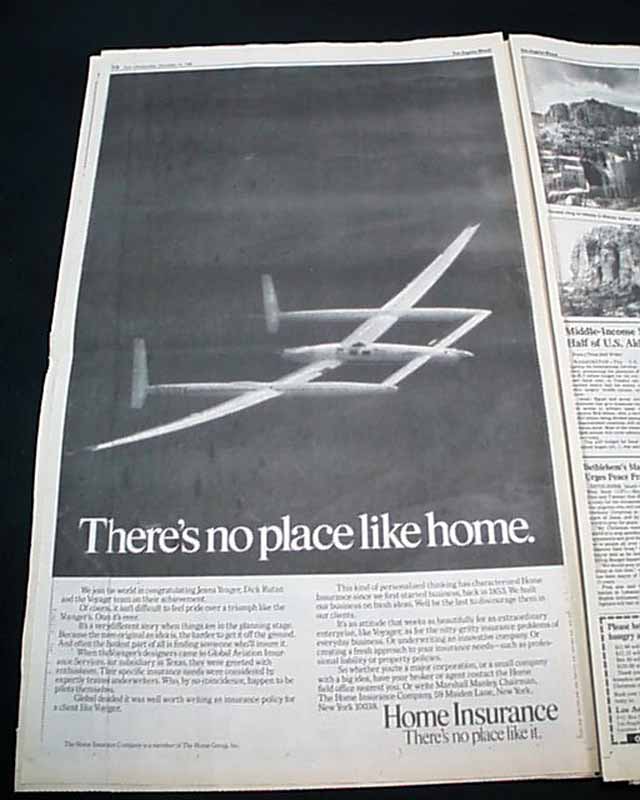
* Rutan Model 76 Voyager makes history
* First to fly around the World w/out refueling
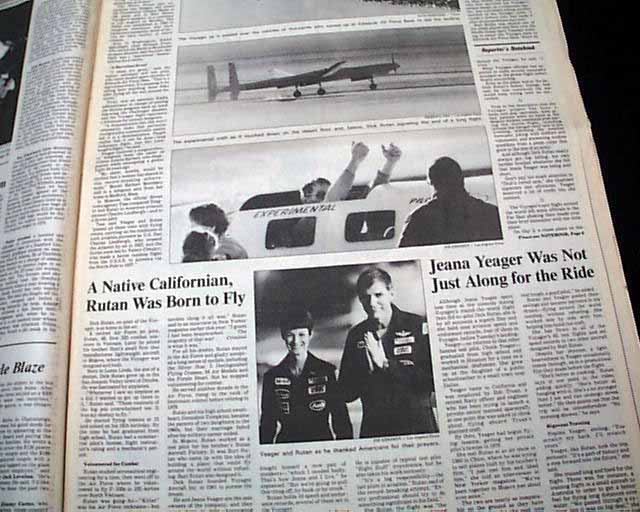
* Piloted by Dick Rutan and Jeana Yeager
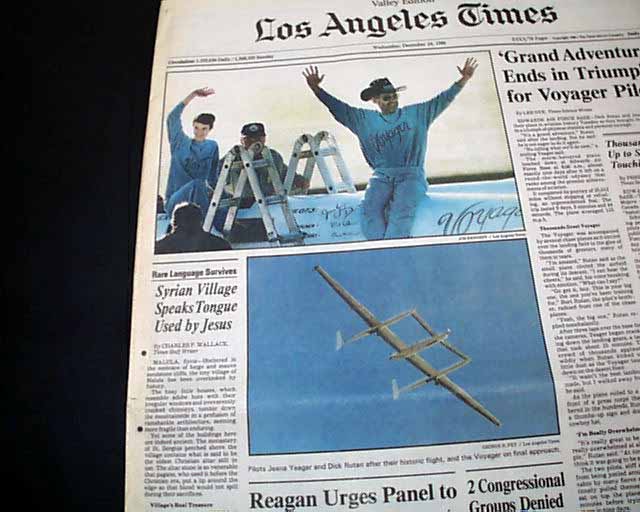
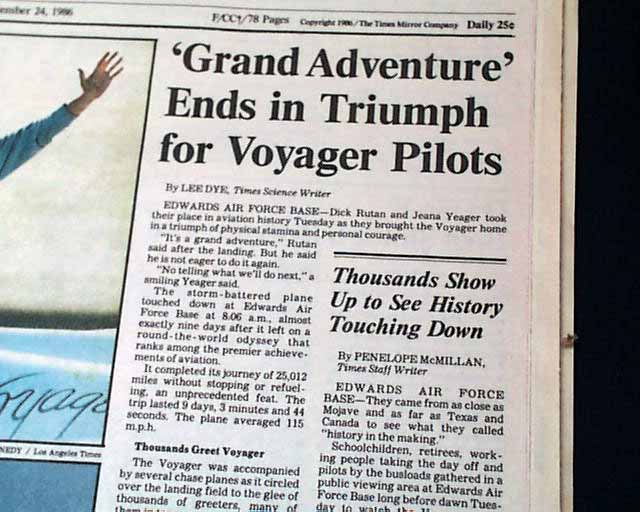
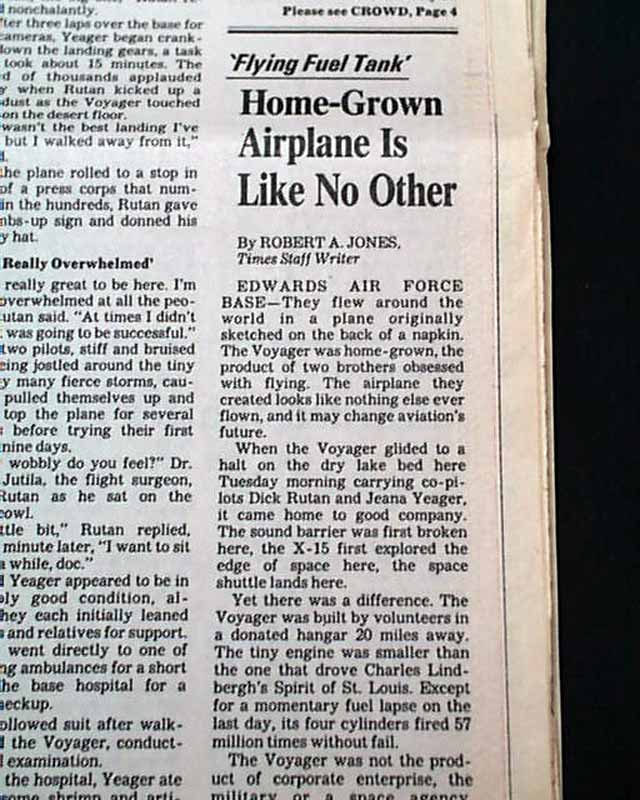
The top of the front page has a two column headline: "'Grand Adventure' Ends in Triumph for Voyager Pilots" with subheads and 2 related photos. Much more on the following pages, loads of text.
Complete with all sections (70+ pages), nice condition.
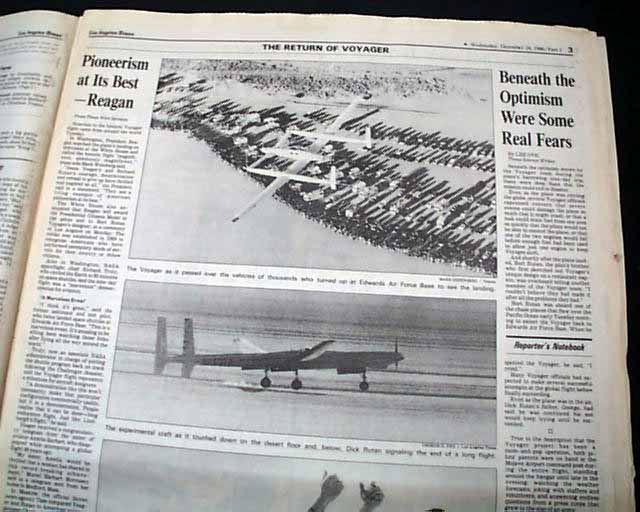
background: The flight of the Rutan Voyager remains a watershed moment in aviation history because it shattered the final great barrier of atmospheric flight: circumnavigating the globe without once stopping or refueling. Beyond the sheer grit of pilots Dick Rutan and Jeana Yeager—who endured nine days of physical agony and sensory deprivation in a cockpit no larger than a pup tent—the mission served as a high-stakes proof of concept for composite material technology. By constructing the airframe from graphite, Kevlar, and fiberglass rather than traditional aluminum, Burt Rutan created a "flying fuel tank" light enough to take off with more than three times its own empty weight in fuel. This revolutionary approach to weight-to-payload ratios proved that extreme fuel efficiency was possible through structural innovation, directly influencing the design of modern carbon-fiber airliners like the Boeing 787. Ultimately, the Voyager’s success was a triumph of private, grassroots engineering that closed the era of "great firsts" in aviation, proving that the planet could be spanned by a single set of wings through the perfect synergy of human endurance and radical design.
* Rutan Model 76 Voyager makes history
* First to fly around the World w/out refueling
* Piloted by Dick Rutan and Jeana Yeager
The top of the front page has a two column headline: "'Grand Adventure' Ends in Triumph for Voyager Pilots" with subheads and 2 related photos. Much more on the following pages, loads of text.
Complete with all sections (70+ pages), nice condition.
background: The flight of the Rutan Voyager remains a watershed moment in aviation history because it shattered the final great barrier of atmospheric flight: circumnavigating the globe without once stopping or refueling. Beyond the sheer grit of pilots Dick Rutan and Jeana Yeager—who endured nine days of physical agony and sensory deprivation in a cockpit no larger than a pup tent—the mission served as a high-stakes proof of concept for composite material technology. By constructing the airframe from graphite, Kevlar, and fiberglass rather than traditional aluminum, Burt Rutan created a "flying fuel tank" light enough to take off with more than three times its own empty weight in fuel. This revolutionary approach to weight-to-payload ratios proved that extreme fuel efficiency was possible through structural innovation, directly influencing the design of modern carbon-fiber airliners like the Boeing 787. Ultimately, the Voyager’s success was a triumph of private, grassroots engineering that closed the era of "great firsts" in aviation, proving that the planet could be spanned by a single set of wings through the perfect synergy of human endurance and radical design.
Category: The 20th Century


