

1926 push to end prohibition...
Item # 725667
April 03, 1926
CHICAGO DAILY TRIBUNE, April 3, 1926
* During U.S. Prohibition
* Illegal beer - alcohol
* Failure of the law exposed
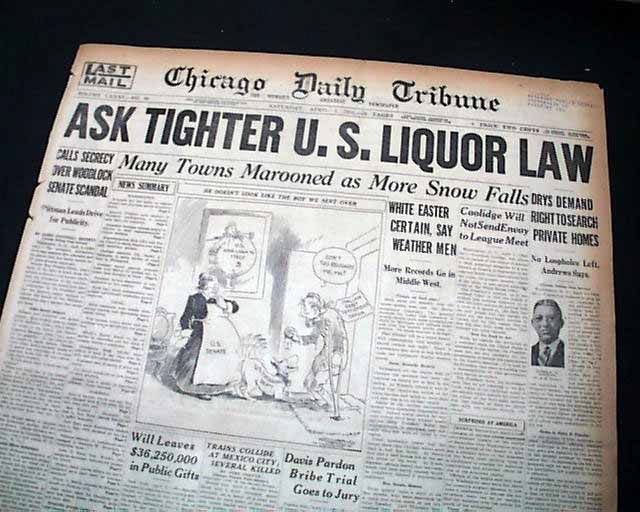
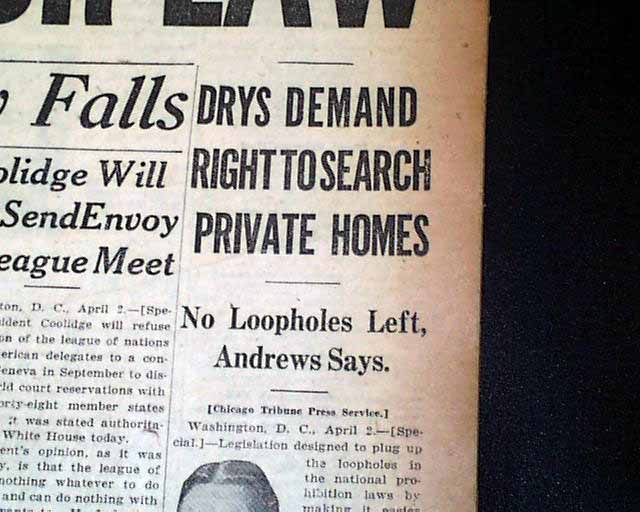
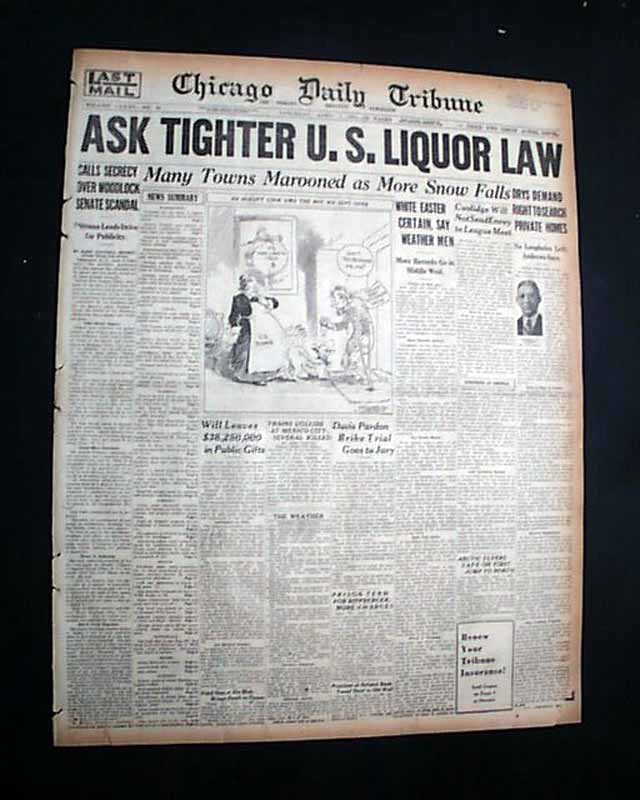
The front page has a nice banner headline: "ASKS TIGHTER U.S. LIQUOR LAW" with subheads. (see images) Nice for display for any tavern or home bar.
When it comes to gangsters, organized crime, and the nefarious activities born out of the Prohibition and Great Depression eras, no city is more in the forefront of our minds than Chicago - and what better newspaper can be found than the Chicago Tribune, self-proclaimed to be "The World's Greatest Newspaper" - attributed in part to its dramatic, banner headlines! Whether hanging on your wall or part of an ongoing collection, these events are sure to capture the flavor of this infamous period in American history.
Complete with 36 pages, archival mend on page 2, light
toning and some wear at the margins with minimal text loss, generally good.
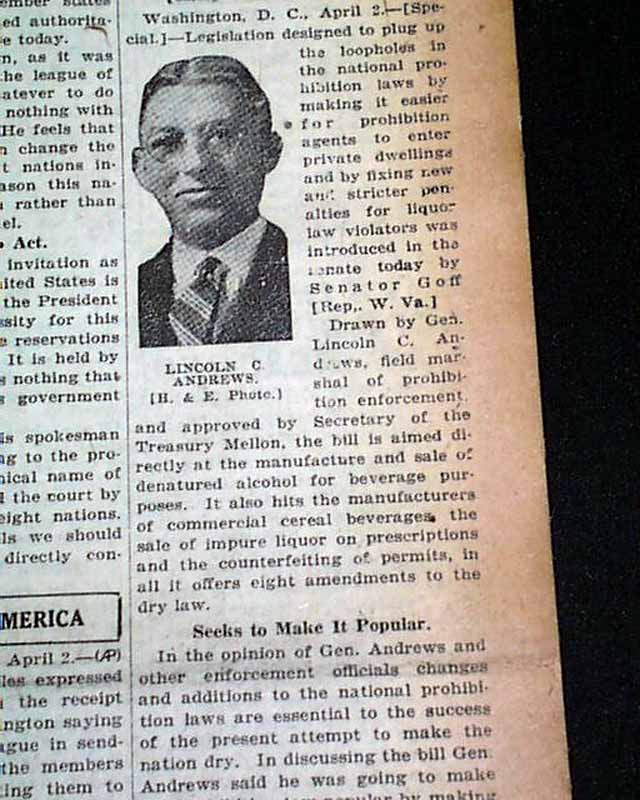
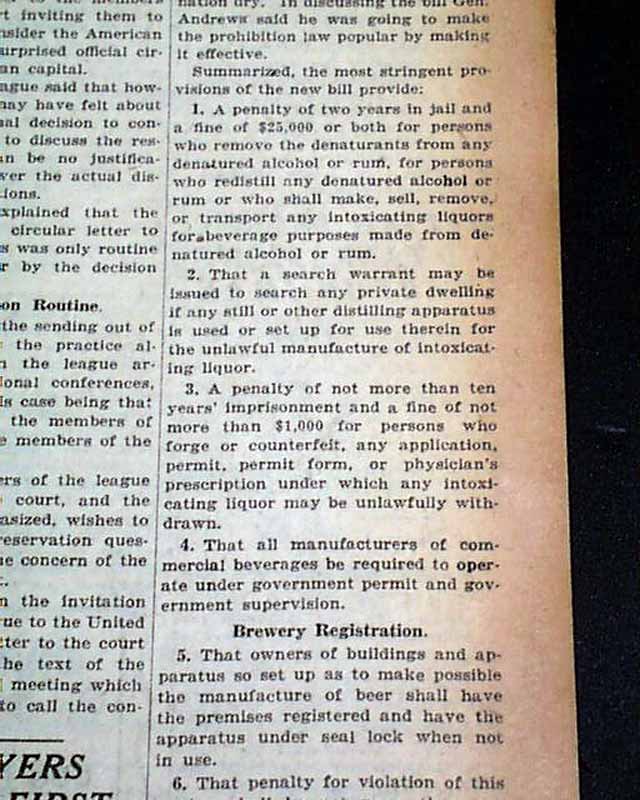
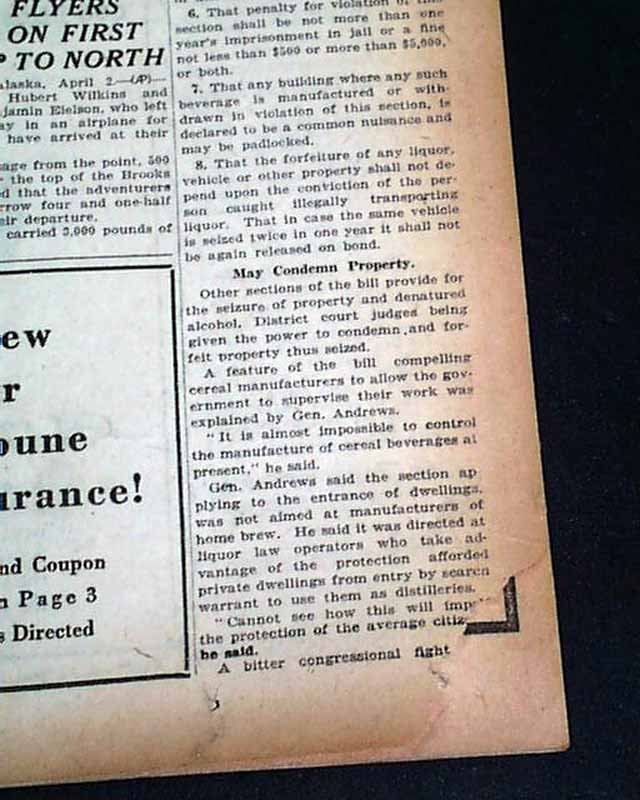
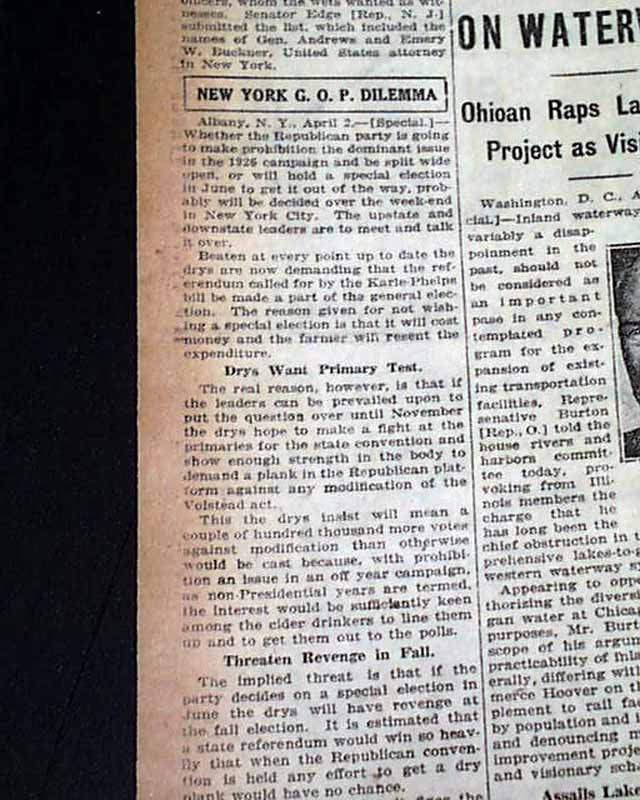
background: In early April 1926, General Lincoln C. Andrews, the Assistant Secretary of the Treasury, aggressively petitioned Congress for sweeping legislative reforms to close the "gaping holes" in the Volstead Act that had turned Prohibition into a national farce. Andrews argued that his agents were hamstrung by legal technicalities, demanding the authority to seize property without delayed court proceedings, the power to search private vessels in international waters, and a drastic increase in federal personnel to create a "wall of men" along the Canadian border. His most controversial move was a request for $3 million in emergency funding to militarize enforcement, coupled with a push for stricter federal control over the "medicinal" whiskey trade and industrial alcohol production to stop the widespread diversion of legal spirits into the black market. While Andrews’ call for tighter laws was intended to save the "noble experiment," his candid testimony during the April 1926 Senate hearings—where he admitted that total enforcement was impossible under current conditions—unintentionally provided the "Wet" faction with the ammunition they needed to argue that the law was inherently broken, sparking a major turning point in the movement toward repeal.
* During U.S. Prohibition
* Illegal beer - alcohol
* Failure of the law exposed
The front page has a nice banner headline: "ASKS TIGHTER U.S. LIQUOR LAW" with subheads. (see images) Nice for display for any tavern or home bar.
When it comes to gangsters, organized crime, and the nefarious activities born out of the Prohibition and Great Depression eras, no city is more in the forefront of our minds than Chicago - and what better newspaper can be found than the Chicago Tribune, self-proclaimed to be "The World's Greatest Newspaper" - attributed in part to its dramatic, banner headlines! Whether hanging on your wall or part of an ongoing collection, these events are sure to capture the flavor of this infamous period in American history.
Complete with 36 pages, archival mend on page 2, light
toning and some wear at the margins with minimal text loss, generally good.
background: In early April 1926, General Lincoln C. Andrews, the Assistant Secretary of the Treasury, aggressively petitioned Congress for sweeping legislative reforms to close the "gaping holes" in the Volstead Act that had turned Prohibition into a national farce. Andrews argued that his agents were hamstrung by legal technicalities, demanding the authority to seize property without delayed court proceedings, the power to search private vessels in international waters, and a drastic increase in federal personnel to create a "wall of men" along the Canadian border. His most controversial move was a request for $3 million in emergency funding to militarize enforcement, coupled with a push for stricter federal control over the "medicinal" whiskey trade and industrial alcohol production to stop the widespread diversion of legal spirits into the black market. While Andrews’ call for tighter laws was intended to save the "noble experiment," his candid testimony during the April 1926 Senate hearings—where he admitted that total enforcement was impossible under current conditions—unintentionally provided the "Wet" faction with the ammunition they needed to argue that the law was inherently broken, sparking a major turning point in the movement toward repeal.
Category: The 20th Century


