


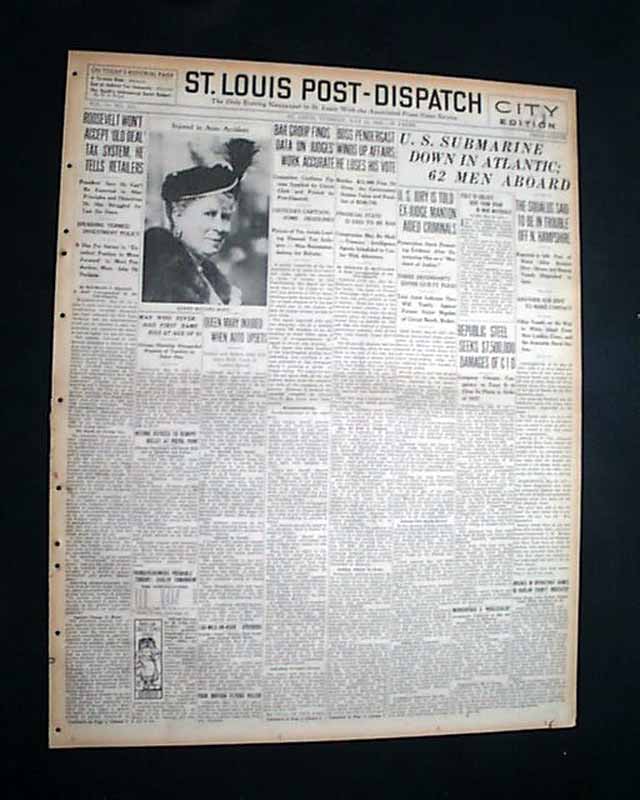
USS Squalus submarine disaster...
Item # 725516
May 23, 1939
ST. LOUIS POST-DISPATCH, May 23, 1939
* USS Squalus (Sailfish) sinking disaster
* Submarine test dive off New Hampshire
* Early, same day first report
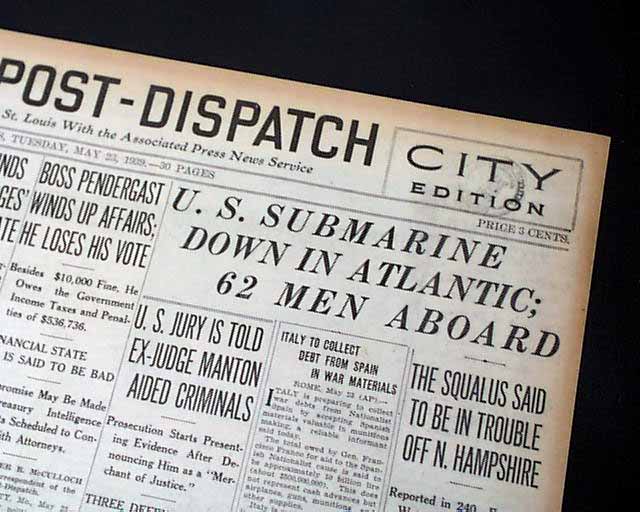
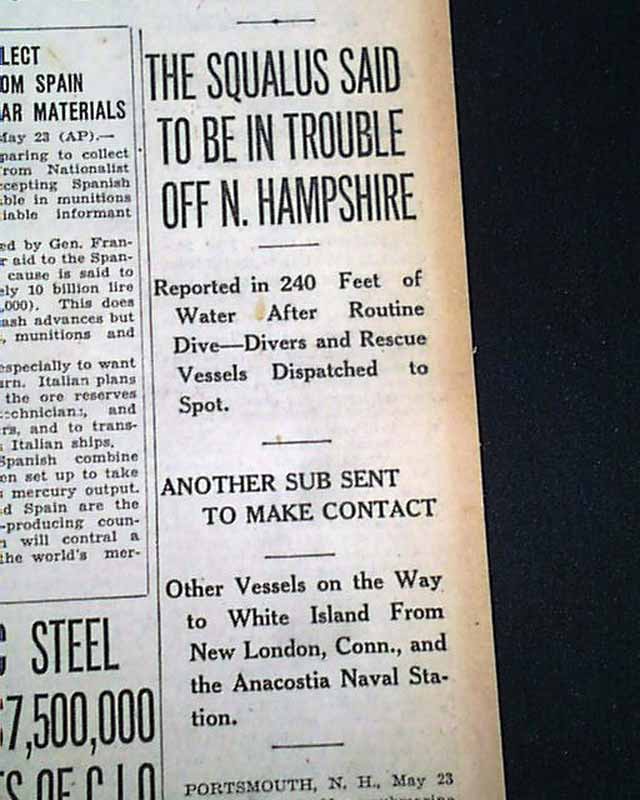
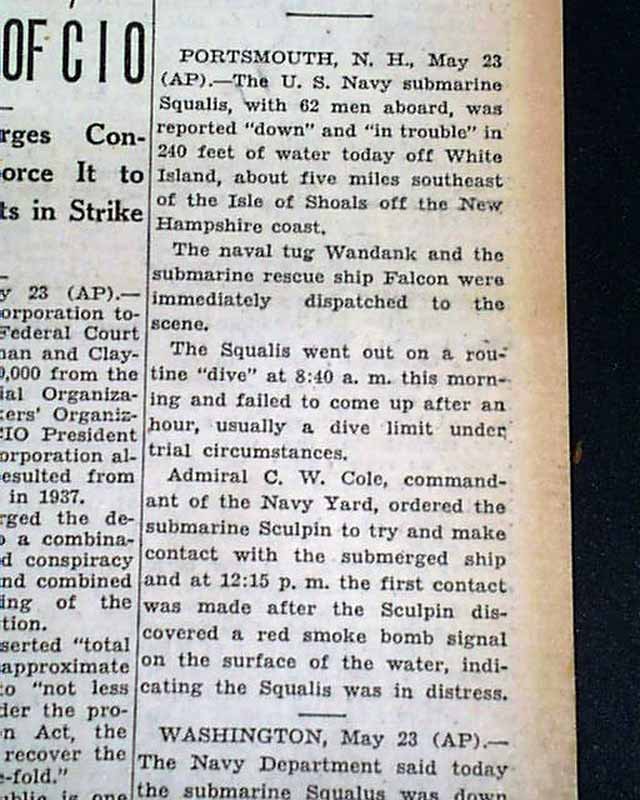
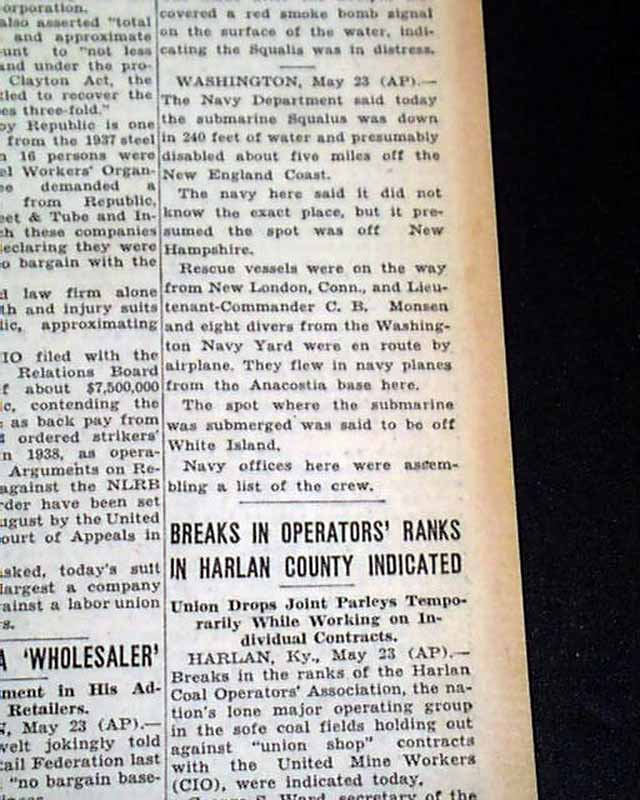
The top of the front page has a three column headline: "U. S. SUBMARINE DOWN IN ATLANTIC 62 MEN ABOARD" with subheads. (see images)
Complete with all 30+ pages, light toning at the margins, small binding holes along the spine, generally very nice.
background: The sinking of the USS Squalus on May 23, 1939, remains a watershed moment in naval history, primarily because it shifted the narrative of submarine disasters from certain death to the possibility of survival through engineering and courage. After a catastrophic failure of the main induction valve caused the stern to flood and settle 243 feet deep in the frigid waters off New Hampshire, 33 men were left trapped in the forward compartments, facing a slow death by suffocation or hypothermia. Their survival was made possible by the debut of the McCann Rescue Chamber, a revolutionary diving bell that made four perilous descents to the seafloor to ferry the survivors to the surface. This operation not only proved the viability of deep-sea rescue technology but also showcased the extraordinary bravery of the Navy divers—four of whom received the Medal of Honor—marking the first time such a feat had ever been achieved at that depth. The legacy of the Squalus is uniquely bittersweet; while 26 men were lost in the initial flooding, the vessel itself was later salvaged and reborn as the USS Sailfish, eventually becoming a highly decorated veteran of the Pacific Theater in World War II.
* USS Squalus (Sailfish) sinking disaster
* Submarine test dive off New Hampshire
* Early, same day first report
The top of the front page has a three column headline: "U. S. SUBMARINE DOWN IN ATLANTIC 62 MEN ABOARD" with subheads. (see images)
Complete with all 30+ pages, light toning at the margins, small binding holes along the spine, generally very nice.
background: The sinking of the USS Squalus on May 23, 1939, remains a watershed moment in naval history, primarily because it shifted the narrative of submarine disasters from certain death to the possibility of survival through engineering and courage. After a catastrophic failure of the main induction valve caused the stern to flood and settle 243 feet deep in the frigid waters off New Hampshire, 33 men were left trapped in the forward compartments, facing a slow death by suffocation or hypothermia. Their survival was made possible by the debut of the McCann Rescue Chamber, a revolutionary diving bell that made four perilous descents to the seafloor to ferry the survivors to the surface. This operation not only proved the viability of deep-sea rescue technology but also showcased the extraordinary bravery of the Navy divers—four of whom received the Medal of Honor—marking the first time such a feat had ever been achieved at that depth. The legacy of the Squalus is uniquely bittersweet; while 26 men were lost in the initial flooding, the vessel itself was later salvaged and reborn as the USS Sailfish, eventually becoming a highly decorated veteran of the Pacific Theater in World War II.
Category: The 20th Century


