

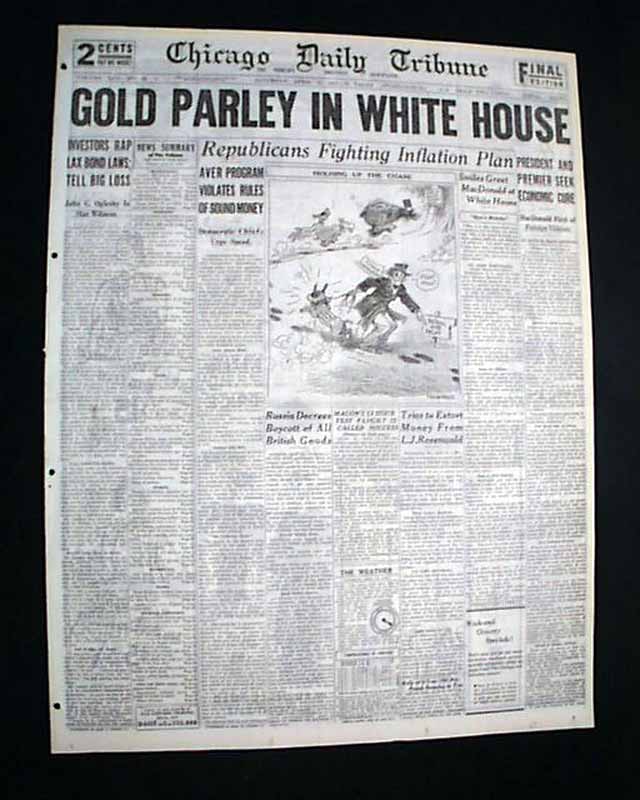
1933 USS Macon airship maiden flight....
Item # 725493
April 22, 1933
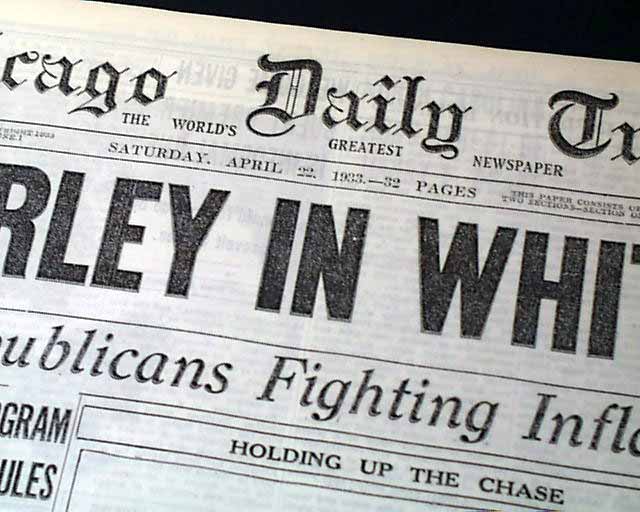
CHICAGO DAILY TRIBUNE, April 22, 1933
* USS Macon (ZRS-5) maiden flight
* United States Navy Airship
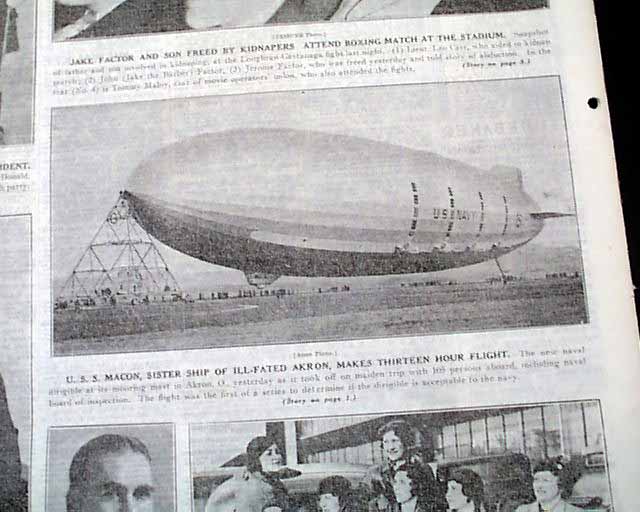
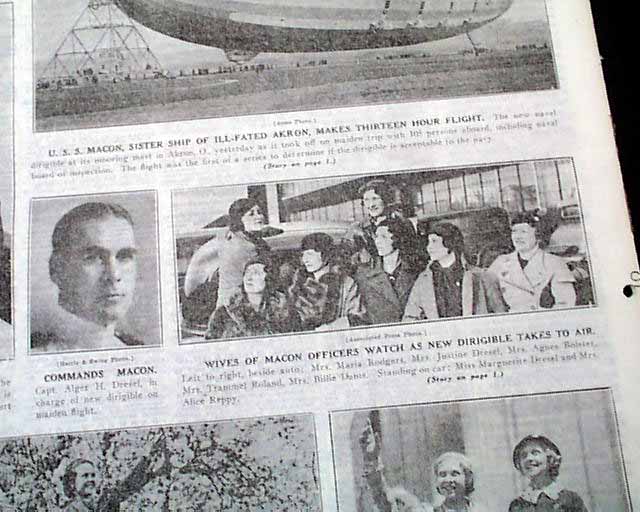
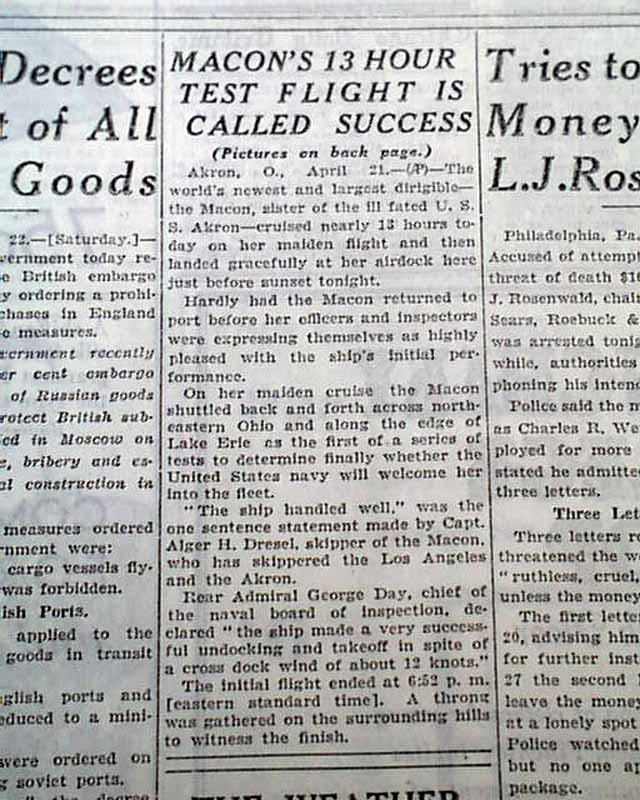
The front page has a one column heading: "Macon's 13 Hour Test Flight Is Called Success" Three related photos are on the back page. (see images)
Complete in 32 pages, rag edition in nice condition. A few small binding holes along the spine.
background: On April 21, 1933, the USS Macon (ZRS-5) ascended from the Goodyear-Zeppelin Airdock in Akron, Ohio, for a maiden flight that was as much a somber necessity as it was a technical triumph. Taking place less than three weeks after the catastrophic loss of its sister ship, the Akron, the 13-hour flight carried 105 personnel—including high-ranking officials like Rear Admiral Ernest J. King—under the command of Commander Alger H. Dresel. As the massive, 785-foot duralumin skeleton drifted over the Ohio countryside, it served as a high-stakes proof of concept for the Navy’s "flying aircraft carrier" program. The flight successfully validated the ship’s eight Maybach VL-2 engines and its unique internal hangar system, which was designed to launch and recover F9C Sparrowhawk biplanes using a specialized "trapeze" hook. Despite the shadow cast by the Akron disaster, the Macon’s smooth performance during this initial trial briefly restored faith in the viability of rigid airships as long-range naval scouts before its eventual transfer to the Pacific Coast.
* USS Macon (ZRS-5) maiden flight
* United States Navy Airship
The front page has a one column heading: "Macon's 13 Hour Test Flight Is Called Success" Three related photos are on the back page. (see images)
Complete in 32 pages, rag edition in nice condition. A few small binding holes along the spine.
background: On April 21, 1933, the USS Macon (ZRS-5) ascended from the Goodyear-Zeppelin Airdock in Akron, Ohio, for a maiden flight that was as much a somber necessity as it was a technical triumph. Taking place less than three weeks after the catastrophic loss of its sister ship, the Akron, the 13-hour flight carried 105 personnel—including high-ranking officials like Rear Admiral Ernest J. King—under the command of Commander Alger H. Dresel. As the massive, 785-foot duralumin skeleton drifted over the Ohio countryside, it served as a high-stakes proof of concept for the Navy’s "flying aircraft carrier" program. The flight successfully validated the ship’s eight Maybach VL-2 engines and its unique internal hangar system, which was designed to launch and recover F9C Sparrowhawk biplanes using a specialized "trapeze" hook. Despite the shadow cast by the Akron disaster, the Macon’s smooth performance during this initial trial briefly restored faith in the viability of rigid airships as long-range naval scouts before its eventual transfer to the Pacific Coast.
Category: The 20th Century


