

Heqakheperre Shoshenq II discovered in 1939
Item # 725453
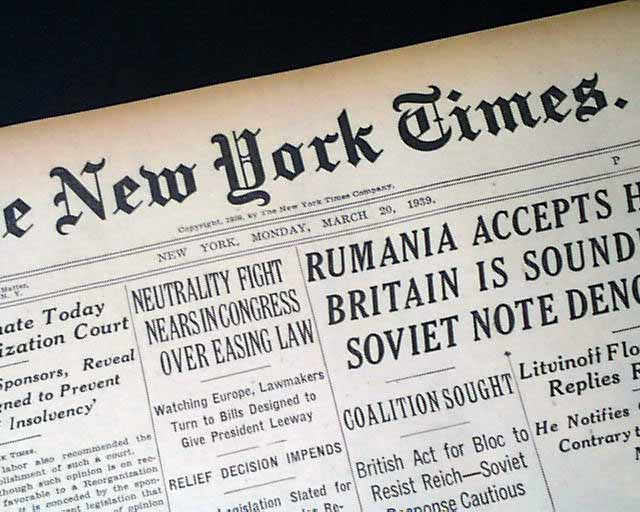
March 20, 1939
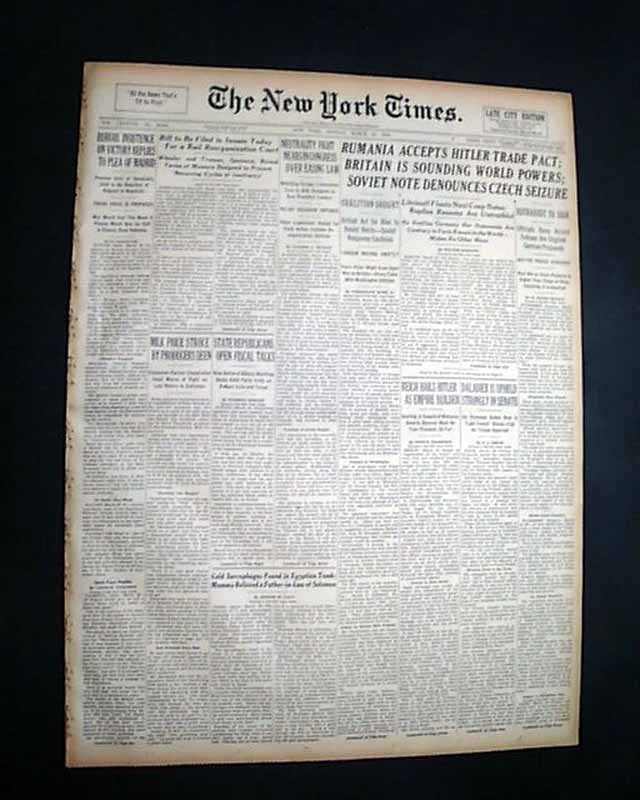
THE NEW YORK TIMES, March 20, 1939
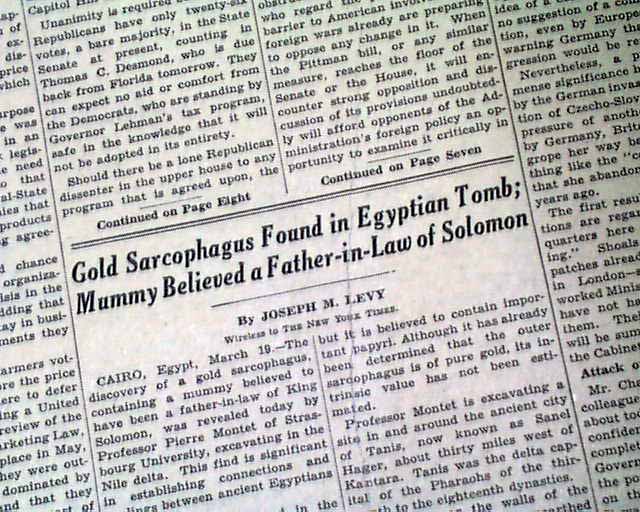
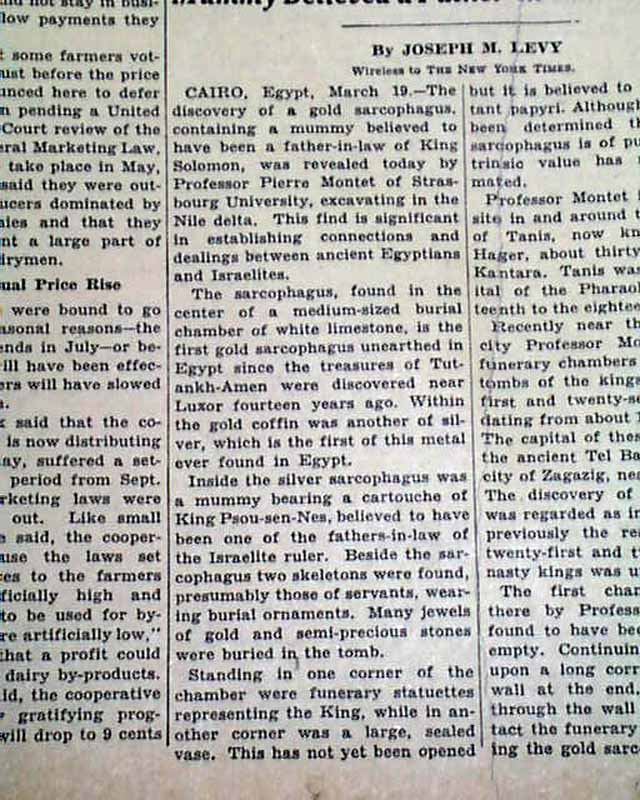
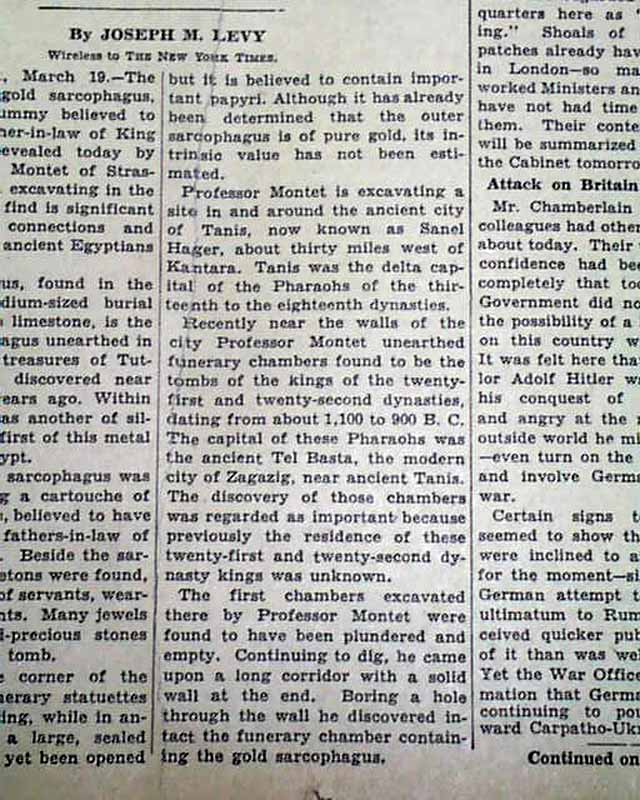
* Heqakheperre Shoshenq II discovered
* 22nd Dynasty Egyptian Pharaoh
* Tanis, Egypt - Pierre Montet
Near the bottom of the front page is a two column heading: "Gold Sarcophagus Found in Egyptian Tomb; Mummy Believed a Father-in-Law of Solomon" (see) History shows this was in fact Shoshenq II despite what the article here says..
Complete with all 34 pages, archival mend on page 2 slightly affects mentioned report, light toning, otherwise very nice.
background: The discovery of Heqakheperre Shoshenq II by Pierre Montet in March 1939 stands as one of the most significant yet overlooked triumphs in Egyptian archaeology, primarily because its timing coincided with the brink of World War II. Hidden within the royal necropolis at Tanis, the pharaoh’s burial was found remarkably intact, a rarity for any 22nd Dynasty ruler. The centerpiece of the find was a magnificent hawk-headed coffin crafted from solid silver—a material more precious than gold in the ancient world due to its scarcity in Egypt. Inside, the king’s mummy was adorned with a delicate gold funerary mask and exquisite jewelry, providing a rare glimpse into the "Silver Pharaohs" and the enduring wealth of the Libyan dynasties during a period of perceived Egyptian decline. Despite the find's immense historical value, the global panic of 1939 ensured that Shoshenq II never quite captured the public imagination like Tutankhamun, leaving his silver-clad legacy as a treasure known mostly to historians and the halls of the Cairo Museum.
* Heqakheperre Shoshenq II discovered
* 22nd Dynasty Egyptian Pharaoh
* Tanis, Egypt - Pierre Montet
Near the bottom of the front page is a two column heading: "Gold Sarcophagus Found in Egyptian Tomb; Mummy Believed a Father-in-Law of Solomon" (see) History shows this was in fact Shoshenq II despite what the article here says..
Complete with all 34 pages, archival mend on page 2 slightly affects mentioned report, light toning, otherwise very nice.
background: The discovery of Heqakheperre Shoshenq II by Pierre Montet in March 1939 stands as one of the most significant yet overlooked triumphs in Egyptian archaeology, primarily because its timing coincided with the brink of World War II. Hidden within the royal necropolis at Tanis, the pharaoh’s burial was found remarkably intact, a rarity for any 22nd Dynasty ruler. The centerpiece of the find was a magnificent hawk-headed coffin crafted from solid silver—a material more precious than gold in the ancient world due to its scarcity in Egypt. Inside, the king’s mummy was adorned with a delicate gold funerary mask and exquisite jewelry, providing a rare glimpse into the "Silver Pharaohs" and the enduring wealth of the Libyan dynasties during a period of perceived Egyptian decline. Despite the find's immense historical value, the global panic of 1939 ensured that Shoshenq II never quite captured the public imagination like Tutankhamun, leaving his silver-clad legacy as a treasure known mostly to historians and the halls of the Cairo Museum.
Category: 1861-1865


