

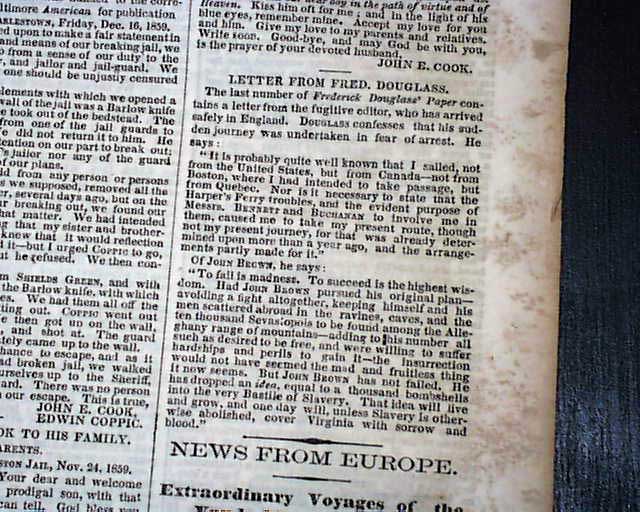
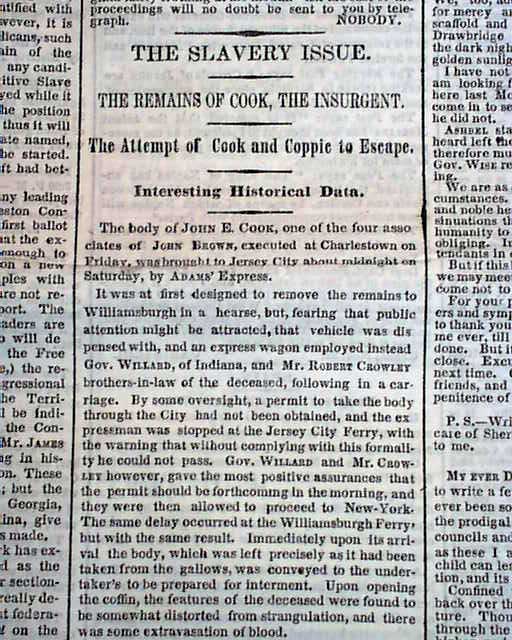
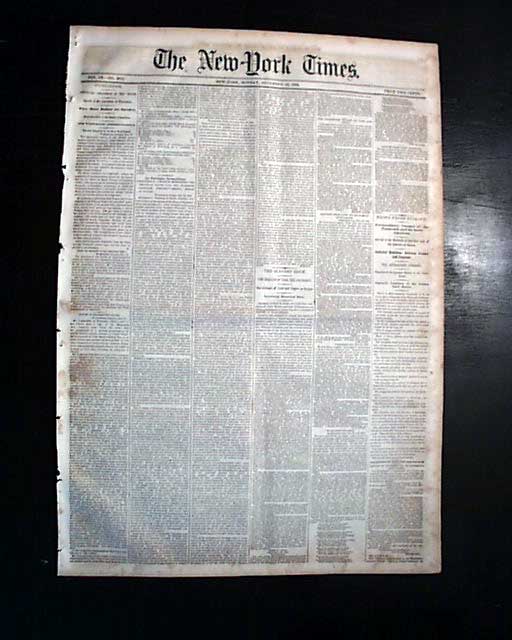
Frederick Douglass writes on the John Brown situation...
Item # 724592
December 19, 1859
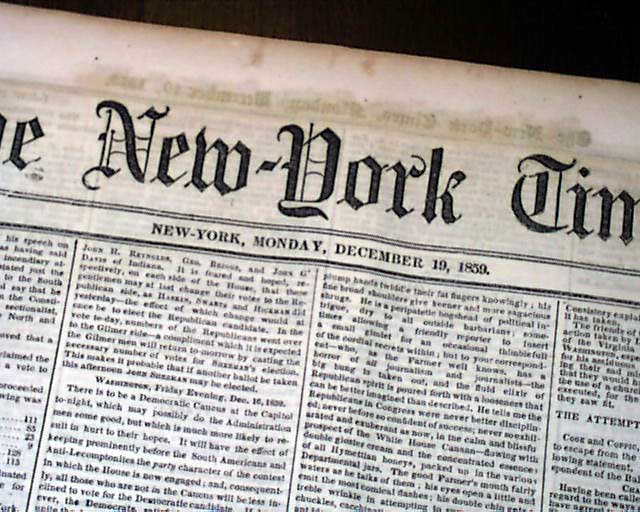
THE NEW YORK TIMES, Dec. 19, 1859
* John Brown's raid on Harpers Ferry
* Frederick Douglass's view of it
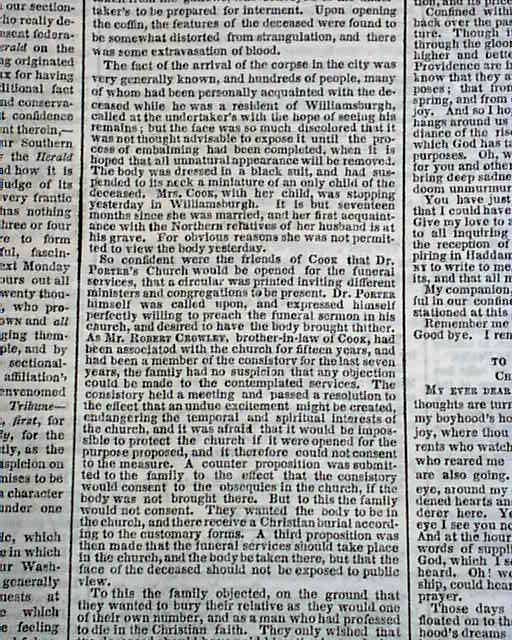
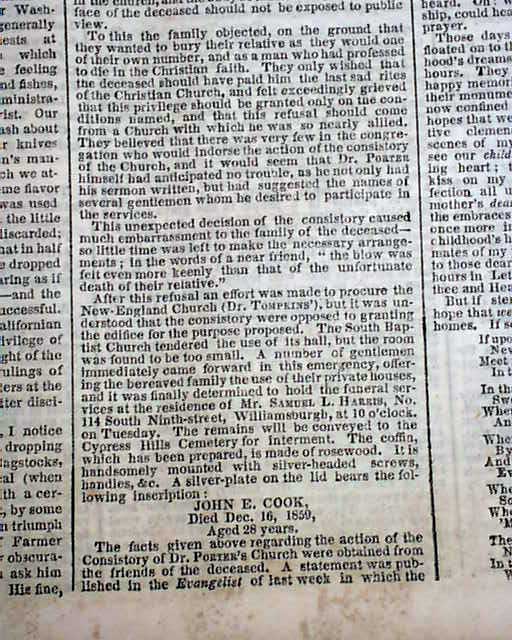
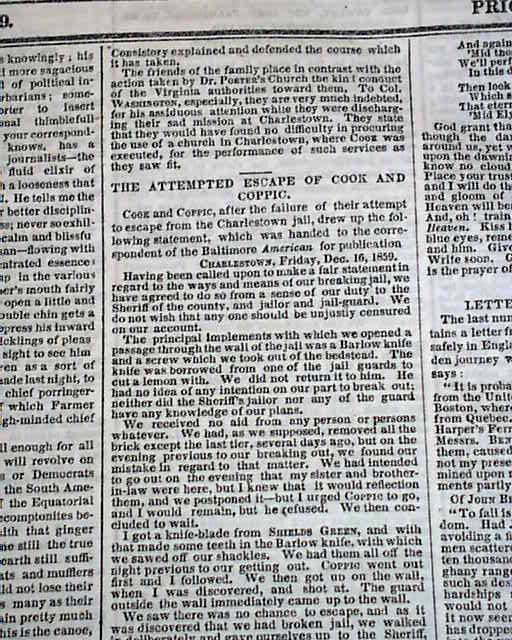
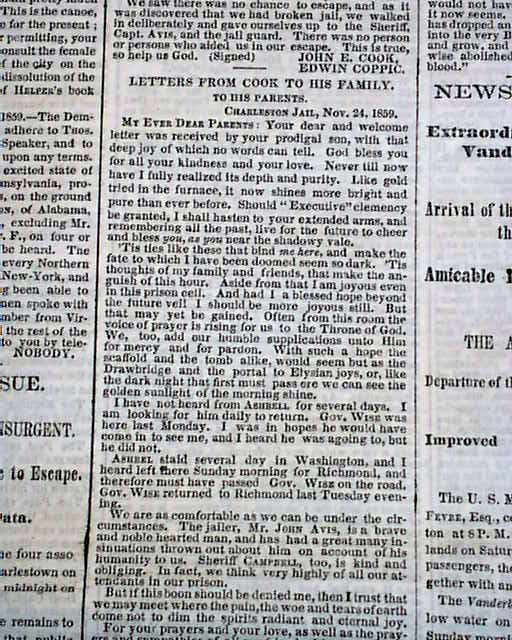
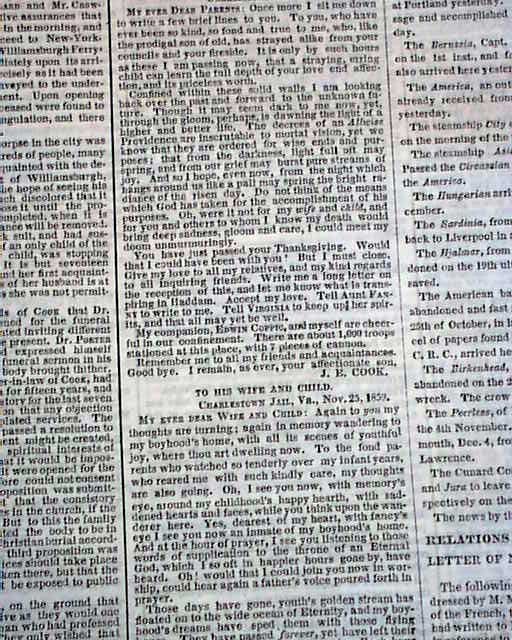
The front page has: "Letter From Fred. Douglass" which provides his perspective on the John Brown insurrection at Harper's Ferry. Related to the raid are close to two columns of text with heads: "The Slavery Issue" "The Remains of Cook, the Insurgent" "The Attempt of Cook & Coppic to Escape", several of which are letters signed in type by insurgent John Cook.
Eight pages, very nice condition.
Background: The John Brown insurrection at Harper’s Ferry represents the definitive "point of no return" in the American sectional crisis, transforming the abstract debate over slavery into an imminent, bloody reality. Historically, the raid’s significance lies in its role as a catalyst for the American Civil War; it terrified the Southern plantocracy into believing that Northern "Black Republicans" and abolitionists were actively sponsoring slave uprisings, leading to the rapid militarization of Southern state militias. The inclusion of Frederick Douglass’s letter in the December 19, 1859, edition of The New York Times highlights the intellectual and political fallout of the event, as Douglass was forced to balance his ideological support for Brown’s radicalism with a pragmatic defense against charges of treason. Furthermore, the detailed accounts of John Cook and Edwin Coppock—their failed escape and subsequent executions—served to cement the "martyr" narrative in the North, where many viewed the insurgents not as criminals, but as soldiers for a divine cause. By the time this issue was printed, the peaceful preservation of the Union had become virtually impossible, as the raid had effectively destroyed the middle ground of American politics and forced every citizen to choose between the preservation of the institution of slavery or the violent pursuit of its many-faceted end.
* John Brown's raid on Harpers Ferry
* Frederick Douglass's view of it
The front page has: "Letter From Fred. Douglass" which provides his perspective on the John Brown insurrection at Harper's Ferry. Related to the raid are close to two columns of text with heads: "The Slavery Issue" "The Remains of Cook, the Insurgent" "The Attempt of Cook & Coppic to Escape", several of which are letters signed in type by insurgent John Cook.
Eight pages, very nice condition.
Background: The John Brown insurrection at Harper’s Ferry represents the definitive "point of no return" in the American sectional crisis, transforming the abstract debate over slavery into an imminent, bloody reality. Historically, the raid’s significance lies in its role as a catalyst for the American Civil War; it terrified the Southern plantocracy into believing that Northern "Black Republicans" and abolitionists were actively sponsoring slave uprisings, leading to the rapid militarization of Southern state militias. The inclusion of Frederick Douglass’s letter in the December 19, 1859, edition of The New York Times highlights the intellectual and political fallout of the event, as Douglass was forced to balance his ideological support for Brown’s radicalism with a pragmatic defense against charges of treason. Furthermore, the detailed accounts of John Cook and Edwin Coppock—their failed escape and subsequent executions—served to cement the "martyr" narrative in the North, where many viewed the insurgents not as criminals, but as soldiers for a divine cause. By the time this issue was printed, the peaceful preservation of the Union had become virtually impossible, as the raid had effectively destroyed the middle ground of American politics and forced every citizen to choose between the preservation of the institution of slavery or the violent pursuit of its many-faceted end.
Category: Pre-Civil War


