

The situation at the Dartmoor Prison...
Item # 716052
June 14, 1815
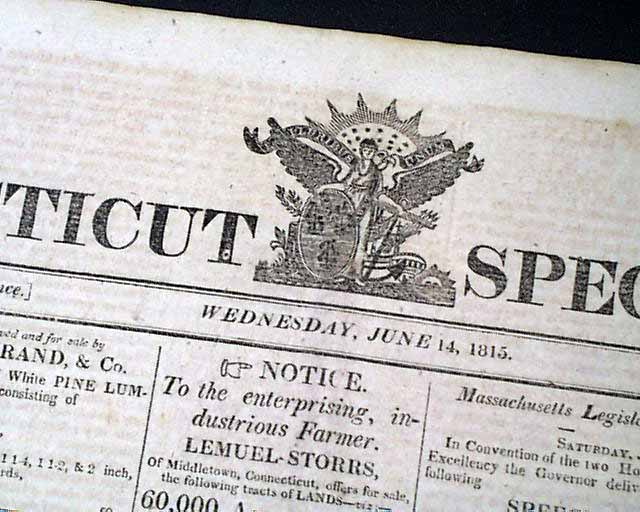
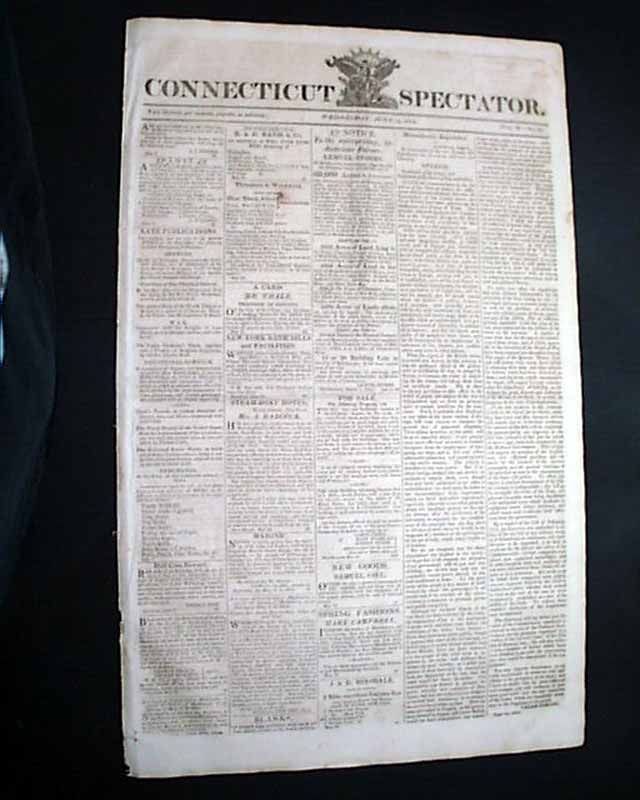
CONNECTICUT SPECTATOR, Middletown, June 14, 1815
* Dartmoor Prison massacre
* American prisoners
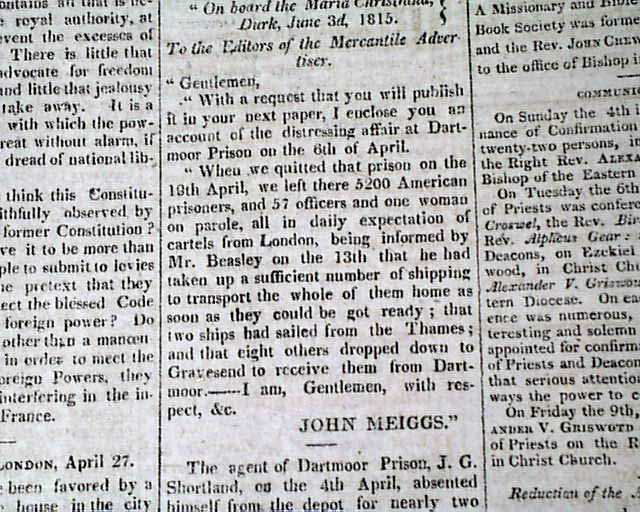
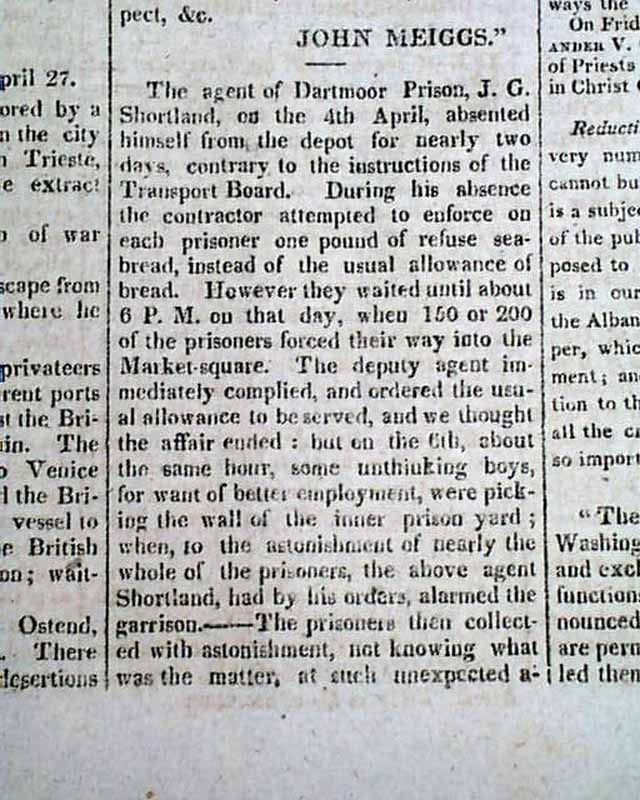
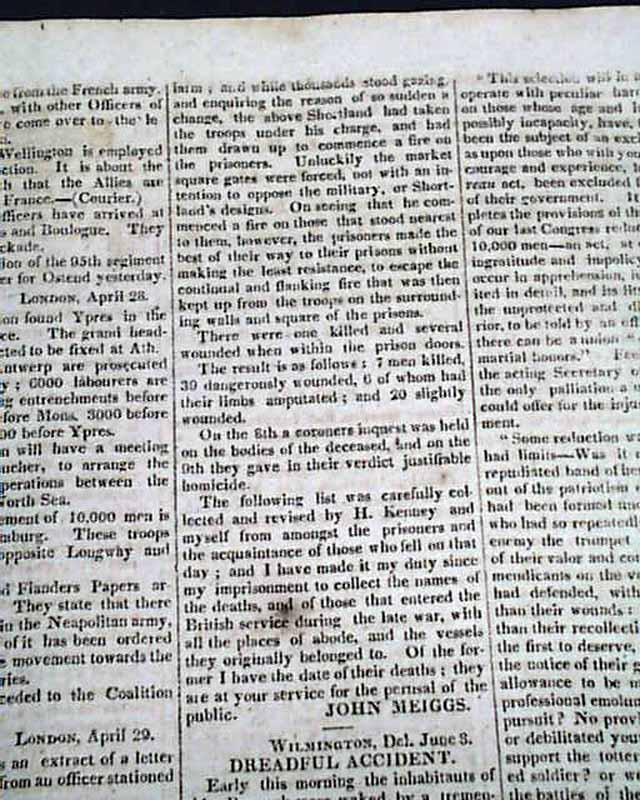
Page 3 has a letter with an early report concerning the Dartmoor Massacre, noting in part: "...I enclose you an account of the distressing affair at Dartmoor Prison...When we quitted that prison...we left there 5200 American prisoners..." with more detail, all taking half a column.
Four pages, very nice condition.
background: The letter featured in the June 14, 1815, issue of the Connecticut Spectator provides a searing, firsthand look at the aftermath of the Dartmoor Massacre, emphasizing the agonizing delay in repatriating the 5,200 American prisoners still held in England months after the War of 1812 had officially ended. This report arrived during a period of intense national mourning and outrage, as the public learned that British guards had fired upon unarmed sailors—many of whom were "impressed" seamen who had previously refused to serve against their own country—over a minor dispute regarding bread rations and a small breach in a prison wall. By documenting the sheer volume of men left in "distressing" conditions, the account highlights the logistical failures of the era and the racial diversity of the captives, serving as a vital piece of early American journalism that transformed these prisoners from mere statistics into symbols of sacrificed liberty.
* Dartmoor Prison massacre
* American prisoners
Page 3 has a letter with an early report concerning the Dartmoor Massacre, noting in part: "...I enclose you an account of the distressing affair at Dartmoor Prison...When we quitted that prison...we left there 5200 American prisoners..." with more detail, all taking half a column.
Four pages, very nice condition.
background: The letter featured in the June 14, 1815, issue of the Connecticut Spectator provides a searing, firsthand look at the aftermath of the Dartmoor Massacre, emphasizing the agonizing delay in repatriating the 5,200 American prisoners still held in England months after the War of 1812 had officially ended. This report arrived during a period of intense national mourning and outrage, as the public learned that British guards had fired upon unarmed sailors—many of whom were "impressed" seamen who had previously refused to serve against their own country—over a minor dispute regarding bread rations and a small breach in a prison wall. By documenting the sheer volume of men left in "distressing" conditions, the account highlights the logistical failures of the era and the racial diversity of the captives, serving as a vital piece of early American journalism that transformed these prisoners from mere statistics into symbols of sacrificed liberty.
Category: War of 1812


