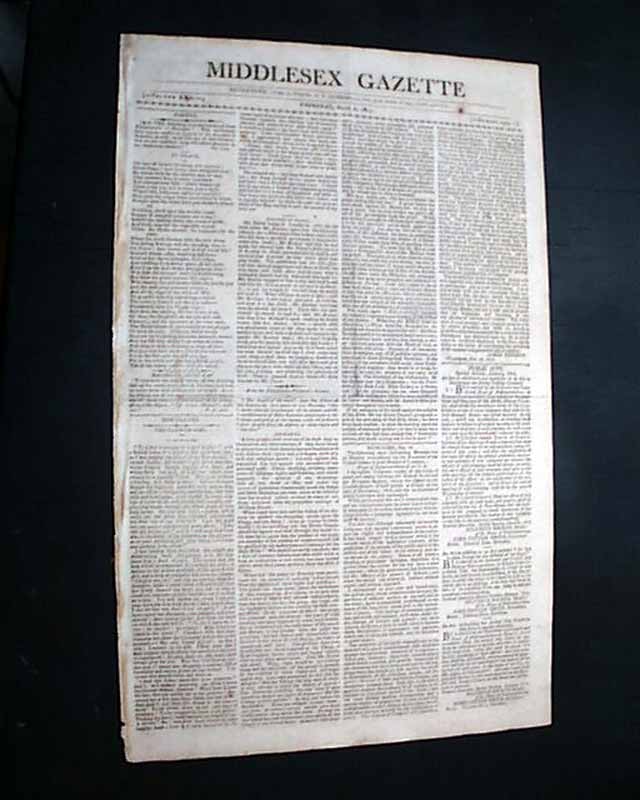
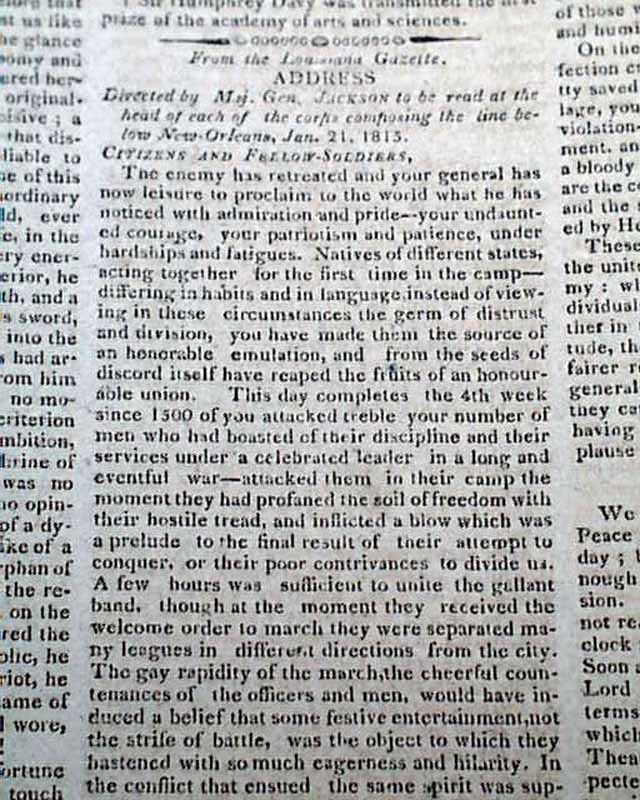
The President, on the treaty ending the War of 1812... Andrew Jackson's letter of praise to his soldiers at New Orleans...
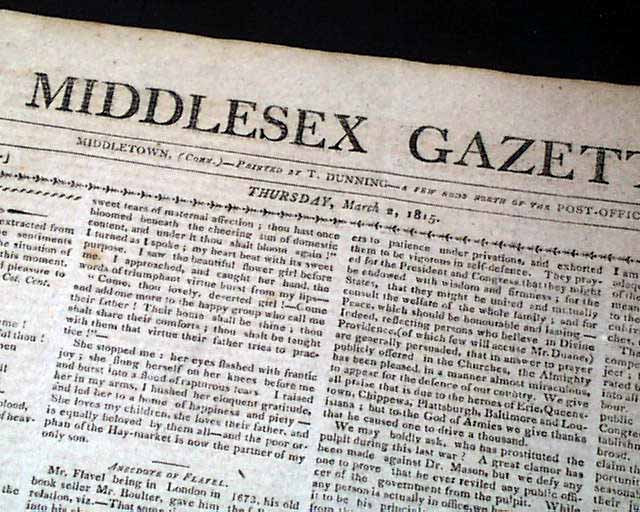
MIDDLESEX GAZETTE, Middletown, Connecticut, March 2, 1815
- President James Madison
- re. the Treaty of Ghent
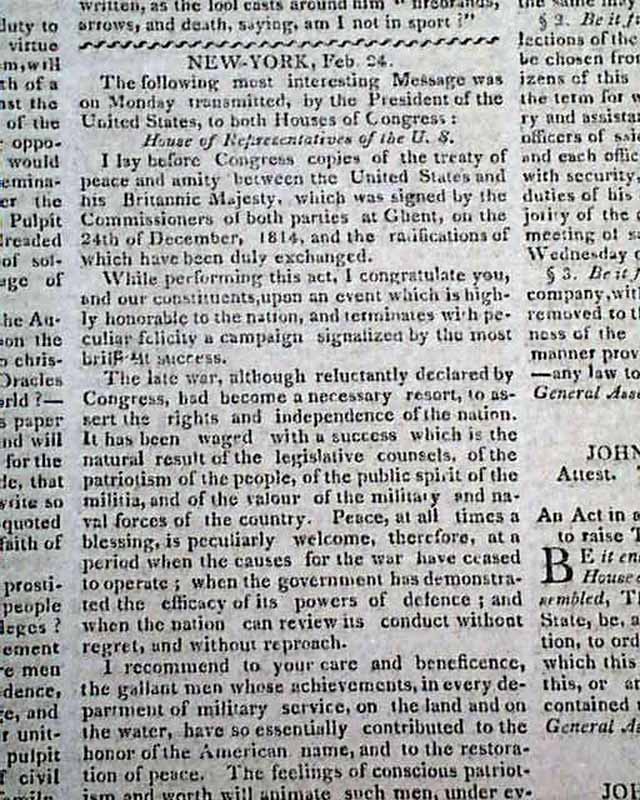
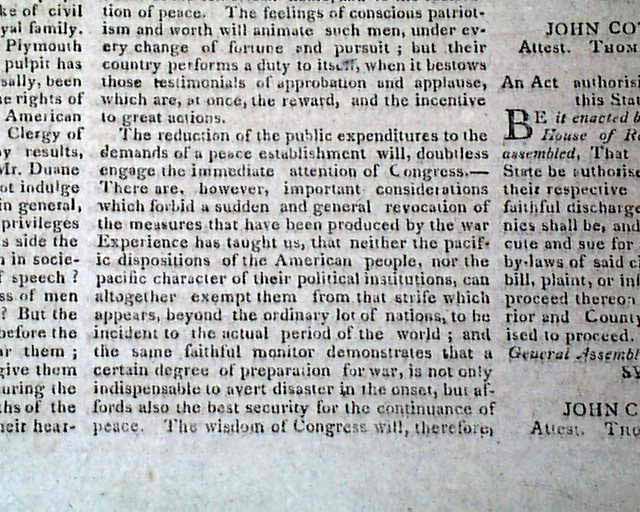
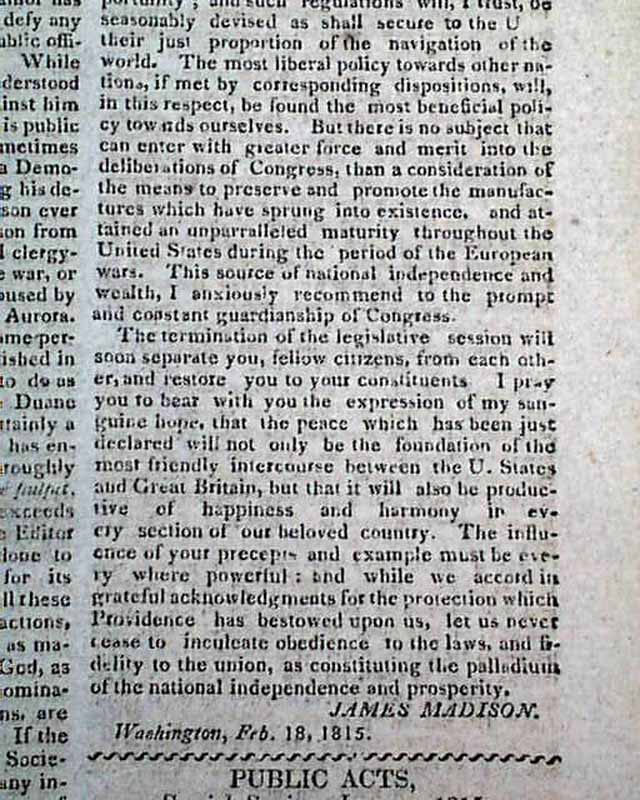
The front page has a message from the President to Congress beginning: "I lay before Congress copies of the treaty of peace & amity between the United States and his Britannic Majesty, which was signed by he Commissioners of both parties at Ghent on the 24th of December, 1814..." with much more, signed in type: James Madison.
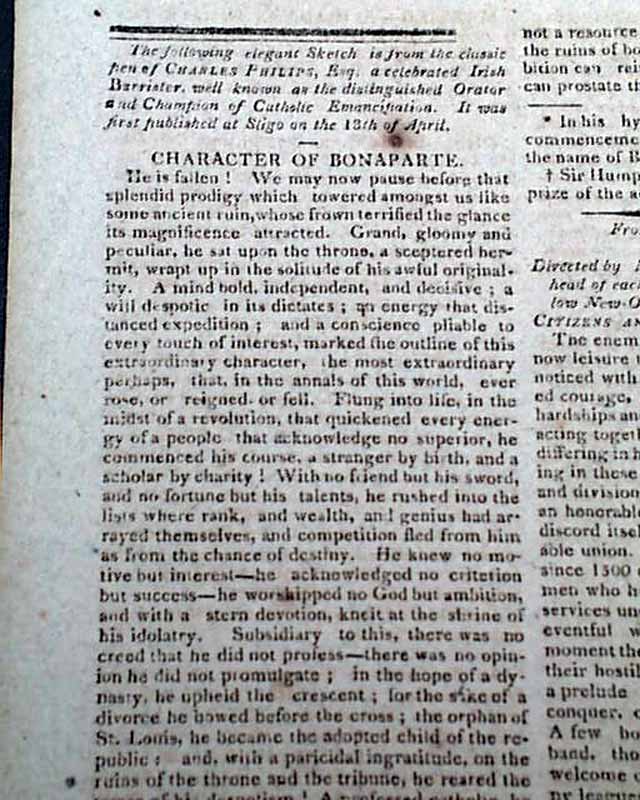
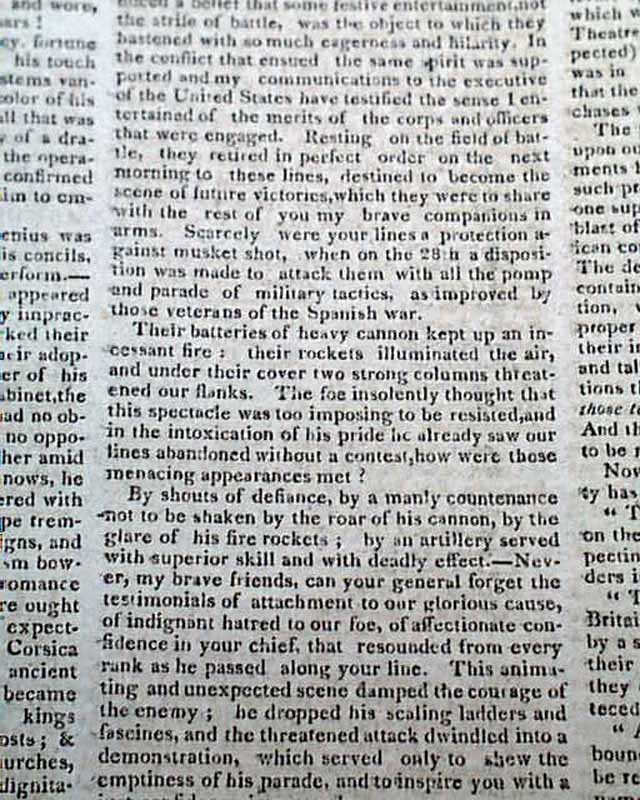
Page 2 has: "Character of Bonaparte" taking over a full column. Then an: "Address" Directed by Maj. Gen. Jackson to read at the head of each of the corps composing the liner below New Orleans, Jan. 21, 1815". It begins: "Citizens and Fellow-Soldiers--The enemy has retreated & your general has now leisure to proclaim to the world what he has noticed with admiration and pride--your undaunted courage your patriotism and patience, uncer hardships and fatigues..." with much more.
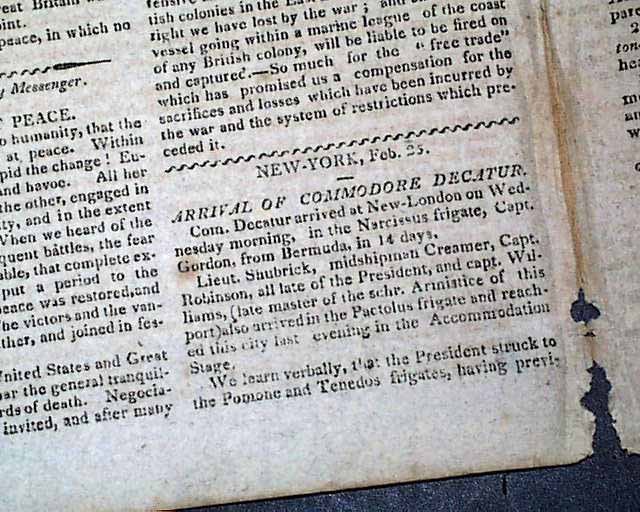
Also inside: "Arrival Of Commodore Decatur".
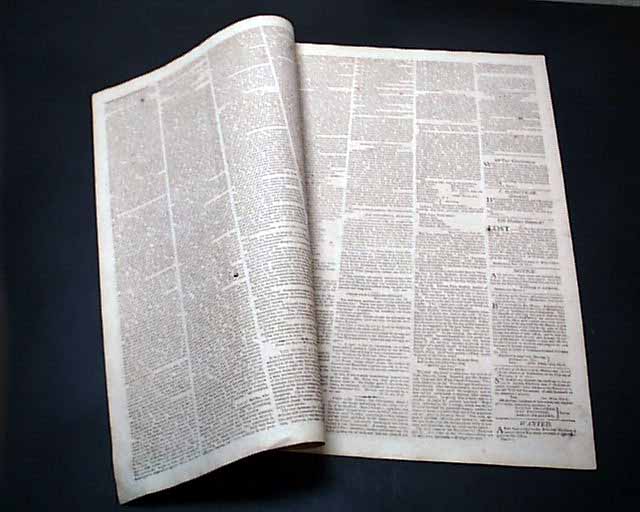
Four pages, very nice condition.
Background: This March 2, 1815 issue of the Middlesex Gazette represents an exceptionally rare historical artifact, capturing the dramatic climax of the War of 1812 on a single front page. What makes this specific printing so remarkable is the extraordinary real-time collision of delayed transatlantic communications: it pairs President James Madison’s formal announcement of the Treaty of Ghent—signed in Belgium in December 1814—alongside Major General Andrew Jackson’s iconic January 21 address celebrating his victory at the Battle of New Orleans, which was famously fought weeks after peace had technically been declared. Beyond preserving Madison's momentous peace declaration and the very speech that launched Jackson from military hero into national political stardom, the issue's inclusion of a full-column commentary on Napoleon Bonaparte adds exceptional depth, printed just as Napoleon was escaping Elba to launch his famous Hundred Days campaign. For collectors and historians, finding official presidential treaty context, Jackson’s post-battle field address, and Napoleonic-era commentary intertwined in a surviving early American newspaper makes this an exceptionally rare snapshot of the news that reshaped the early republic.
Other issues you may like
§ related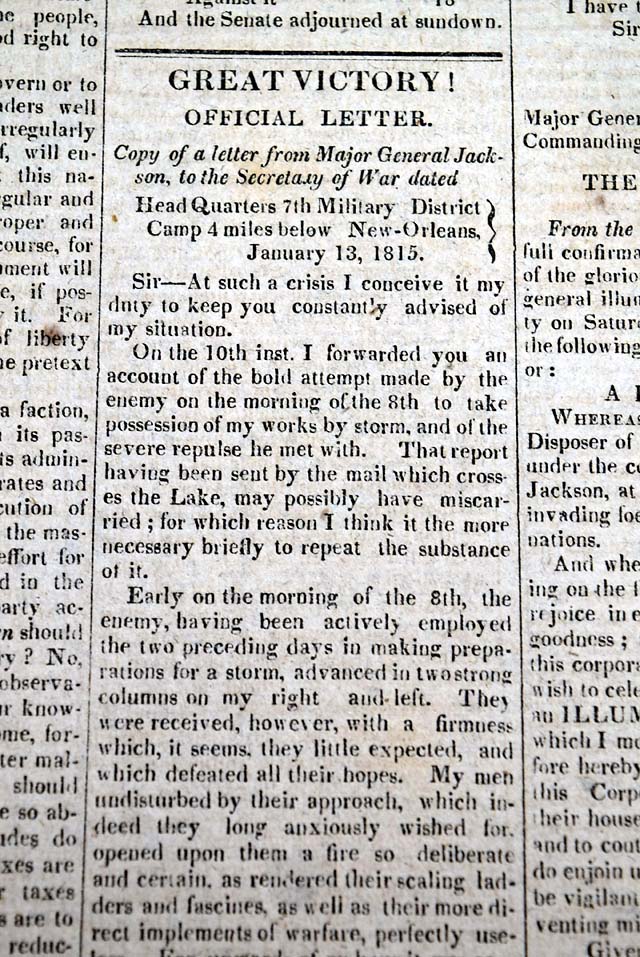
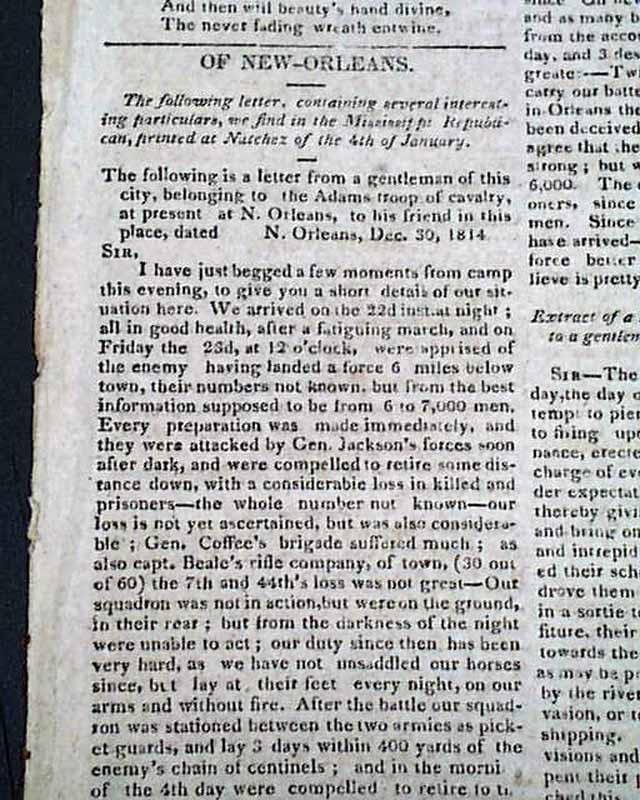
CONNECTICUT SPECTATOR, Middletown, Feb. 15, 1815 Page 2 has: "GREAT VICTORY ! " "Official Letter - Copy of a Letter from Major General Jackson to the
...
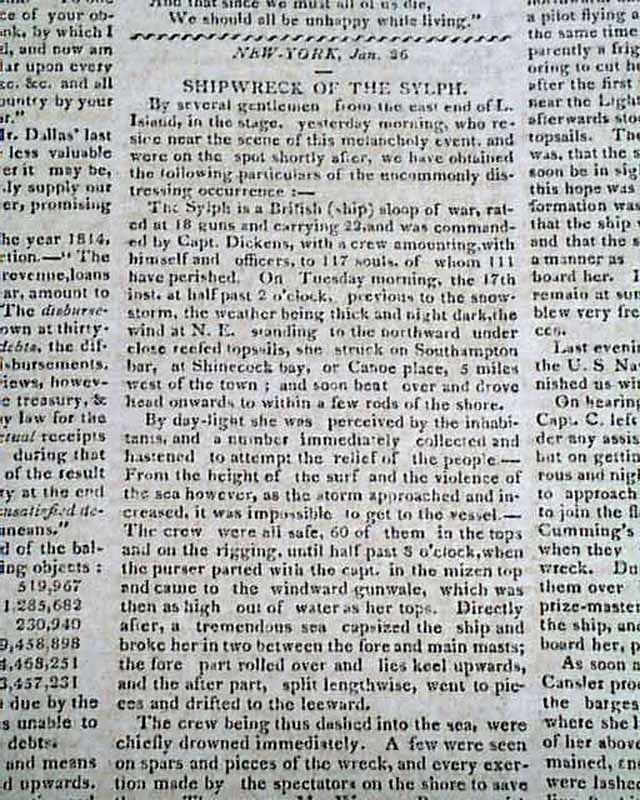
MIDDLESEX GAZETTE, Middletown, Connecticut, Feb. 9, 1815
- Battle of New Orleans is won by General Andrew Jackson
A wealth of great content on this historic
...
MIDDLESEX GAZETTE, Middletown, Connecticut, Feb. 2, 1815
- End of the War of 1812
- Battle of New Orleans victory
- General Andrew Jackson
Page 2 has much on the:
...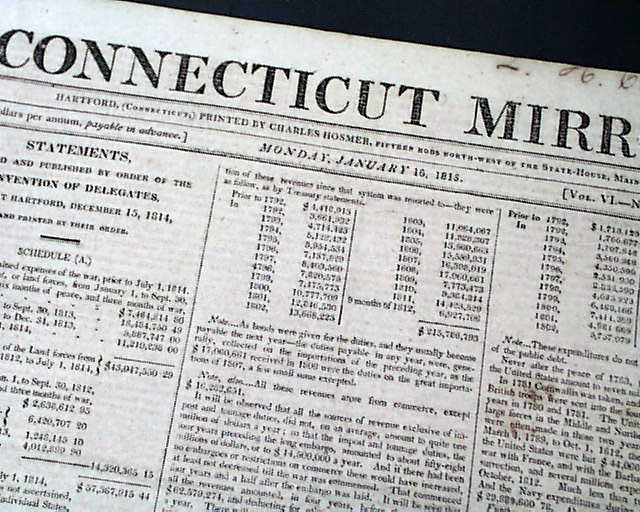
CONNECTICUT MIRROR, Hartford, Jan. 16, 1815 Page 2 has: "Latest And Very Important Intelligence From N. Orleans", followed by: "Later From New Orleans".
...