

Nice map of the Boston fire...
Item # 714583
November 11, 1872
NEW YORK TIMES, Nov. 11, 1872
* The great Boston Fire w/ ftpg. map
* One of most costly fires in U.S. history
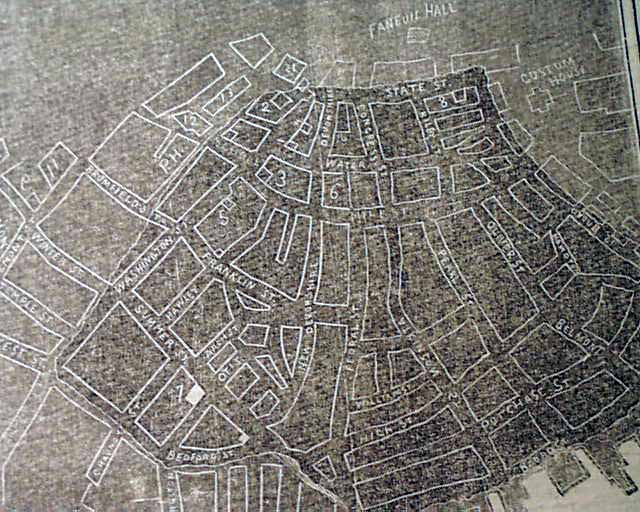
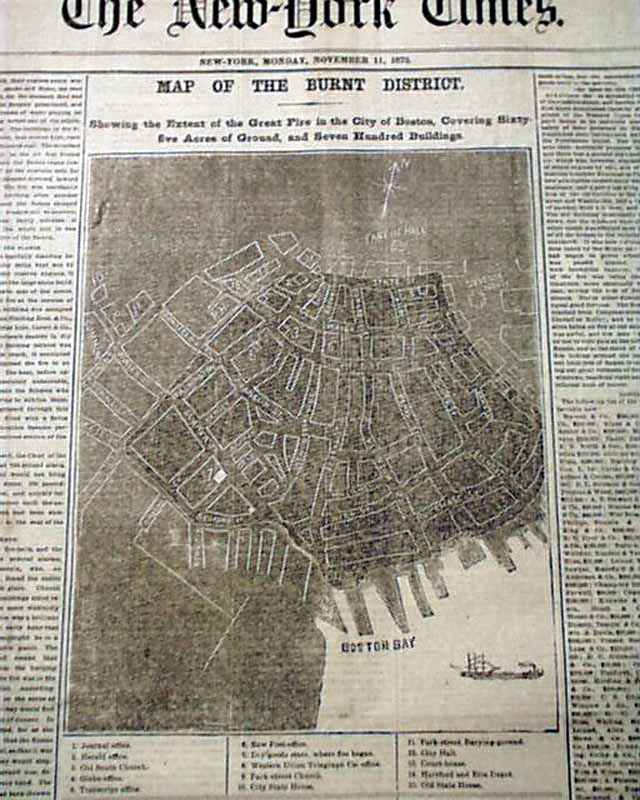
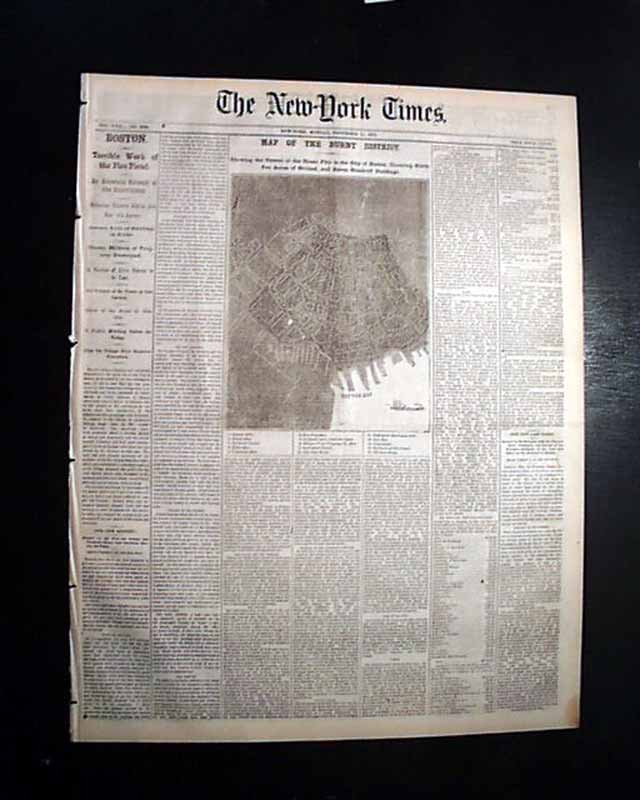
The front page is dominated by a very nice & large: "MAP OF THE BURNT DISTRICT. Showing the Extend of the Great Fire in the City of Boston, Covering 65 Acres of Ground and 700 Buildings."
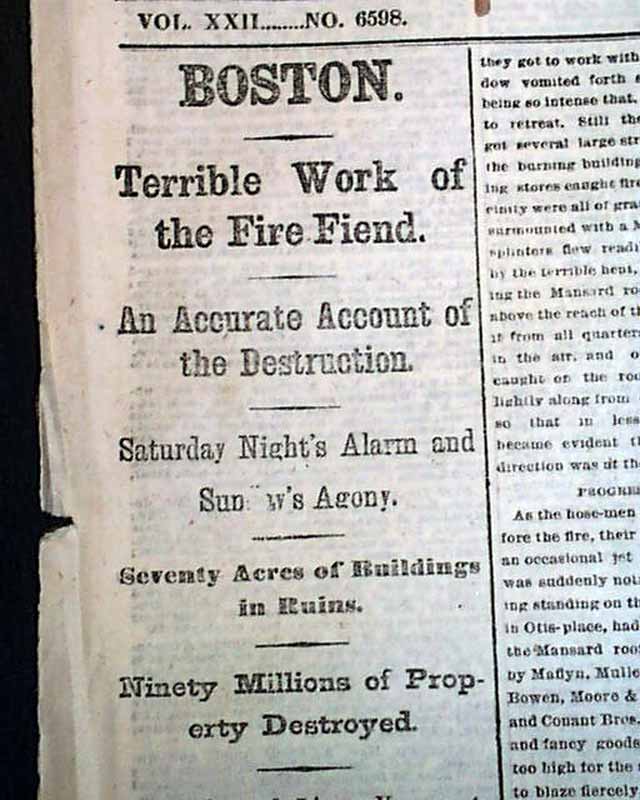
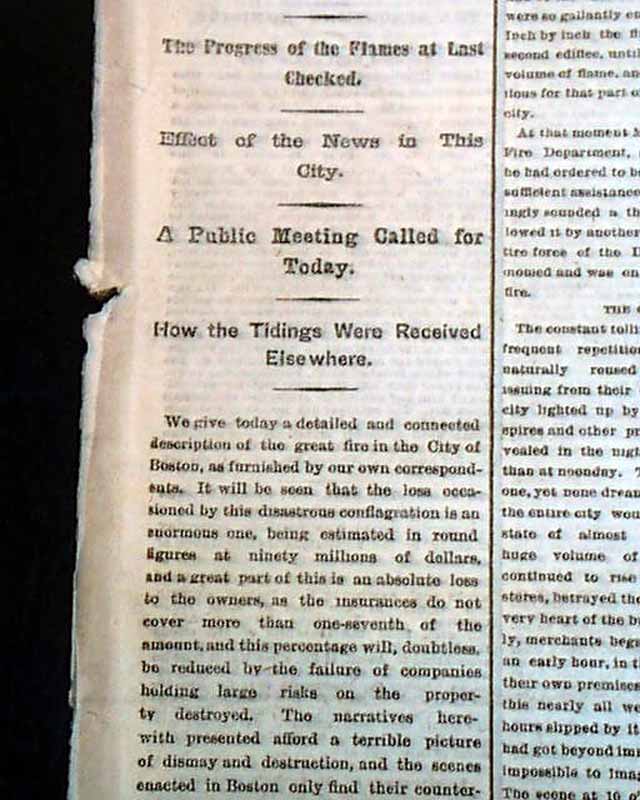
Also nice first column heads including: "BOSTON" "Terrible Work of the Fire Fiend" "An Accurate Account of the Destruction" & much more.
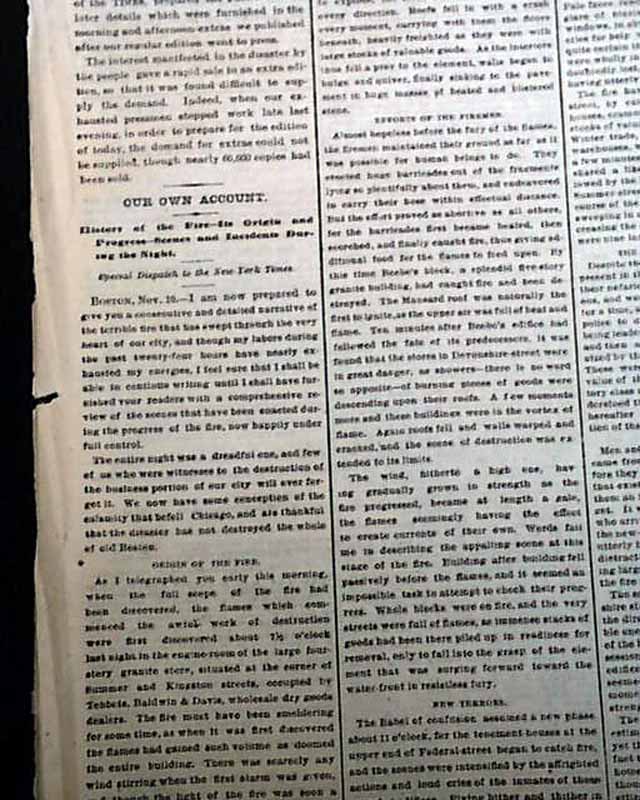
The entire front page is devoted to reports on the fire with more on pages 4, 5 and 8 as well.
Eight pages, very nice condition.
Background: The Great Boston Fire of 1872, which ignited on November 9, stands as one of the most economically devastating urban disasters in American history, fundamentally reshaping both the landscape of Boston and the national insurance industry. The conflagration erupted in a commercial basement on Summer Street and rapidly intensified due to a perfect storm of systemic vulnerabilities: the city’s fire horses were incapacitated by a widespread equine influenza epidemic, water pressure was critically low, and the fire department’s ladders were too short to reach the roofs of the district's soaring, mansard-roofed warehouses. Fueled by these wooden roofs and closely packed brick and granite structures filled with dry goods, the "Fire Fiend" raged unchecked for nearly twenty hours, ultimately obliterating 65 acres of Boston’s downtown financial and commercial heart, destroying 776 buildings, and causing an estimated $75 million in property damage (equivalent to billions today). Beyond the immediate tragic loss of at least 30 lives and the sudden unemployment of thousands, the disaster's historical significance lies in its aftermath. The financial shockwave bankrupted dozens of local insurance companies, forcing a radical overhaul of underwriting standards, while the city itself used the tragedy to aggressively modernize, widening choked medieval roadways, implementing stricter building codes, and constructing a revolutionized, high-capacity municipal water system that became a blueprint for urban fire safety across the United States.
* The great Boston Fire w/ ftpg. map
* One of most costly fires in U.S. history
The front page is dominated by a very nice & large: "MAP OF THE BURNT DISTRICT. Showing the Extend of the Great Fire in the City of Boston, Covering 65 Acres of Ground and 700 Buildings."
Also nice first column heads including: "BOSTON" "Terrible Work of the Fire Fiend" "An Accurate Account of the Destruction" & much more.
The entire front page is devoted to reports on the fire with more on pages 4, 5 and 8 as well.
Eight pages, very nice condition.
Background: The Great Boston Fire of 1872, which ignited on November 9, stands as one of the most economically devastating urban disasters in American history, fundamentally reshaping both the landscape of Boston and the national insurance industry. The conflagration erupted in a commercial basement on Summer Street and rapidly intensified due to a perfect storm of systemic vulnerabilities: the city’s fire horses were incapacitated by a widespread equine influenza epidemic, water pressure was critically low, and the fire department’s ladders were too short to reach the roofs of the district's soaring, mansard-roofed warehouses. Fueled by these wooden roofs and closely packed brick and granite structures filled with dry goods, the "Fire Fiend" raged unchecked for nearly twenty hours, ultimately obliterating 65 acres of Boston’s downtown financial and commercial heart, destroying 776 buildings, and causing an estimated $75 million in property damage (equivalent to billions today). Beyond the immediate tragic loss of at least 30 lives and the sudden unemployment of thousands, the disaster's historical significance lies in its aftermath. The financial shockwave bankrupted dozens of local insurance companies, forcing a radical overhaul of underwriting standards, while the city itself used the tragedy to aggressively modernize, widening choked medieval roadways, implementing stricter building codes, and constructing a revolutionized, high-capacity municipal water system that became a blueprint for urban fire safety across the United States.
Category: Post-Civil War


