

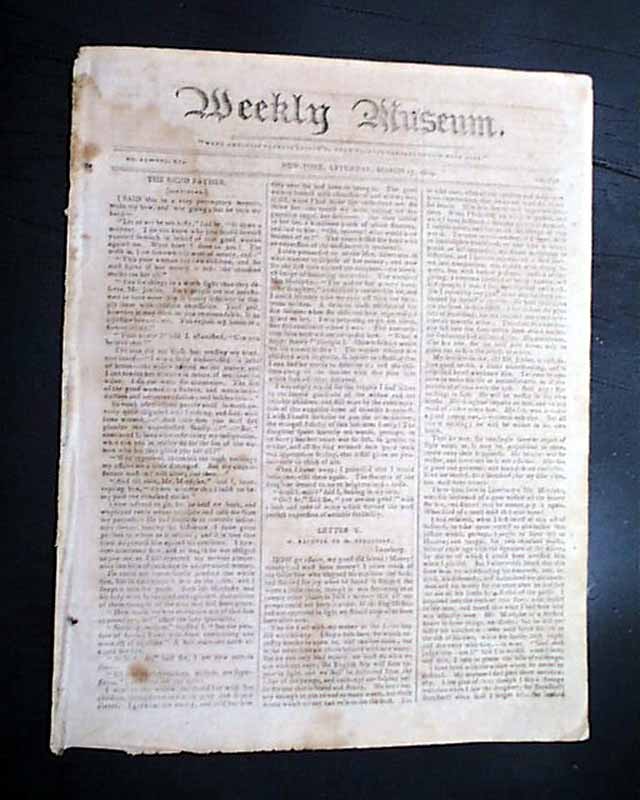
Loss of the frigate Philadelphia in the Barbary War...
Item # 713637This item is currently up for auction on eBay (item #110588487331). You’re welcome to bid there, or email us at info@rarenewspapers.com if you’d prefer to buy directly at the web-price. If it remains unsold, we’ll be in touch.
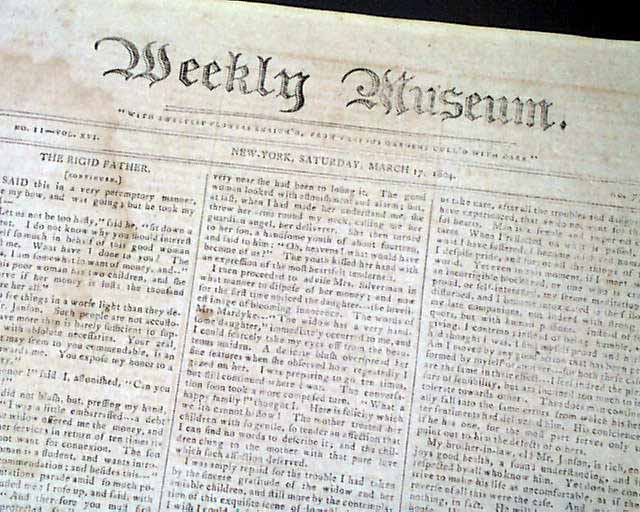
March 17, 1804
WEEKLY MUSEUM, New York, March 17, 1804
* First Barbary War - Tripolitan
* Frigate USS Philadelphia captured
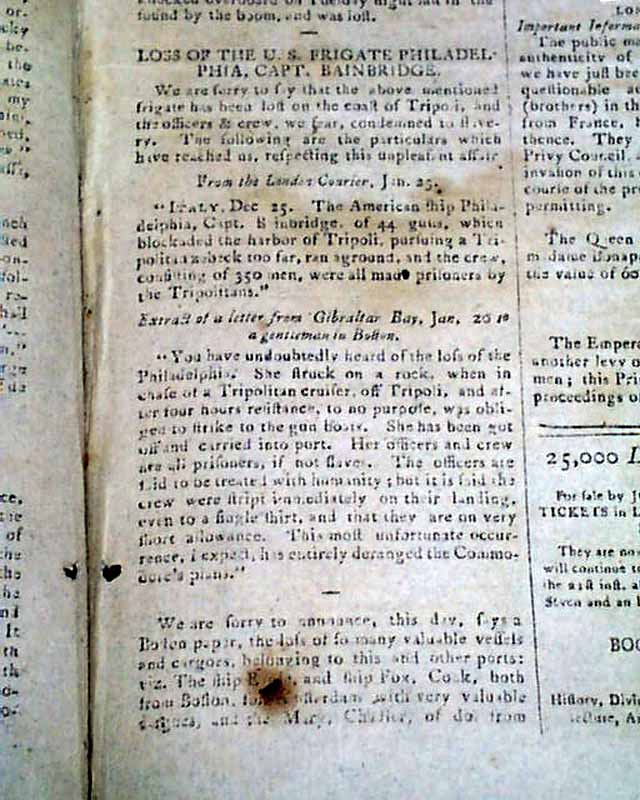
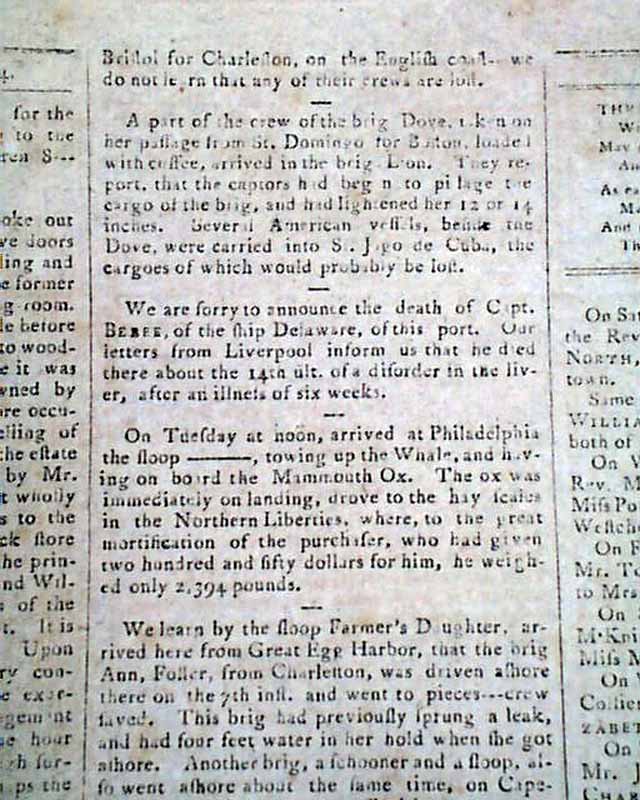
Page 3 has an historic report: "Loss Of The U.S. Frigate Philadelphia, Capt. Bainbridge". The report begins: "We are sorry to say that the above-mentioned frigate has been lost on the coast of Tripoli & the officers & crew, we fear, condemned to slavery..." and what followed are additional naval reports.
This was a notable event during the First Barbary War. The internet has much on the capture & destruction of this frigate.
Four pages, 9 1/2 by 12 inches, good condition.
Background: The grounding and subsequent capture of the USS Philadelphia on October 31, 1803, stands as one of the most critical turning points of the First Barbary War, shifting early American foreign policy from passive tribute-paying to aggressive naval intervention. While blockading Tripoli harbor, the heavy frigate accidentally struck an uncharted reef; despite desperate efforts to lighten the vessel by cutting away the foremast and dumping guns, Captain William Bainbridge was forced to surrender, resulting in the immediate captivity and enslavement of over 300 American crewmembers. This disaster handed the Bashaw of Tripoli a powerful strategic asset and an immense ransom leverage, sending a wave of shock and humiliation across the young United States as news trickled back months later. However, the crisis ultimately catalyzed one of the most celebrated exploits in American military lore: on February 16, 1804, Lieutenant Stephen Decatur led a stealth night raid into the enemy harbor aboard a captured ketch, successfully boarding and burning the Philadelphia to prevent the Barbary forces from utilizing her weapons. This daring act of sabotage not only denied the enemy a flagship and restored American military prestige globally—earning praise from British Admiral Horatio Nelson as "the most bold and daring act of the age"—but it also solidified the foundational identity, heroism, and global projection of the nascent U.S. Navy.
* First Barbary War - Tripolitan
* Frigate USS Philadelphia captured
Page 3 has an historic report: "Loss Of The U.S. Frigate Philadelphia, Capt. Bainbridge". The report begins: "We are sorry to say that the above-mentioned frigate has been lost on the coast of Tripoli & the officers & crew, we fear, condemned to slavery..." and what followed are additional naval reports.
This was a notable event during the First Barbary War. The internet has much on the capture & destruction of this frigate.
Four pages, 9 1/2 by 12 inches, good condition.
Background: The grounding and subsequent capture of the USS Philadelphia on October 31, 1803, stands as one of the most critical turning points of the First Barbary War, shifting early American foreign policy from passive tribute-paying to aggressive naval intervention. While blockading Tripoli harbor, the heavy frigate accidentally struck an uncharted reef; despite desperate efforts to lighten the vessel by cutting away the foremast and dumping guns, Captain William Bainbridge was forced to surrender, resulting in the immediate captivity and enslavement of over 300 American crewmembers. This disaster handed the Bashaw of Tripoli a powerful strategic asset and an immense ransom leverage, sending a wave of shock and humiliation across the young United States as news trickled back months later. However, the crisis ultimately catalyzed one of the most celebrated exploits in American military lore: on February 16, 1804, Lieutenant Stephen Decatur led a stealth night raid into the enemy harbor aboard a captured ketch, successfully boarding and burning the Philadelphia to prevent the Barbary forces from utilizing her weapons. This daring act of sabotage not only denied the enemy a flagship and restored American military prestige globally—earning praise from British Admiral Horatio Nelson as "the most bold and daring act of the age"—but it also solidified the foundational identity, heroism, and global projection of the nascent U.S. Navy.
Category: Pre-Civil War


