

On removing the Cherokees to west of the Mississippi...
Item # 711820
August 21, 1830
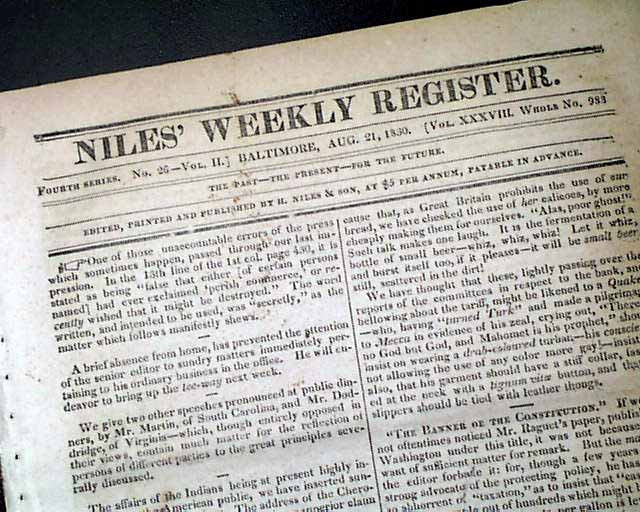
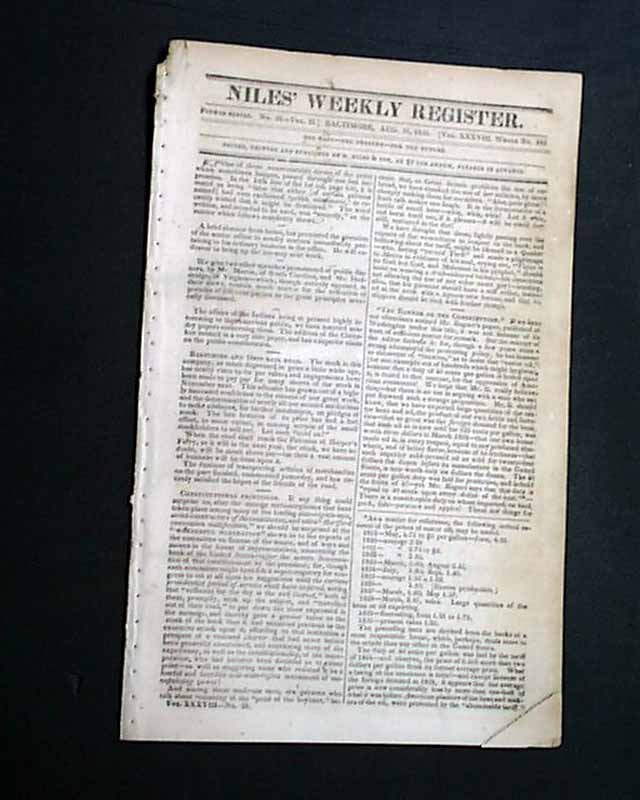
NILES' WEEKLY REGISTER, Baltimore, Aug. 21, 1830
* Southern Native Americans - Indians
* Removal to lands West of Mississippi River
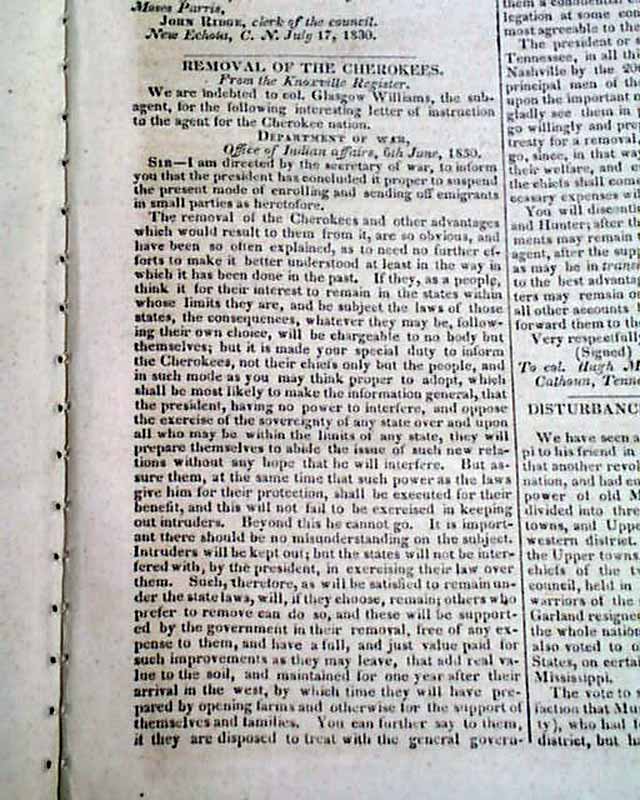
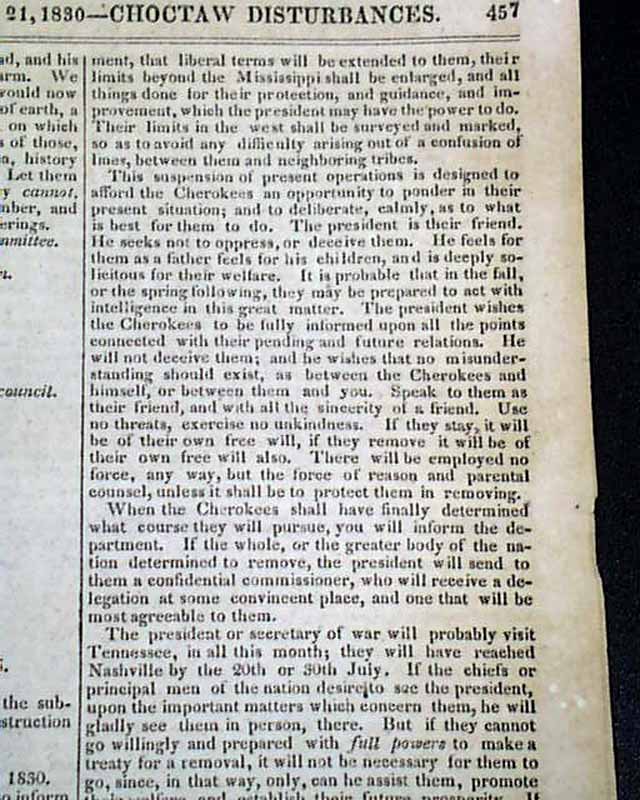
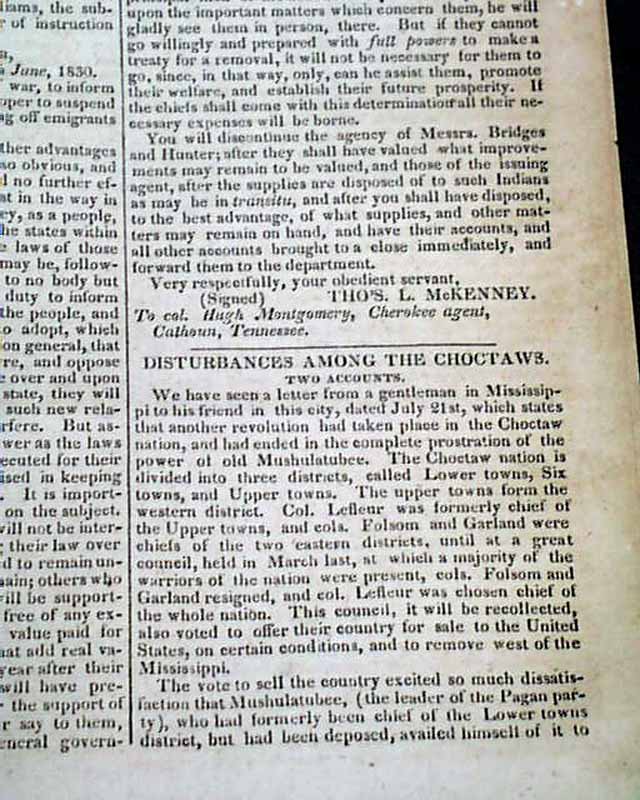
Near the back is: "Removal of the Cherokees" which is a follow-up to the Indian Removal Act signed by the President 3 months prior. The lengthy letter from the "Department of War, Office of Indian Affairs" explains the benefits of the Indians being removed to west of the Mississippi and the dangers of staying where they are. Ultimately this controversial Act would result in the Trail of Tears.
Sixteen pages, 6 by 9 1/4 inches, minor indent to an upper corner, nice condition.
Background: The publication of this War Department letter in Niles' Weekly Register on August 21, 1830, captures a critical turning point in American history, documenting the immediate structural rollout of the Indian Removal Act passed just three months prior. This document reflects the official transition of federal policy from theoretical assimilation to state-sponsored forced relocation, showcasing the paternalistic and coercive rhetoric used by the Andrew Jackson administration to frame existential displacement as a benevolent measure for Native survival. By publicizing these directives in a widely read national journal, the government sought to manufacture public consensus for an unprecedented expansion of federal and executive power over sovereign nations. Ultimately, this bureaucratic groundwork directly enabled the catastrophic breakdown of tribal sovereignty and the subsequent forced expulsion of the Cherokee, Muscogee (Creek), Seminole, Chickasaw, and Choctaw nations. The administrative justifications recorded in these pages led directly to the Trail of Tears, during which thousands of indigenous people died from exposure, disease, and starvation, permanently altering the demographic, cultural, and geographic landscape of the United States.
As noted in Wikipedia, this title: "...(was) one of the most widely-circulated magazines in the United States...Devoted primarily to politics...considered an important source for the history of the period."
* Southern Native Americans - Indians
* Removal to lands West of Mississippi River
Near the back is: "Removal of the Cherokees" which is a follow-up to the Indian Removal Act signed by the President 3 months prior. The lengthy letter from the "Department of War, Office of Indian Affairs" explains the benefits of the Indians being removed to west of the Mississippi and the dangers of staying where they are. Ultimately this controversial Act would result in the Trail of Tears.
Sixteen pages, 6 by 9 1/4 inches, minor indent to an upper corner, nice condition.
Background: The publication of this War Department letter in Niles' Weekly Register on August 21, 1830, captures a critical turning point in American history, documenting the immediate structural rollout of the Indian Removal Act passed just three months prior. This document reflects the official transition of federal policy from theoretical assimilation to state-sponsored forced relocation, showcasing the paternalistic and coercive rhetoric used by the Andrew Jackson administration to frame existential displacement as a benevolent measure for Native survival. By publicizing these directives in a widely read national journal, the government sought to manufacture public consensus for an unprecedented expansion of federal and executive power over sovereign nations. Ultimately, this bureaucratic groundwork directly enabled the catastrophic breakdown of tribal sovereignty and the subsequent forced expulsion of the Cherokee, Muscogee (Creek), Seminole, Chickasaw, and Choctaw nations. The administrative justifications recorded in these pages led directly to the Trail of Tears, during which thousands of indigenous people died from exposure, disease, and starvation, permanently altering the demographic, cultural, and geographic landscape of the United States.
As noted in Wikipedia, this title: "...(was) one of the most widely-circulated magazines in the United States...Devoted primarily to politics...considered an important source for the history of the period."
Category: Pre-Civil War


