

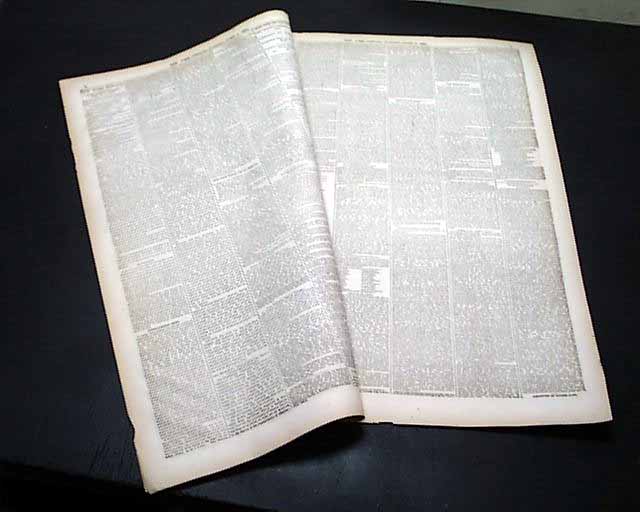
1864 Battle of Cold Harbor...
Item # 710721
June 05, 1864
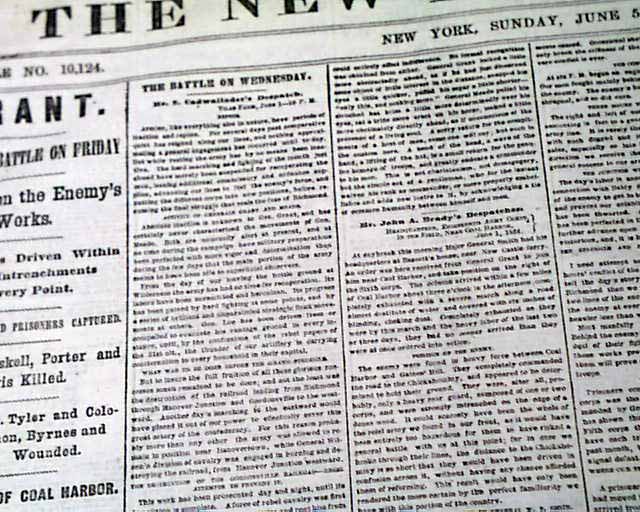
NEW YORK HERALD, June 5, 1864
* Battle of Cold Harbor
* Ulysses S. Grant vs. Robert E. Lee
* Lopsided Confederate victory
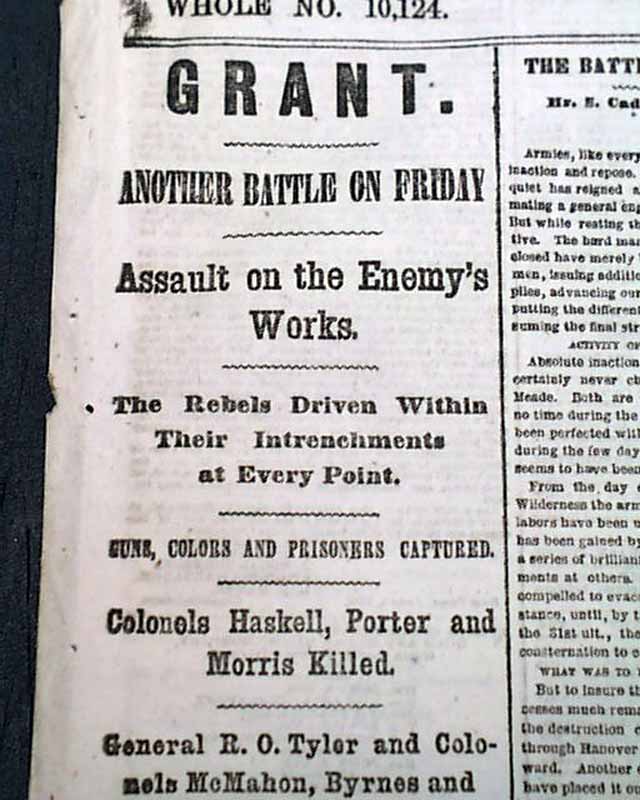
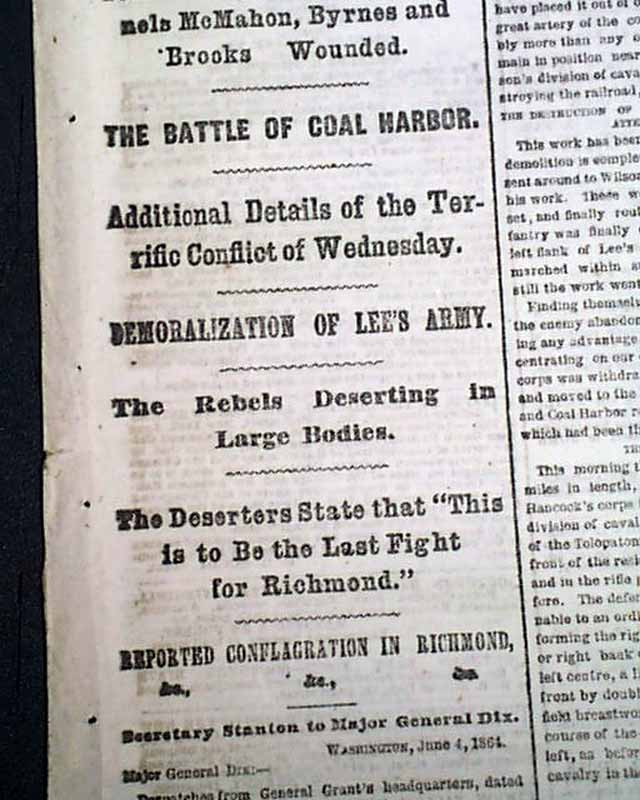
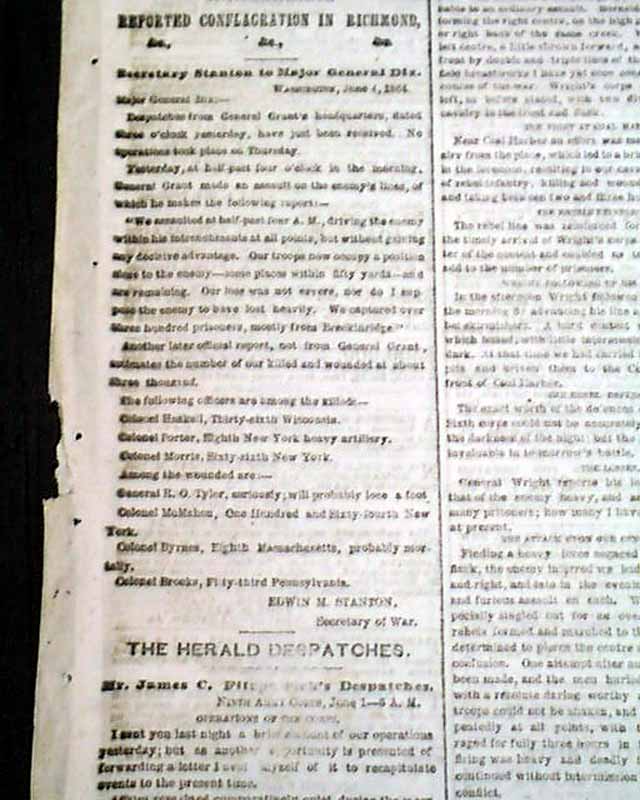
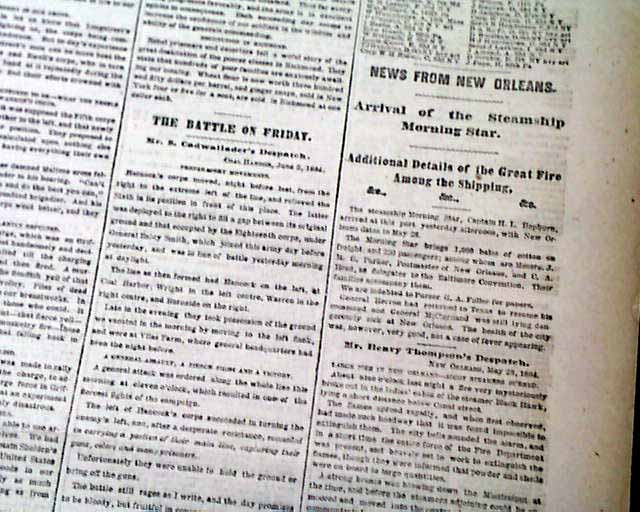
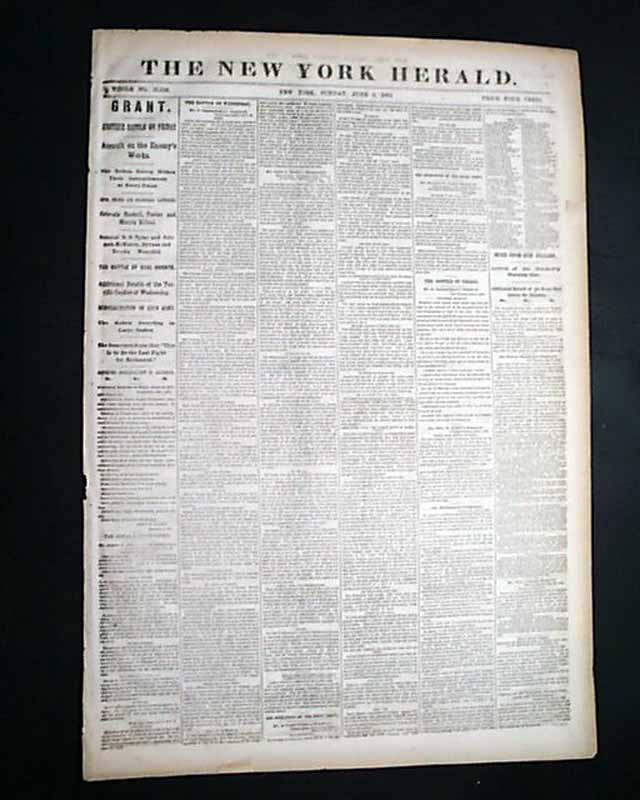
Among the front page column heads on the Civil War are: "GRANT" "Another Battle on Friday" "Assault on the Enemy's Works" "Demoralization of Lee's Army" "The Rebels Deserting in Large Bodies" "The Battle of Coal [sic] Harbor" "The Herald Dispatches" and much more.
This is fine coverage of the Battle of Cold Harbor, erroneously noted as "'Coal" Harbor.
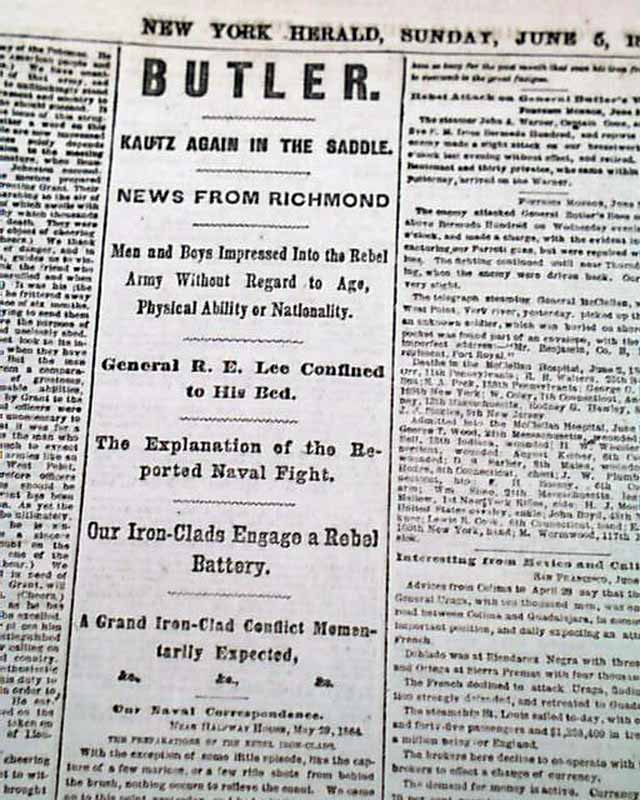
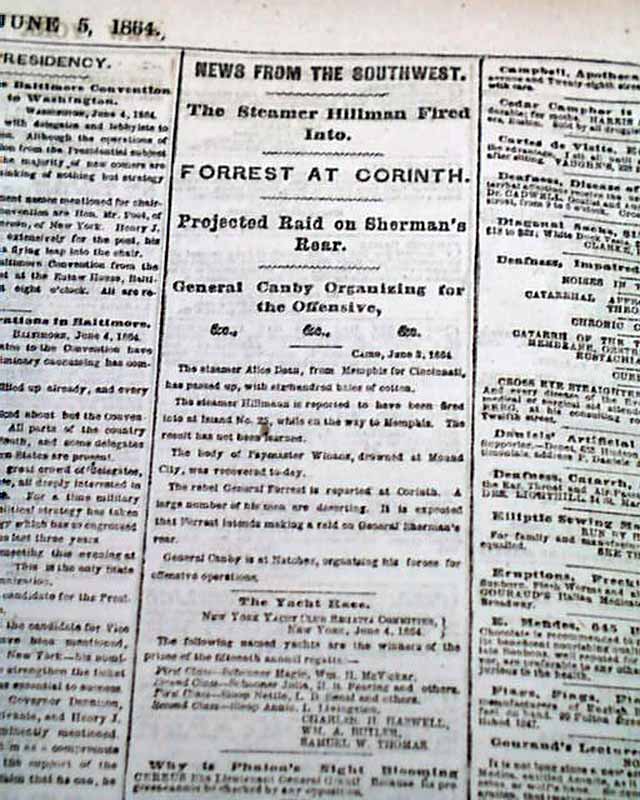
Much war reporting on pages 4, 5 and 8 as well.
Eight pages, very nice condition.
Background: The Battle of Cold Harbor (May 31 – June 12, 1864) stands as one of the most lopsided and grimly significant engagements of the American Civil War, serving as a chilling preview of the trench warfare that would later define World War I. Fought just miles outside Richmond during General Ulysses S. Grant’s Overland Campaign, the conflict culminated on June 3 when Grant launched a disastrous frontal assault against General Robert E. Lee’s deeply entrenched veteran forces. Due to a critical 24-hour Union delay that allowed the Confederates to fortify their lines with an intricate web of earthworks and artillery crossfires, the charge was annihilated in a matter of minutes, resulting in a staggering 7,000 Union casualties in a single morning compared to fewer than 1,500 for the South. The sheer brutality of the battle—magnified by days of a horrific stalemate where wounded soldiers died between the lines before a truce was called—culminated in over 12,000 total Union casualties and ignited fierce Northern anti-war sentiment, branding Grant a "butcher" and severely threatening Abraham Lincoln’s 1864 re-election campaign. Ultimately, while Cold Harbor marked Robert E. Lee’s final major field victory of the war and forced Grant to bypass Richmond for a siege at Petersburg, it underscored a grim mathematical reality: Lee's army was permanently depleted of irreplaceable manpower, while the Union possessed the reinforcements necessary to sustain the war of attrition to its conclusion.
* Battle of Cold Harbor
* Ulysses S. Grant vs. Robert E. Lee
* Lopsided Confederate victory
Among the front page column heads on the Civil War are: "GRANT" "Another Battle on Friday" "Assault on the Enemy's Works" "Demoralization of Lee's Army" "The Rebels Deserting in Large Bodies" "The Battle of Coal [sic] Harbor" "The Herald Dispatches" and much more.
This is fine coverage of the Battle of Cold Harbor, erroneously noted as "'Coal" Harbor.
Much war reporting on pages 4, 5 and 8 as well.
Eight pages, very nice condition.
Background: The Battle of Cold Harbor (May 31 – June 12, 1864) stands as one of the most lopsided and grimly significant engagements of the American Civil War, serving as a chilling preview of the trench warfare that would later define World War I. Fought just miles outside Richmond during General Ulysses S. Grant’s Overland Campaign, the conflict culminated on June 3 when Grant launched a disastrous frontal assault against General Robert E. Lee’s deeply entrenched veteran forces. Due to a critical 24-hour Union delay that allowed the Confederates to fortify their lines with an intricate web of earthworks and artillery crossfires, the charge was annihilated in a matter of minutes, resulting in a staggering 7,000 Union casualties in a single morning compared to fewer than 1,500 for the South. The sheer brutality of the battle—magnified by days of a horrific stalemate where wounded soldiers died between the lines before a truce was called—culminated in over 12,000 total Union casualties and ignited fierce Northern anti-war sentiment, branding Grant a "butcher" and severely threatening Abraham Lincoln’s 1864 re-election campaign. Ultimately, while Cold Harbor marked Robert E. Lee’s final major field victory of the war and forced Grant to bypass Richmond for a siege at Petersburg, it underscored a grim mathematical reality: Lee's army was permanently depleted of irreplaceable manpower, while the Union possessed the reinforcements necessary to sustain the war of attrition to its conclusion.
Category: Yankee


