



A terrific letter to rouse the troops in conquering Niagara...
Item # 709971Sorry, but this item is no longer available. Please be in touch at info@rarenewspapers.com if you would like to be placed on a want list or are interested in a potential alternate issue.
December 02, 1812
BOSTON PATRIOT, Dec. 2, 1812
* War of 1812 - Niagara Frontier
* Invasion of British Canada & more
* General Alexander Smyth
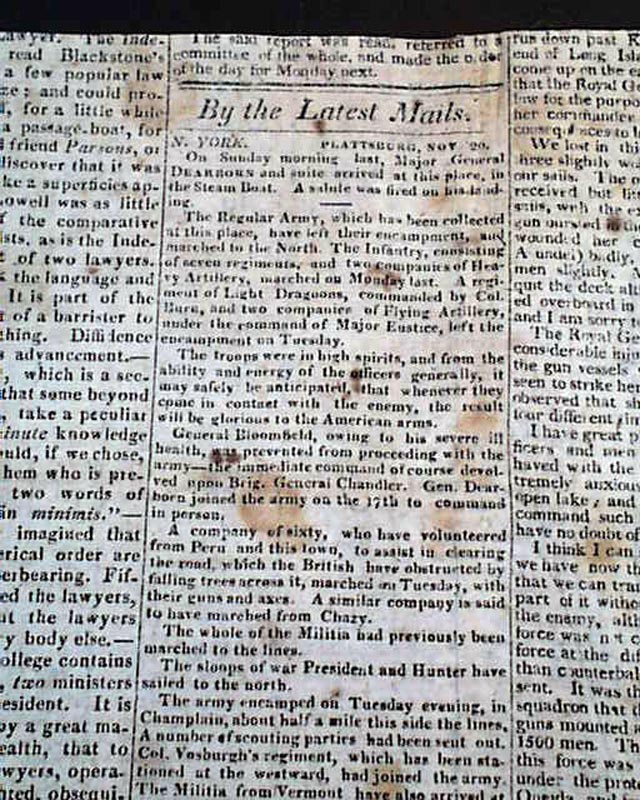
Page 2 has several reports with a Plattsburg, N.Y. dateline. Also a letter from S. T. Anderson with another from Commodore Chauncey datelines from Sacket's Harbor, taking two-thirds of a column & signed in type: Isaac Chauncey. This is a fine account of a naval encounter.
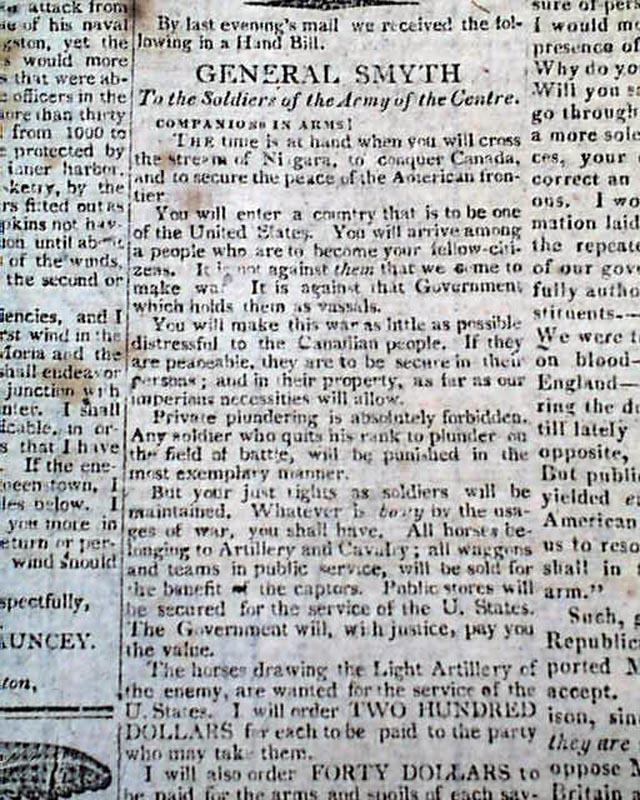
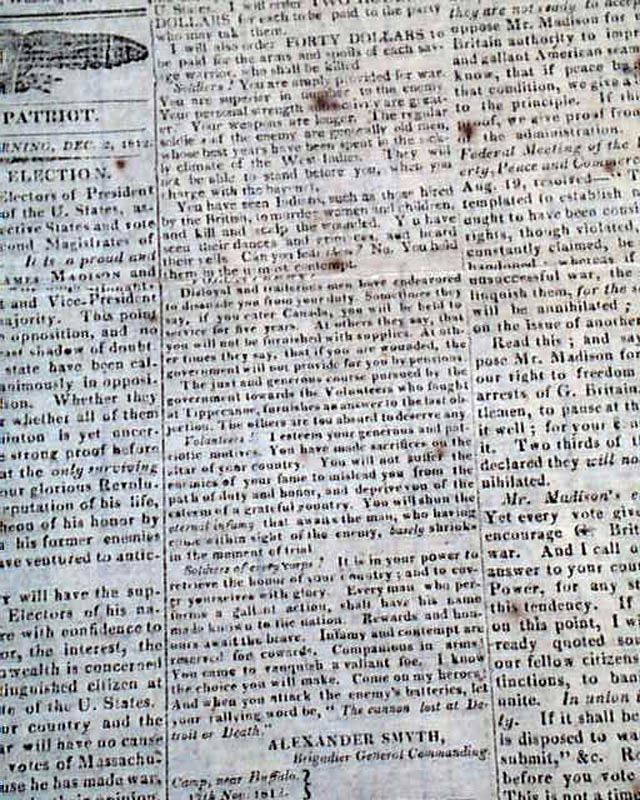
Also a nice & rousing letter headed: "General Smyth To the Soldiers of the Army of the Centre" which begins: "Companions in Arms! The time is at hand when you will cross the stream of Niagara to conquer Canada, and to secure the peace of the American frontier..." with much more. A terrific letter.
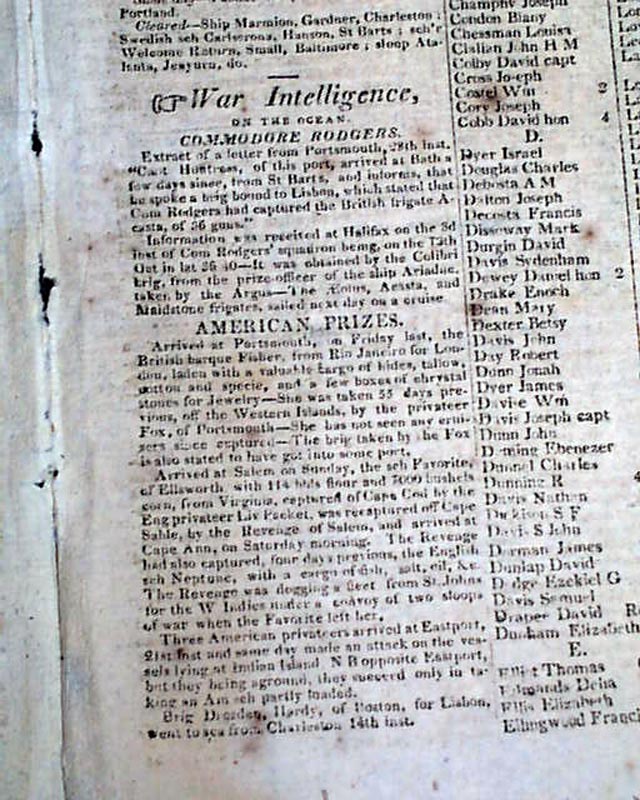
Page 3 as: "War Intelligence on the Ocean - Commodore Rodgers" which includes: "American Prizes".
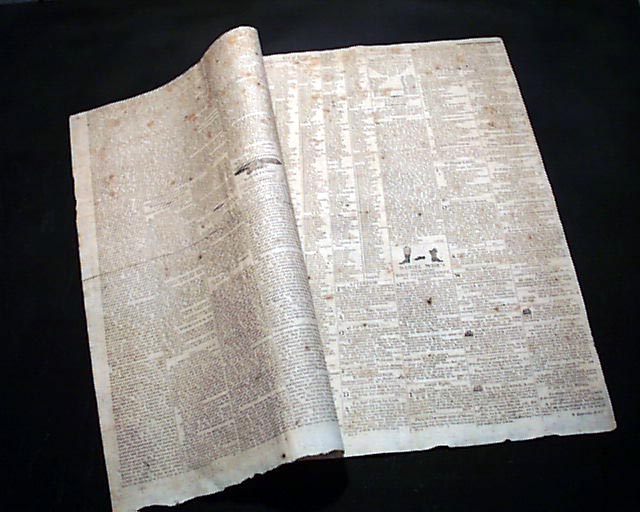
Four pages, some spotted foxing, nearly close-trimmed at the top of page 2, good condition.
Background: The December 1812 reports in the Boston Patriot capture a critical juncture in the War of 1812, documenting a period where the United States attempted to pivot from early humiliations toward a coordinated offensive against British Canada. The historical significance lies in the convergence of three distinct military strategies: the struggle for naval control of the Great Lakes, the failed land invasions of the Niagara Frontier, and the high-seas privateering meant to cripple British commerce. Commodore Isaac Chauncey’s dispatches from Sacket's Harbor signify the birth of American naval power on the inland seas, specifically following his November raid on Kingston, which forced the British into a defensive posture on Lake Ontario. In stark contrast, General Alexander Smyth’s bombastic proclamation to the "Army of the Centre" represents the logistical and leadership failures of the early American war effort; despite his rousing rhetoric about "conquering Canada," Smyth’s invasion attempts across the Niagara River in late November were abandoned amidst chaos and mutinous sentiment, leading to his eventual removal from command. Together with Commodore Rodgers’ reports of "American Prizes," these accounts illustrate the duality of the war at the end of 1812: while the U.S. Navy and privateers were finding surprising success on the water, the land campaign remained a disorganized struggle to turn patriotic fervor into territorial gains.
* War of 1812 - Niagara Frontier
* Invasion of British Canada & more
* General Alexander Smyth
Page 2 has several reports with a Plattsburg, N.Y. dateline. Also a letter from S. T. Anderson with another from Commodore Chauncey datelines from Sacket's Harbor, taking two-thirds of a column & signed in type: Isaac Chauncey. This is a fine account of a naval encounter.
Also a nice & rousing letter headed: "General Smyth To the Soldiers of the Army of the Centre" which begins: "Companions in Arms! The time is at hand when you will cross the stream of Niagara to conquer Canada, and to secure the peace of the American frontier..." with much more. A terrific letter.
Page 3 as: "War Intelligence on the Ocean - Commodore Rodgers" which includes: "American Prizes".
Four pages, some spotted foxing, nearly close-trimmed at the top of page 2, good condition.
Background: The December 1812 reports in the Boston Patriot capture a critical juncture in the War of 1812, documenting a period where the United States attempted to pivot from early humiliations toward a coordinated offensive against British Canada. The historical significance lies in the convergence of three distinct military strategies: the struggle for naval control of the Great Lakes, the failed land invasions of the Niagara Frontier, and the high-seas privateering meant to cripple British commerce. Commodore Isaac Chauncey’s dispatches from Sacket's Harbor signify the birth of American naval power on the inland seas, specifically following his November raid on Kingston, which forced the British into a defensive posture on Lake Ontario. In stark contrast, General Alexander Smyth’s bombastic proclamation to the "Army of the Centre" represents the logistical and leadership failures of the early American war effort; despite his rousing rhetoric about "conquering Canada," Smyth’s invasion attempts across the Niagara River in late November were abandoned amidst chaos and mutinous sentiment, leading to his eventual removal from command. Together with Commodore Rodgers’ reports of "American Prizes," these accounts illustrate the duality of the war at the end of 1812: while the U.S. Navy and privateers were finding surprising success on the water, the land campaign remained a disorganized struggle to turn patriotic fervor into territorial gains.
Category: War of 1812


