

The Great Railroad Strike of 1877...
Item # 709966Sorry, but this item is no longer available. Please be in touch at info@rarenewspapers.com if you would like to be placed on a want list or are interested in a potential alternate issue.
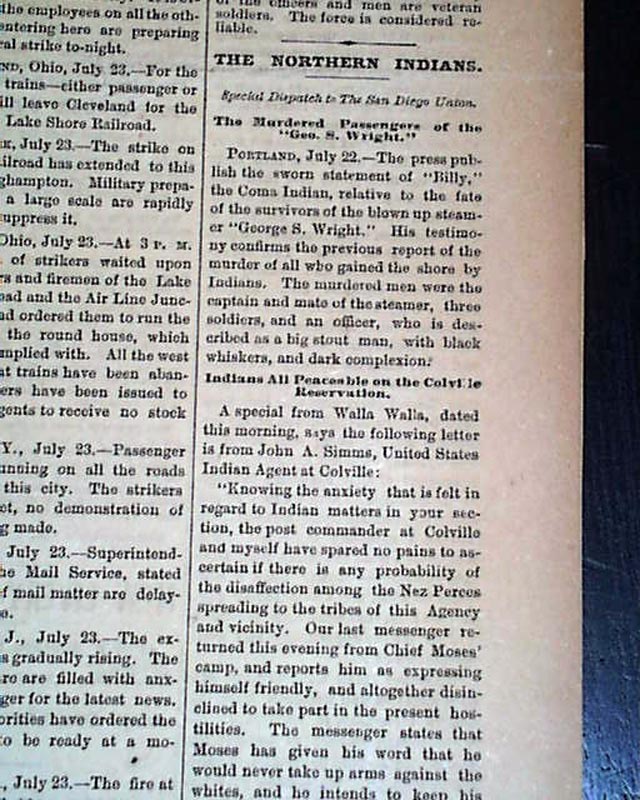
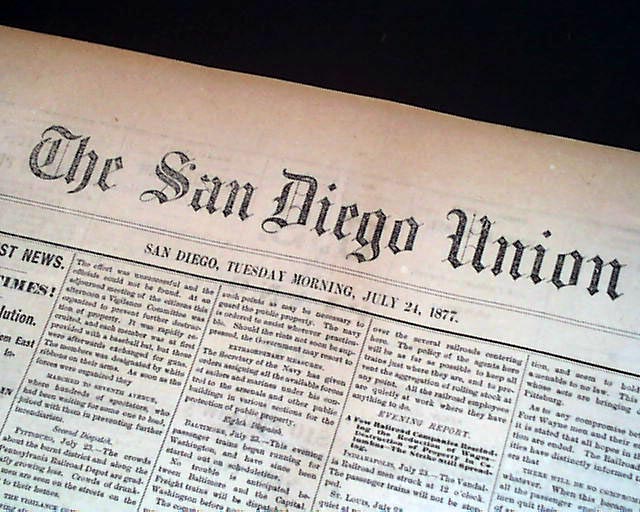
THE SAN DIEGO UNION, California, July 24, 1877 The Great Railroad Strike of 1877 stands as a watershed moment in American history, marking the first truly national labor uprising and the definitive end of the "Age of Innocence" regarding industrial relations. Triggered by a series of aggressive wage cuts amidst the lingering economic stagnation of the Panic of 1873, the strike paralyzed the country's infrastructure, moving beyond mere picketing into a violent class conflict that saw the destruction of millions of dollars in property—most notably during the "Frightful Scenes" in Pittsburgh where the burning of the Union Depot and roundhouses signaled a breakdown of social order. Its historical significance is twofold: it forced the American public to confront the "Labor Question" and the growing disparity between workers and "Robber Barons," while simultaneously setting a grim precedent for federal intervention. By deploying the U.S. Army to suppress American citizens, President Rutherford B. Hayes established a pattern of the state siding with corporate interests, which in turn catalyzed the rapid growth of organized labor groups like the Knights of Labor and spurred the construction of massive urban armories designed to quell future domestic "revolutions."
* Great railroad strike
* Riots in many cities
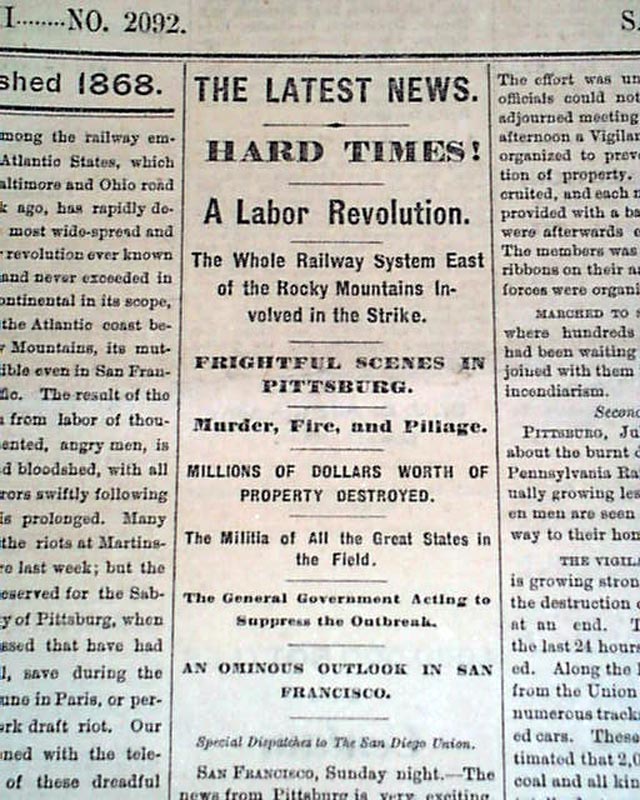
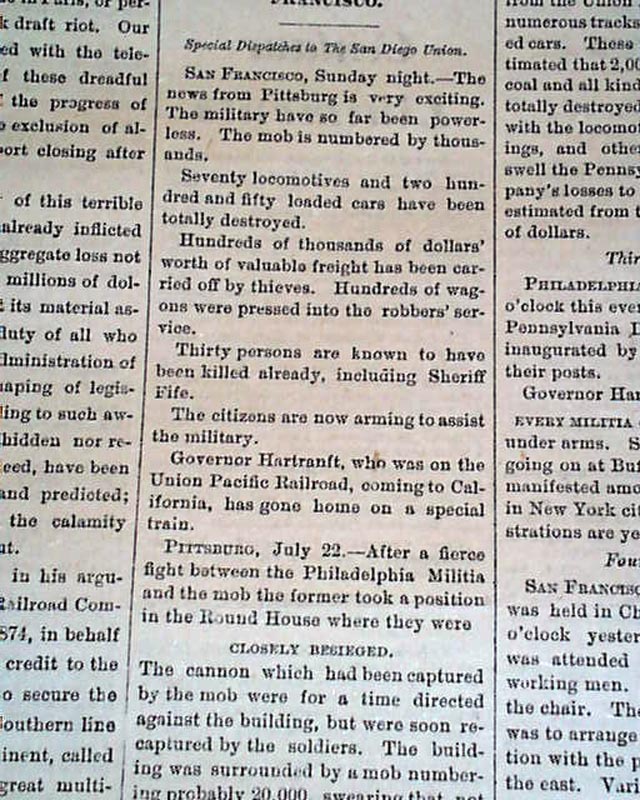
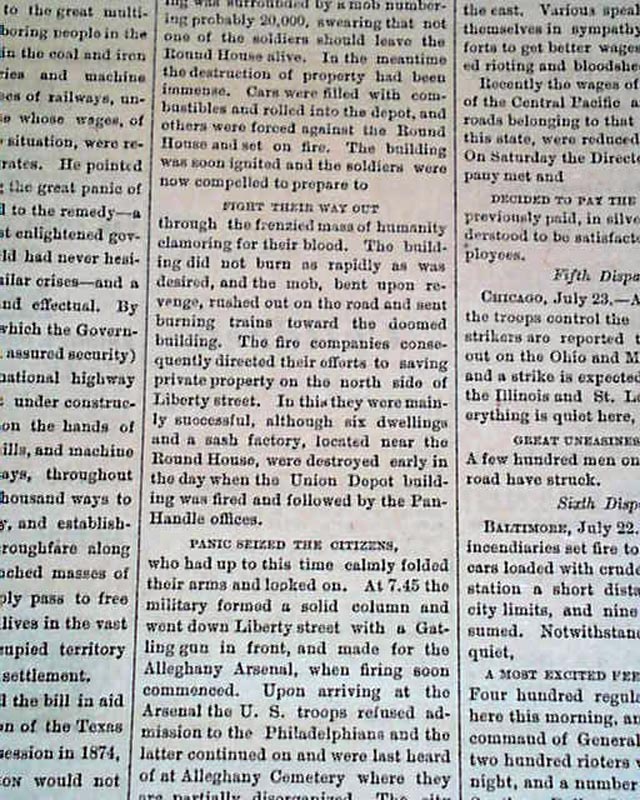
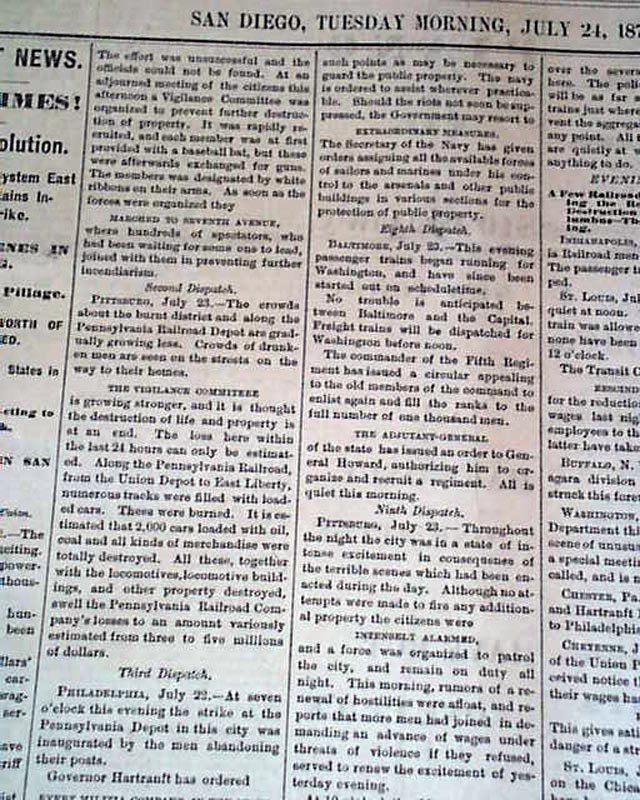
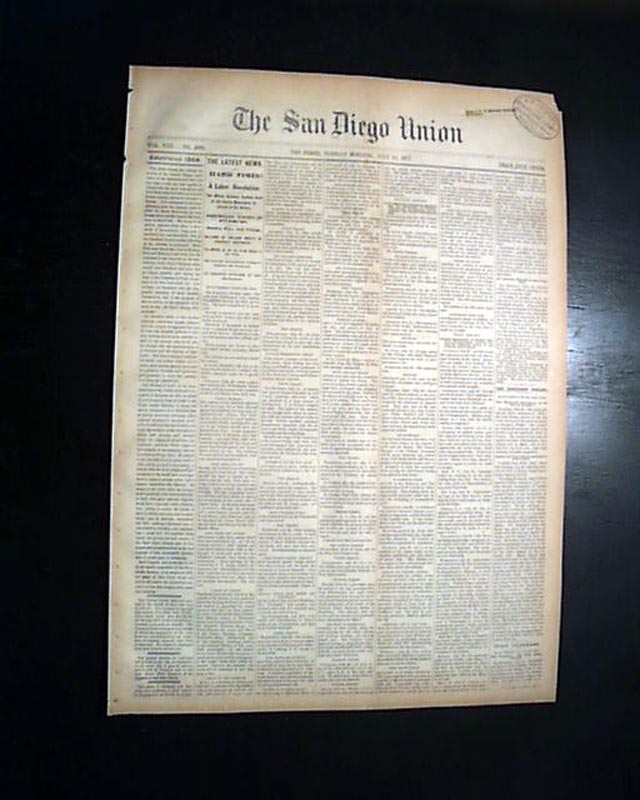
Over three columns of the front page are taken up with a fine account of the Pittsburgh Railroad Strike of 1877, part of the larger Great Railroad Strike which resulted in over 100 deaths including women & children. The incidents followed repeated reductions in wages and sometimes increases in workload by railroad companies, during a period of economic recession following the Panic of 1873.
The report is actually a collection of many dispatches from various cities in the East. Column heads include: "HARD TIMES!" "A Labor Revolution" "The Whole Railway System East of the Rocky Mountains Involved in the Strike" "Frightful Scenes In Pittsburg" "Murder, Fire, and Pillage" and more.
Four pages, a bit fragile but in nice condition.
Background: The Great Railroad Strike of 1877 stands as a watershed moment in American history, marking the first truly national labor uprising and the definitive end of the "Age of Innocence" regarding industrial relations. Triggered by a series of aggressive wage cuts amidst the lingering economic stagnation of the Panic of 1873, the strike paralyzed the country's infrastructure, moving beyond mere picketing into a violent class conflict that saw the destruction of millions of dollars in property—most notably during the "Frightful Scenes" in Pittsburgh where the burning of the Union Depot and roundhouses signaled a breakdown of social order. Its historical significance is twofold: it forced the American public to confront the "Labor Question" and the growing disparity between workers and "Robber Barons," while simultaneously setting a grim precedent for federal intervention. By deploying the U.S. Army to suppress American citizens, President Rutherford B. Hayes established a pattern of the state siding with corporate interests, which in turn catalyzed the rapid growth of organized labor groups like the Knights of Labor and spurred the construction of massive urban armories designed to quell future domestic "revolutions."
Category: The Old West


