

Account of an 1812-1813 expedition from Louisiana through Texas...
Item # 709685
August 28, 1819
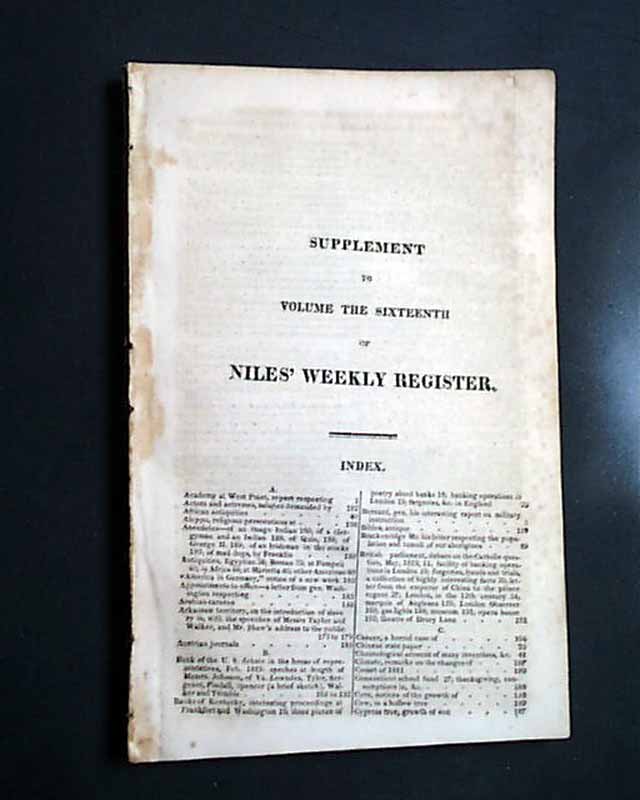
SUPPLEMENT TO VOLUME THE SIXTEENTH OF THE WEEKLY REGISTER, Baltimore, (1819).
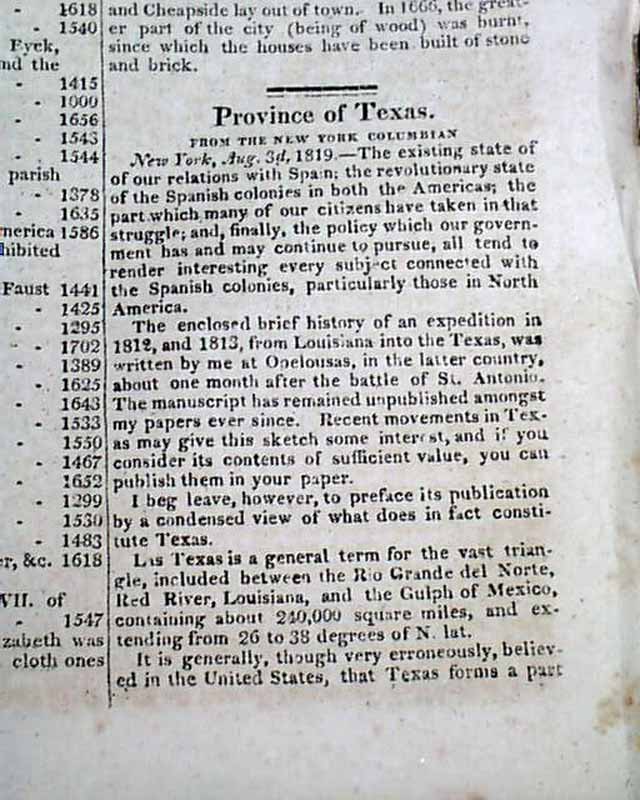
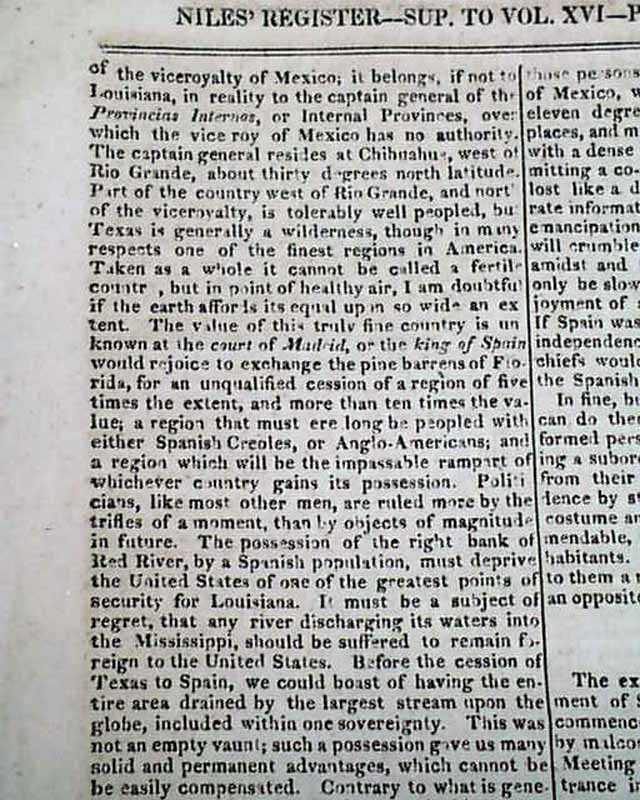
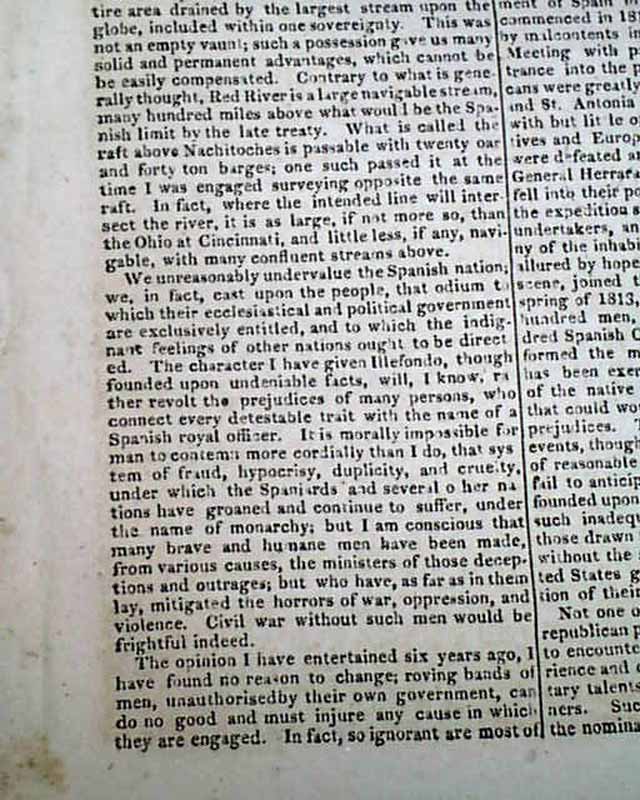
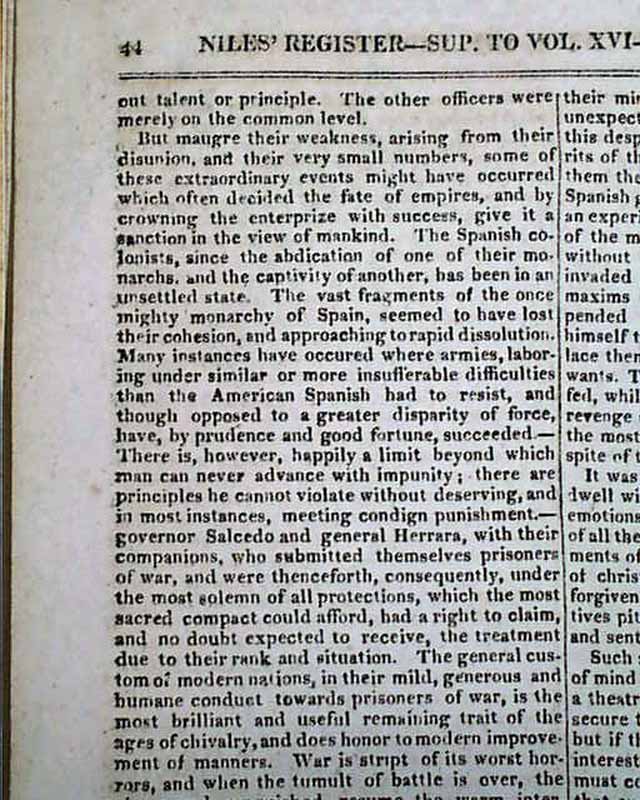
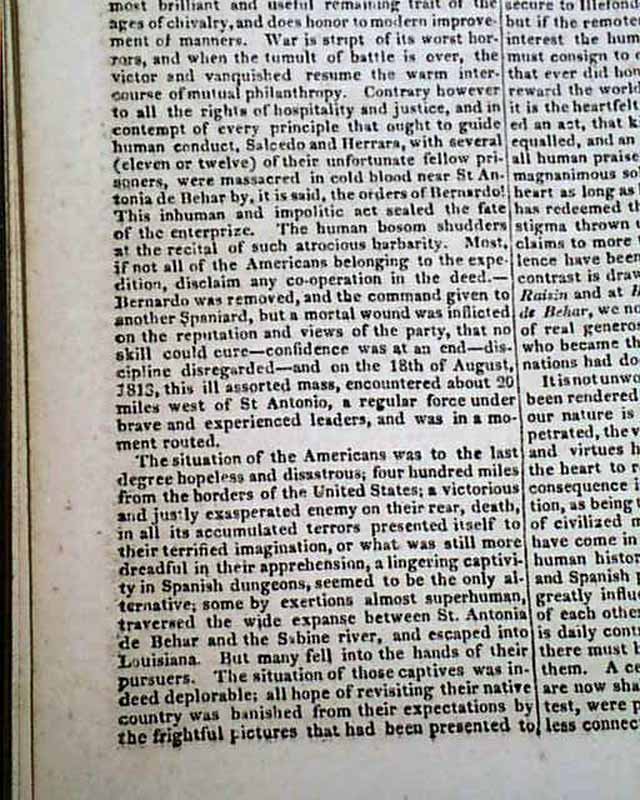
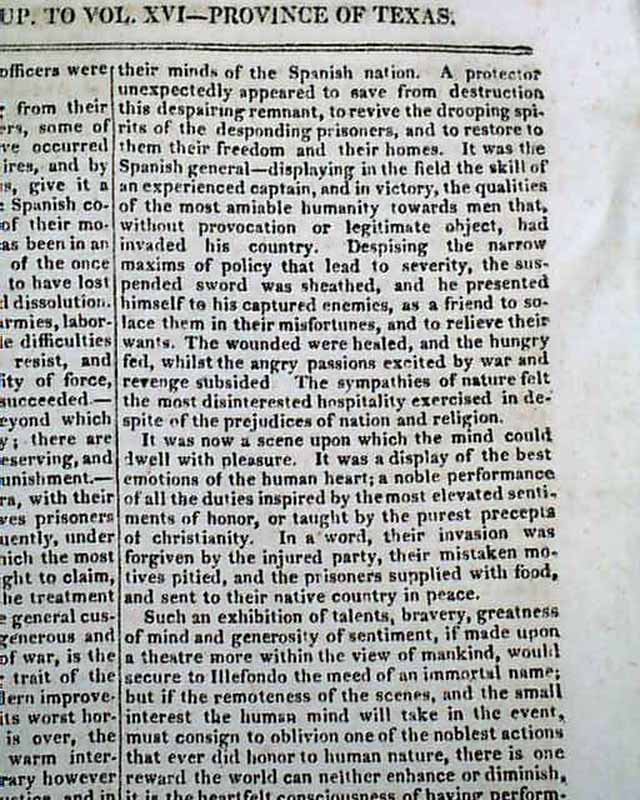
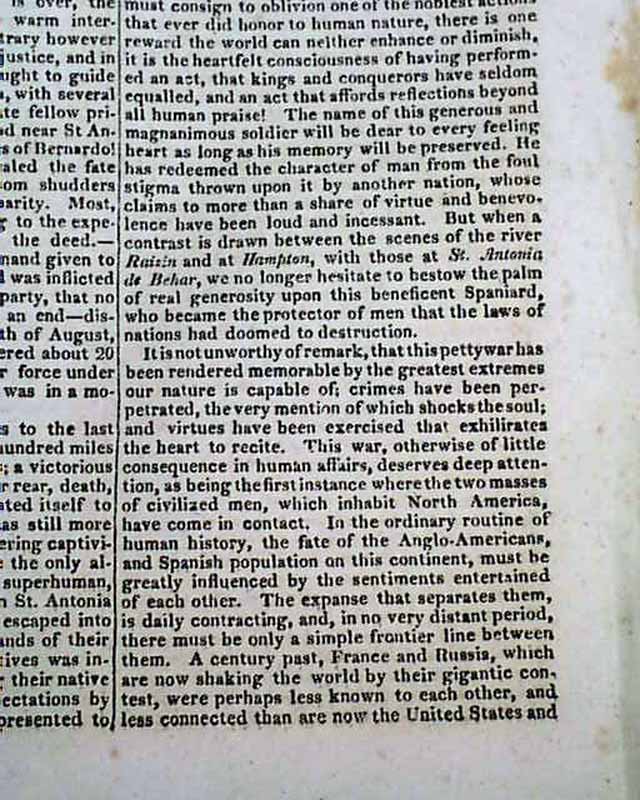
Page 42 begins: "Province of Texas" which includes a "...brief history of an expedition in 1812 and 1813, from Louisiana into the Texas..." and "...The expedition carried on against the government of Spain in the Provine of Texas, which commenced in 1812, by a body of Americans, sided by malcontents in the country, is now at an end. Meeting with partial success on their first entrance into the province, the hopes of the Americans were greatly inflated...", with much more taking nearly 3 1/2 pages.
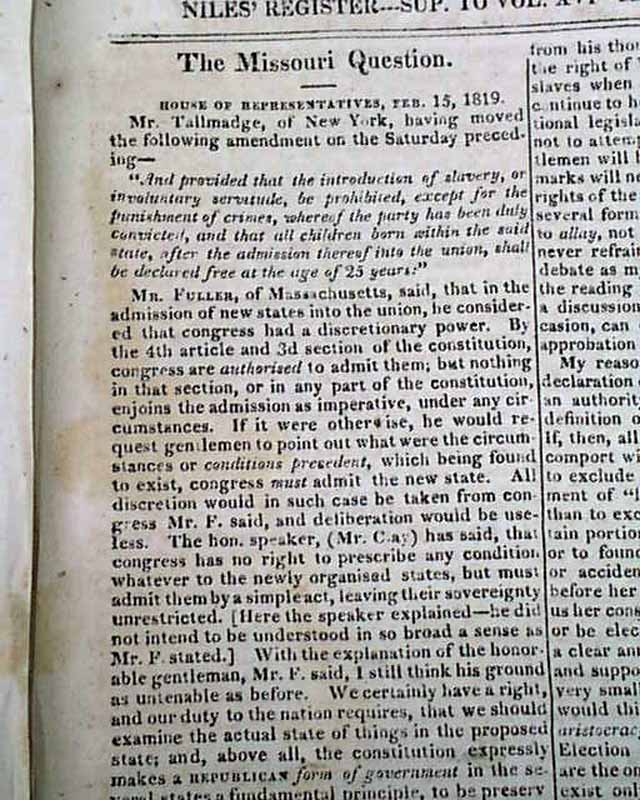
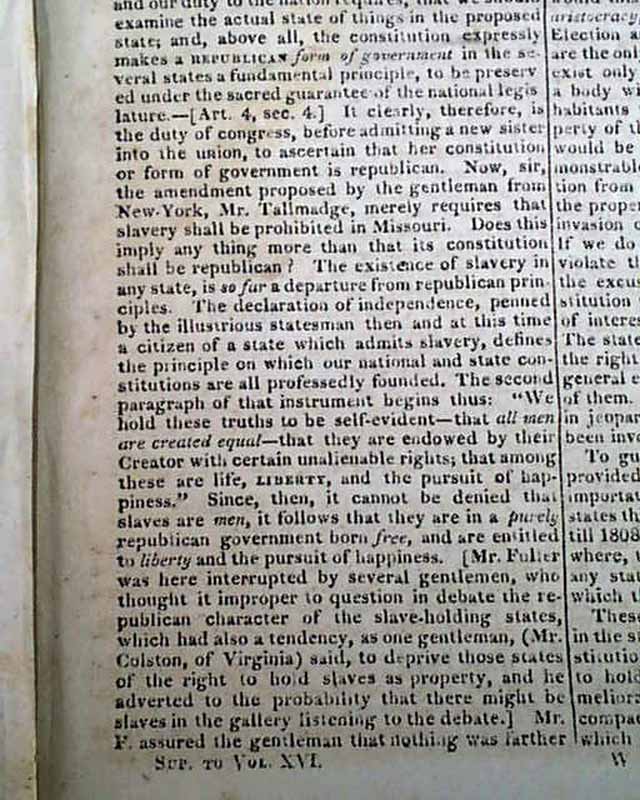
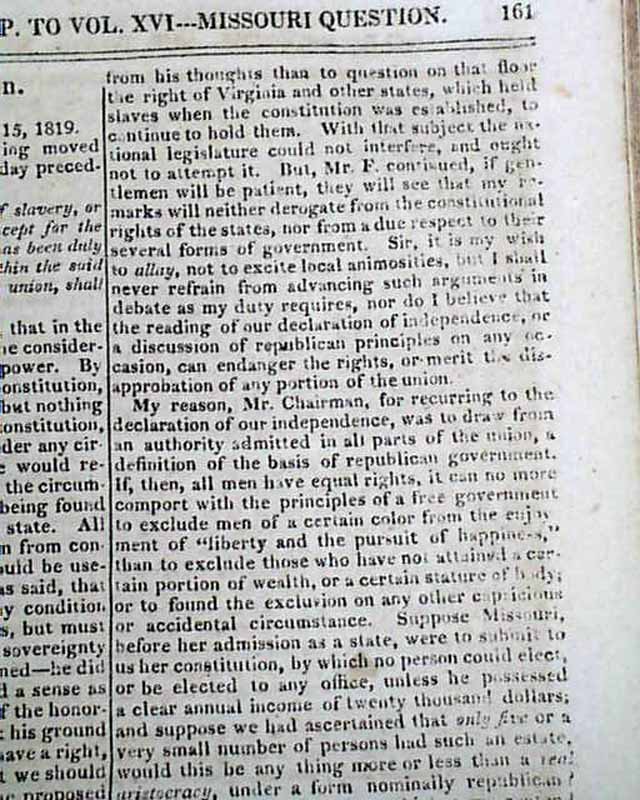
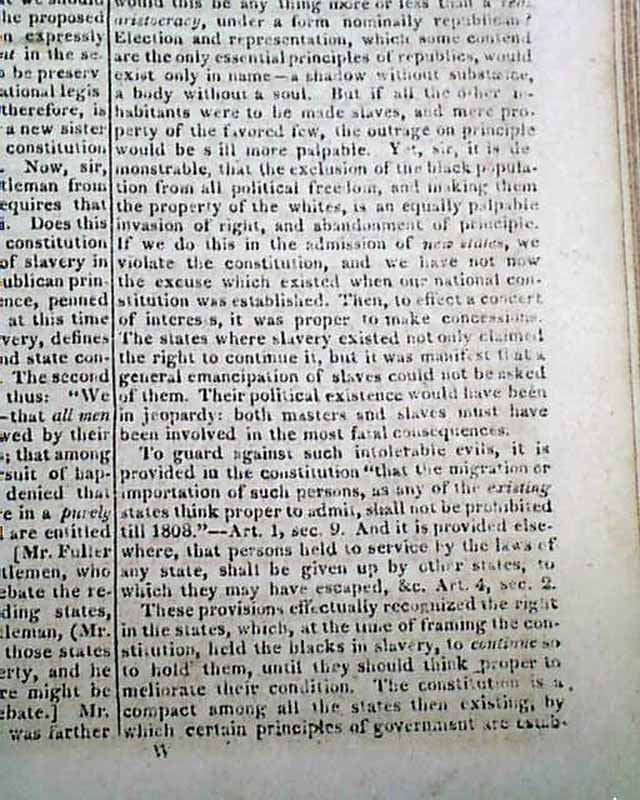
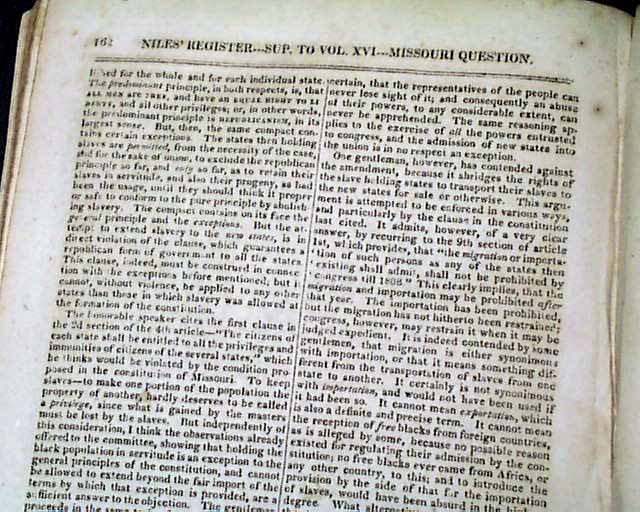
Page 161 begins: "The Missouri Question" which takes 11 pages with considerable text on the slave-related situation, and how Missouri would be admitted to the Union. This would be resolved by the Missouri Compromise of 1820.
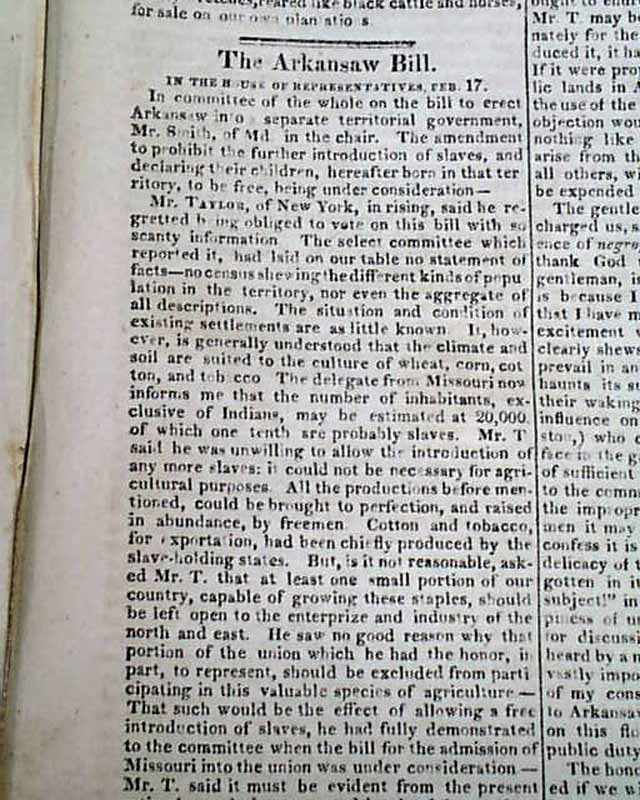
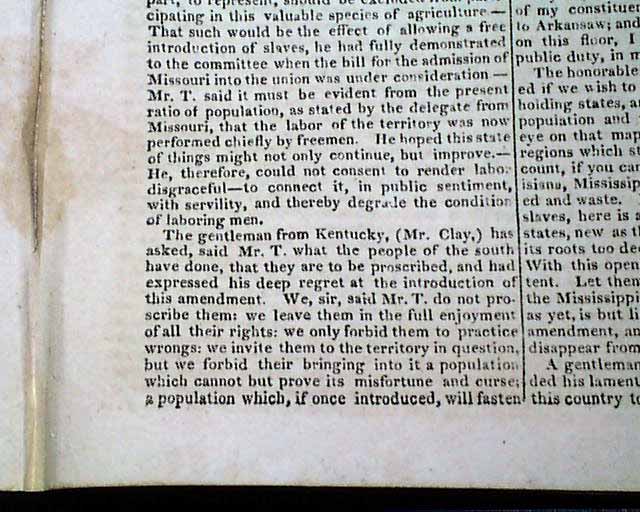
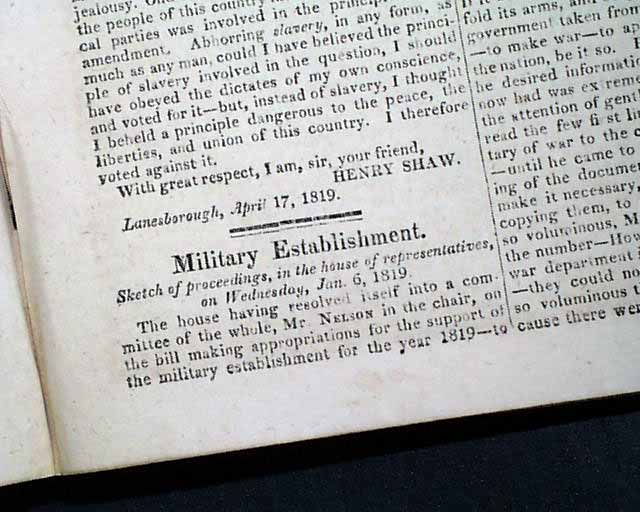
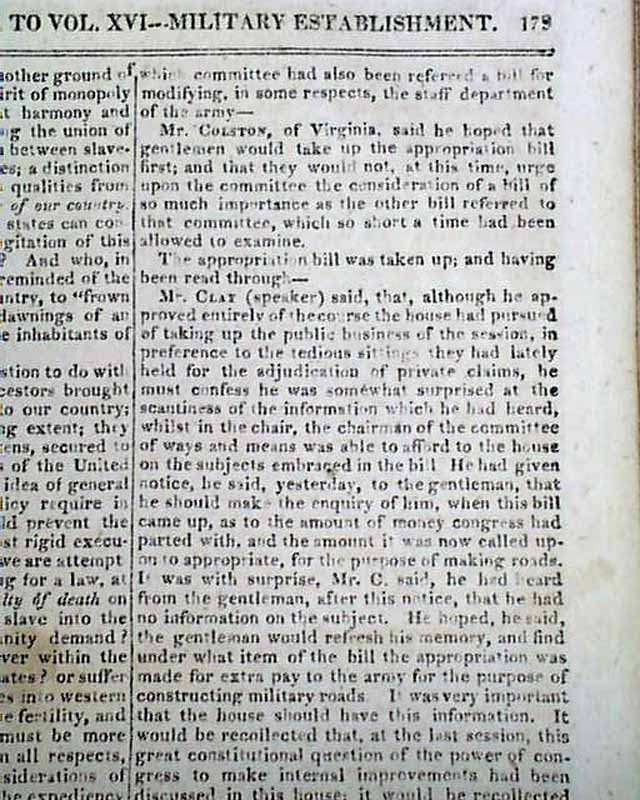
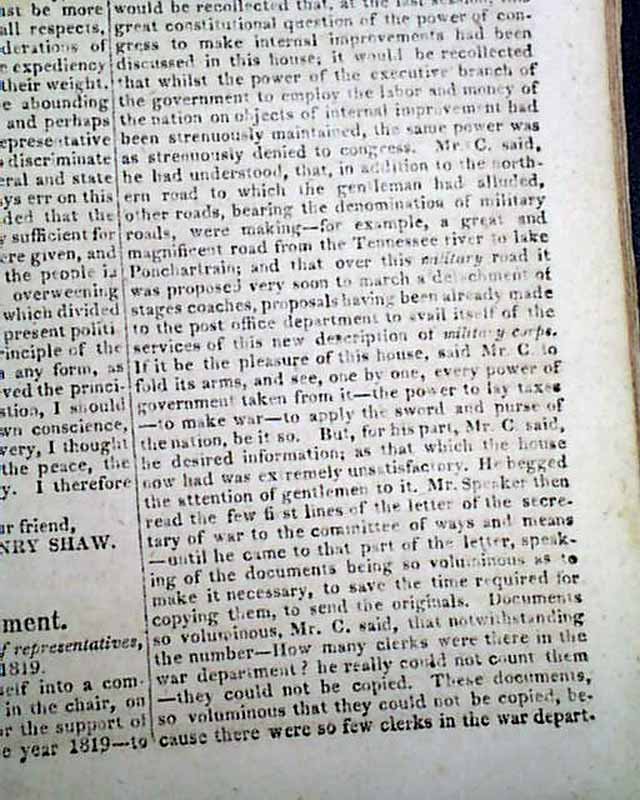
Page 173 has: "The Arkansaw [now Arkansas] Bill" discussion in the House of Representatives. The discussion begins with: "In committee of the whole on the bill to erect Armansaw into a separate territorial government..." with much on this, taking nearly 6 1/2 pages. Then much on the: "Military Establishment" which takes 5 1/2 pages.
A wealth of other fine content within, too much to list here.
Complete in 192 pages, 6 1/4 by 9 3/4 inches, great condition.
Background: The historical significance of these documents lies in their real-time capture of the "Era of Good Feelings" fracturing under the weight of territorial expansion and the "peculiar institution" of slavery. By 1819, the United States was transitioning from a post-war period of unity into a volatile era of sectionalism; the "Missouri Question" recorded here represents the first major national crisis over the morality and legality of slavery's westward spread, acting as the direct ideological precursor to the American Civil War. Simultaneously, the accounts of the Gutierrez-Magee Expedition and the Arkansaw Bill illustrate the aggressive, often chaotic nature of Manifest Destiny—where American "malcontents" and filibusters were already probing the borders of the Spanish Empire in Texas while the federal government struggled to organize the vast Louisiana Purchase. Together, these pages document a young nation grappling with the paradox of its growing geographic power versus its deepening internal divisions, providing a primary-source look at the exact moment the "fire bell in the night" began to toll for the Union.
As noted in Wikipedia, this title: "...(was) one of the most widely-circulated publications in the United States...Devoted primarily to politics...considered an important source for the history of the period."
Page 42 begins: "Province of Texas" which includes a "...brief history of an expedition in 1812 and 1813, from Louisiana into the Texas..." and "...The expedition carried on against the government of Spain in the Provine of Texas, which commenced in 1812, by a body of Americans, sided by malcontents in the country, is now at an end. Meeting with partial success on their first entrance into the province, the hopes of the Americans were greatly inflated...", with much more taking nearly 3 1/2 pages.
Page 161 begins: "The Missouri Question" which takes 11 pages with considerable text on the slave-related situation, and how Missouri would be admitted to the Union. This would be resolved by the Missouri Compromise of 1820.
Page 173 has: "The Arkansaw [now Arkansas] Bill" discussion in the House of Representatives. The discussion begins with: "In committee of the whole on the bill to erect Armansaw into a separate territorial government..." with much on this, taking nearly 6 1/2 pages. Then much on the: "Military Establishment" which takes 5 1/2 pages.
A wealth of other fine content within, too much to list here.
Complete in 192 pages, 6 1/4 by 9 3/4 inches, great condition.
Background: The historical significance of these documents lies in their real-time capture of the "Era of Good Feelings" fracturing under the weight of territorial expansion and the "peculiar institution" of slavery. By 1819, the United States was transitioning from a post-war period of unity into a volatile era of sectionalism; the "Missouri Question" recorded here represents the first major national crisis over the morality and legality of slavery's westward spread, acting as the direct ideological precursor to the American Civil War. Simultaneously, the accounts of the Gutierrez-Magee Expedition and the Arkansaw Bill illustrate the aggressive, often chaotic nature of Manifest Destiny—where American "malcontents" and filibusters were already probing the borders of the Spanish Empire in Texas while the federal government struggled to organize the vast Louisiana Purchase. Together, these pages document a young nation grappling with the paradox of its growing geographic power versus its deepening internal divisions, providing a primary-source look at the exact moment the "fire bell in the night" began to toll for the Union.
As noted in Wikipedia, this title: "...(was) one of the most widely-circulated publications in the United States...Devoted primarily to politics...considered an important source for the history of the period."
Category: Pre-Civil War


