

Much about the early life of Abraham Lincoln...
Item # 708770
December 31, 1865
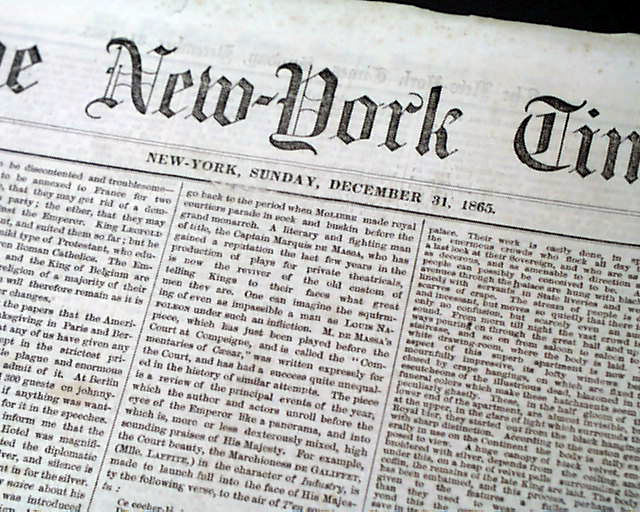
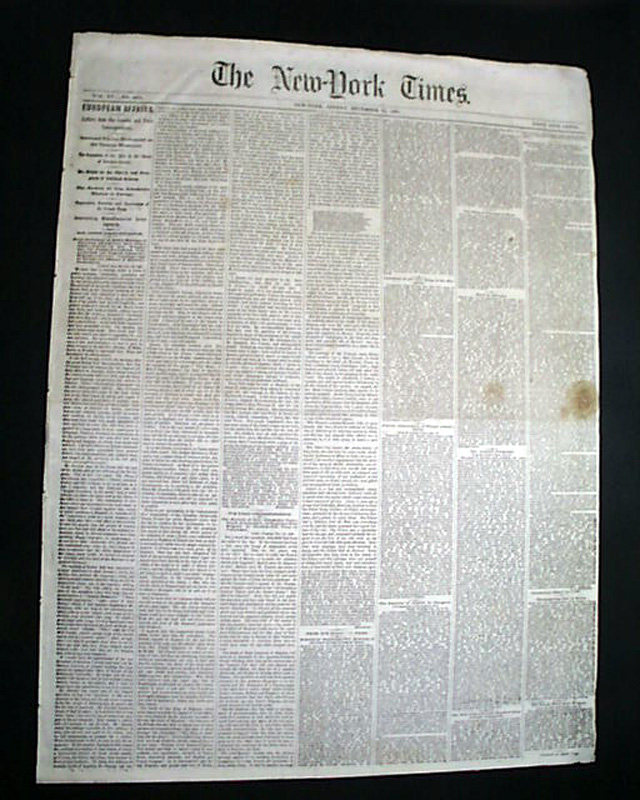
NEW YORK TIMES, Dec. 31, 1865
* William H. Herndon speech - lecture
* Post Abraham Lincoln assassination
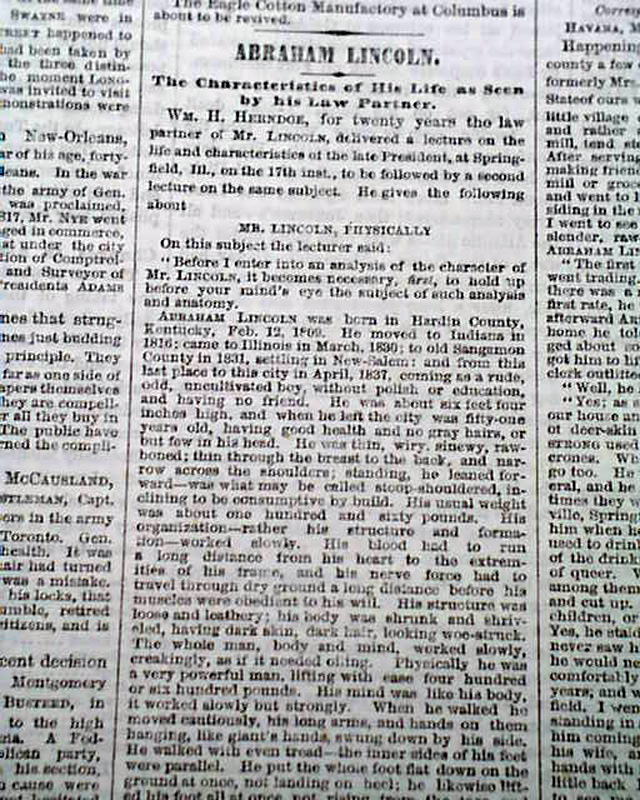
Page 3 has column heads: "Abraham Lincoln" "The Character of His Life as Seen by his Law Partner".
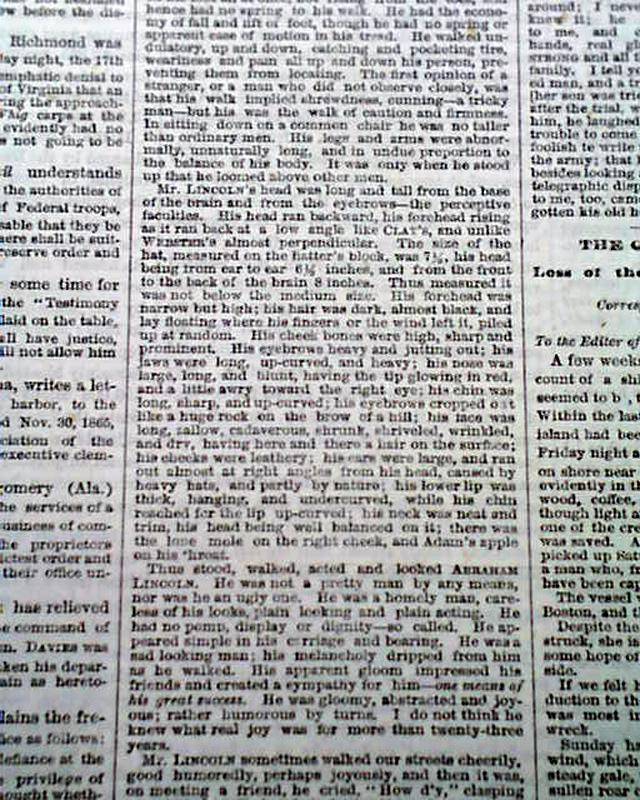
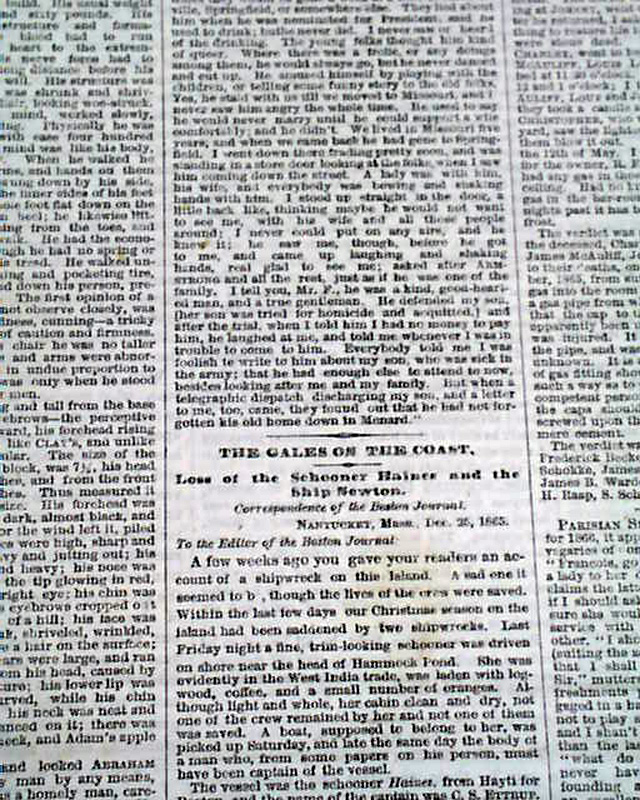
Taken from a lecture delivered at Springfield by Wm. H. Herdon, Lincoln's law partner for twenty years, the first part vividly describes Lincolns appearance, various physical attributes and more. The second part discusses Lincolns complex mind.
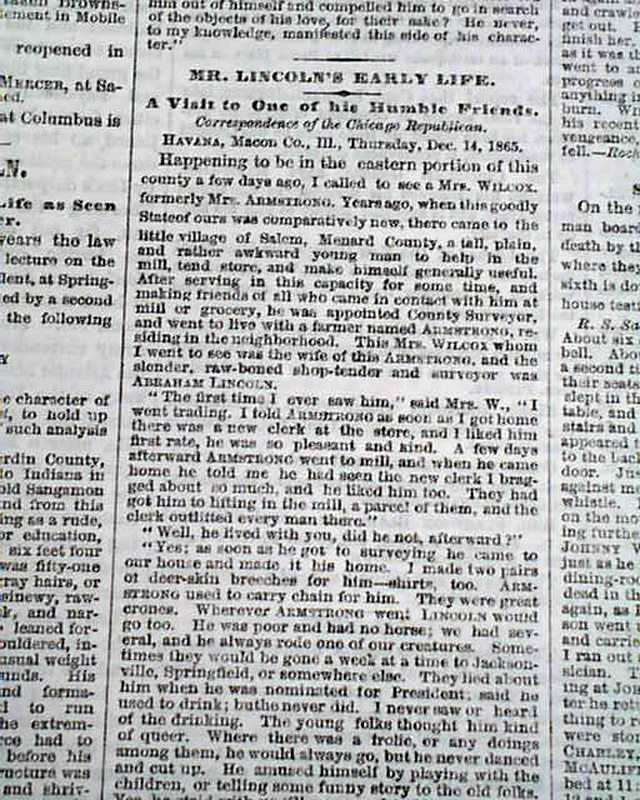
Also on page 3: "Mr. Lincoln's Early Life" "A Visit to One of His Humble Friends". This is another fine article with more about Lincoln's qualities and disposition from his early days. Fascinating reading.
Eight pages, some archival mends near margins with one non-archival mend to page 6, wear with small tears at the margins.
background: William Herndon’s 1865 lecture, as captured in this New York Times New Year's Eve edition, serves as a cornerstone of Lincoln scholarship because it bridged the gap between the mythic "Martyr President" and the gritty reality of the man. Herndon’s physical description—detailing Lincoln’s 6′4′′ frame, his sunken chest, and his unique, weather-beaten features—was intended to show that greatness could reside in a plain, even "homely," exterior. By pivoting to Lincoln’s "complex mind" and his humble social circles, the article highlights the paradoxical nature of a leader who was intellectually superior to his peers yet remained deeply connected to the common laborer. This specific printing is a poignant historical artifact; published at the very end of the year Lincoln was assassinated, it offered a grieving nation a way to reconcile the tragic loss of their leader by humanizing him through the eyes of the man who shared his law office for two decades.
* William H. Herndon speech - lecture
* Post Abraham Lincoln assassination
Page 3 has column heads: "Abraham Lincoln" "The Character of His Life as Seen by his Law Partner".
Taken from a lecture delivered at Springfield by Wm. H. Herdon, Lincoln's law partner for twenty years, the first part vividly describes Lincolns appearance, various physical attributes and more. The second part discusses Lincolns complex mind.
Also on page 3: "Mr. Lincoln's Early Life" "A Visit to One of His Humble Friends". This is another fine article with more about Lincoln's qualities and disposition from his early days. Fascinating reading.
Eight pages, some archival mends near margins with one non-archival mend to page 6, wear with small tears at the margins.
background: William Herndon’s 1865 lecture, as captured in this New York Times New Year's Eve edition, serves as a cornerstone of Lincoln scholarship because it bridged the gap between the mythic "Martyr President" and the gritty reality of the man. Herndon’s physical description—detailing Lincoln’s 6′4′′ frame, his sunken chest, and his unique, weather-beaten features—was intended to show that greatness could reside in a plain, even "homely," exterior. By pivoting to Lincoln’s "complex mind" and his humble social circles, the article highlights the paradoxical nature of a leader who was intellectually superior to his peers yet remained deeply connected to the common laborer. This specific printing is a poignant historical artifact; published at the very end of the year Lincoln was assassinated, it offered a grieving nation a way to reconcile the tragic loss of their leader by humanizing him through the eyes of the man who shared his law office for two decades.
Category: Post-Civil War


