

Trial of the "demon" of Andersonville.... How the soldiers were buried...
Item # 708725
October 19, 1865
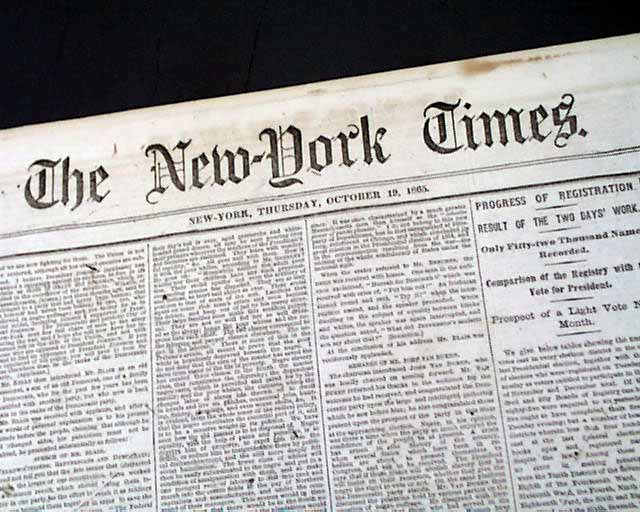
NEW YORK TIMES, Oct. 19, 1865
* Andersonville Prison - Camp Sumter
* Captain Henry Wirz trial - Georgia
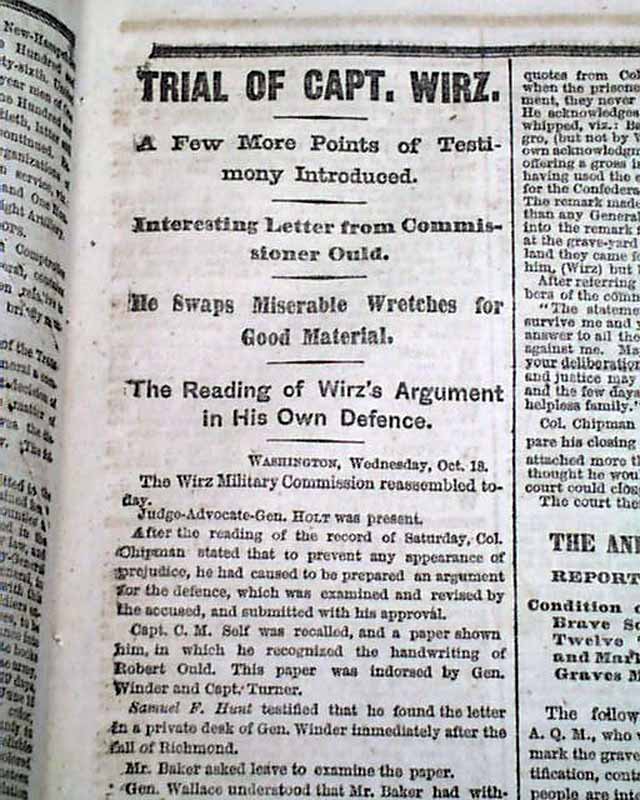
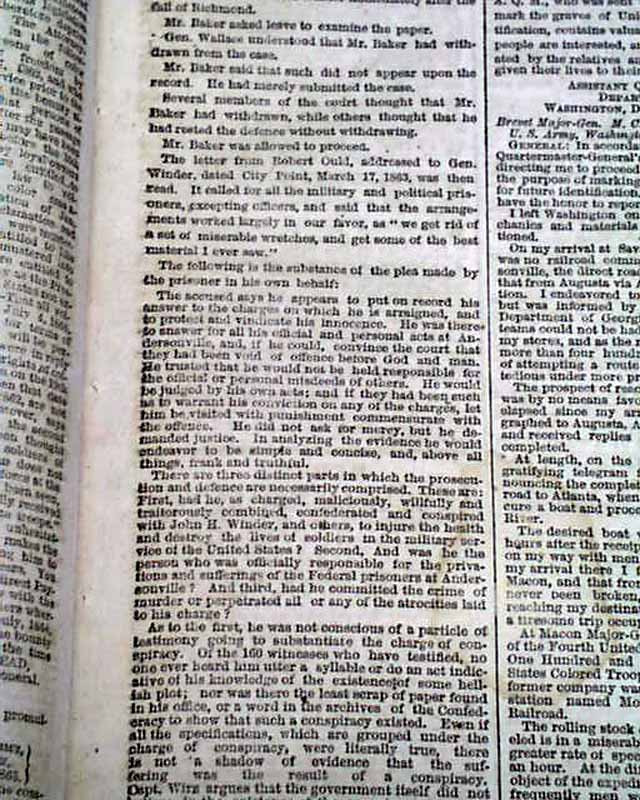
Page 5 has column heads: "TRIAL OF CAPT. WIRZ" "A Few More Points of Testimony introduced" "Interesting Letter from Commissioner Ouler" "He Swaps Miserable Wretches for Good Material" "The Reading of Wirz's Argument In His Own Defence".
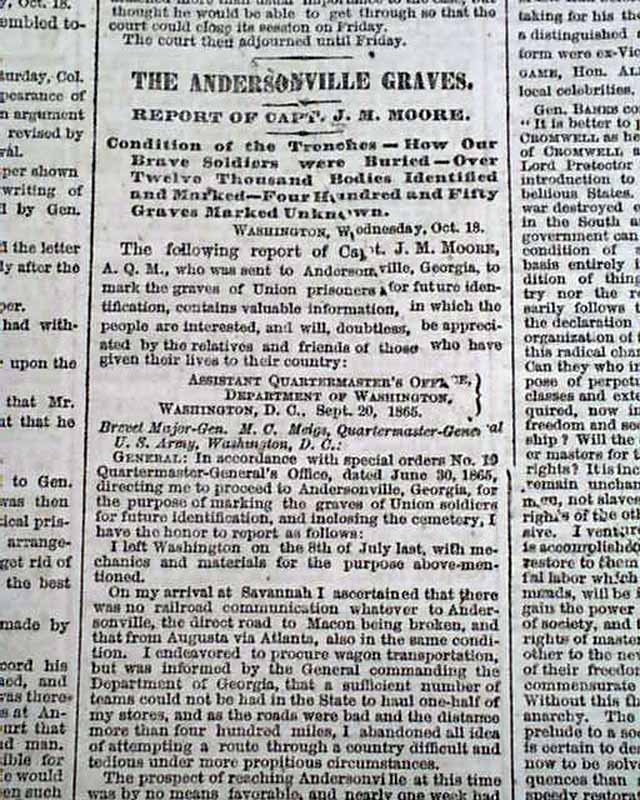
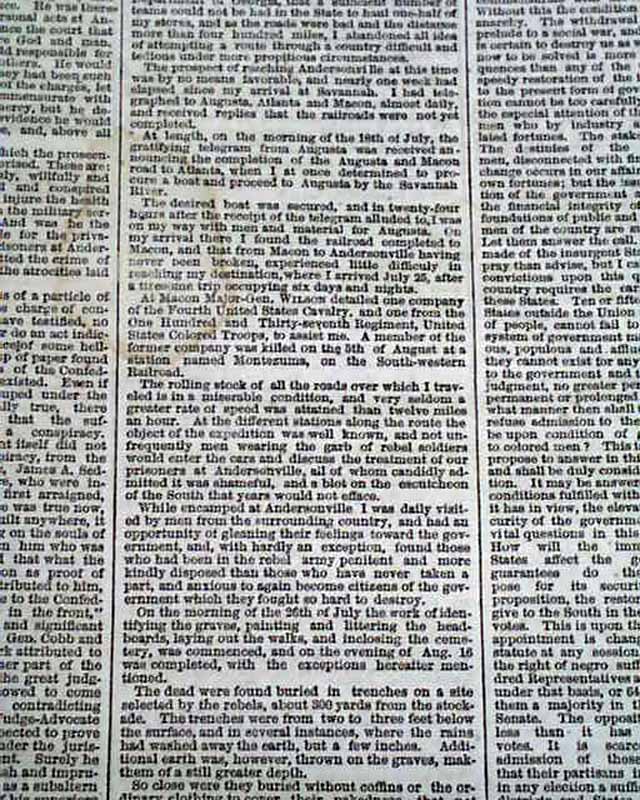
Also on page 5 is a column on: "The Andersonville Graves - Report of Capt. J. M. Moore" "Condition of the Trenches--How Our Brave Soldiers Were Buried--Over 12,000 Bodies Identified and Marked--450 Graves Marked Unknown".
Eight pages, nice condition.
Background: This rare, eight-page survivor from October 19, 1865, offers a harrowing, "front-row seat" to the closing act of the American Civil War: the high-stakes trial of Captain Henry Wirz, the only Confederate official executed for war crimes. While the world watched Wirz attempt to deflect guilt for the horrors of Andersonville, this specific edition juxtaposes his desperate legal defense against the visceral, heartbreaking reality of Captain J.M. Moore’s forensic report on the prison’s trenches. It is a hauntingly preserved ledger of sacrifice, documenting the monumental effort to identify over 12,000 fallen Union soldiers and transform a site of mass death into a hallowed National Cemetery. For a collector, this isn't just a newspaper; it is a foundational document of American justice and a grimly beautiful testament to the birth of the National Cemetery System, capturing the exact moment the nation began to reckon with the true cost of its survival.
* Andersonville Prison - Camp Sumter
* Captain Henry Wirz trial - Georgia
Page 5 has column heads: "TRIAL OF CAPT. WIRZ" "A Few More Points of Testimony introduced" "Interesting Letter from Commissioner Ouler" "He Swaps Miserable Wretches for Good Material" "The Reading of Wirz's Argument In His Own Defence".
Also on page 5 is a column on: "The Andersonville Graves - Report of Capt. J. M. Moore" "Condition of the Trenches--How Our Brave Soldiers Were Buried--Over 12,000 Bodies Identified and Marked--450 Graves Marked Unknown".
Eight pages, nice condition.
Background: This rare, eight-page survivor from October 19, 1865, offers a harrowing, "front-row seat" to the closing act of the American Civil War: the high-stakes trial of Captain Henry Wirz, the only Confederate official executed for war crimes. While the world watched Wirz attempt to deflect guilt for the horrors of Andersonville, this specific edition juxtaposes his desperate legal defense against the visceral, heartbreaking reality of Captain J.M. Moore’s forensic report on the prison’s trenches. It is a hauntingly preserved ledger of sacrifice, documenting the monumental effort to identify over 12,000 fallen Union soldiers and transform a site of mass death into a hallowed National Cemetery. For a collector, this isn't just a newspaper; it is a foundational document of American justice and a grimly beautiful testament to the birth of the National Cemetery System, capturing the exact moment the nation began to reckon with the true cost of its survival.
Category: Post-Civil War


