

Publisher with an interesting life... Indian hostilities...
Item # 707490
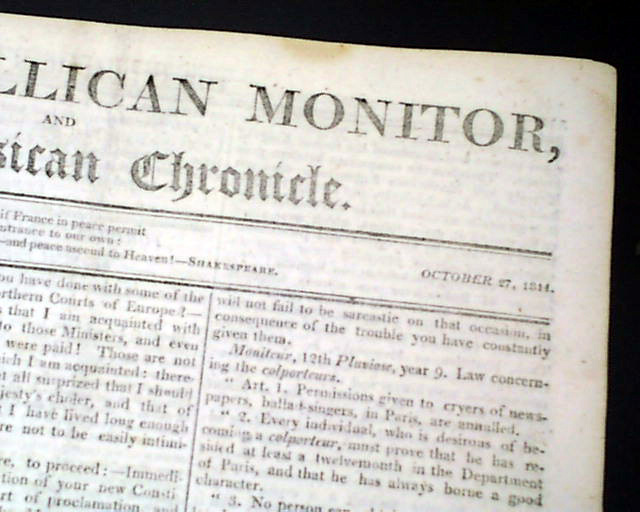
October 27, 1811
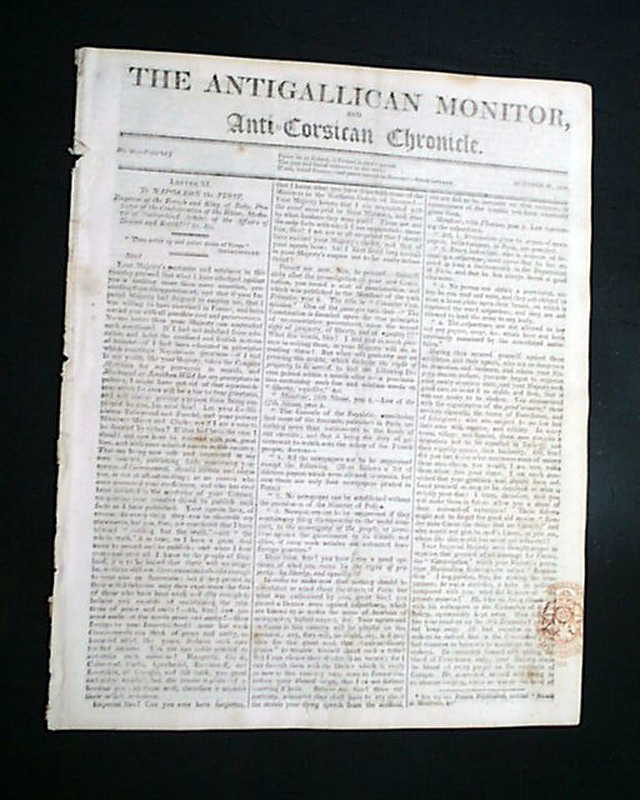
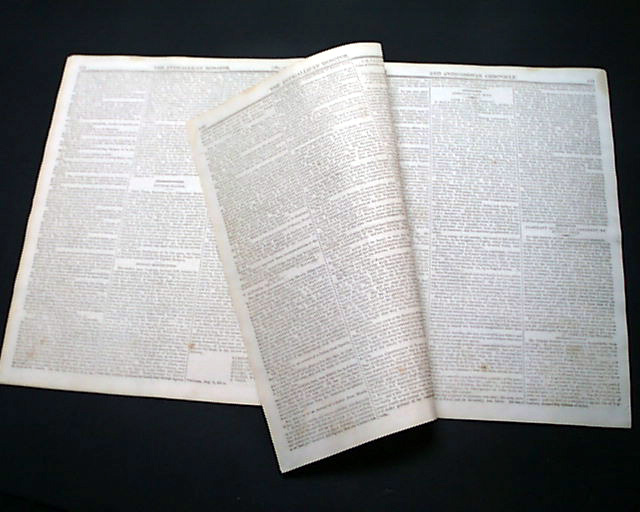
THE ANTIGALLICAN MONITOR & ANTI-CORSICAN CHRONICLE, London, Oct. 27, 1811 Published by Lewis Goldsmith, of Portuguese-Jewish extraction. Previous to publishing this newspaper he spent much time in France acting as a "secret agent" to Napoleon, including efforts to kidnap King Louis XVIII. Goldsmith escaped to England in 1809 & by 1811 he founded this newspaper (subsequently known as the British Monitor, which advocated tyrannicide) through which he denounced the French Revolution.
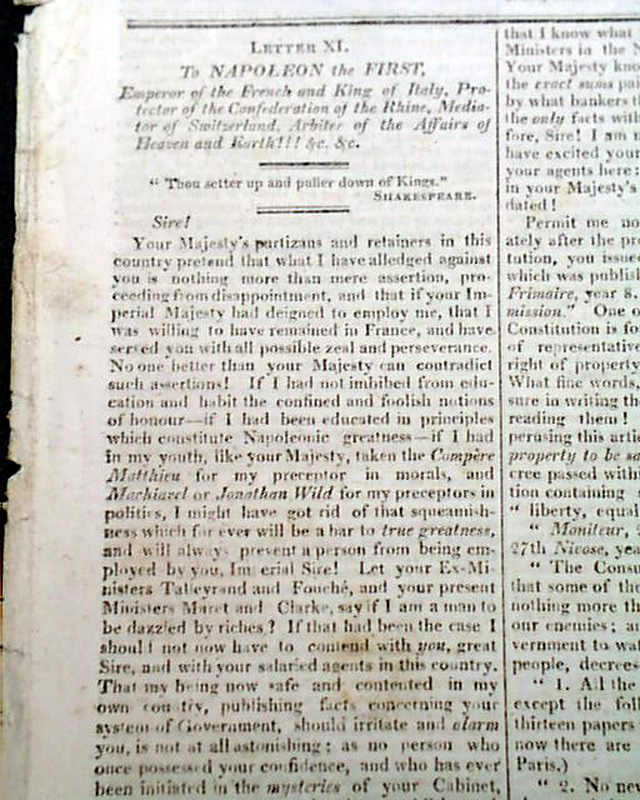
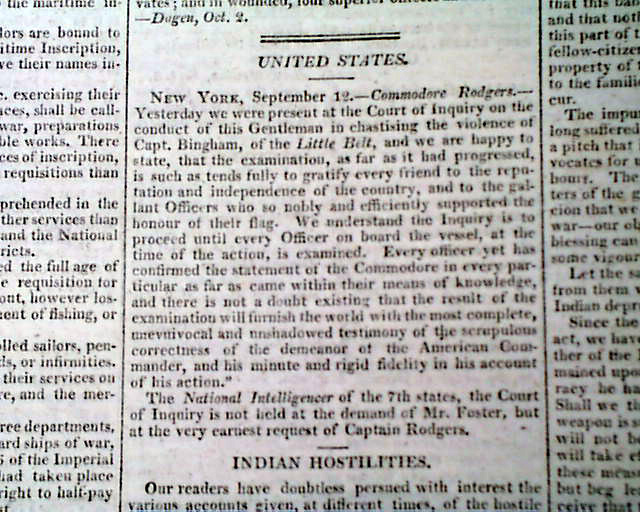
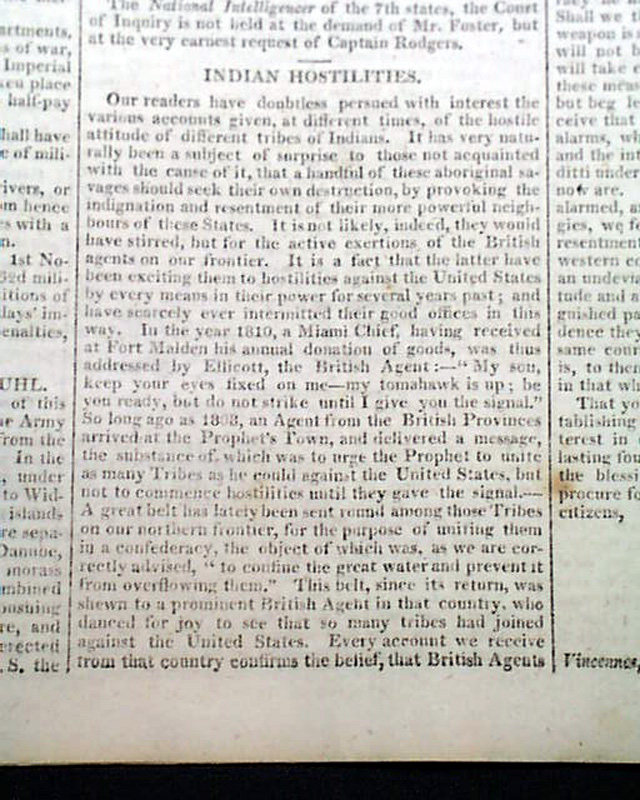
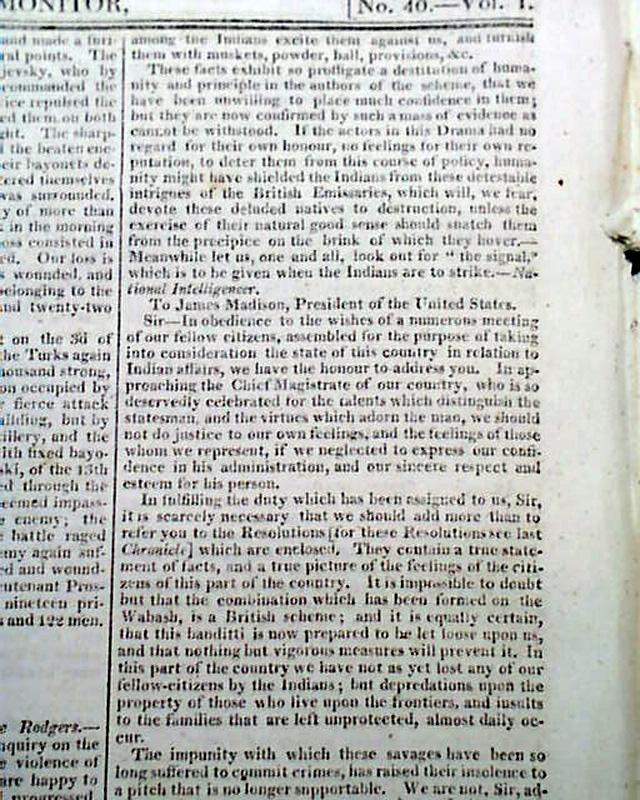
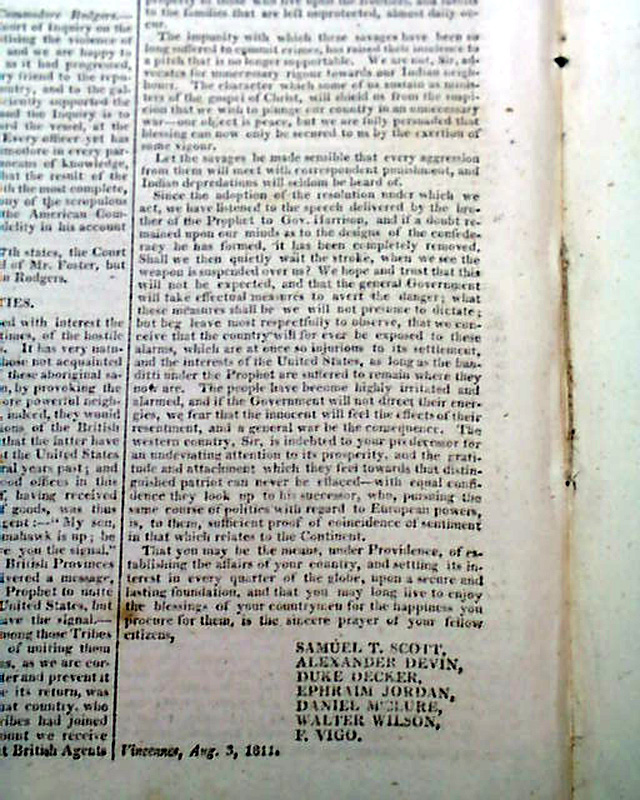
The front page has a letter: "To Napoleon the First". Page 4 has: "United States" concerning the situation with the Little Belt that would lead to the War of 1812. Also: "Indian Hostilities".
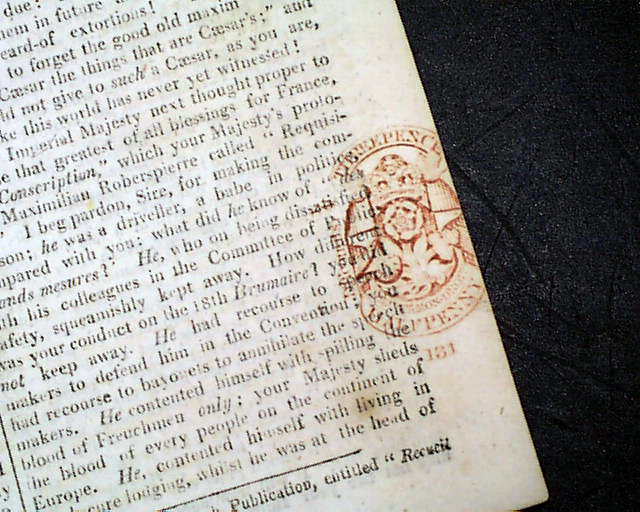
Eight pages, 9 1/2 by 11 3/4 inches, partial red tax stamp on the front page, very nice condition.
background: The Antigallican Monitor of October 27, 1811, serves as a high-tension snapshot of a world on the brink of global reorganization, fueled by the personal vendetta of Lewis Goldsmith against his former employer, Napoleon Bonaparte. By dedicating his front page to an open letter to the French Emperor, Goldsmith utilizes his insider knowledge as a former "secret agent" to strip away the veneer of Napoleonic legitimacy, framing the Emperor not as a statesman but as a tyrant deserving of the ultimate penalty. This domestic European obsession is mirrored on page four by the deteriorating state of Atlantic diplomacy; the reports on the Little Belt incident highlight the naval friction that made the War of 1812 inevitable, while the "Indian Hostilities" section captures the British perspective on Tecumseh’s confederacy just weeks before the pivotal Battle of Tippecanoe. Together, these eight pages illustrate the "Anti-Corsican" worldview—a belief that Napoleon’s influence was a global contagion affecting everything from the drawing rooms of London to the wilderness of the American frontier.
The front page has a letter: "To Napoleon the First". Page 4 has: "United States" concerning the situation with the Little Belt that would lead to the War of 1812. Also: "Indian Hostilities".
Eight pages, 9 1/2 by 11 3/4 inches, partial red tax stamp on the front page, very nice condition.
background: The Antigallican Monitor of October 27, 1811, serves as a high-tension snapshot of a world on the brink of global reorganization, fueled by the personal vendetta of Lewis Goldsmith against his former employer, Napoleon Bonaparte. By dedicating his front page to an open letter to the French Emperor, Goldsmith utilizes his insider knowledge as a former "secret agent" to strip away the veneer of Napoleonic legitimacy, framing the Emperor not as a statesman but as a tyrant deserving of the ultimate penalty. This domestic European obsession is mirrored on page four by the deteriorating state of Atlantic diplomacy; the reports on the Little Belt incident highlight the naval friction that made the War of 1812 inevitable, while the "Indian Hostilities" section captures the British perspective on Tecumseh’s confederacy just weeks before the pivotal Battle of Tippecanoe. Together, these eight pages illustrate the "Anti-Corsican" worldview—a belief that Napoleon’s influence was a global contagion affecting everything from the drawing rooms of London to the wilderness of the American frontier.
Category: Pre-Civil War


