

The Mormons and Salt Lake City...
Item # 707060
November 01, 1871
NEW YORK TIMES, Nov. 1, 1871
* Southern Ku Klux Klan - KKK
* Mormons - Mormonism
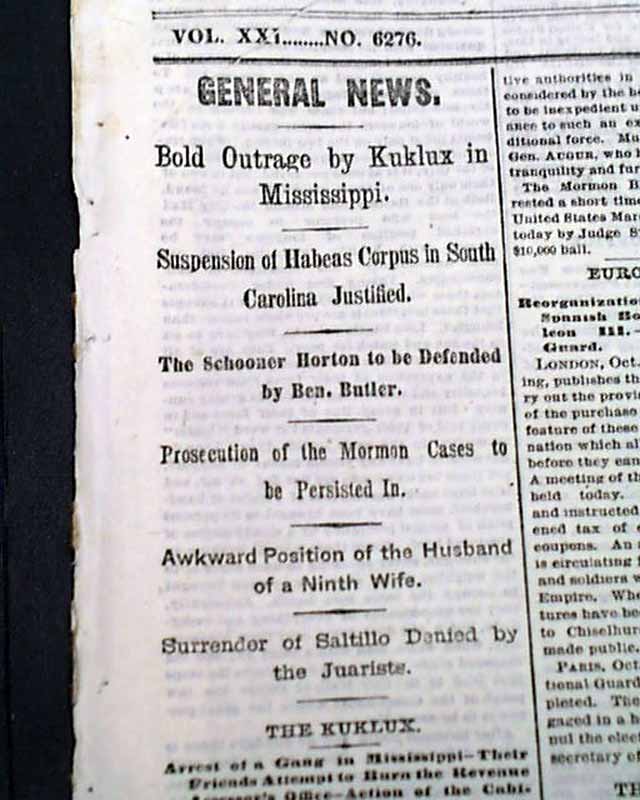
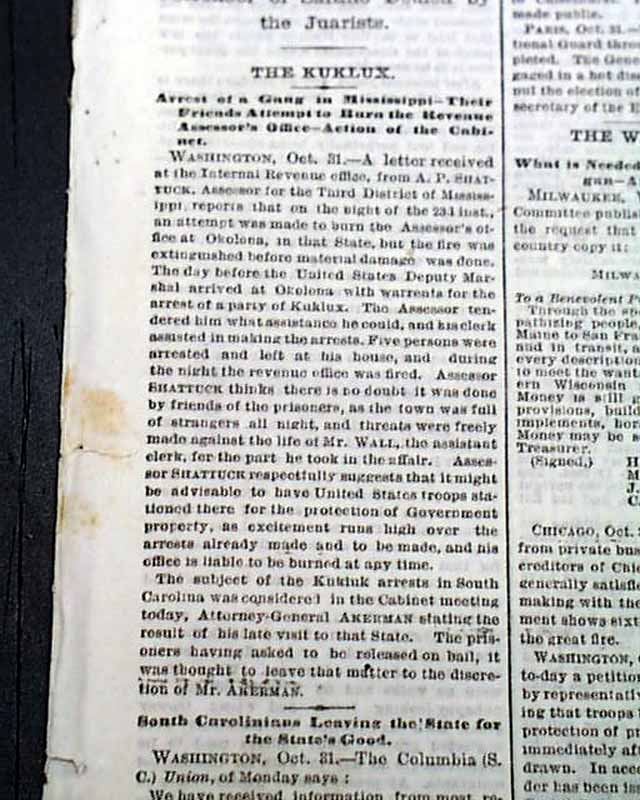
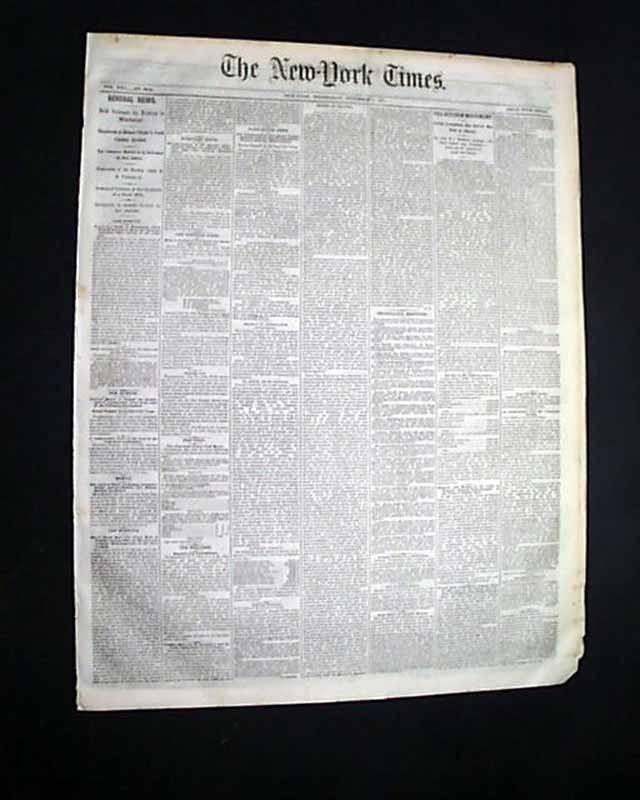
Among the front page column heads: "Bold Outrage by Kuklux in Mississippi" "Suspension of Habeas Corpus in South Carolina Justified" "Prosecution of the Mormon Cases to be Persisted In" "Awkward Position of the Husband of a Ninth Wife".
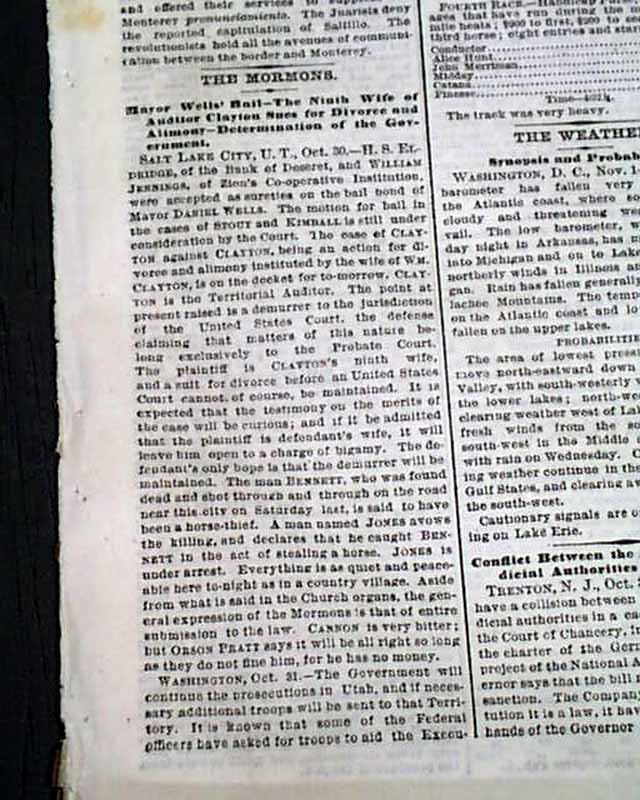
Among the subheads: "The Mormons" "Mayor Wells' Bail--The Ninth Wife of Auditor Clayton Sues for Divorce and Alimony--Determination of the Government".
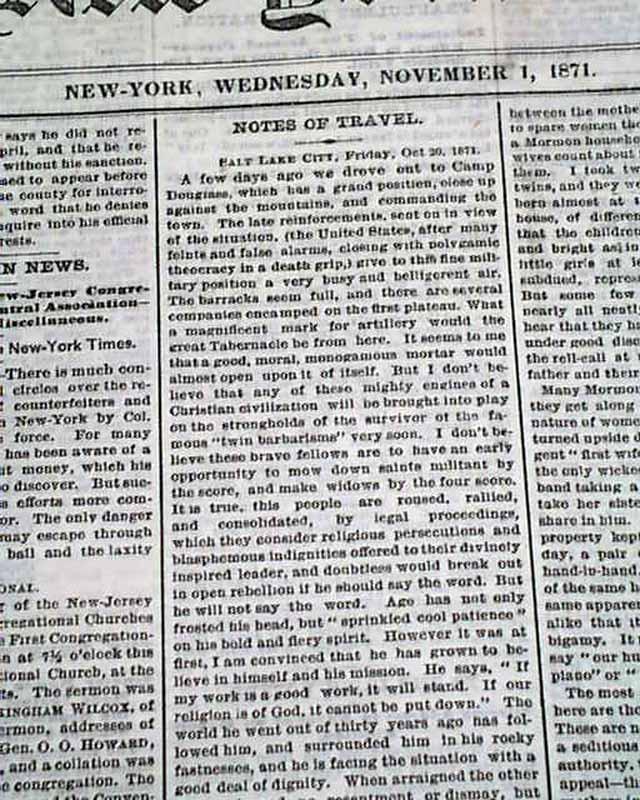
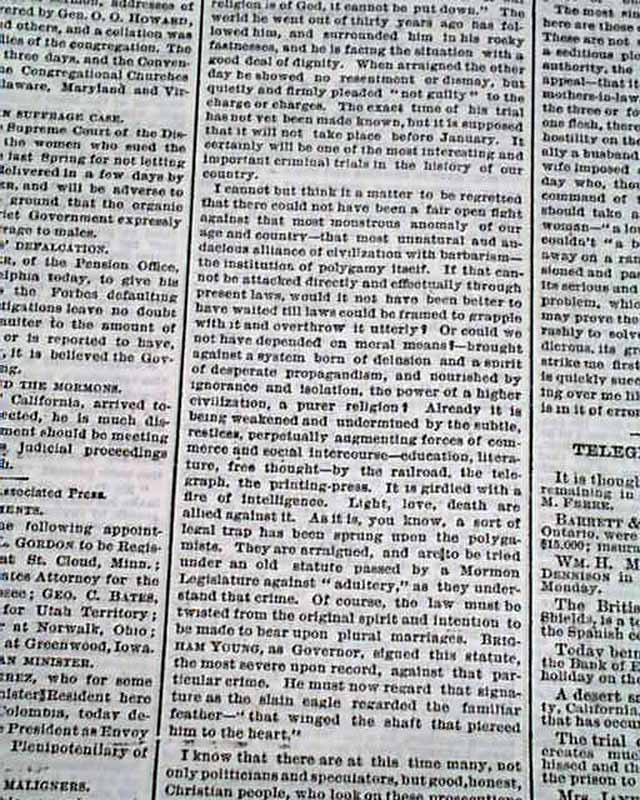
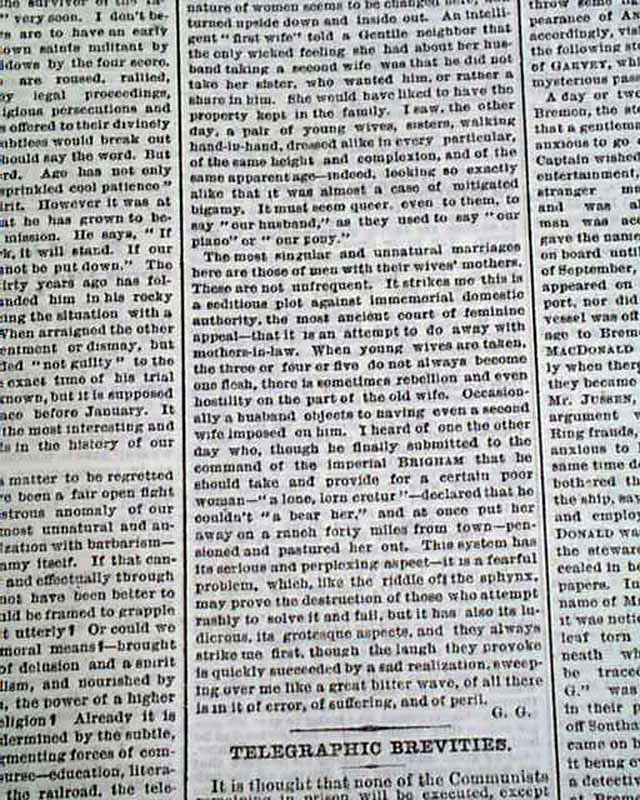
Also on the front page is a great and quite details account of the Salt Lake City area headed: "Notes Of Travel" with a dateline of Salt Lake City, Oct. 20, 1871.
Eight pages, very nice condition.
Background: The front page of the New York Times on November 1, 1871, serves as a vivid cross-section of a fractured United States struggling to define the limits of federal power and the meaning of citizenship during the Reconstruction era. The headlines regarding the Ku Klux Klan and the suspension of habeas corpus in South Carolina signify a landmark moment in constitutional history; it was a rare instance where the federal government, under President Ulysses S. Grant and the Third Enforcement Act, intervened directly in state affairs to suppress domestic terrorism and protect the civil rights of Black Americans. Simultaneously, the focus on the "Mormon Cases" in Utah illustrates a parallel federal effort to enforce Victorian-era legal standards of marriage and morality over territorial sovereignty. The specific mention of Mayor Wells and the legal drama surrounding Auditor Clayton’s "Ninth Wife" highlights the government’s shift from passive disapproval of polygamy to active judicial prosecution, treating the practice as a challenge to the supremacy of U.S. law. Together, these reports document a nation in the throes of a "Second Founding," where the central government was aggressively asserting its authority to reshape the social and legal fabric of both the war-torn South and the expanding Western frontier.
* Southern Ku Klux Klan - KKK
* Mormons - Mormonism
Among the front page column heads: "Bold Outrage by Kuklux in Mississippi" "Suspension of Habeas Corpus in South Carolina Justified" "Prosecution of the Mormon Cases to be Persisted In" "Awkward Position of the Husband of a Ninth Wife".
Among the subheads: "The Mormons" "Mayor Wells' Bail--The Ninth Wife of Auditor Clayton Sues for Divorce and Alimony--Determination of the Government".
Also on the front page is a great and quite details account of the Salt Lake City area headed: "Notes Of Travel" with a dateline of Salt Lake City, Oct. 20, 1871.
Eight pages, very nice condition.
Background: The front page of the New York Times on November 1, 1871, serves as a vivid cross-section of a fractured United States struggling to define the limits of federal power and the meaning of citizenship during the Reconstruction era. The headlines regarding the Ku Klux Klan and the suspension of habeas corpus in South Carolina signify a landmark moment in constitutional history; it was a rare instance where the federal government, under President Ulysses S. Grant and the Third Enforcement Act, intervened directly in state affairs to suppress domestic terrorism and protect the civil rights of Black Americans. Simultaneously, the focus on the "Mormon Cases" in Utah illustrates a parallel federal effort to enforce Victorian-era legal standards of marriage and morality over territorial sovereignty. The specific mention of Mayor Wells and the legal drama surrounding Auditor Clayton’s "Ninth Wife" highlights the government’s shift from passive disapproval of polygamy to active judicial prosecution, treating the practice as a challenge to the supremacy of U.S. law. Together, these reports document a nation in the throes of a "Second Founding," where the central government was aggressively asserting its authority to reshape the social and legal fabric of both the war-torn South and the expanding Western frontier.
Category: Post-Civil War


