




Bainbridge and the Quasi-War... Napoleon was assassinated?
Item # 706092
February 28, 1799
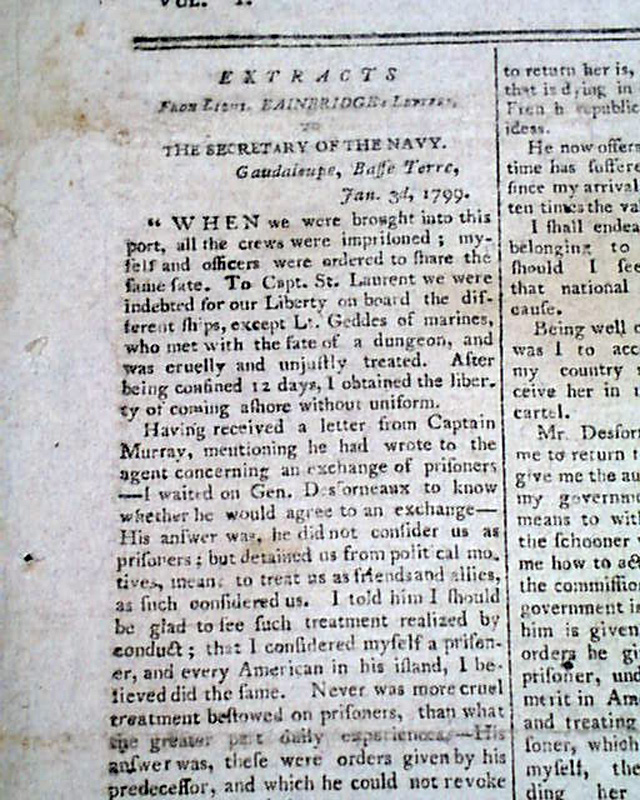
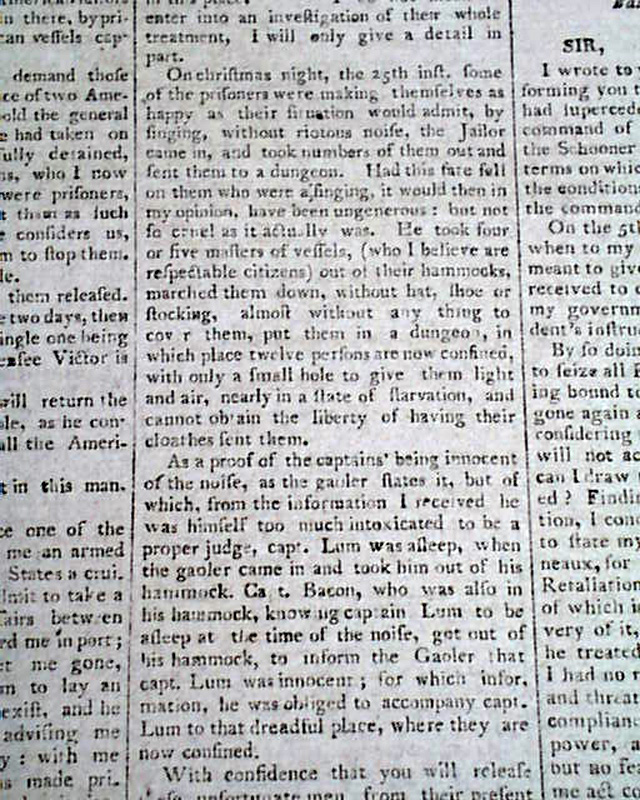
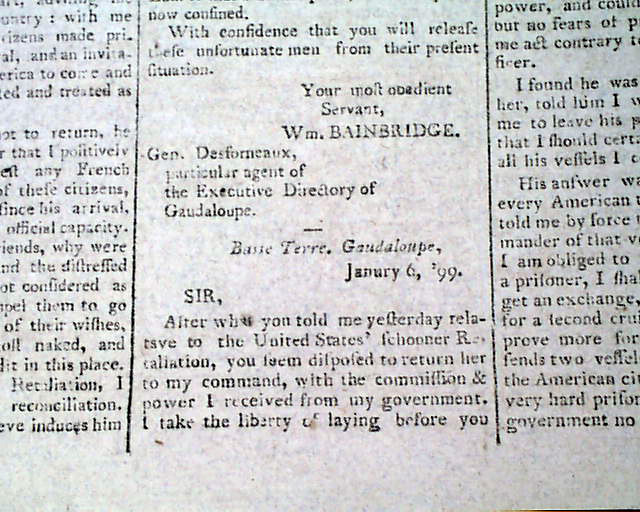
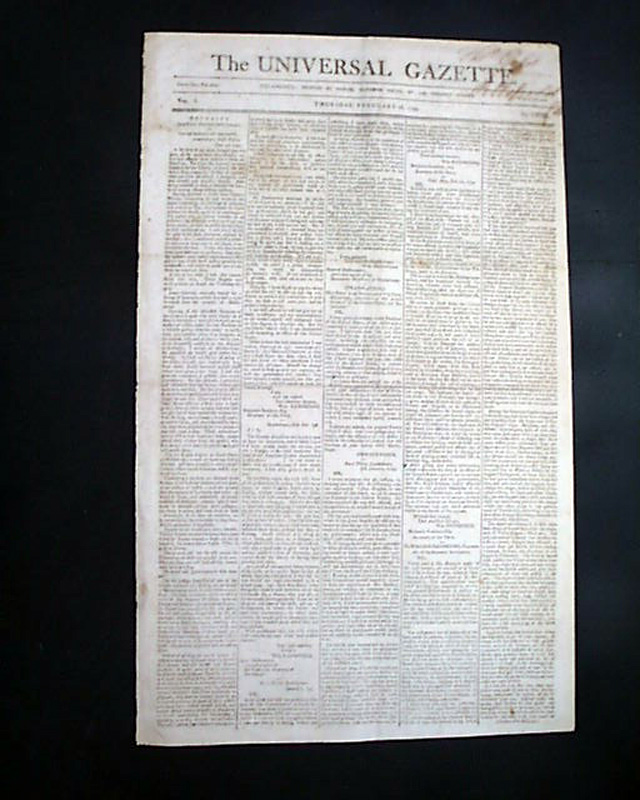
THE UNIVERSAL GAZETTE, Philadelphia, Feb. 28, 1799 The front page has 1 1/2 columns on a letter to: "The Secretary of the Navy" from William Bainbridge, concerning the controversy of him surrendering his ship to the French in the Quasi-War, which was a limited naval war against French privateers who were seizing U.S. shipping in the Caribbean.
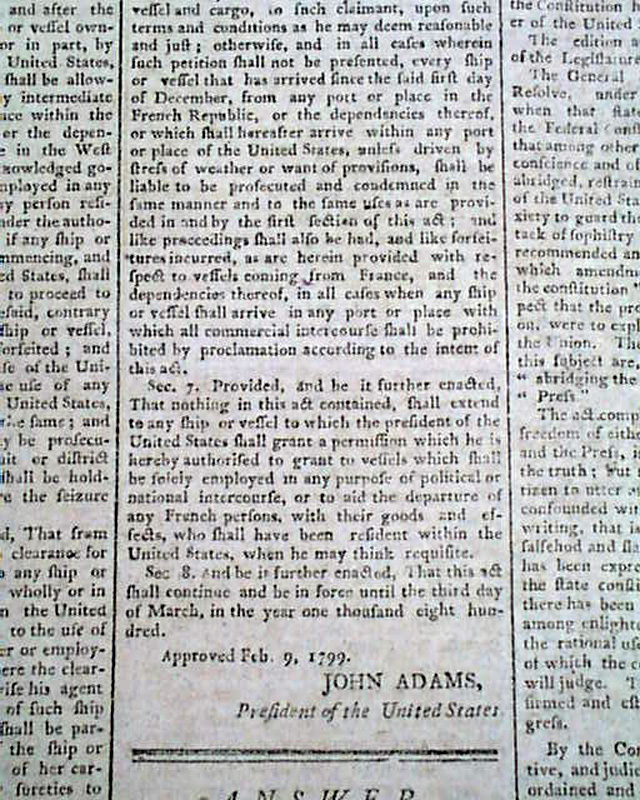
The back page has "An Act" of Congress relating to the Quasi-War with France.
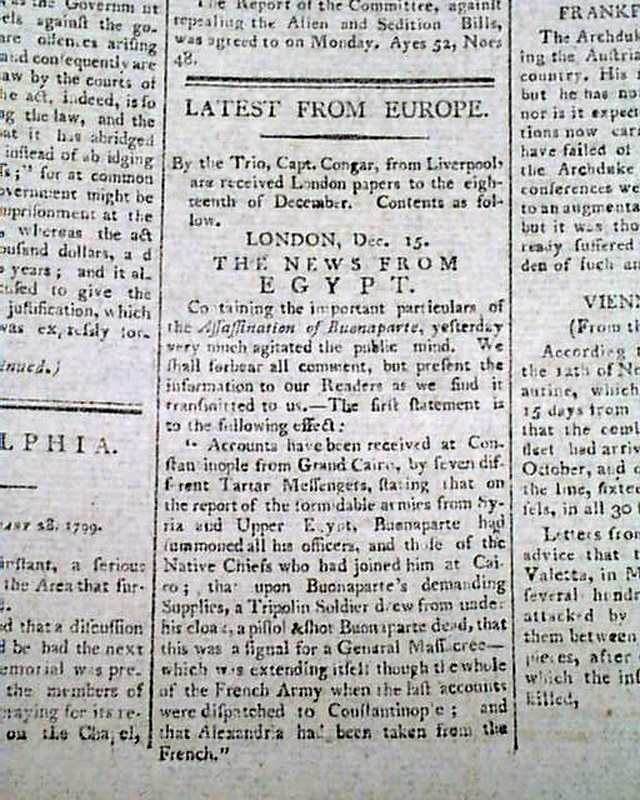
Page 3 has: "The New From Egypt" begins: "Containing the important particulars of the assassination of Buonaparte, yesterday, very much agitated the public mind...". It was not true.
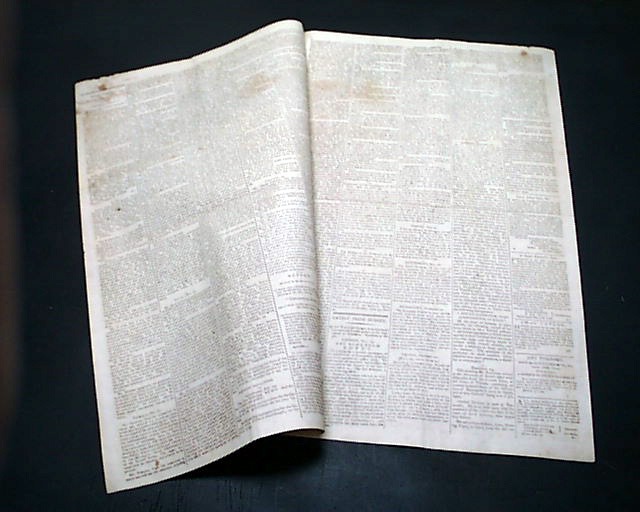
Four pages, nice condition.
background: This February 28, 1799, edition of The Universal Gazette serves as a remarkable time capsule of the Quasi-War, capturing the volatile intersection of early American naval honor and the era's global misinformation. The defense offered by William Bainbridge regarding the surrender of the USS Retaliation is particularly significant; it marks a moment of professional crisis for a man who would later become a naval icon, yet here he is seen grappling with the fallout of being the first commander to strike the American colors to a foreign power. This domestic drama is framed on the back page by the rigid legislative reality of the Act of Congress, illustrating the government's transition from diplomatic tension to active economic and naval hostility against France. Perhaps most fascinating is the false report of Napoleon’s assassination in Egypt, a "fake news" phenomenon of the 18th century that highlights how the Atlantic Ocean acted as a distorting lens, allowing British-leaning rumors to agitate the American public and color their perception of the French Revolution’s most formidable figure.
The back page has "An Act" of Congress relating to the Quasi-War with France.
Page 3 has: "The New From Egypt" begins: "Containing the important particulars of the assassination of Buonaparte, yesterday, very much agitated the public mind...". It was not true.
Four pages, nice condition.
background: This February 28, 1799, edition of The Universal Gazette serves as a remarkable time capsule of the Quasi-War, capturing the volatile intersection of early American naval honor and the era's global misinformation. The defense offered by William Bainbridge regarding the surrender of the USS Retaliation is particularly significant; it marks a moment of professional crisis for a man who would later become a naval icon, yet here he is seen grappling with the fallout of being the first commander to strike the American colors to a foreign power. This domestic drama is framed on the back page by the rigid legislative reality of the Act of Congress, illustrating the government's transition from diplomatic tension to active economic and naval hostility against France. Perhaps most fascinating is the false report of Napoleon’s assassination in Egypt, a "fake news" phenomenon of the 18th century that highlights how the Atlantic Ocean acted as a distorting lens, allowing British-leaning rumors to agitate the American public and color their perception of the French Revolution’s most formidable figure.
Category: The 1600's and 1700's


