

Marriage advice from Ben Franklin...
Item # 703757Sorry, but this item is no longer available. Please be in touch at info@rarenewspapers.com if you would like to be placed on a want list or are interested in a potential alternate issue.
October 10, 1789
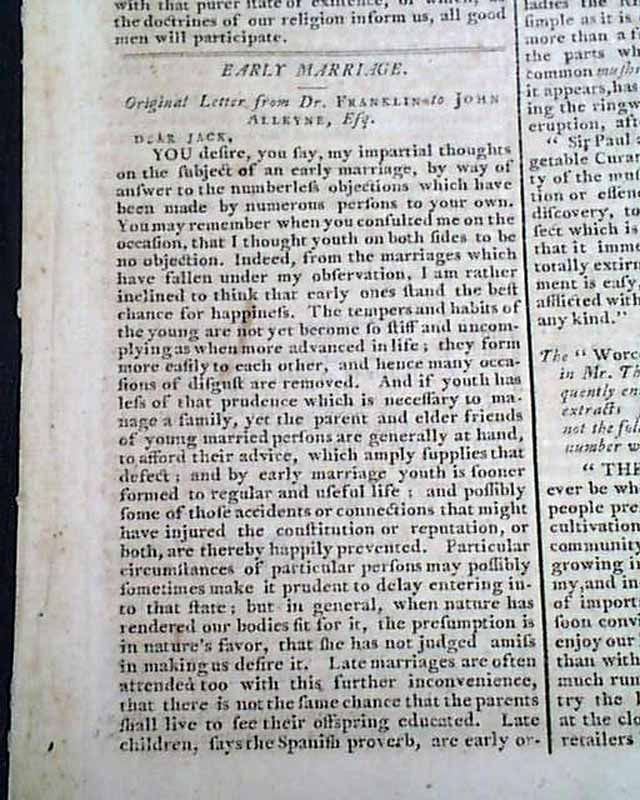
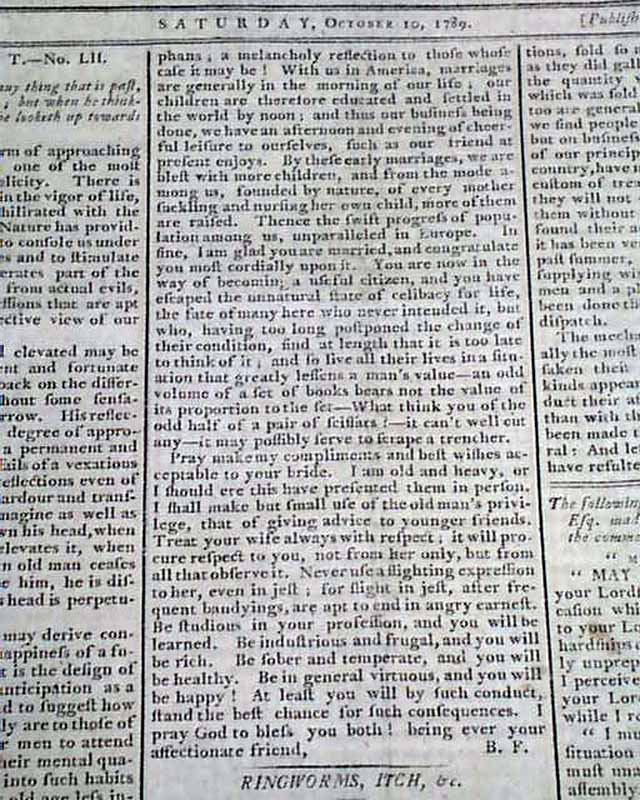
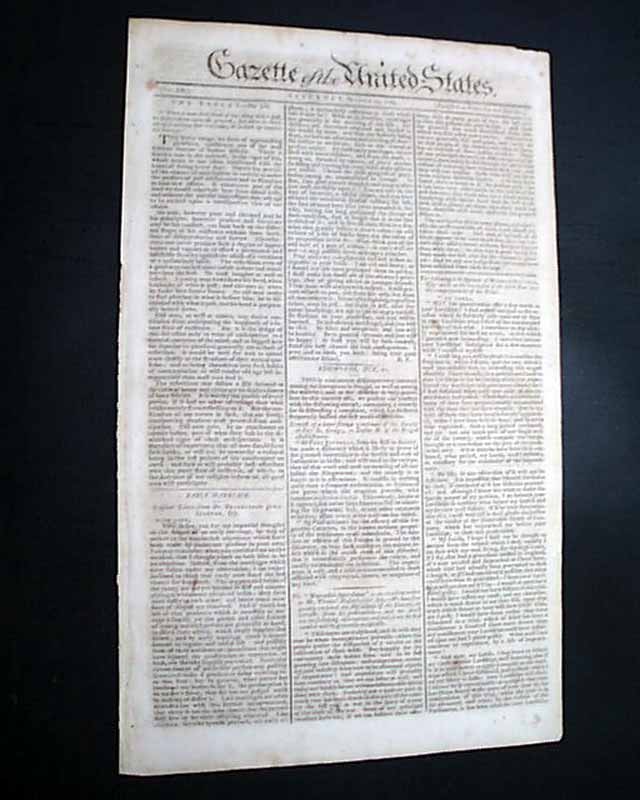
GAZETTE OF THE UNITED STATES, New York, Oct. 10, 1789 The front page has close to a full column taken up with: "Early Marriage -- Original Letter from Dr. Franklin to John Alleyne, Esq." which is signed by him in type: B. F. This is a bit of a "Dear Abby" response from over 200 years ago.
An internet source mentions this was printed in the Penna. Packet of Oct. 30, 1789. This printing appears 20 days earlier.
Pages 2 & 3 have: "New Constitution of France" with various particulars.
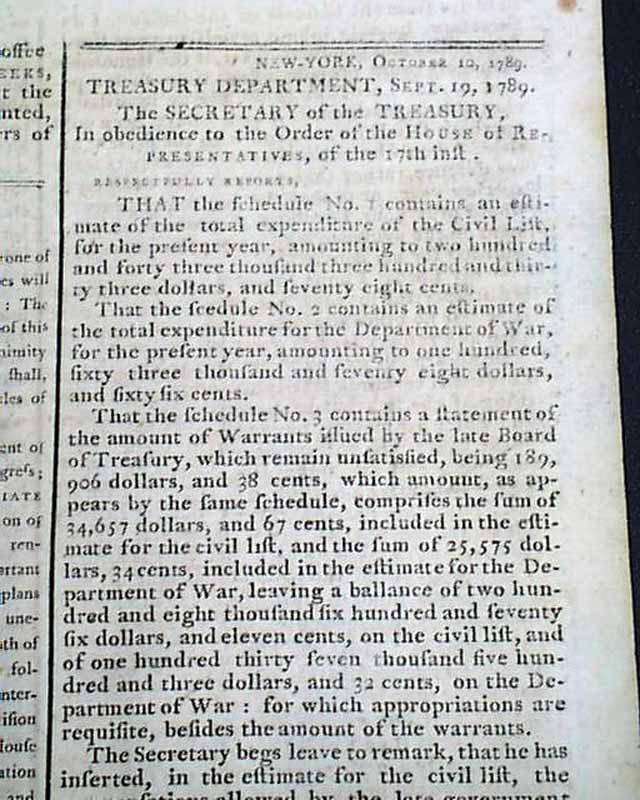
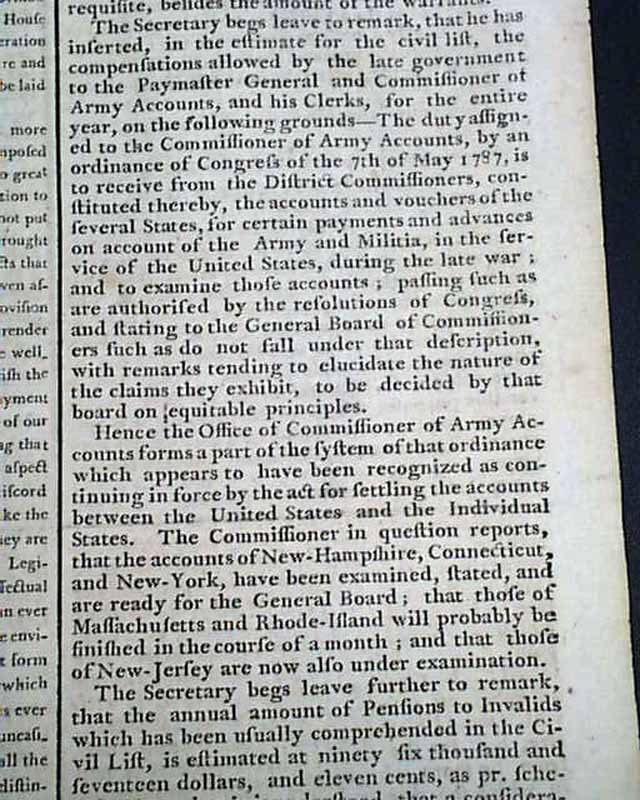
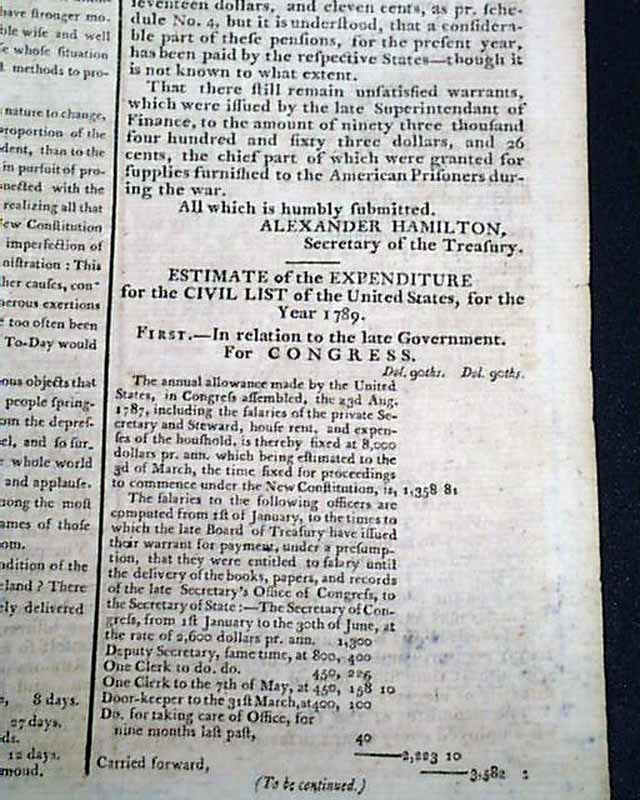
Page 3 has a report headed: "Treasury Department" signed in type by: Alexander Hamilton, Secretary of the Treasury. This is his "Report on the Estimate of the Expenditure for the Civil List and the War Department to the End of the Present Year". Part of the financial statement is continued in the next issue.
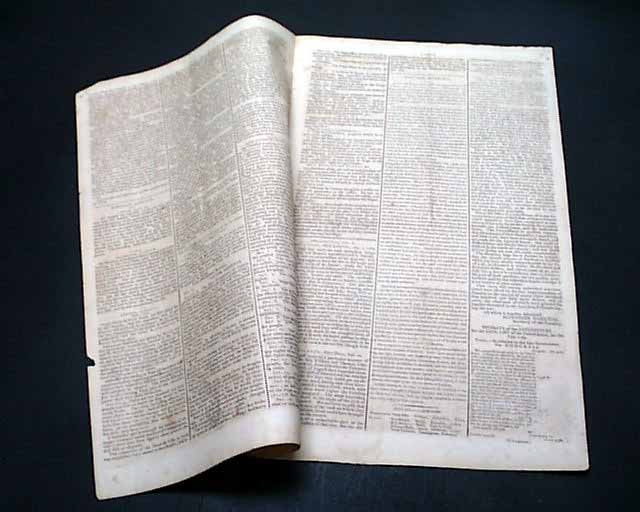
Four pages, nice condition.
Background: The publication of the October 10, 1789, issue of the Gazette of the United States serves as a definitive primary source documenting the "engine room" of the nascent American Republic during its first year under the Constitution. As the unofficial organ of the Federalist administration, this issue captures the precise moment when the abstract ideals of the Revolution were being translated into a functioning federal bureaucracy. The inclusion of Alexander Hamilton’s Treasury report, signed just weeks after his appointment, provides a raw look at the daunting task of organizing the nation’s finances and civil expenditures from scratch. This political gravity is balanced by the cultural weight of Benjamin Franklin’s "Early Marriage" letter; its appearance here—weeks before other major city papers—highlights the Gazette’s role as the premier source for the era's most influential voices. Furthermore, by reporting on the "New Constitution of France" amidst the escalating French Revolution, the paper illustrates the global reach of Enlightenment thought and the shared, yet divergent, paths of the two great 18th-century republics. Together, these elements reflect the Federalists' vision of a sophisticated, fiscally sound, and culturally unified nation emerging on the world stage.
Considered by many as the most significant newspaper of the 18th century, particularly during this, the formative year of the new federal government, as this paper was the mouthpiece of all matters political. Most pronouncements from Congress & the President were printed first in this newspaper.
An internet source mentions this was printed in the Penna. Packet of Oct. 30, 1789. This printing appears 20 days earlier.
Pages 2 & 3 have: "New Constitution of France" with various particulars.
Page 3 has a report headed: "Treasury Department" signed in type by: Alexander Hamilton, Secretary of the Treasury. This is his "Report on the Estimate of the Expenditure for the Civil List and the War Department to the End of the Present Year". Part of the financial statement is continued in the next issue.
Four pages, nice condition.
Background: The publication of the October 10, 1789, issue of the Gazette of the United States serves as a definitive primary source documenting the "engine room" of the nascent American Republic during its first year under the Constitution. As the unofficial organ of the Federalist administration, this issue captures the precise moment when the abstract ideals of the Revolution were being translated into a functioning federal bureaucracy. The inclusion of Alexander Hamilton’s Treasury report, signed just weeks after his appointment, provides a raw look at the daunting task of organizing the nation’s finances and civil expenditures from scratch. This political gravity is balanced by the cultural weight of Benjamin Franklin’s "Early Marriage" letter; its appearance here—weeks before other major city papers—highlights the Gazette’s role as the premier source for the era's most influential voices. Furthermore, by reporting on the "New Constitution of France" amidst the escalating French Revolution, the paper illustrates the global reach of Enlightenment thought and the shared, yet divergent, paths of the two great 18th-century republics. Together, these elements reflect the Federalists' vision of a sophisticated, fiscally sound, and culturally unified nation emerging on the world stage.
Considered by many as the most significant newspaper of the 18th century, particularly during this, the formative year of the new federal government, as this paper was the mouthpiece of all matters political. Most pronouncements from Congress & the President were printed first in this newspaper.
Category: The 1600's and 1700's


