

Angry Loyalists, and much more...
Item # 703291
May 12, 1783
THE INDEPENDENT LEDGER & AMERICAN ADVERTISER, Boston, May 12, 1783
* "Great Expulsion" of American Loyalists
* The Fall of Count de Grasse - The Saintes
* American Revolutionary War "Cleanup Phase"
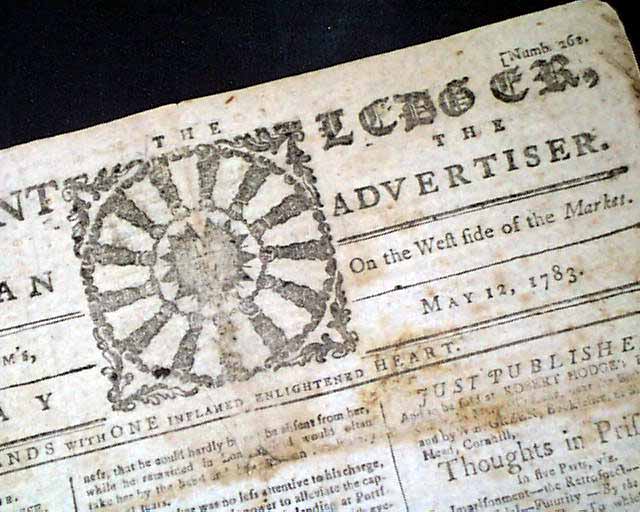
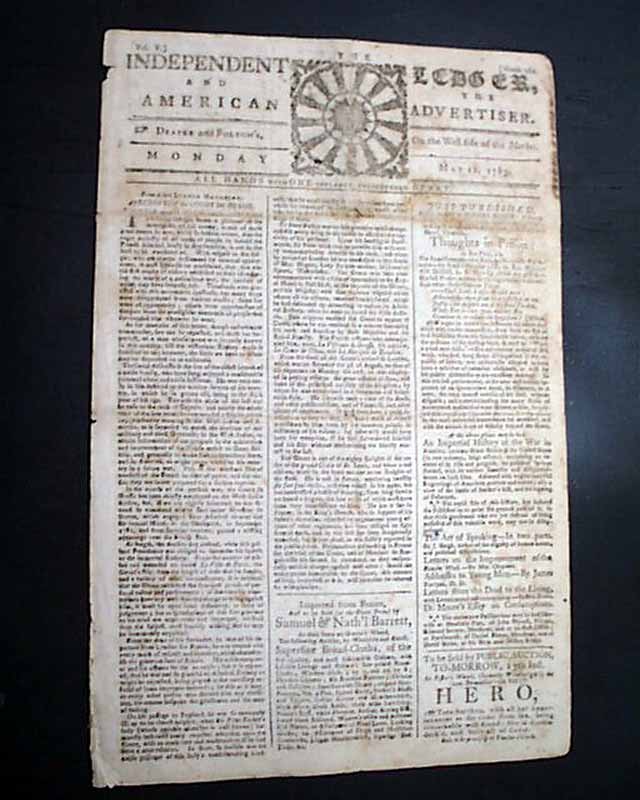
A nice feature of this issue is the masthead engraving which shows "All Hands with One Inflamed Enlightened Heart." signifying the 13 united colonies having a common, patriotic purpose.
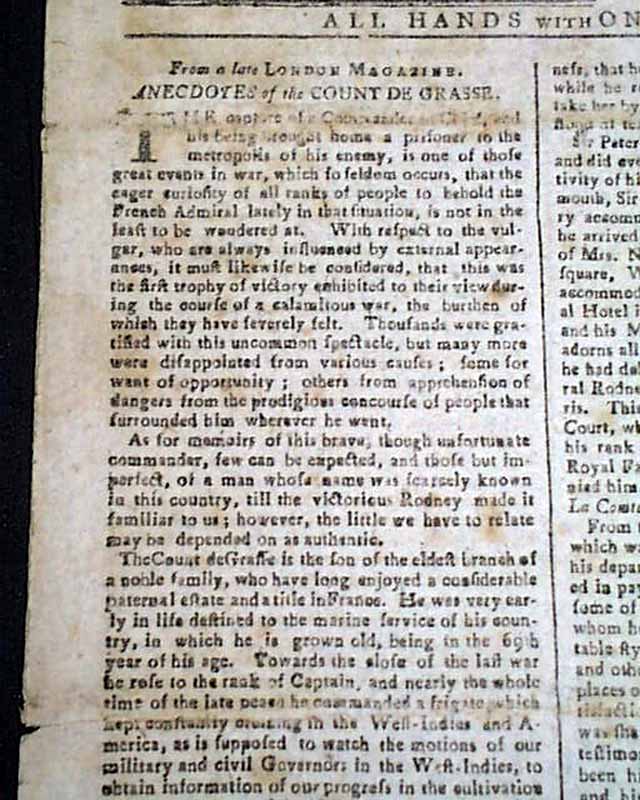
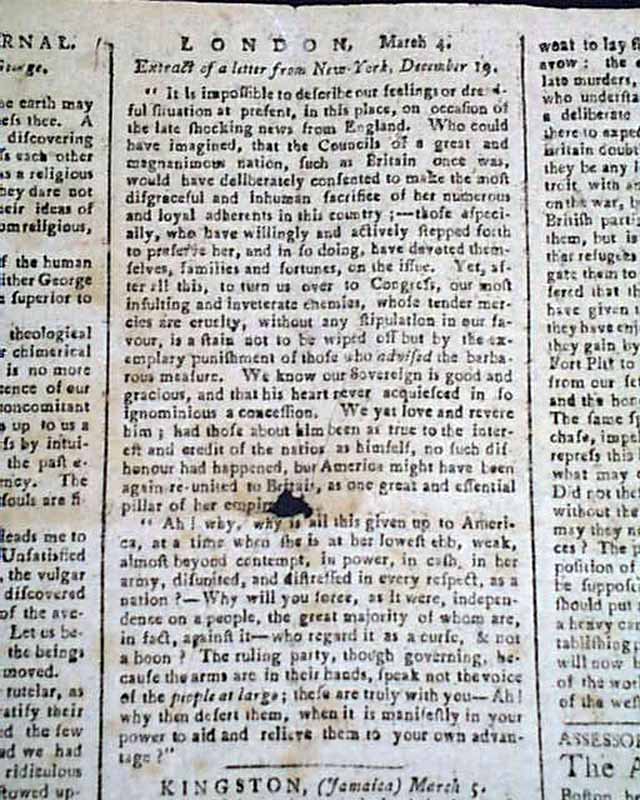
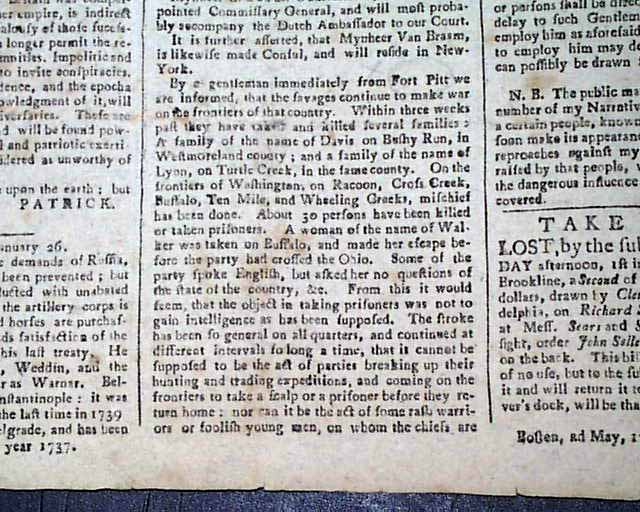
Over half of the front page has an item from London: "Anecdotes of the Count De Grasse" which begins: "The capture of a Commander in Chief & his being brought home a prisoner to the metropolis of his enemy is one of those great events in war which so seldom occurs...". He was commander of the French forces in the Chesapeake at the time Cornwallis surrendered to Washington, but the following year was captured by the British in the Battle of the Saintes in the Caribbean just 7 months later. Page 2 has a great letter from New York angry at England in its protection of the American loyalists during the war, beginning: "It is impossible to describe our feelings or dreadful situation at present in this place on occasion of the late shocking news from England. Who could have imagined that...nation such as Britain once was, would have deliberately consented to make the most disgraceful & inhuman sacrifice to her numerous & loyal adherents i this country..." with much more. Another bit on the Loyalists note: "The number of inhabitants going to Nova Scotia in the present fleet consists of upwards of 9000 souls...".
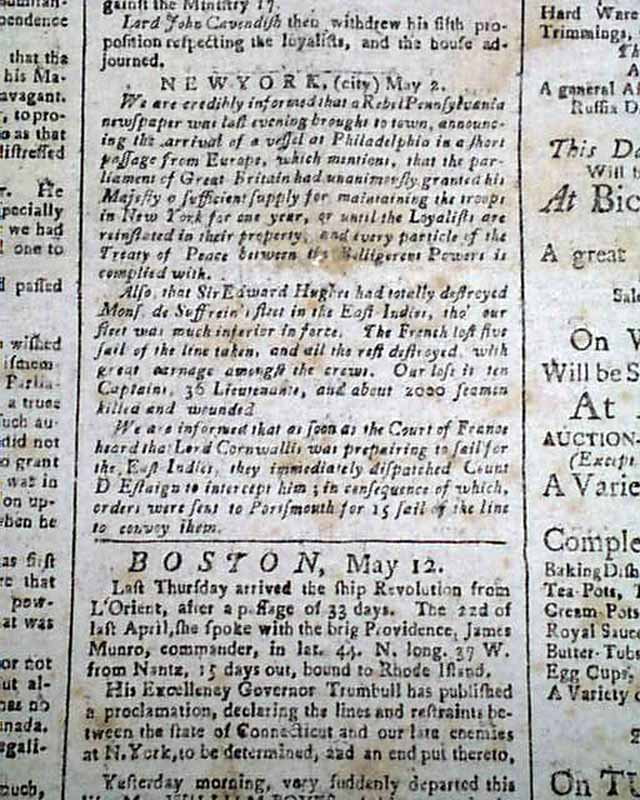
A page 3 item includes: "...informed that a rebel Pennsylvania newspaper...announcing...that the parliament of Great Britain had unanimously granted his Majesty a sufficient supply for maintaining the troops in New York for one year, or until the Loyalists are reinstated in their property & every particle of the Treaty of Peace between the belligerent powers is complied with."
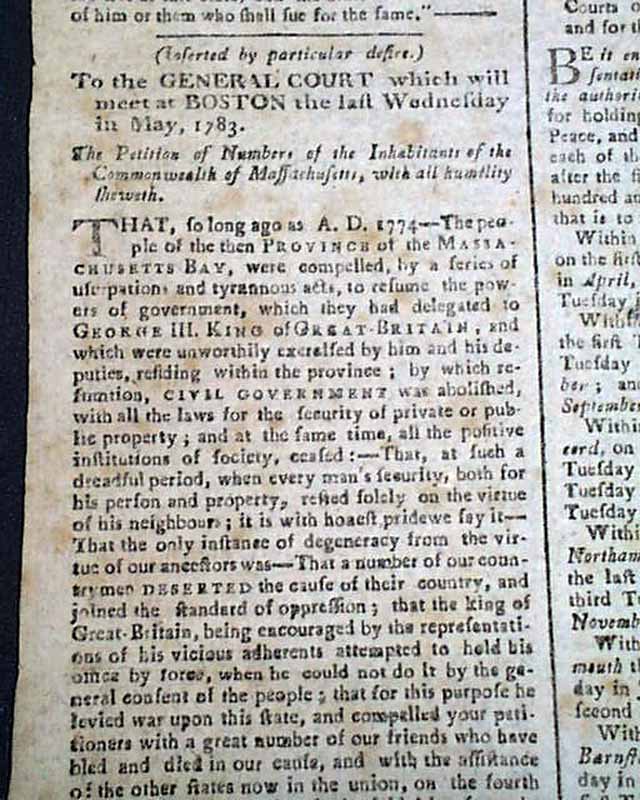
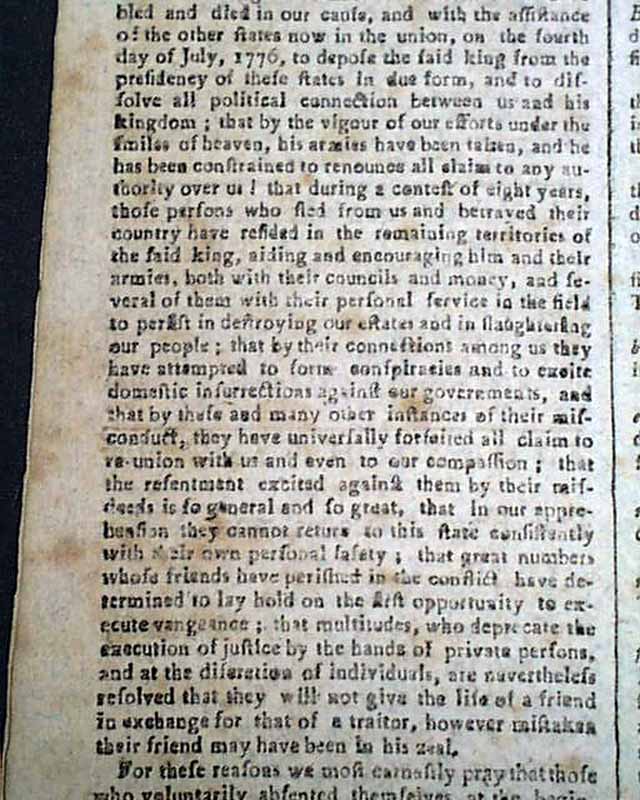
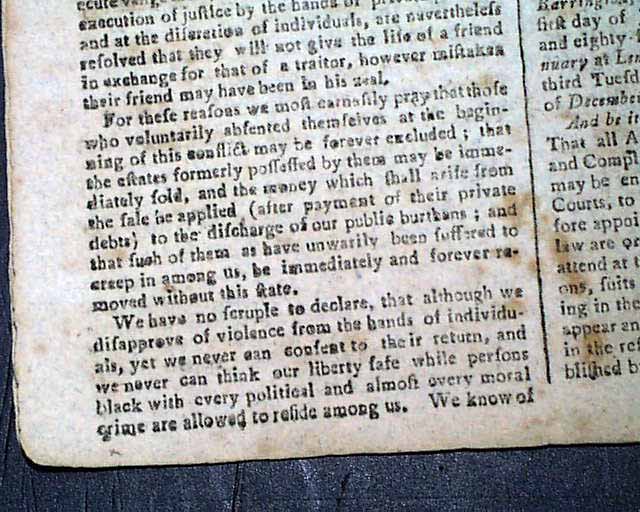
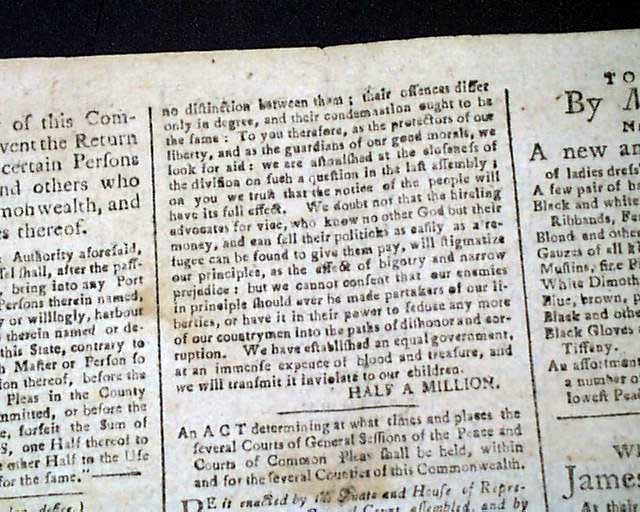
The back page has a document which includes in part: "...That a number of our countrymen deserted the cause of their country & joined the standard of oppression; that the king of Great Britain, being encouraged by the representations of his vicious adherents...he levied war upon this state & compelled...a great number of our friends who have bled and died in our cause, and with the assistance of the other states now in the union, on the fourth day of July, 1776 to depose the said king..." with much more, taking nearly a full page.
Four pages, rubbing at the front leaf folds causes a small hole at the fold juncture affecting about 3 words on the front page. Otherwise in good condition.
Background: The May 12, 1783, publication of The Independent Ledger & American Advertiser serves as a poignant historical snapshot of a nation in a state of volatile transition, caught between the euphoria of independence and the bitter realities of post-war reconciliation. While the front page reflects on the shifting fortunes of global powers through the "anecdotes" of the captured French Admiral de Grasse—the hero of Yorktown turned British prisoner—the internal pages expose the raw, domestic wounds of the Revolution. The rhetoric vividly illustrates the "dreadful situation" of British Loyalists in New York who, feeling "disgracefully" sacrificed by the Crown in the preliminary peace negotiations, began a desperate exodus of thousands to Nova Scotia. Simultaneously, the paper documents the simmering American animosity toward those who "joined the standard of oppression," showcasing a hardening national identity that demanded full compliance with treaty terms before property could be restored. This issue essentially archives the exact moment the revolutionary fervor of "one inflamed enlightened heart" collided with the complex logistical and humanitarian crisis of decolonization, marking the painful birth of a sovereign United States.
* "Great Expulsion" of American Loyalists
* The Fall of Count de Grasse - The Saintes
* American Revolutionary War "Cleanup Phase"
A nice feature of this issue is the masthead engraving which shows "All Hands with One Inflamed Enlightened Heart." signifying the 13 united colonies having a common, patriotic purpose.
Over half of the front page has an item from London: "Anecdotes of the Count De Grasse" which begins: "The capture of a Commander in Chief & his being brought home a prisoner to the metropolis of his enemy is one of those great events in war which so seldom occurs...". He was commander of the French forces in the Chesapeake at the time Cornwallis surrendered to Washington, but the following year was captured by the British in the Battle of the Saintes in the Caribbean just 7 months later. Page 2 has a great letter from New York angry at England in its protection of the American loyalists during the war, beginning: "It is impossible to describe our feelings or dreadful situation at present in this place on occasion of the late shocking news from England. Who could have imagined that...nation such as Britain once was, would have deliberately consented to make the most disgraceful & inhuman sacrifice to her numerous & loyal adherents i this country..." with much more. Another bit on the Loyalists note: "The number of inhabitants going to Nova Scotia in the present fleet consists of upwards of 9000 souls...".
A page 3 item includes: "...informed that a rebel Pennsylvania newspaper...announcing...that the parliament of Great Britain had unanimously granted his Majesty a sufficient supply for maintaining the troops in New York for one year, or until the Loyalists are reinstated in their property & every particle of the Treaty of Peace between the belligerent powers is complied with."
The back page has a document which includes in part: "...That a number of our countrymen deserted the cause of their country & joined the standard of oppression; that the king of Great Britain, being encouraged by the representations of his vicious adherents...he levied war upon this state & compelled...a great number of our friends who have bled and died in our cause, and with the assistance of the other states now in the union, on the fourth day of July, 1776 to depose the said king..." with much more, taking nearly a full page.
Four pages, rubbing at the front leaf folds causes a small hole at the fold juncture affecting about 3 words on the front page. Otherwise in good condition.
Background: The May 12, 1783, publication of The Independent Ledger & American Advertiser serves as a poignant historical snapshot of a nation in a state of volatile transition, caught between the euphoria of independence and the bitter realities of post-war reconciliation. While the front page reflects on the shifting fortunes of global powers through the "anecdotes" of the captured French Admiral de Grasse—the hero of Yorktown turned British prisoner—the internal pages expose the raw, domestic wounds of the Revolution. The rhetoric vividly illustrates the "dreadful situation" of British Loyalists in New York who, feeling "disgracefully" sacrificed by the Crown in the preliminary peace negotiations, began a desperate exodus of thousands to Nova Scotia. Simultaneously, the paper documents the simmering American animosity toward those who "joined the standard of oppression," showcasing a hardening national identity that demanded full compliance with treaty terms before property could be restored. This issue essentially archives the exact moment the revolutionary fervor of "one inflamed enlightened heart" collided with the complex logistical and humanitarian crisis of decolonization, marking the painful birth of a sovereign United States.
Category: Revolutionary War


