

Proclamation of war: the War of 1812 begins...
Item # 702750
June 27, 1812
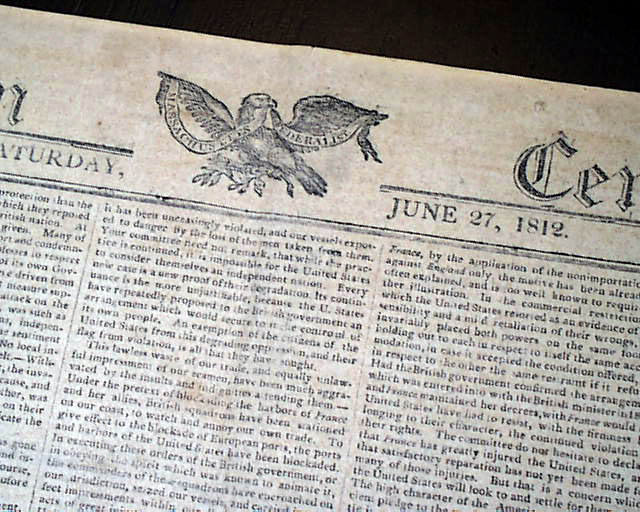
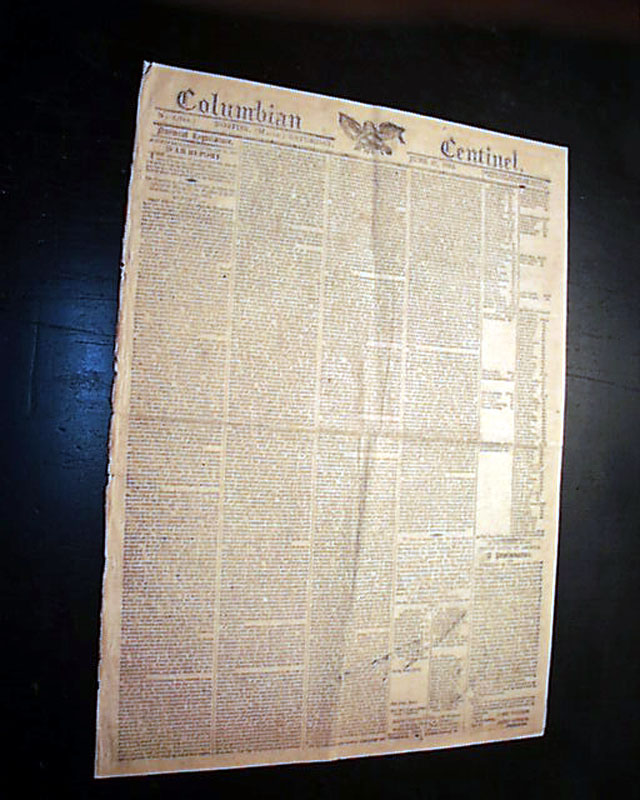
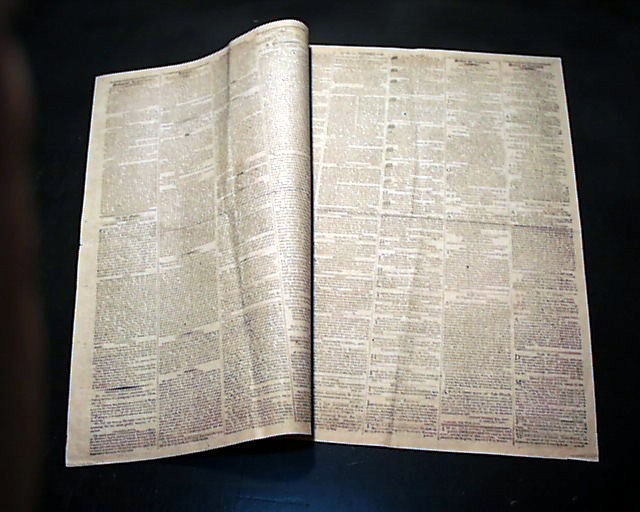
COLUMBIAN CENTINEL, Boston, June 27, 1812
* War of 1812 declaration by United States
* President James Madison proclamation
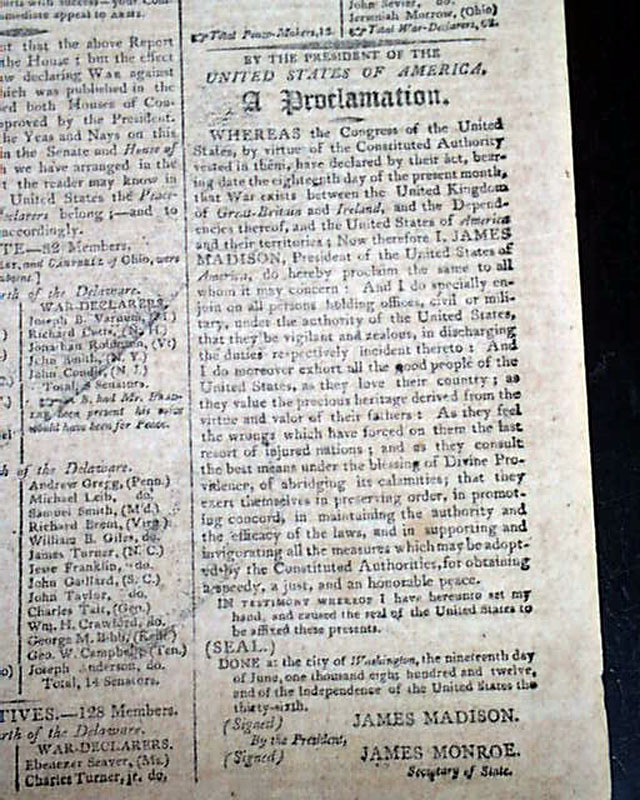
In the last column of the front page is the very historic: "Proclamation" "By The President of the United States of America" & signed by James Madison, declaring that a state of war exists between the United States & England, marking the official beginning of the War of 1812.
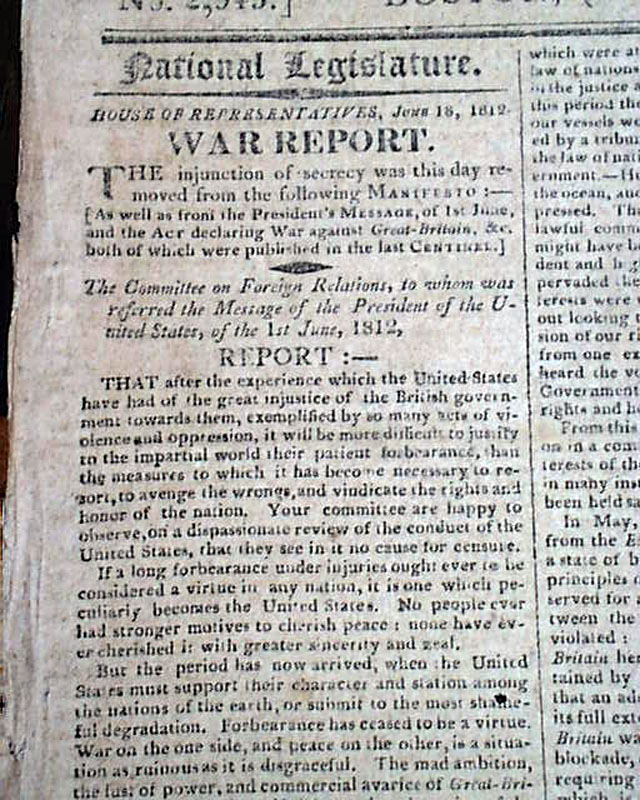
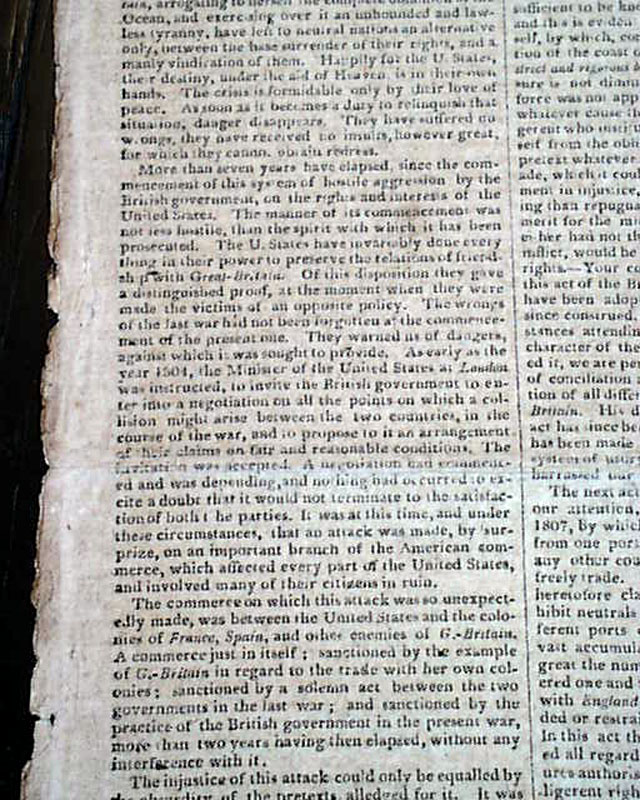
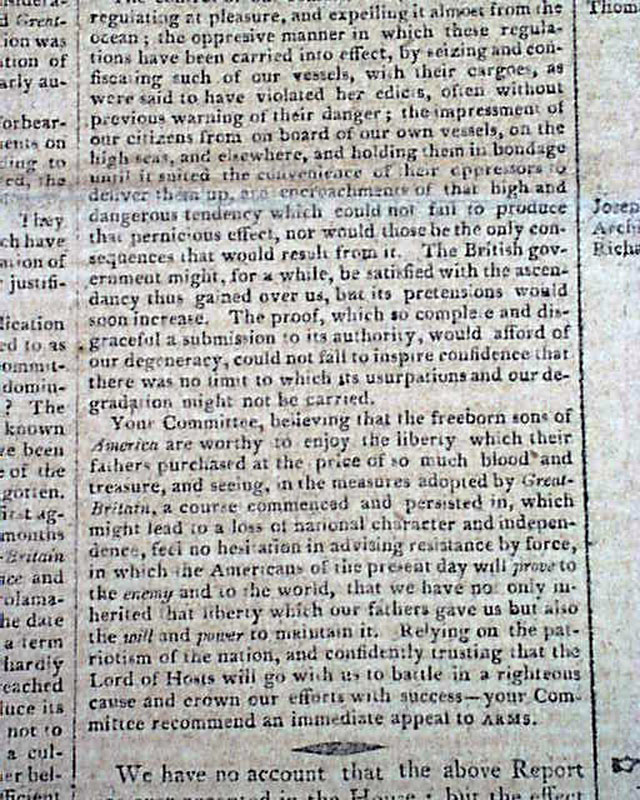
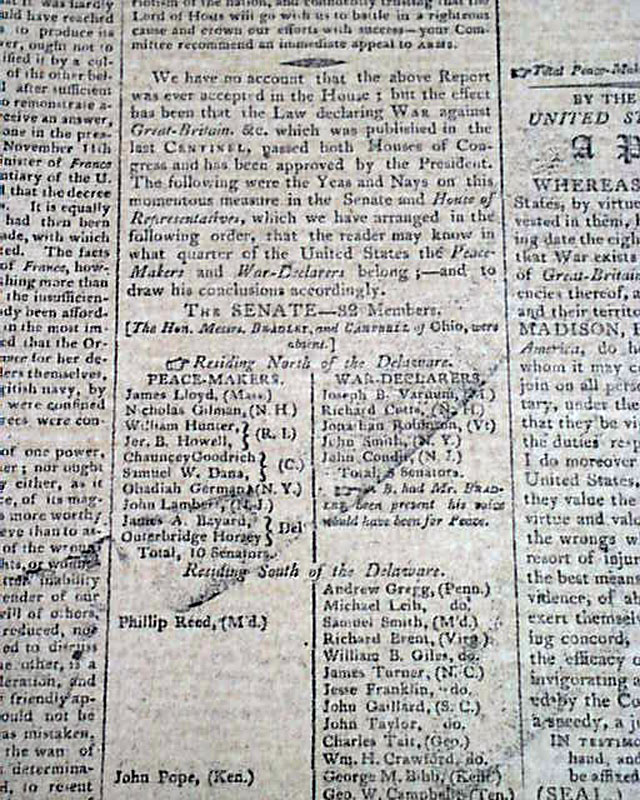
Most of the balance of the front page is taken up with the very lengthy & detailed: "War Report" of the House of Representatives, giving credence to the President's declaration of war.
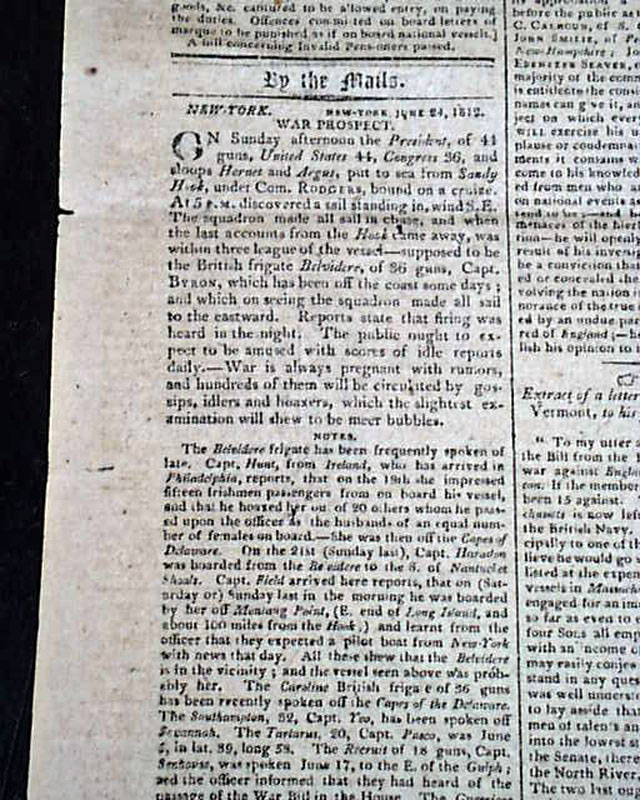
Page 2 has some editorial commentary on the war headed: "War Prospect".
An historic issue on America's entry into what would become known as the War of 1812.
Four pages, nice condition.
Background: The War of 1812, sparked by James Madison’s June 1812 proclamation, represents a pivotal "Second War of Independence" that solidified American sovereignty on the global stage. The conflict arose from deep-seated grievances against Great Britain, primarily the impressment of American sailors into the Royal Navy and the restrictive Orders in Council that crippled American trade during the Napoleonic Wars. While the House of Representatives' "War Report" framed the conflict as a defense of national honor and maritime rights, the nation was deeply divided; Federalist strongholds in New England, represented by papers like the Columbian Centinel, feared the economic ruin of their shipping industry and labeled it "Mr. Madison's War." Despite the British burning of Washington D.C. and the lack of significant territorial gains in the Treaty of Ghent, the war’s conclusion ushered in the "Era of Good Feelings." It broke the power of Native American confederacies in the Northwest Territory, surged a newfound sense of national identity, and proved that the young republic could withstand a sustained military challenge from a world superpower.
* War of 1812 declaration by United States
* President James Madison proclamation
In the last column of the front page is the very historic: "Proclamation" "By The President of the United States of America" & signed by James Madison, declaring that a state of war exists between the United States & England, marking the official beginning of the War of 1812.
Most of the balance of the front page is taken up with the very lengthy & detailed: "War Report" of the House of Representatives, giving credence to the President's declaration of war.
Page 2 has some editorial commentary on the war headed: "War Prospect".
An historic issue on America's entry into what would become known as the War of 1812.
Four pages, nice condition.
Background: The War of 1812, sparked by James Madison’s June 1812 proclamation, represents a pivotal "Second War of Independence" that solidified American sovereignty on the global stage. The conflict arose from deep-seated grievances against Great Britain, primarily the impressment of American sailors into the Royal Navy and the restrictive Orders in Council that crippled American trade during the Napoleonic Wars. While the House of Representatives' "War Report" framed the conflict as a defense of national honor and maritime rights, the nation was deeply divided; Federalist strongholds in New England, represented by papers like the Columbian Centinel, feared the economic ruin of their shipping industry and labeled it "Mr. Madison's War." Despite the British burning of Washington D.C. and the lack of significant territorial gains in the Treaty of Ghent, the war’s conclusion ushered in the "Era of Good Feelings." It broke the power of Native American confederacies in the Northwest Territory, surged a newfound sense of national identity, and proved that the young republic could withstand a sustained military challenge from a world superpower.
Category: Pre-Civil War


