

Captain Porter & the Battle of Valparaiso... Battle of Chippewa...
Item # 700928
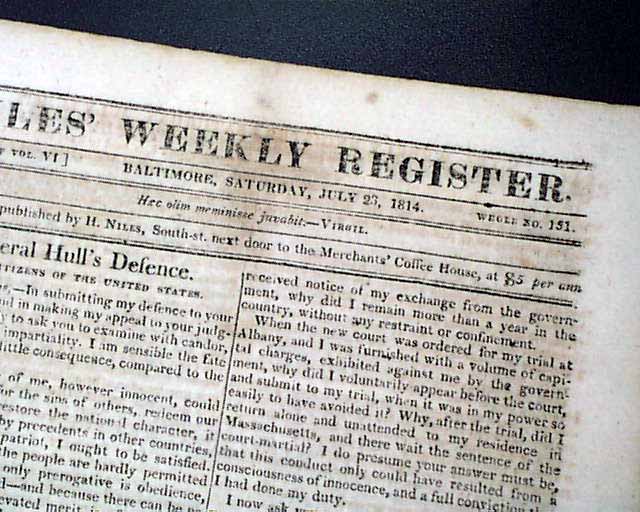
July 23, 1814
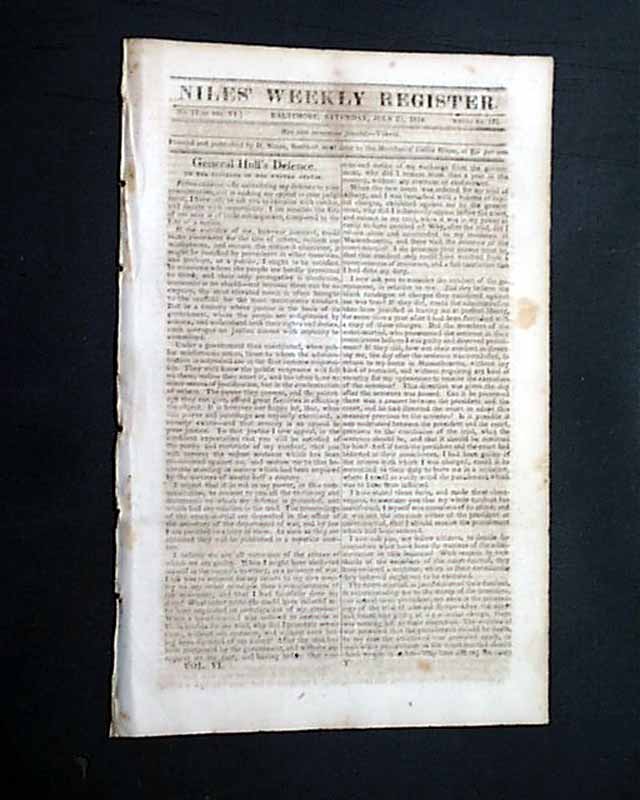
NILES' WEEKLY REGISTER, Baltimore, July 23, 1814
* Battle of Valparaiso
* Captain David Porter
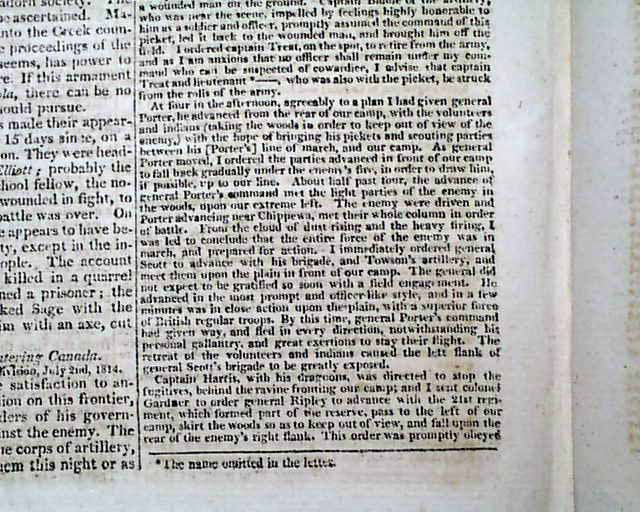
* Battle of Chippawa
* War of 1812
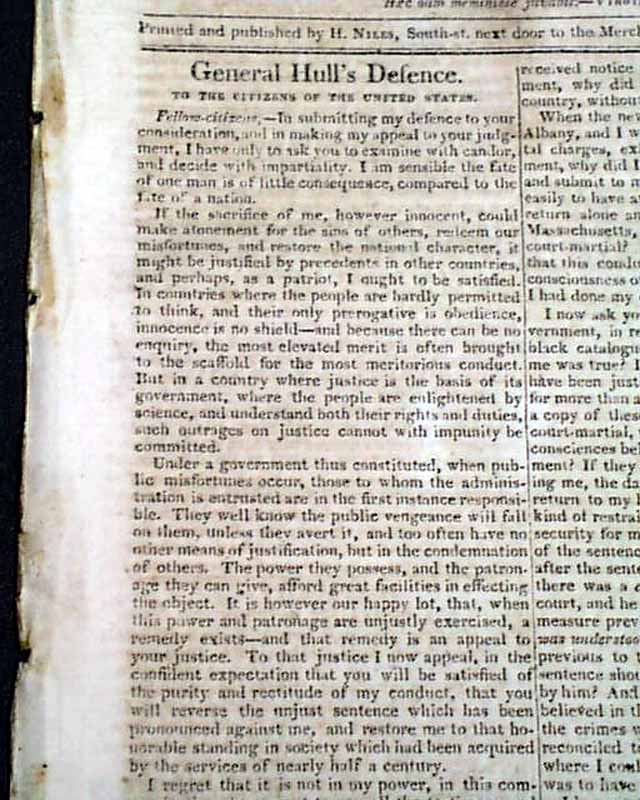
The issue begins with: "General Hull's Defence, to the Citizens of the United States" concerning his decision to surrender Detroit to the British. He was sentenced to be shot but was reprieved by President Madison. This letter is signed in type: William Hull, and takes over 2 1/2 pages.
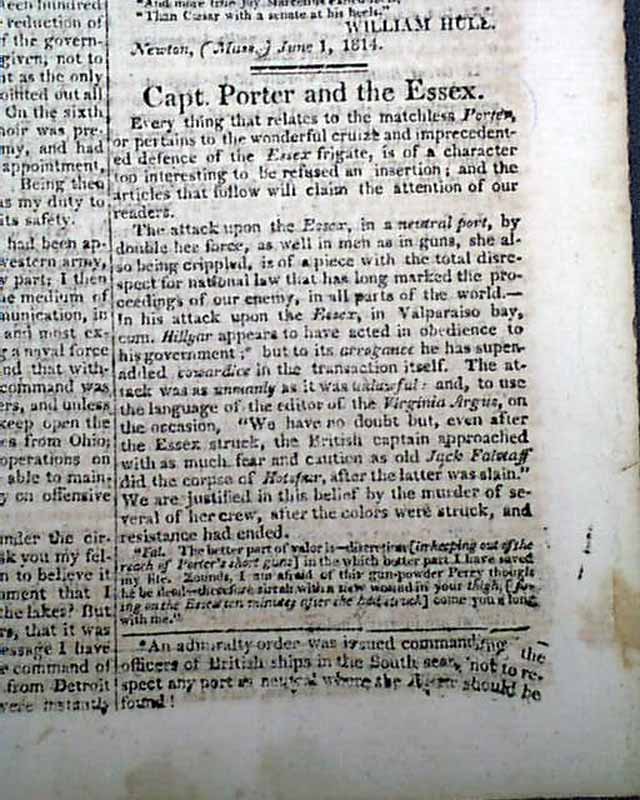
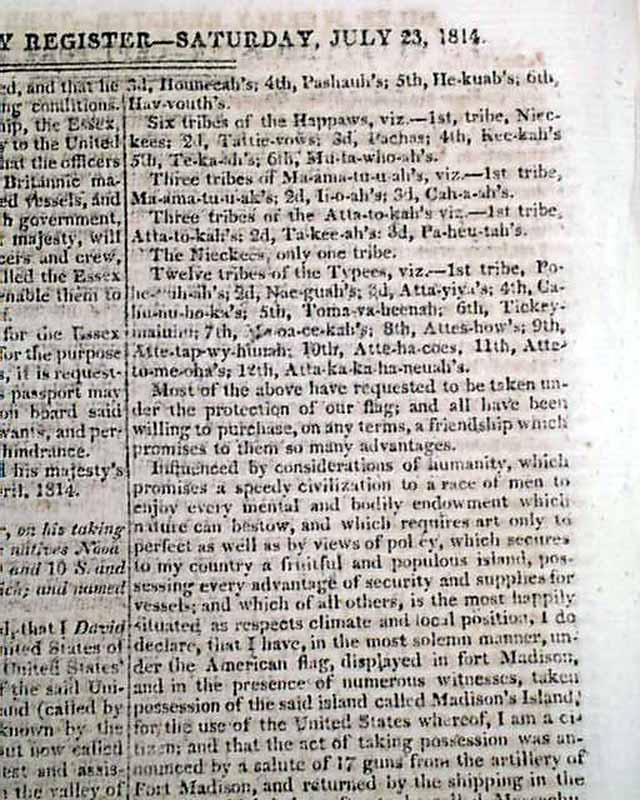
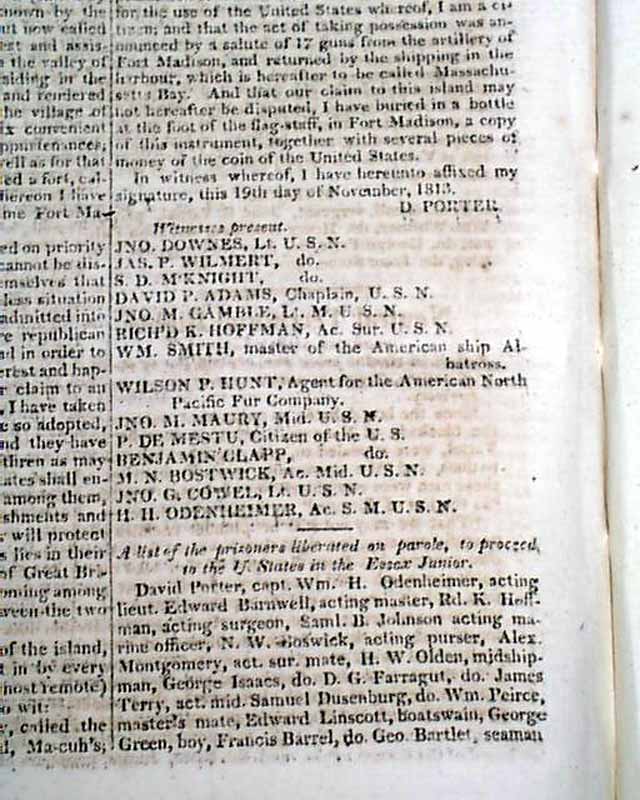
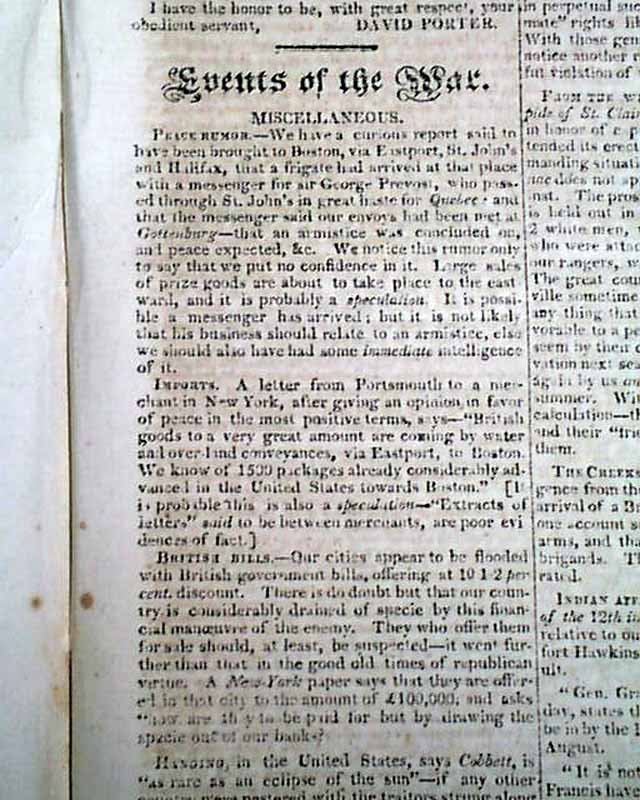
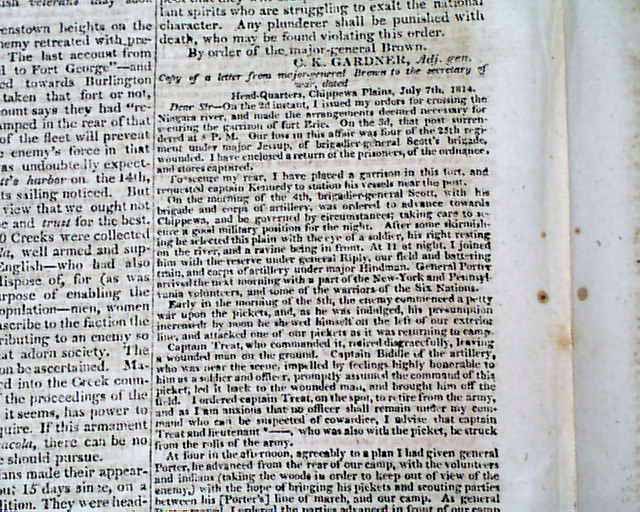
Also in this issue: "Capt. Porter & the Essex" which takes over 3 pages on his Battle of Valparaiso. Further on is: "Events of the War" taking 7 pages and includes much on the War of 1812, perhaps the most significant being a nice account of the Battle of Chippawa Falls signed in type: Jacob Brown.
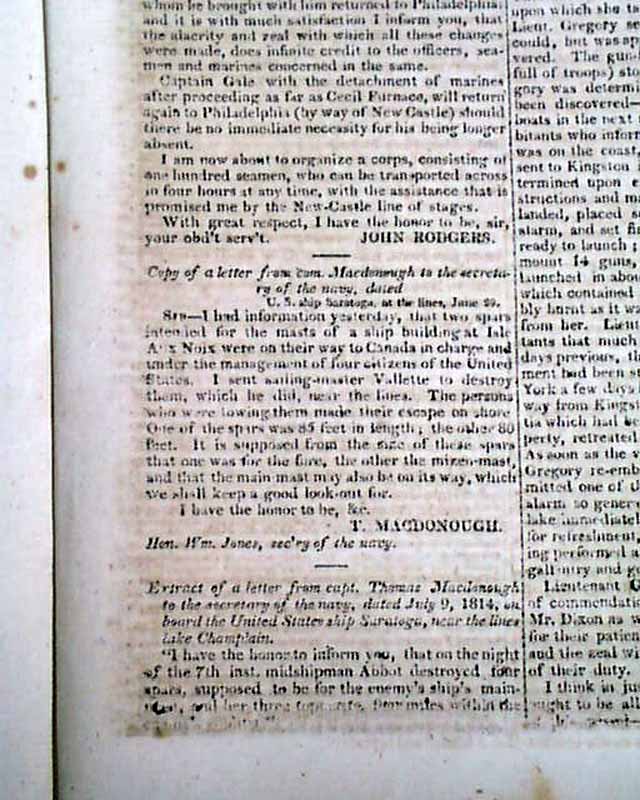
Other reports include much on naval affairs with letters signed by John Rodgers, T. MacDonough & Isaac Chauncey, and more.
Sixteen pages, 6 1/4 by 9 3/4 inches, very nice condition.
background: While both events occurred in 1814, they represent the divergent fates of the American military during the War of 1812: one a tragic naval stand in the Pacific and the other a professional rebirth on the Canadian frontier. At the Battle of Valparaiso, Captain David Porter’s commerce-raiding saga ended in a bloody stalemate turned slaughter; trapped in neutral Chilean waters with a shattered mast, his USS Essex was systematically dismantled by British long guns that stayed safely out of range of Porter’s short-range carronades. Conversely, the Battle of Chippewa served as the ultimate proof of American grit, where General Winfield Scott’s brigade, clad in unconventional gray uniforms, executed complex maneuvers under blistering fire with such precision that the British commander realized too late he was facing highly trained regulars rather than disorganized militia. Together, these battles illustrate a turning point where the United States moved past the amateurism of the early war, trading Porter's bold but isolated heroism for the disciplined, standardized military doctrine that would define the nation's future forces.
As noted in Wikipedia, this title: "...(was) one of the most widely-circulated magazines in the United States...Devoted primarily to politics...considered an important source for the history of the period."
* Battle of Valparaiso
* Captain David Porter
* Battle of Chippawa
* War of 1812
The issue begins with: "General Hull's Defence, to the Citizens of the United States" concerning his decision to surrender Detroit to the British. He was sentenced to be shot but was reprieved by President Madison. This letter is signed in type: William Hull, and takes over 2 1/2 pages.
Also in this issue: "Capt. Porter & the Essex" which takes over 3 pages on his Battle of Valparaiso. Further on is: "Events of the War" taking 7 pages and includes much on the War of 1812, perhaps the most significant being a nice account of the Battle of Chippawa Falls signed in type: Jacob Brown.
Other reports include much on naval affairs with letters signed by John Rodgers, T. MacDonough & Isaac Chauncey, and more.
Sixteen pages, 6 1/4 by 9 3/4 inches, very nice condition.
background: While both events occurred in 1814, they represent the divergent fates of the American military during the War of 1812: one a tragic naval stand in the Pacific and the other a professional rebirth on the Canadian frontier. At the Battle of Valparaiso, Captain David Porter’s commerce-raiding saga ended in a bloody stalemate turned slaughter; trapped in neutral Chilean waters with a shattered mast, his USS Essex was systematically dismantled by British long guns that stayed safely out of range of Porter’s short-range carronades. Conversely, the Battle of Chippewa served as the ultimate proof of American grit, where General Winfield Scott’s brigade, clad in unconventional gray uniforms, executed complex maneuvers under blistering fire with such precision that the British commander realized too late he was facing highly trained regulars rather than disorganized militia. Together, these battles illustrate a turning point where the United States moved past the amateurism of the early war, trading Porter's bold but isolated heroism for the disciplined, standardized military doctrine that would define the nation's future forces.
As noted in Wikipedia, this title: "...(was) one of the most widely-circulated magazines in the United States...Devoted primarily to politics...considered an important source for the history of the period."
Category: War of 1812


