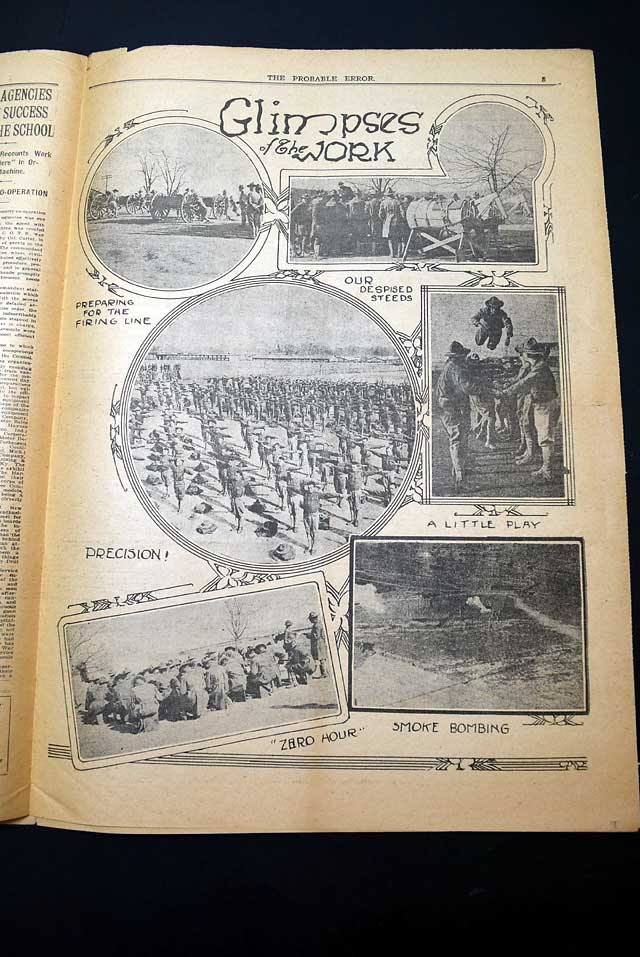
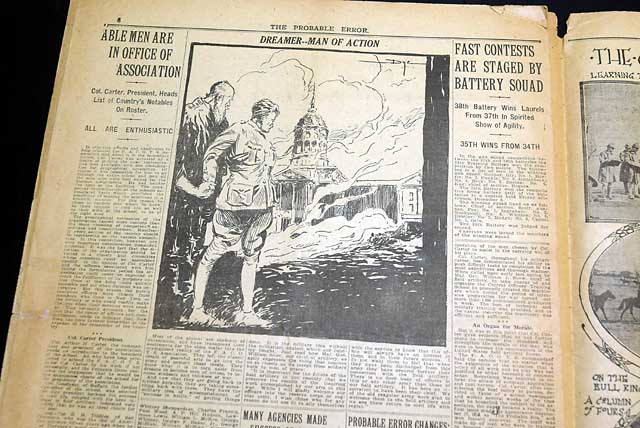
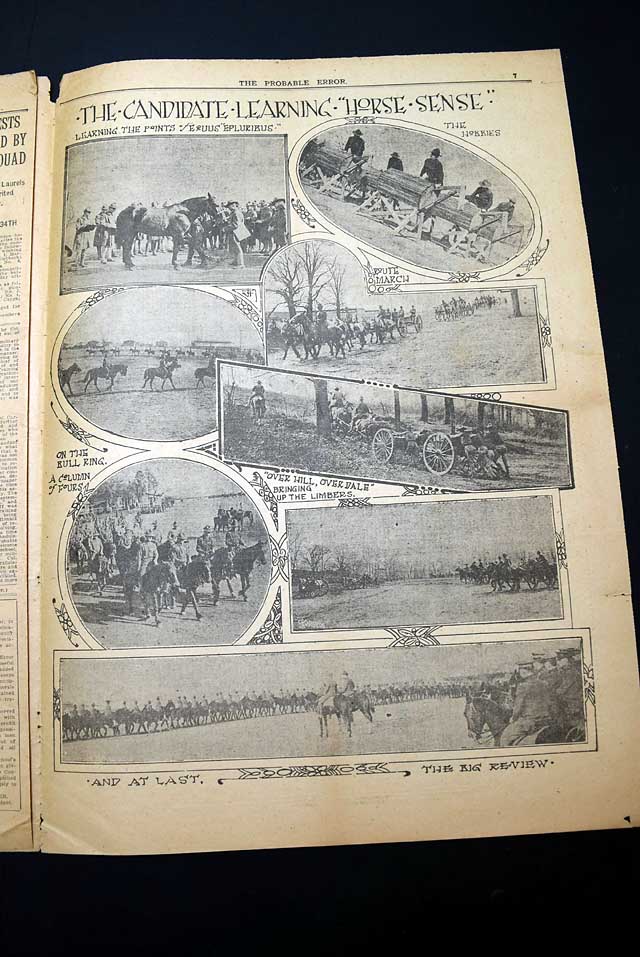
The most unusual title in your collection?
THE PROBABLE ERROR, Camp Zachary Taylor, (Louisville) Kentucky, Dec. 11, 1918
- Rare World War I training camp publication
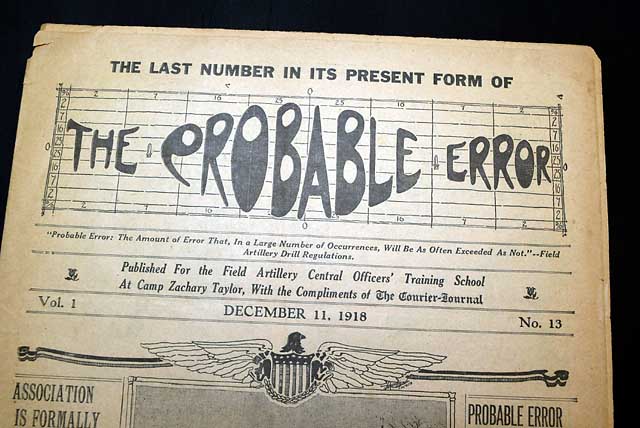
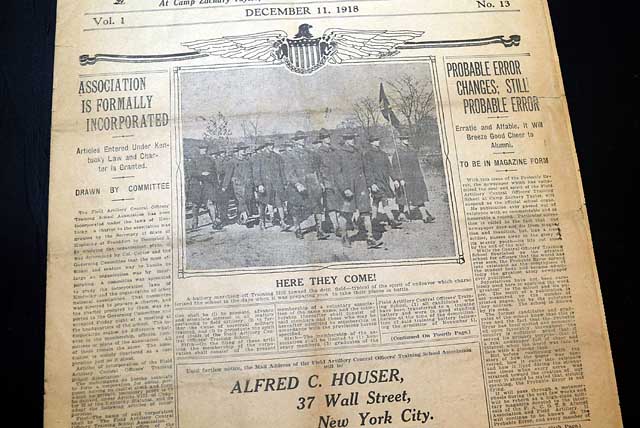
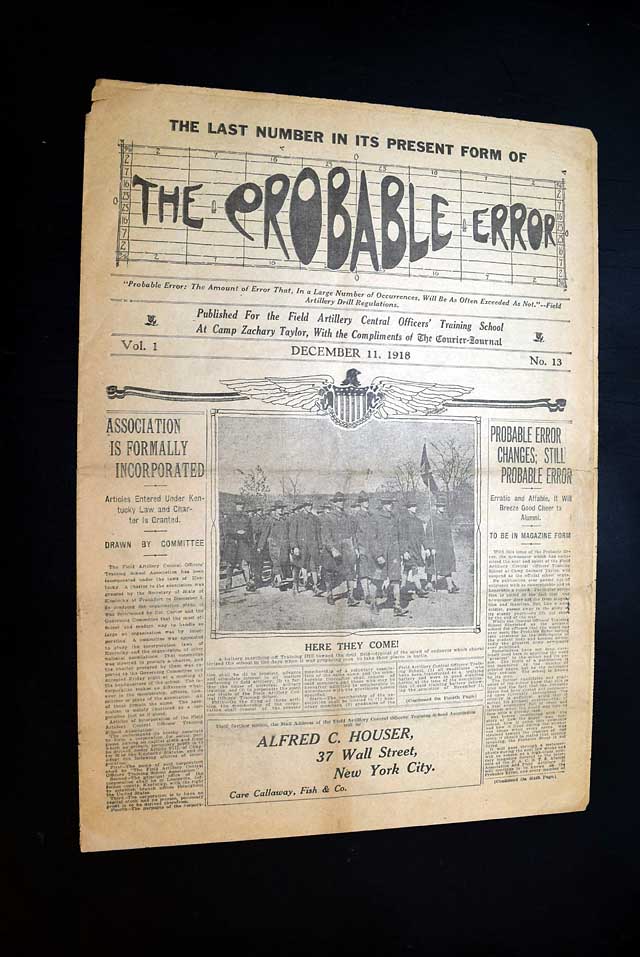
This could well be the newspaper with the most unusual title and masthead you could have in your collection. It is a military newspaper produced by the soldiers of Field Artillery Central Officers' Training School printed on the presses of the Courier-Journal. This is the volume 1, number 13 issue.
The masthead has a quote from the Field Artillery Drill Regulations which explains the title: "Probable Error: The amount of error that, in a large number of occurrences, will be as often exceeded as not."
The content is entirely military-themed, from just after the end of World War I. The camp existed only from 1917 thru 1920.
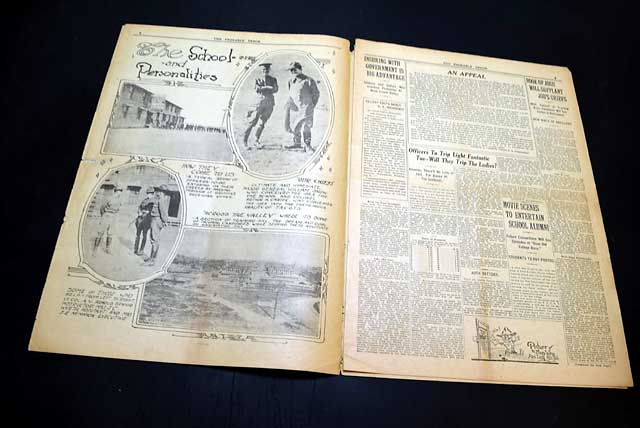
Four pages, some light dirtiness, a few small margins tears (some archaically repaired), minimal wear, good condition.
Background: Published on December 11, 1918—exactly one month after the World War I Armistice—this rare four-page issue (Vol. 1, No. 13) of The Probable Error is a standout piece of military ephemera produced by soldier-candidates of the Field Artillery Central Officers' Training School (FACOTS) at Camp Zachary Taylor in Louisville, Kentucky, a massive cantonment that existed only from 1917 to 1920. Printed on the professional presses of the Louisville Courier-Journal, the newspaper is immediately distinguished by its clever, self-deprecating artillery humor: its masthead quotes the Field Artillery Drill Regulations to define "Probable Error" as "The amount of error that, in a large number of occurrences, will be as often exceeded as not," wryly implying that half the camp rumors and reporting inside were bound to miss the mark. Beyond its unique branding, the entirely military-themed content captures a pivotal transitional moment in American military history, shifting from urgent officer preparation for the Western Front to post-Armistice demobilization, muster-out news, battery life, and soldier commentary as trainees navigated the abrupt end of the Great War.
Item from last month's catalog - #371, released for October, 2026
Other issues you may like
§ related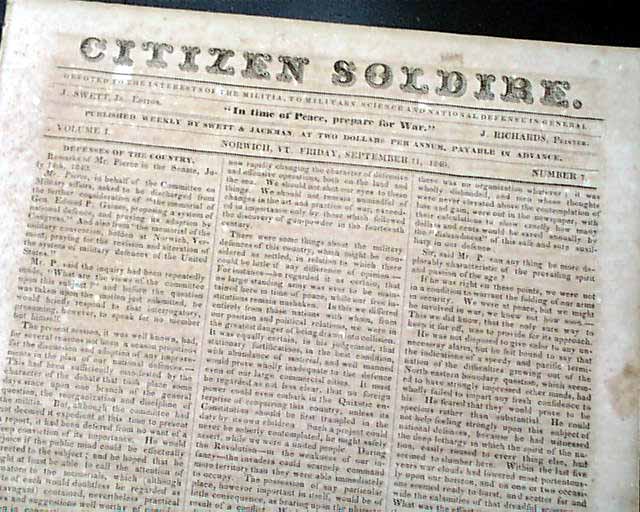
CITIZEN SOLDIER, Norwich, Vermont, Sept. 11, 1840
- Misspelled masthead title
"Devoted To the Interests of the Militia, Military Science & National
...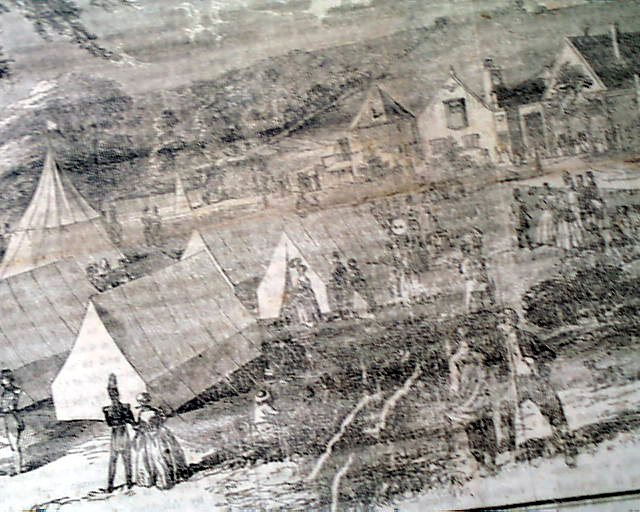
THE AMERICAN SENTINEL AND ESSEX NORTH RECORD, Newburyport, Massachusetts, Aug. 17, 1854
- Massachusetts Volunteer Militia camp
This is the volume 1, number 2
...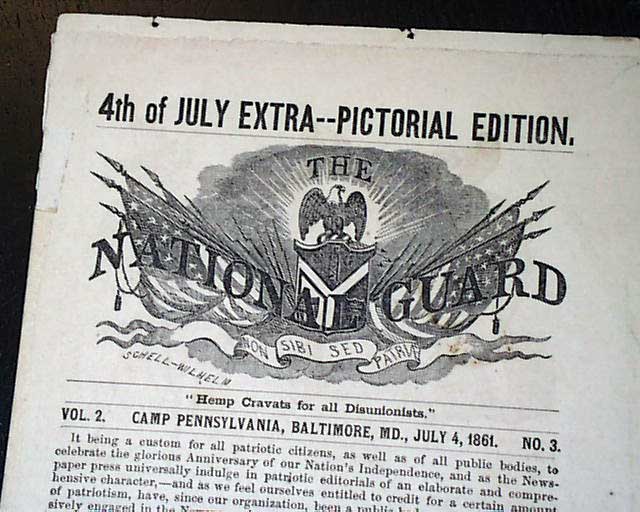
THE NATIONAL GUARD, Camp Pennsylvania, Baltimore, July 4, 1861
- Very rare Union Civil War camp publication
- 19th Pennsylvania Infantry Regiment
A very rare
...
THE MESSAGE CENTER, "Somewhere In The South", November 7, 1942
- Rare camp newspaper from "somewhere"
- World War II - WWII military original
This is one of many
...