

Lengthy on the life of Charles Dickens...
Item # 691797
February 22, 1874
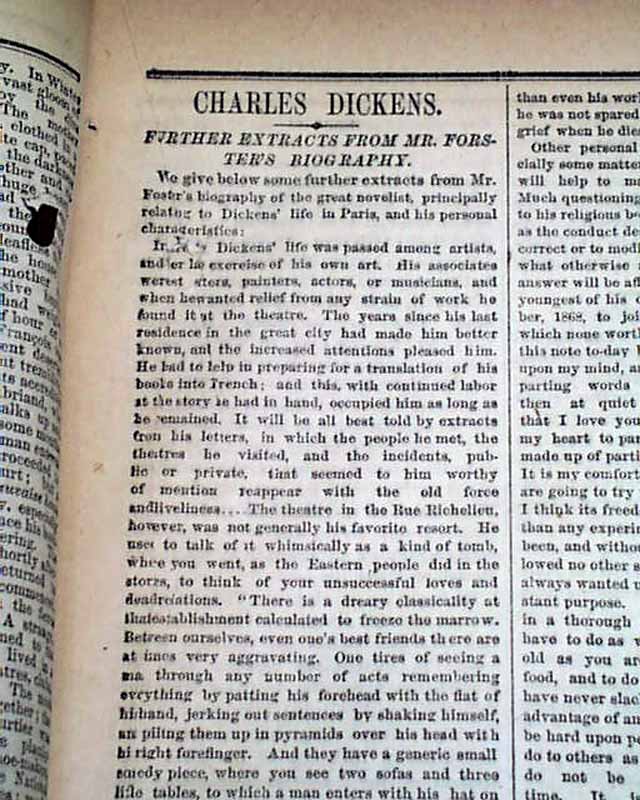
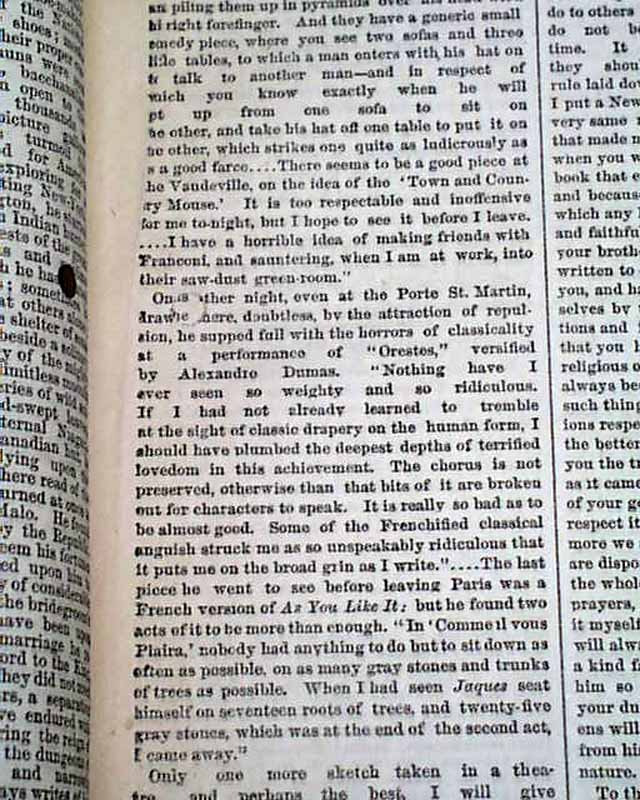
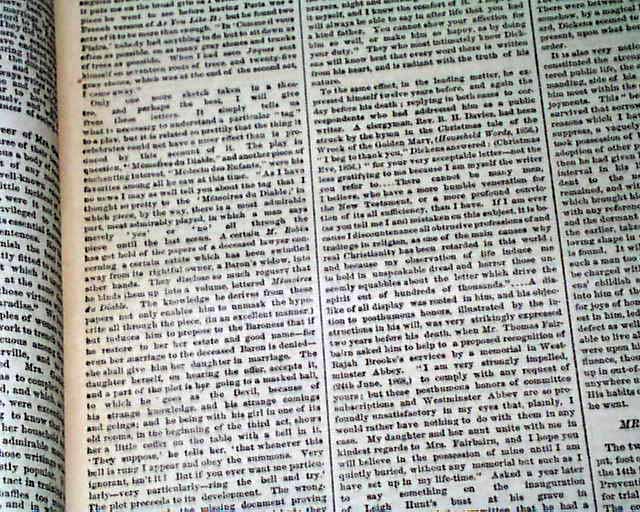
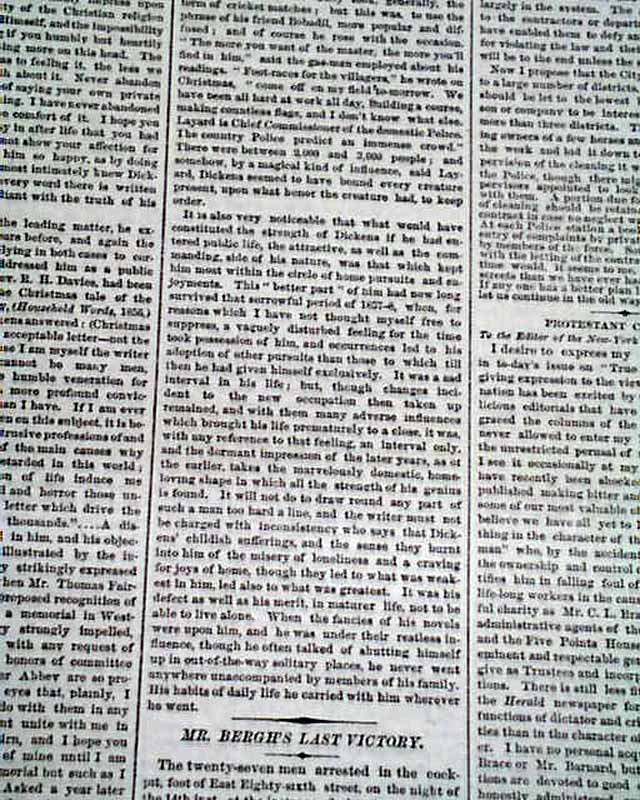
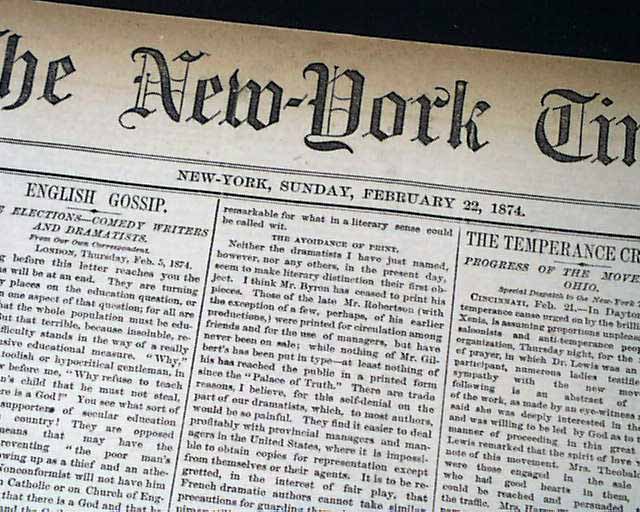
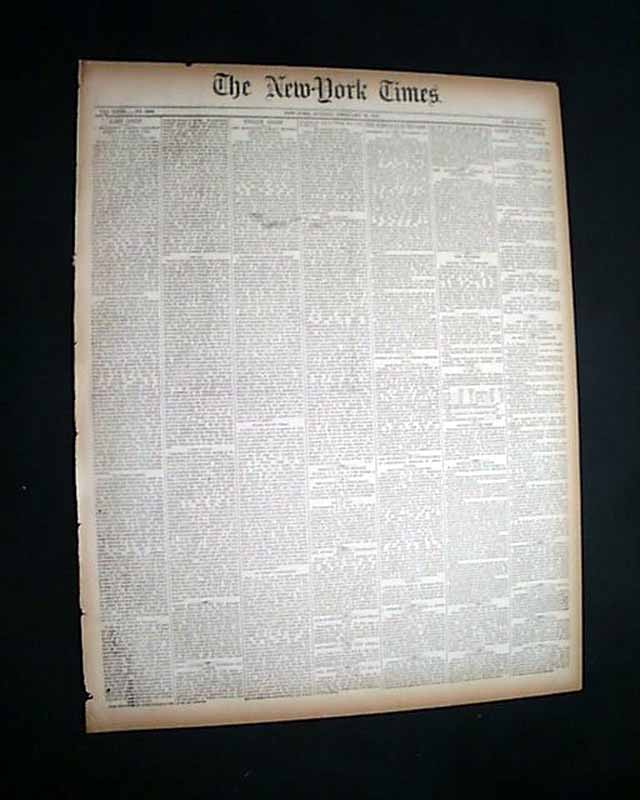
NEW YORK TIMES, Feb. 22, 1874 Page 3 has 2 1/2 columns taken up with: "CHARLES DICKENS" "Further Extracts From Mr. Forster's Biography" containing a wealth of interesting content on this notable writer.
Eight pages, four binding holes near the spine affect about 7 words in the Dickens article, otherwise nice condition.
Background: John Forster’s The Life of Charles Dickens, published in three volumes between 1872 and 1874, is the first comprehensive biography of Dickens and remains a cornerstone of Dickensian scholarship. As Dickens’s lifelong friend, confidant, and literary executor, Forster had unparalleled access to the author’s letters, manuscripts, and private papers, allowing him to create an intimate and detailed portrait of Dickens’s life from his impoverished childhood—marked by his father’s imprisonment and his own work in a blacking factory—to his rise as one of Victorian England’s most celebrated novelists. The biography combines chronological narrative with personal anecdotes, illuminating both Dickens’s creative process and his humanitarian ideals, while also shaping the public image of him as a champion of the poor and a tireless social observer. While Forster’s devotion results in a sympathetic and sometimes idealized portrayal—omitting controversial aspects of Dickens’s private life, such as his relationship with Ellen Ternan—the work remains invaluable for its firsthand insights, its preservation of key documents, and its enduring influence on how Dickens has been remembered and studied.
Eight pages, four binding holes near the spine affect about 7 words in the Dickens article, otherwise nice condition.
Background: John Forster’s The Life of Charles Dickens, published in three volumes between 1872 and 1874, is the first comprehensive biography of Dickens and remains a cornerstone of Dickensian scholarship. As Dickens’s lifelong friend, confidant, and literary executor, Forster had unparalleled access to the author’s letters, manuscripts, and private papers, allowing him to create an intimate and detailed portrait of Dickens’s life from his impoverished childhood—marked by his father’s imprisonment and his own work in a blacking factory—to his rise as one of Victorian England’s most celebrated novelists. The biography combines chronological narrative with personal anecdotes, illuminating both Dickens’s creative process and his humanitarian ideals, while also shaping the public image of him as a champion of the poor and a tireless social observer. While Forster’s devotion results in a sympathetic and sometimes idealized portrayal—omitting controversial aspects of Dickens’s private life, such as his relationship with Ellen Ternan—the work remains invaluable for its firsthand insights, its preservation of key documents, and its enduring influence on how Dickens has been remembered and studied.
Category: Post-Civil War


