

The Barbary War... Jefferson and Bonaparte...
Item # 667691
January 03, 1802
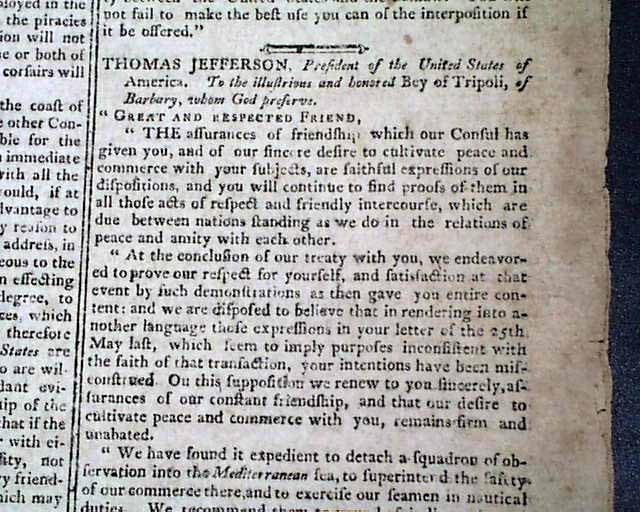
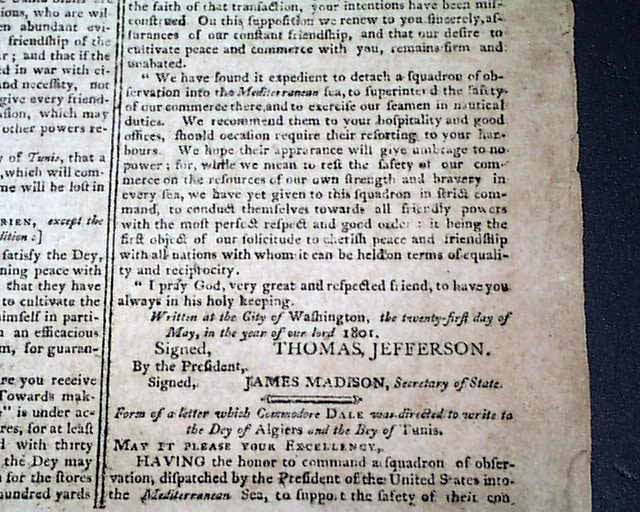
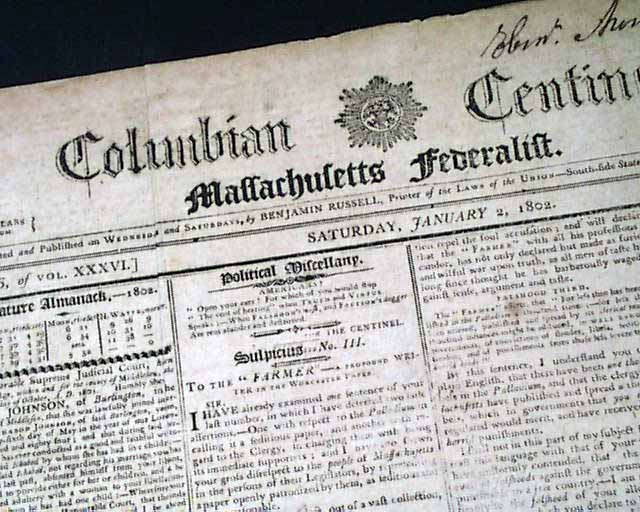
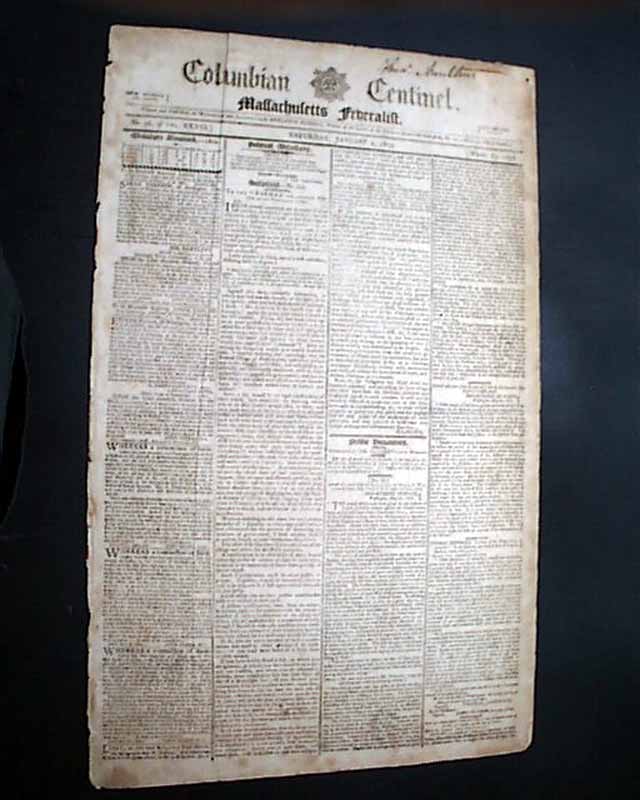
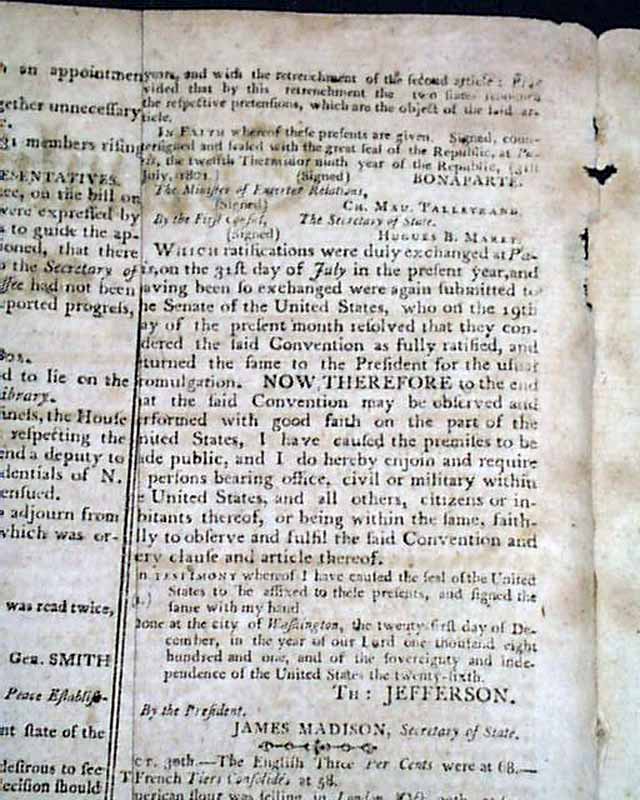
COLUMBIAN CENTINEL, Boston, Jan. 3, 1802 The front page has a letter to the "...honored Bey of Tripoli, of Barbary..." concerning the on-going Barbary War, signed in type: Thomas Jefferson and James Madison.
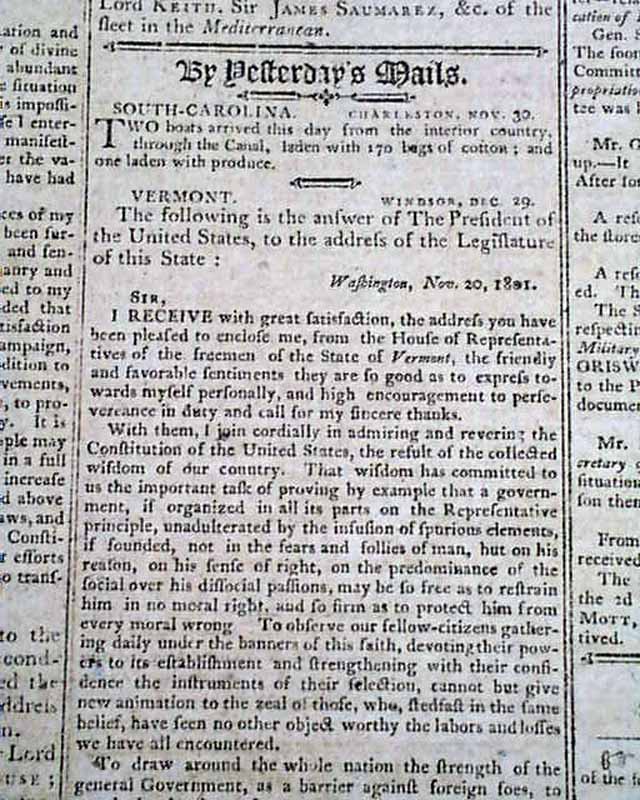
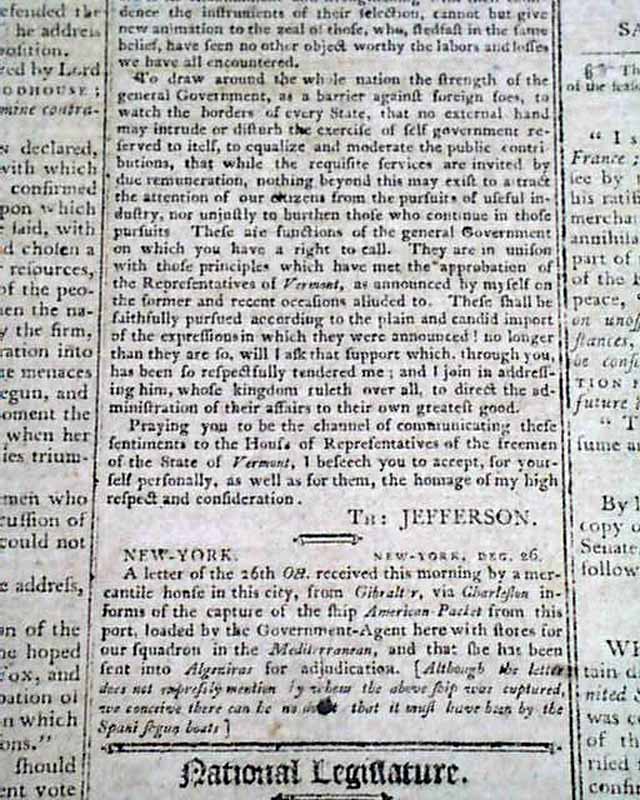
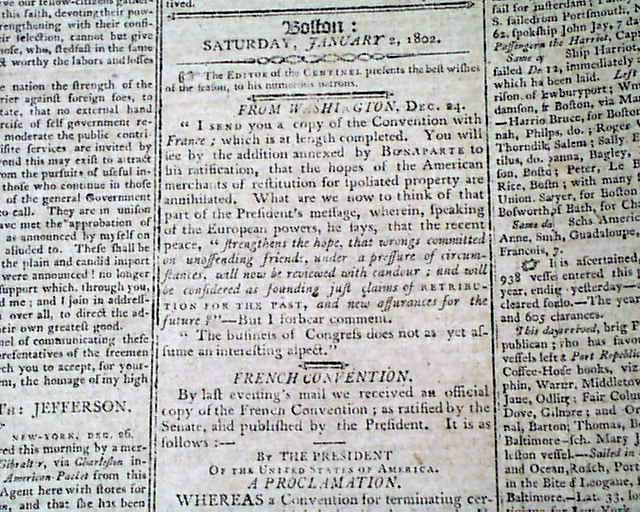
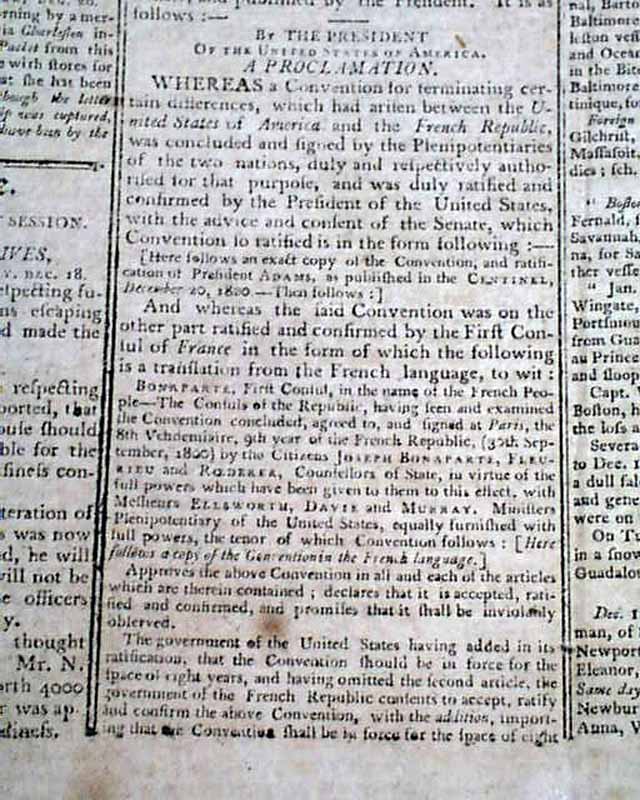
Page 2 has: "A Proclamation" signed by: Th. Jefferson concerning France, within which is a letter signed in type by: Bonaparte. Also has a half column letter to the legislature of Vermont, signed in type: Th. Jefferson.
Four pages, good condition.
Background: The publication of the January 3, 1802, Columbian Centinel captures a transformative era in American foreign policy as the nation transitioned from colonial vulnerability to assertive sovereignty. The correspondence between Thomas Jefferson, James Madison, and the Bey of Tripoli marks a definitive escalation in the First Barbary War, representing the first time the United States projected naval power across the Atlantic to challenge the centuries-old system of state-sponsored piracy and tribute payments. Simultaneously, the inclusion of a proclamation involving Napoleon Bonaparte highlights the delicate diplomatic "balancing act" Jefferson maintained with France following the Quasi-War, a relationship that would eventually culminate in the Louisiana Purchase. This specific issue of the Centinel serves as a primary source for the "Jeffersonian Revolution," illustrating how the administration utilized public newspapers to communicate its Republican ideals—ranging from domestic correspondence with state legislatures like Vermont to the bold, principled rejection of foreign extortion—thereby defining the early 19th-century American identity as one of defiant independence and expanding global influence.
Page 2 has: "A Proclamation" signed by: Th. Jefferson concerning France, within which is a letter signed in type by: Bonaparte. Also has a half column letter to the legislature of Vermont, signed in type: Th. Jefferson.
Four pages, good condition.
Background: The publication of the January 3, 1802, Columbian Centinel captures a transformative era in American foreign policy as the nation transitioned from colonial vulnerability to assertive sovereignty. The correspondence between Thomas Jefferson, James Madison, and the Bey of Tripoli marks a definitive escalation in the First Barbary War, representing the first time the United States projected naval power across the Atlantic to challenge the centuries-old system of state-sponsored piracy and tribute payments. Simultaneously, the inclusion of a proclamation involving Napoleon Bonaparte highlights the delicate diplomatic "balancing act" Jefferson maintained with France following the Quasi-War, a relationship that would eventually culminate in the Louisiana Purchase. This specific issue of the Centinel serves as a primary source for the "Jeffersonian Revolution," illustrating how the administration utilized public newspapers to communicate its Republican ideals—ranging from domestic correspondence with state legislatures like Vermont to the bold, principled rejection of foreign extortion—thereby defining the early 19th-century American identity as one of defiant independence and expanding global influence.
Category: Pre-Civil War


