

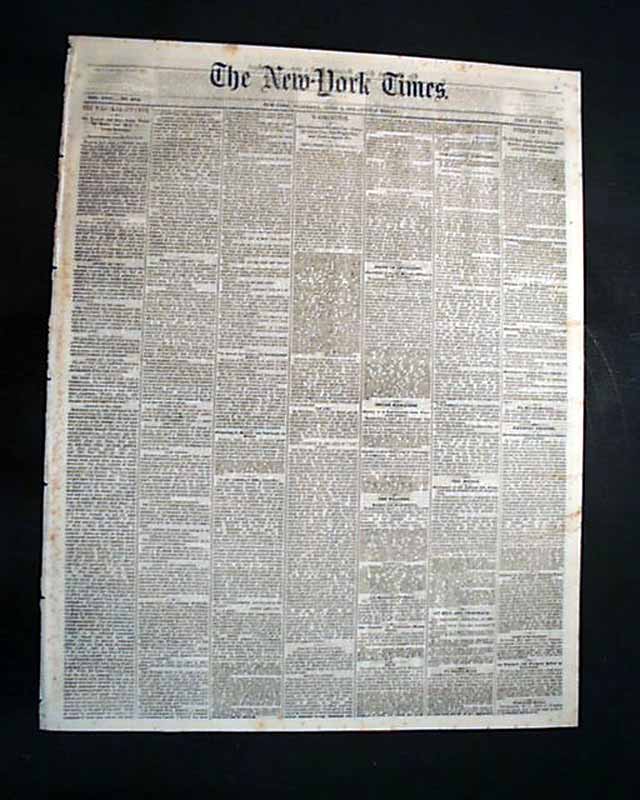
Famous frontier scouts appearing on stage...
Item # 633295
April 11, 1873
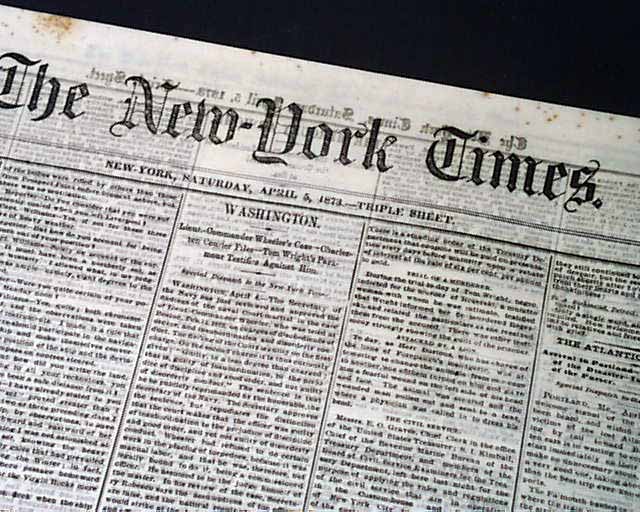
NEW YORK TIMES, April 5, 1873
* Buffalo Bill - William F. Cody
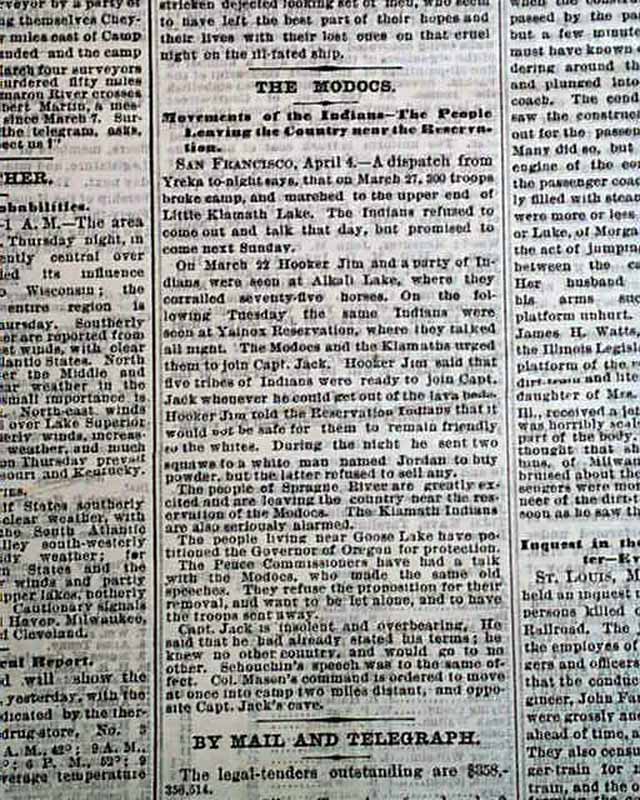
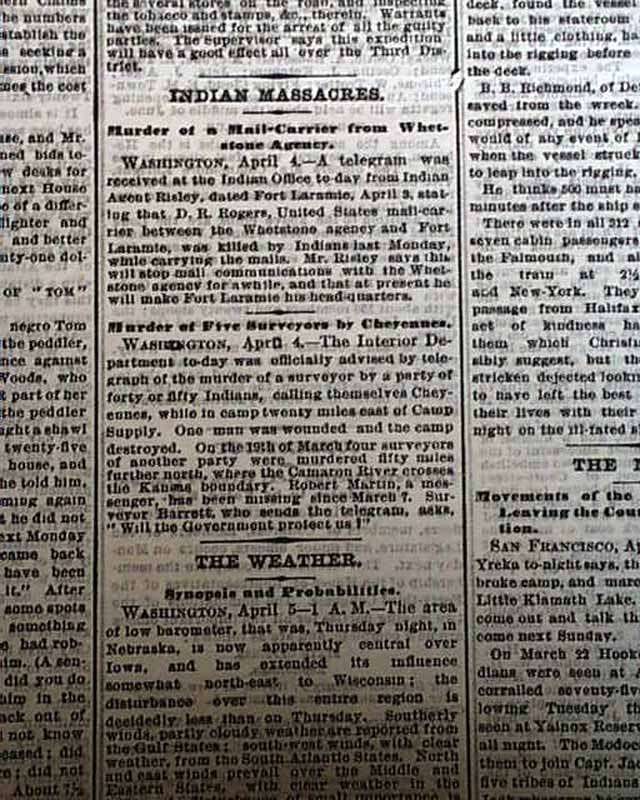
The front page has: "Indian Massacres - Murder of a Mail Carrier..." "Murder of Five Surveyors by Cheyennes" "The Modocs - Movements of the Indians...".
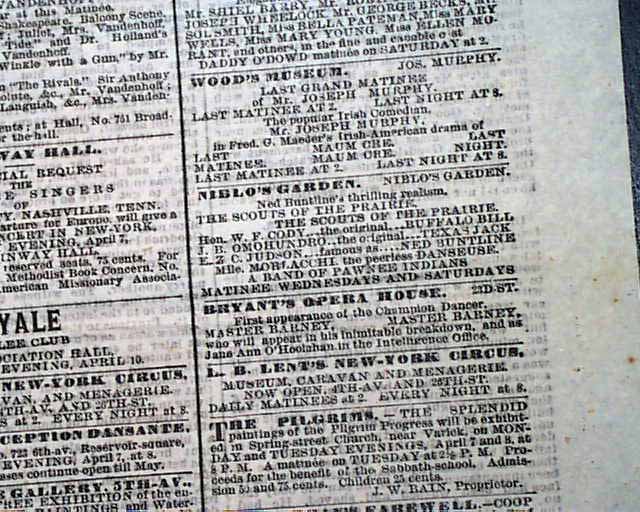
Page 11 has an interesting advertisement for "Niblo's Garden" at which are appearing: "Hon. W. F. Cody...the original Buffalo Bill" and "J. B. Omohundro...the original...Texas Jack" as well as Ned Buntline & others (see).
Twelve pages, very nice condition.
Background: The historical significance of the April 5, 1873, edition of the New York Times lies in its vivid capture of the "Great Divide" in American history: the simultaneous peak of the Indian Wars and the commodification of the West into popular entertainment. The front-page headlines detailing the Modoc War and Cheyenne attacks represent the brutal, final stages of the Continental Conquest—a time when the frontier was a site of active, lethal conflict for surveyors and mail carriers. Conversely, the advertisement for Cody and Omohundro at Niblo's Garden marks the literal birth of the Western genre. By bringing real-life scouts like "Buffalo Bill" and "Texas Jack" off the plains and onto a Manhattan stage while their counterparts were still fighting in the field, Ned Buntline initiated the mythologizing of the American West. This specific moment at Niblo’s Garden transformed the "Wild West" from a dangerous geographical reality into a scripted theatrical product, laying the commercial and cultural foundation for the dime novels, traveling shows, and eventually the Hollywood Westerns that would define the American identity globally for the next century.
* Buffalo Bill - William F. Cody
The front page has: "Indian Massacres - Murder of a Mail Carrier..." "Murder of Five Surveyors by Cheyennes" "The Modocs - Movements of the Indians...".
Page 11 has an interesting advertisement for "Niblo's Garden" at which are appearing: "Hon. W. F. Cody...the original Buffalo Bill" and "J. B. Omohundro...the original...Texas Jack" as well as Ned Buntline & others (see).
Twelve pages, very nice condition.
Background: The historical significance of the April 5, 1873, edition of the New York Times lies in its vivid capture of the "Great Divide" in American history: the simultaneous peak of the Indian Wars and the commodification of the West into popular entertainment. The front-page headlines detailing the Modoc War and Cheyenne attacks represent the brutal, final stages of the Continental Conquest—a time when the frontier was a site of active, lethal conflict for surveyors and mail carriers. Conversely, the advertisement for Cody and Omohundro at Niblo's Garden marks the literal birth of the Western genre. By bringing real-life scouts like "Buffalo Bill" and "Texas Jack" off the plains and onto a Manhattan stage while their counterparts were still fighting in the field, Ned Buntline initiated the mythologizing of the American West. This specific moment at Niblo’s Garden transformed the "Wild West" from a dangerous geographical reality into a scripted theatrical product, laying the commercial and cultural foundation for the dime novels, traveling shows, and eventually the Hollywood Westerns that would define the American identity globally for the next century.
Category: Post-Civil War


