


The Dred Scott case: a dissenting decision...
Item # 597628Sorry, but this item is no longer available. Please be in touch at info@rarenewspapers.com if you would like to be placed on a want list or are interested in a potential alternate issue.
March 10, 1857
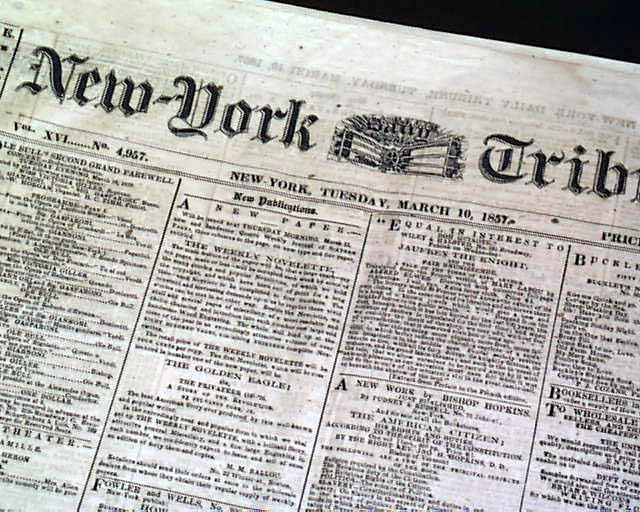
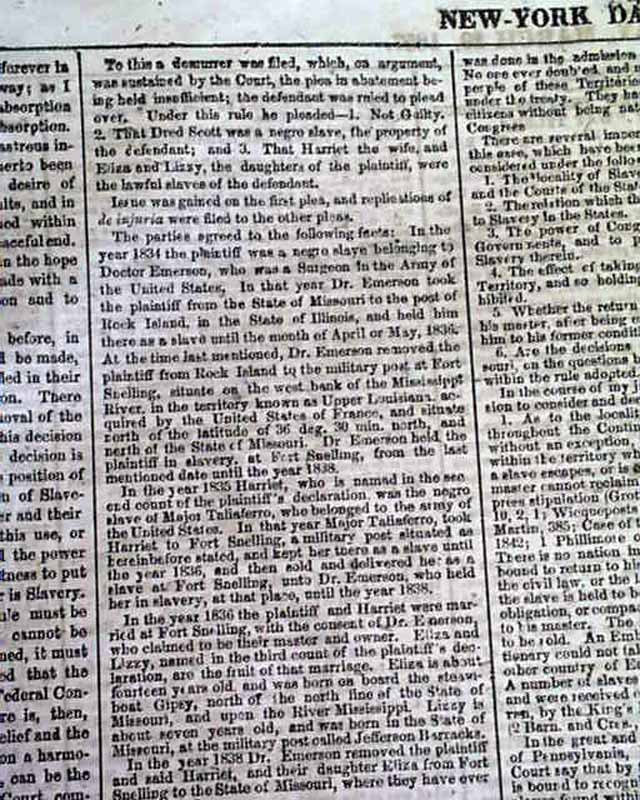
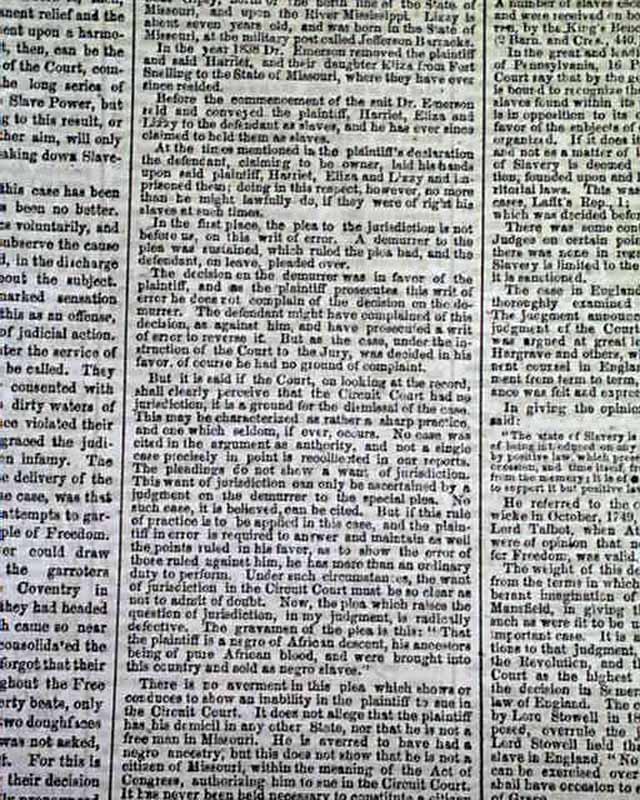
THE NEW YORK TRIBUNE, March 10, 1857 The Dred Scott Decision was a decision by the United States Supreme Court that ruled that people of African descent imported into the United States and held as slaves were slaves were not protected by the Constitution and could never be citizens of the United States. It also held that the United States Congress had no authority to prohibit slavery in federal territories. The Court also ruled that because slaves were not citizens, they could not sue in court, and that slaves—as chattel or private property—could not be taken away from their owners without due process.
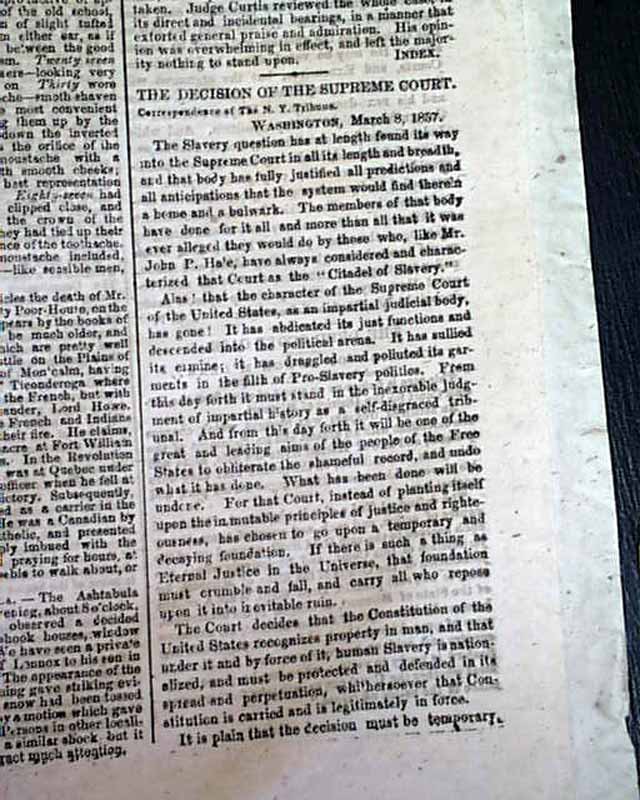
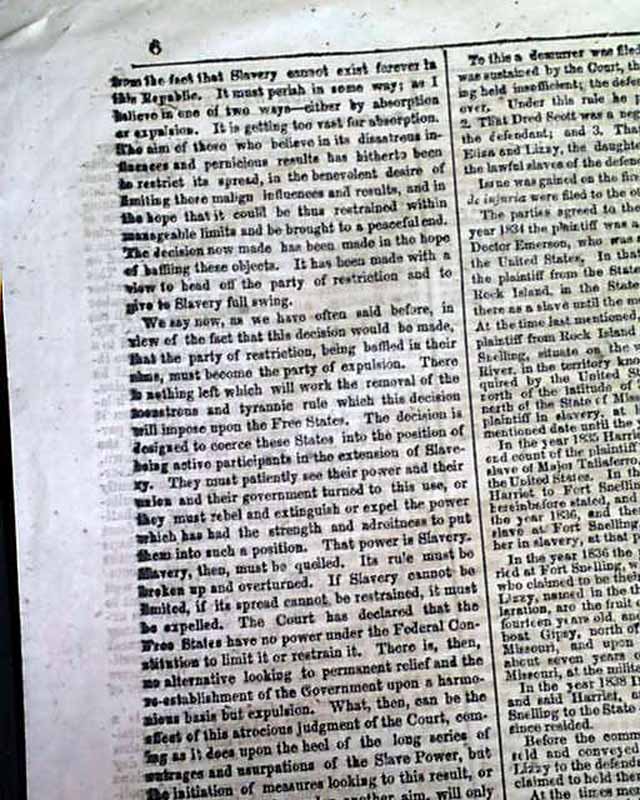
Page 5 has an editorial titled: "The Decision of the Supreme Court" which begins: "The Slavery question has at length found its way into the Supreme court in all its length and broadth & that body has fully justified all predictions and all anticipations that the system would find therein a home and a bulwark. The members of that body have done for it all & more than all that it was ever alleged they would do by those...have always considered & characterized that Court as the 'Citidal of Slavery.' Alas! that the character of the Supreme Court of the United States as an impartial judicial body has gone!..." with more, carrying over to page 6.
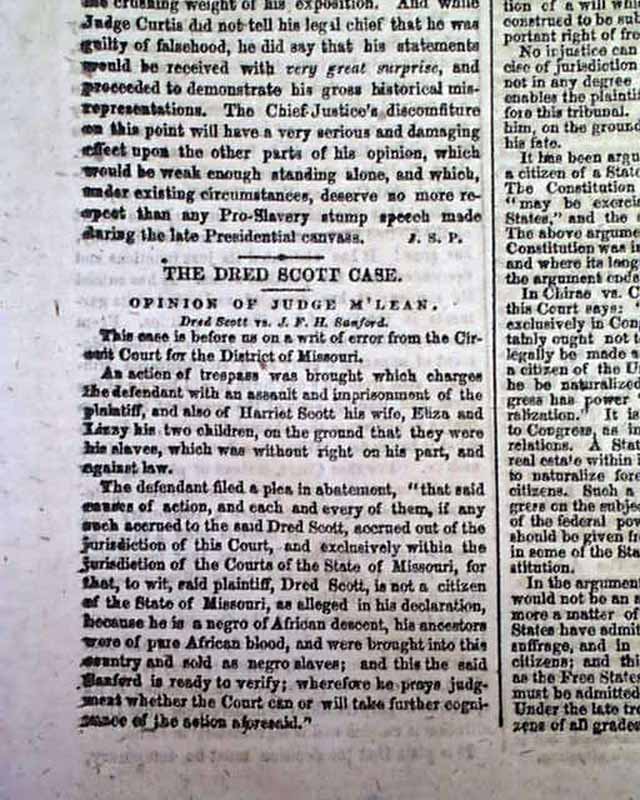
Two of the nine Supreme Court justices dissented with the majority opinion, they being judges McLean and Curtis. This issue contains on page 6: "The Dred Scott Case--Opinion of Judge McLean" with the text taking more than an entire page.
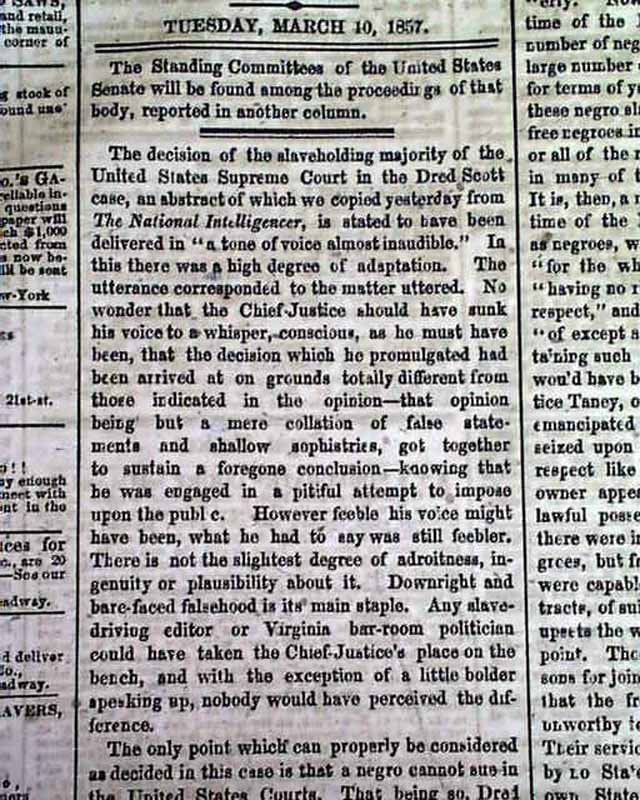
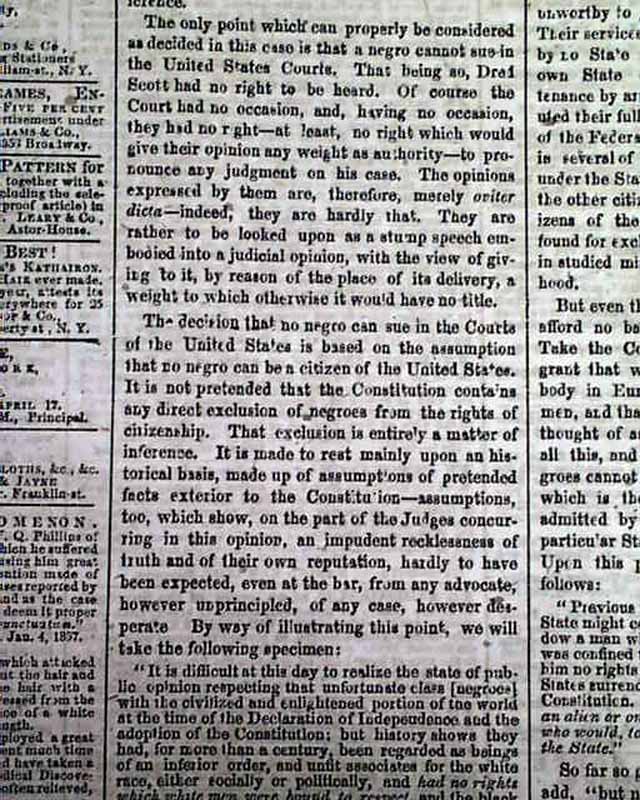
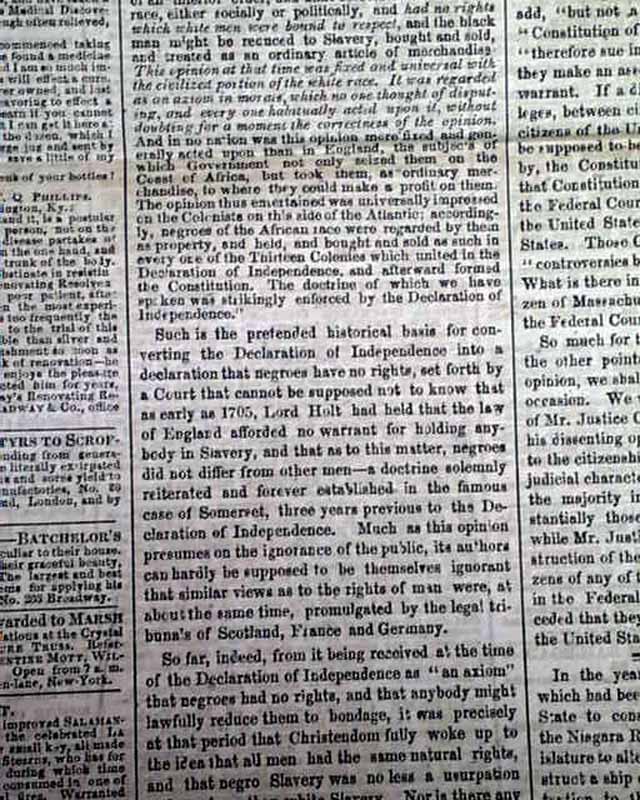
Page 4 has a lengthy editorial on the decision, beginning: "The decision of the slaveholding majority of the United States Supreme court in the Dred Scott case...is state to have been delivered in 'a tone of voice almost inaudible'...." and further in: "The only point which can properly be considered as decided in this case is that a negro cannot sue in the United States Courts. That being so, Dred Scott had no right to be heard..." with much, much more, including reference to the Declaration of Independence (see for portions).
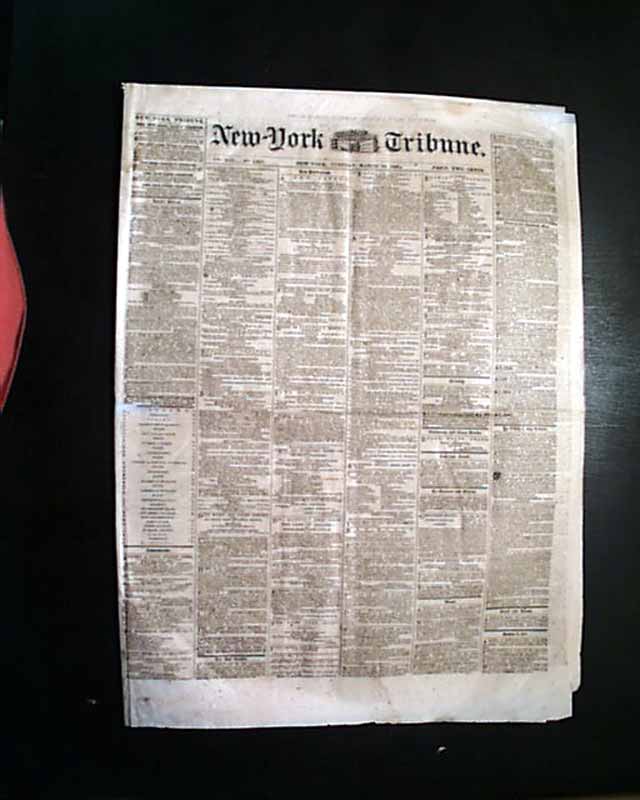
Eight pages, never bound nor trimmed, various damage, mostly near the central fold, which has been archivally mended but with some loss of text. Fortunately very few words in the noted content were lost due to damage.
Page 5 has an editorial titled: "The Decision of the Supreme Court" which begins: "The Slavery question has at length found its way into the Supreme court in all its length and broadth & that body has fully justified all predictions and all anticipations that the system would find therein a home and a bulwark. The members of that body have done for it all & more than all that it was ever alleged they would do by those...have always considered & characterized that Court as the 'Citidal of Slavery.' Alas! that the character of the Supreme Court of the United States as an impartial judicial body has gone!..." with more, carrying over to page 6.
Two of the nine Supreme Court justices dissented with the majority opinion, they being judges McLean and Curtis. This issue contains on page 6: "The Dred Scott Case--Opinion of Judge McLean" with the text taking more than an entire page.
Page 4 has a lengthy editorial on the decision, beginning: "The decision of the slaveholding majority of the United States Supreme court in the Dred Scott case...is state to have been delivered in 'a tone of voice almost inaudible'...." and further in: "The only point which can properly be considered as decided in this case is that a negro cannot sue in the United States Courts. That being so, Dred Scott had no right to be heard..." with much, much more, including reference to the Declaration of Independence (see for portions).
Eight pages, never bound nor trimmed, various damage, mostly near the central fold, which has been archivally mended but with some loss of text. Fortunately very few words in the noted content were lost due to damage.
Category: Pre-Civil War


