

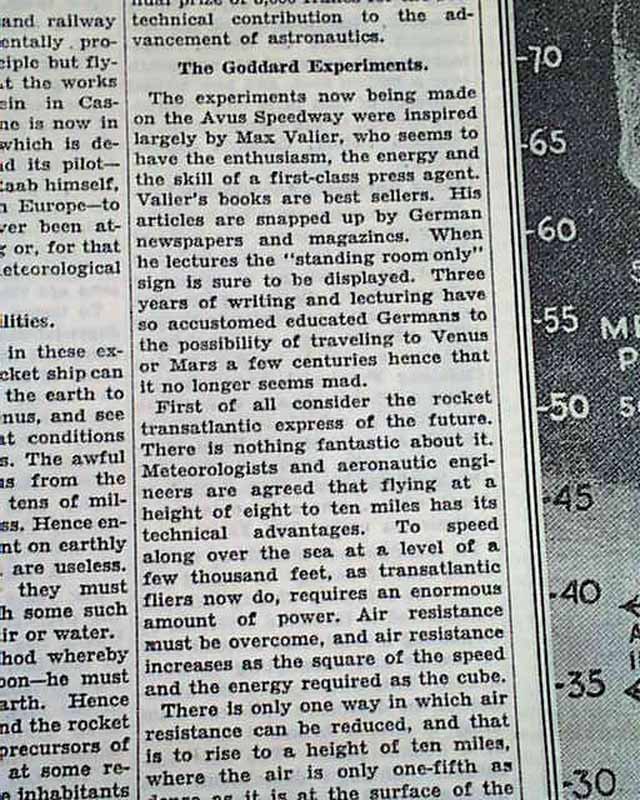
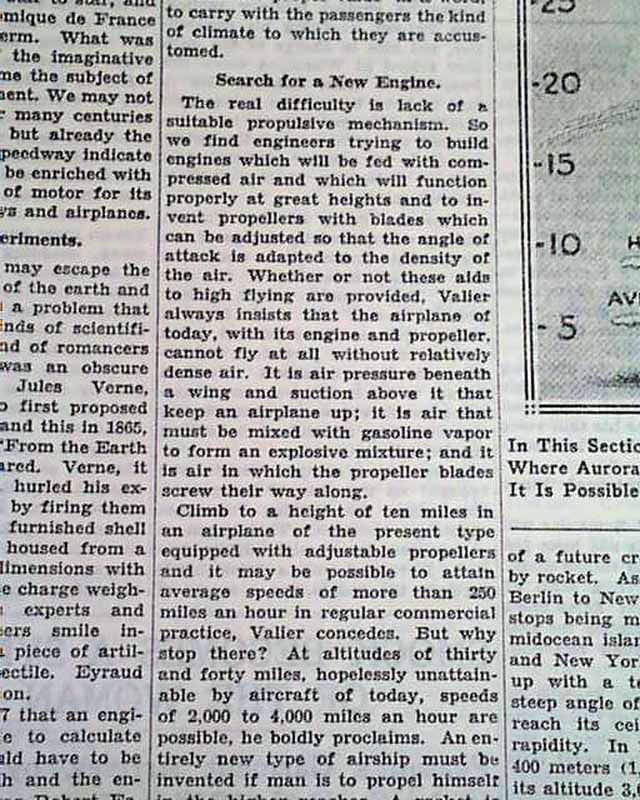
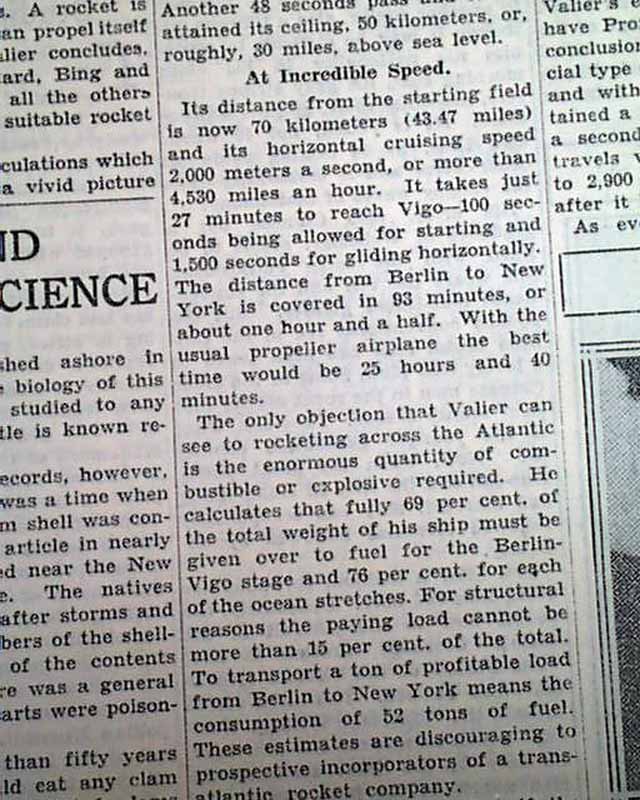
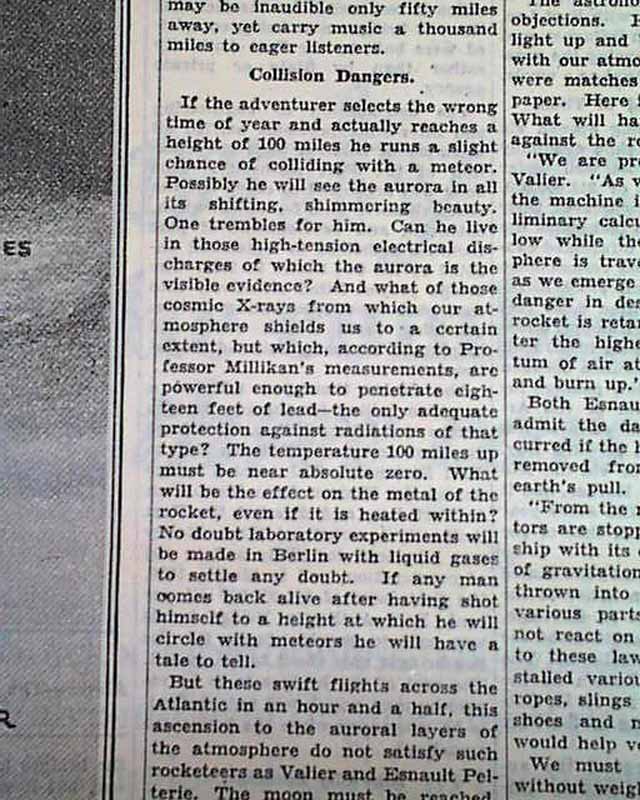
Robert Goddard... early rockets...
Item # 579837Sorry, but this item is no longer available. Please be in touch at info@rarenewspapers.com if you would like to be placed on a want list or are interested in a potential alternate issue.
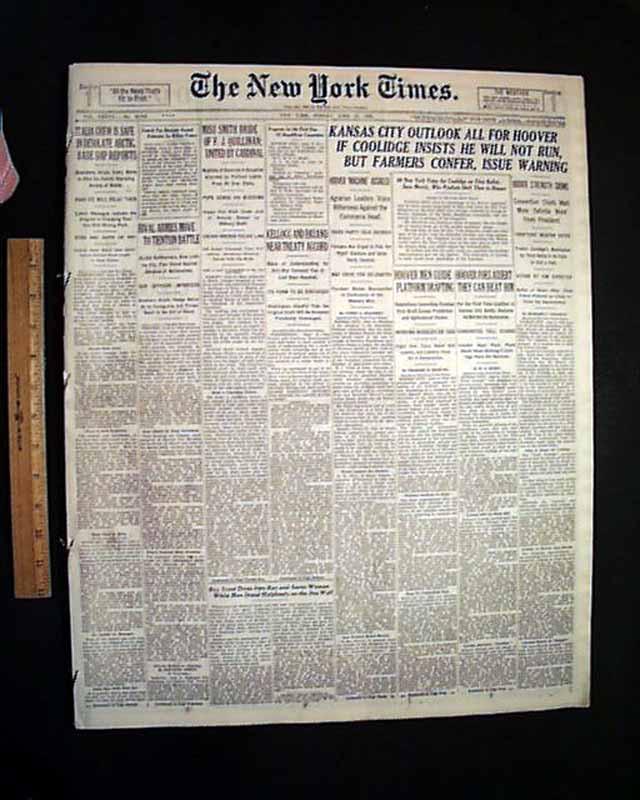
June 10, 1928
THE NEW YORK TIMES, June 10, 1928
* Robert Goddard
* Early rockets - rocketry - Space travel?
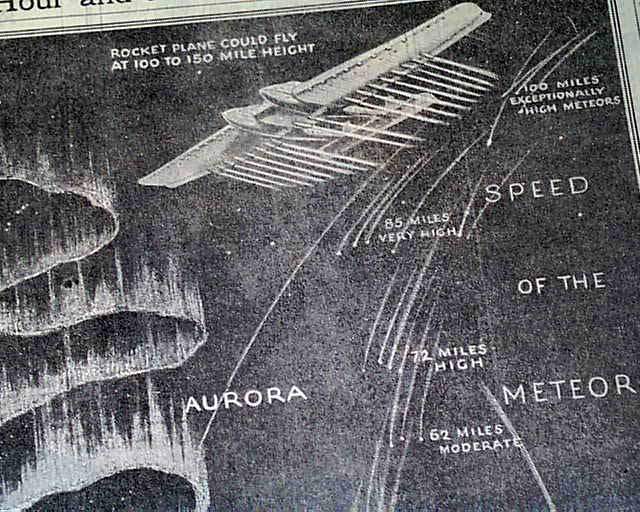
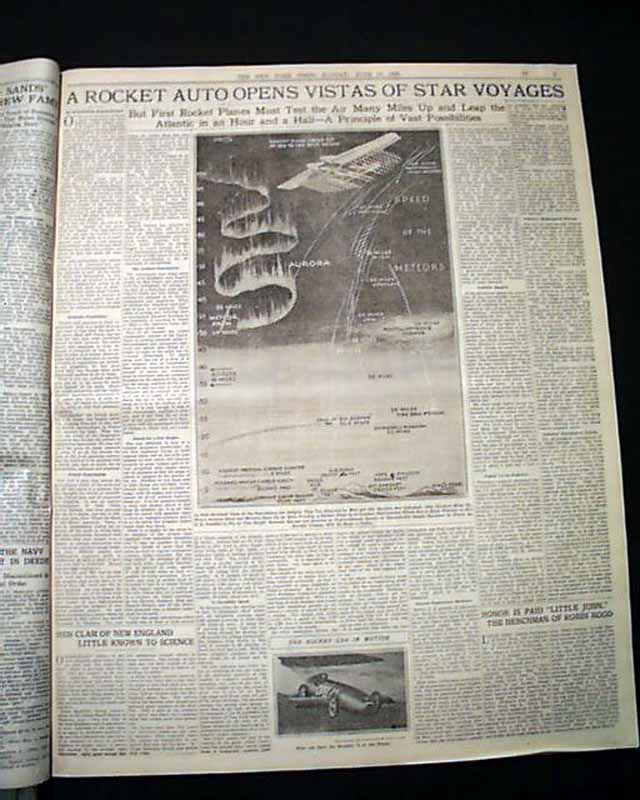
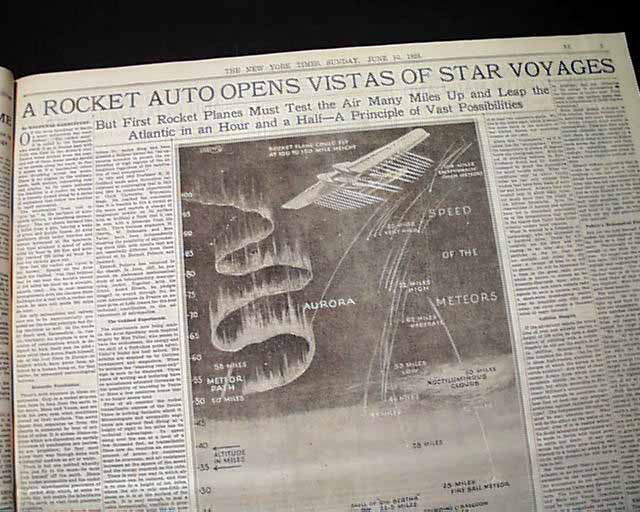
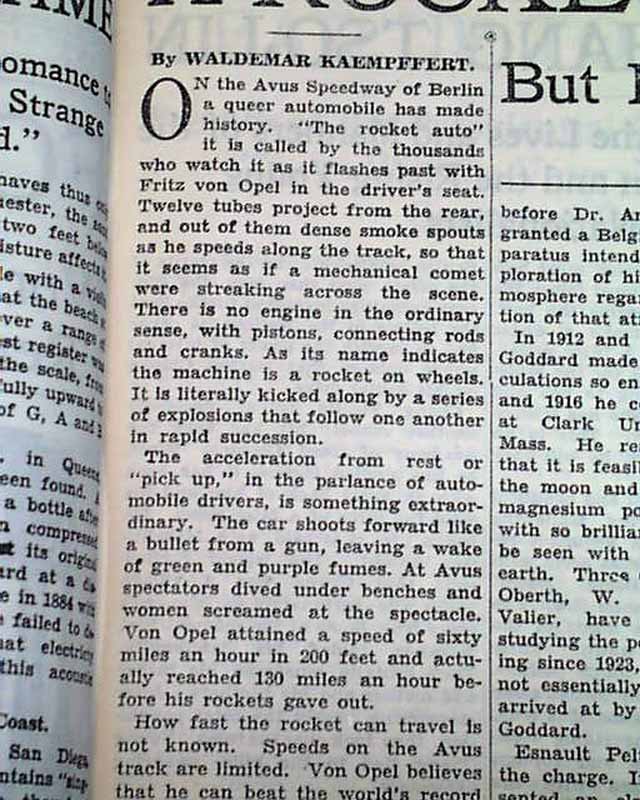
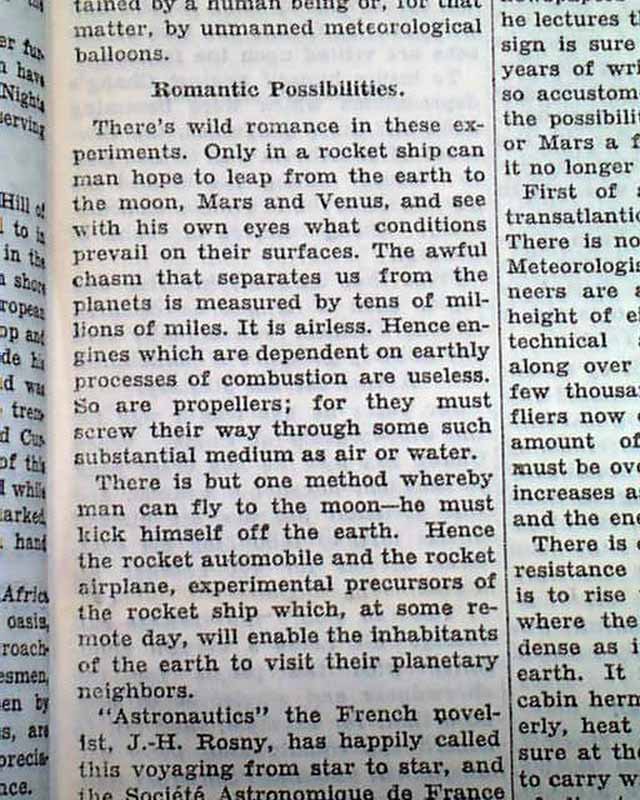
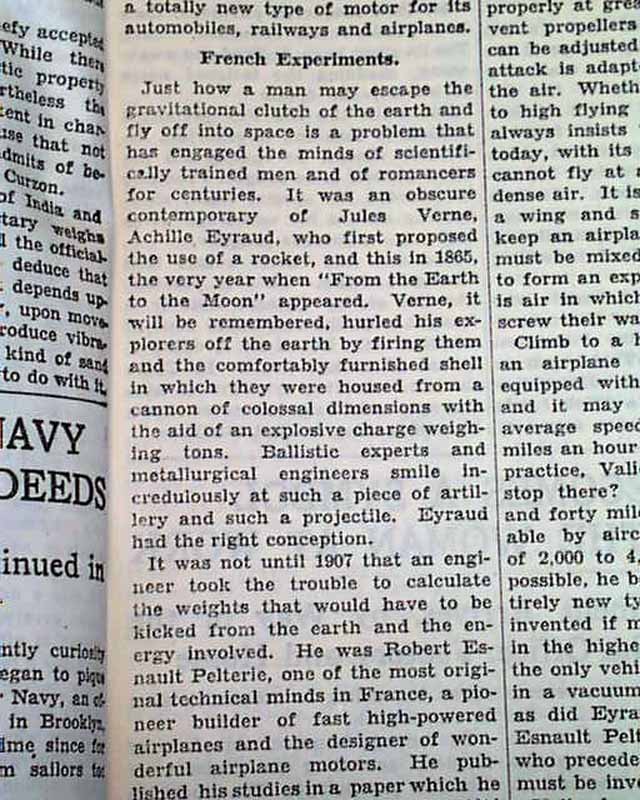
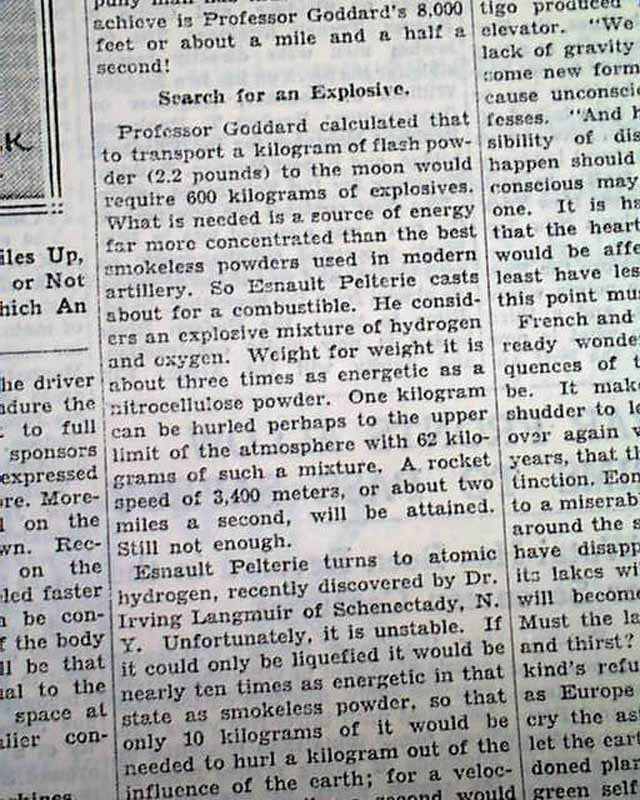
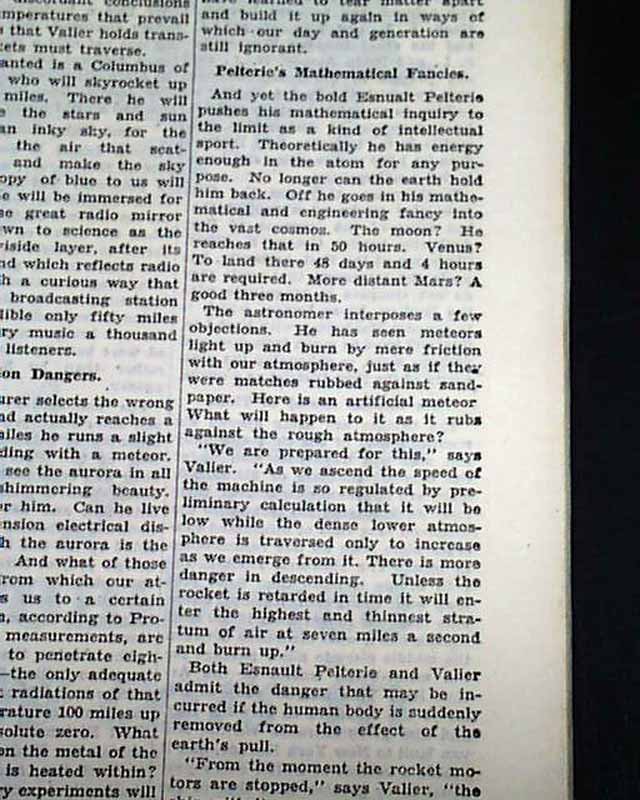
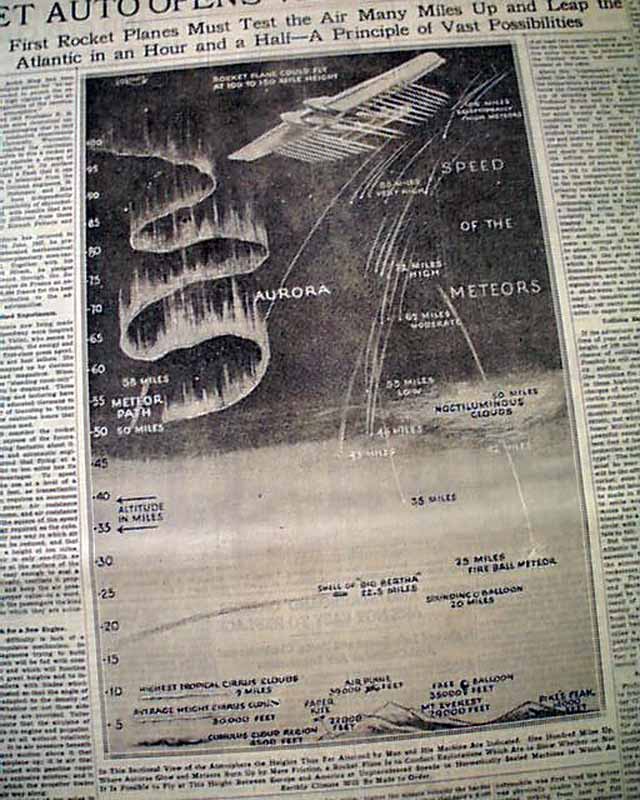
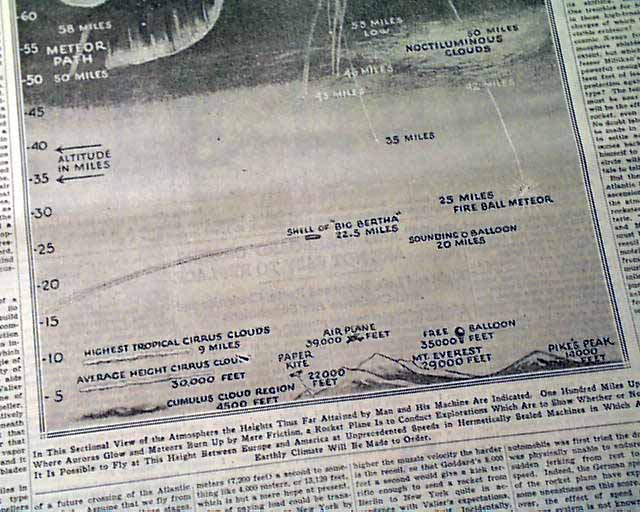
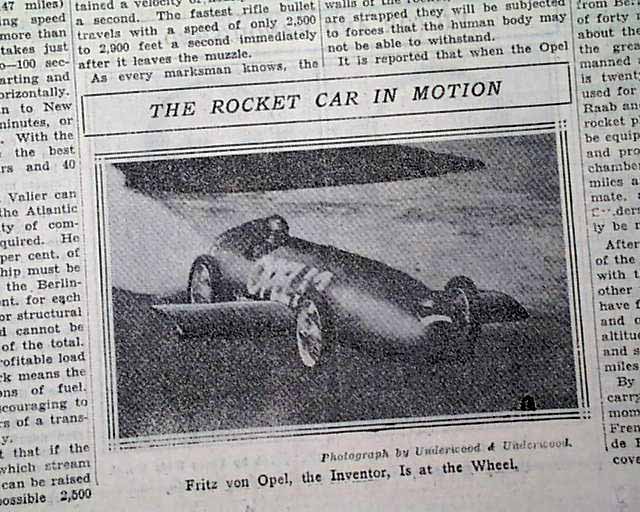
This 100+ page newspaper has a banner headline on page XX3 (inside, near the back): "A ROCKET AUTO OPENS VISTAS OF STAR VOYAGES" with subheads. Nice illustration as well (see photos). Lengthy text here.
Other news of the day throughout including period advertising. This rag edition is in great condition.
source: wikipedia: Robert Hutchings Goddard, Ph.D. (October 5, 1882 – August 10, 1945), U.S. professor and scientist, was a pioneer of controlled, liquid-fueled rocketry. He launched the world's first liquid-fueled rocket on March 16, 1926. From 1930 to 1935 he launched rockets that attained speeds of up to 885 km/h (550 mph). Though his work in the field was revolutionary, he was sometimes ridiculed for his theories. He received little recognition during his lifetime, but would eventually come to be called one of the fathers of modern rocketry for his life's work.
* Robert Goddard
* Early rockets - rocketry - Space travel?
This 100+ page newspaper has a banner headline on page XX3 (inside, near the back): "A ROCKET AUTO OPENS VISTAS OF STAR VOYAGES" with subheads. Nice illustration as well (see photos). Lengthy text here.
Other news of the day throughout including period advertising. This rag edition is in great condition.
source: wikipedia: Robert Hutchings Goddard, Ph.D. (October 5, 1882 – August 10, 1945), U.S. professor and scientist, was a pioneer of controlled, liquid-fueled rocketry. He launched the world's first liquid-fueled rocket on March 16, 1926. From 1930 to 1935 he launched rockets that attained speeds of up to 885 km/h (550 mph). Though his work in the field was revolutionary, he was sometimes ridiculed for his theories. He received little recognition during his lifetime, but would eventually come to be called one of the fathers of modern rocketry for his life's work.
Category: The 20th Century


