Home >
Item # 725495
THE NEW YORK TIMES, May 24, 1950
* 1950 "Treaty of Detroit" contract signed
* Modern American middle class workers
* Long-term economic stability achieved
* Walter Reuther and General Motors - GM
* "Golden Age" of Capitalism
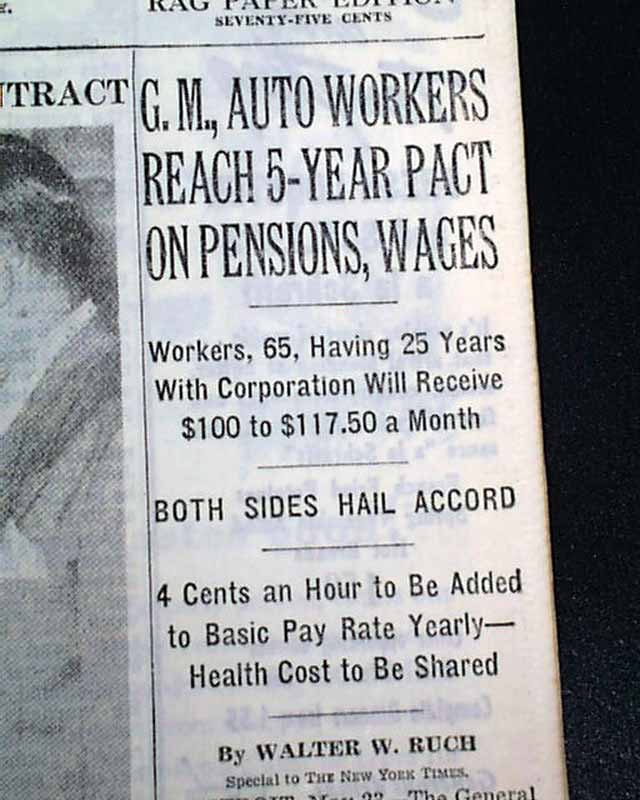
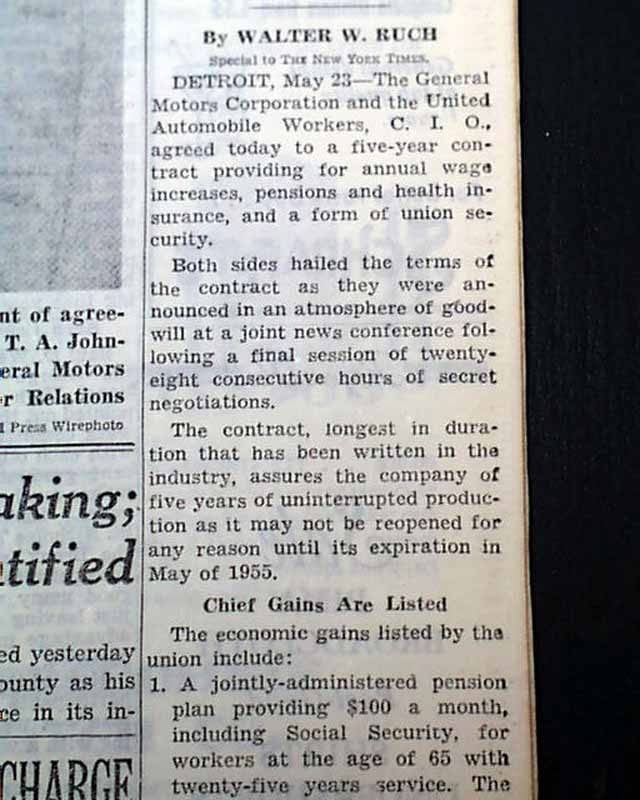
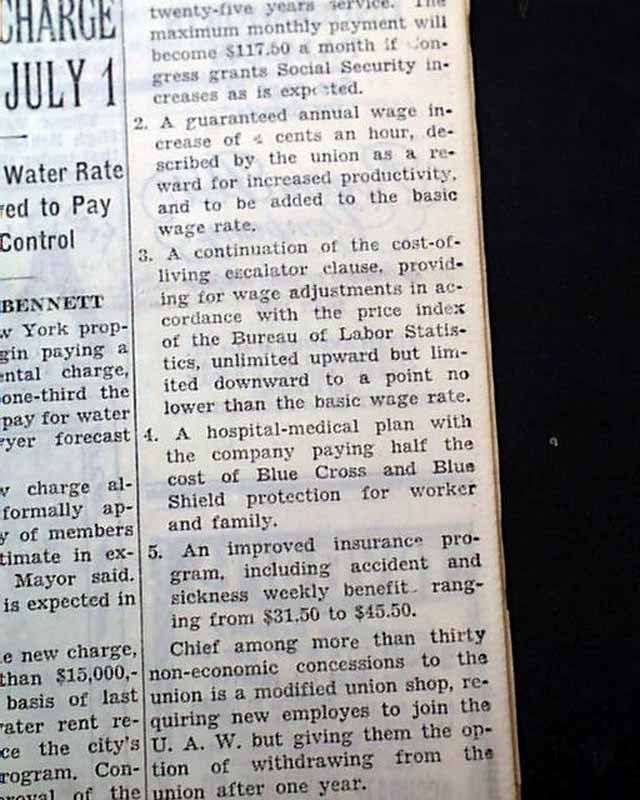
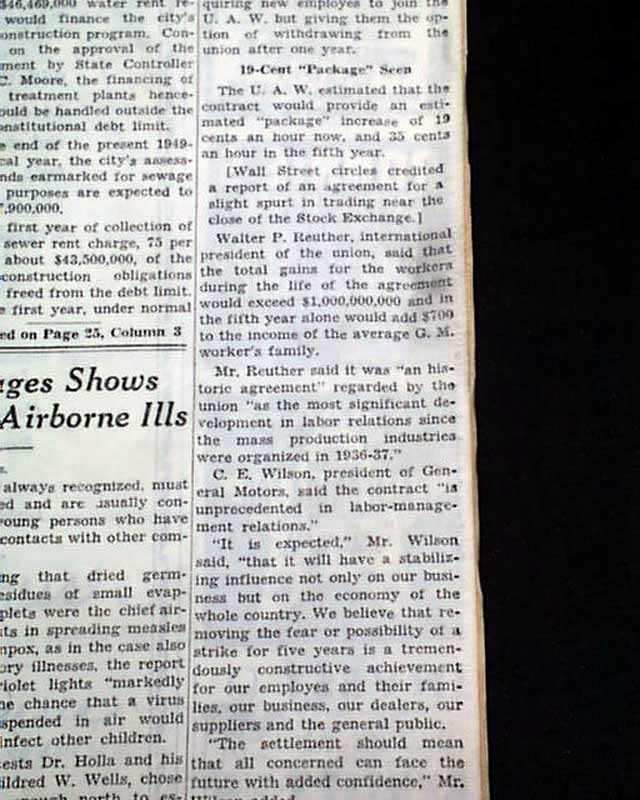
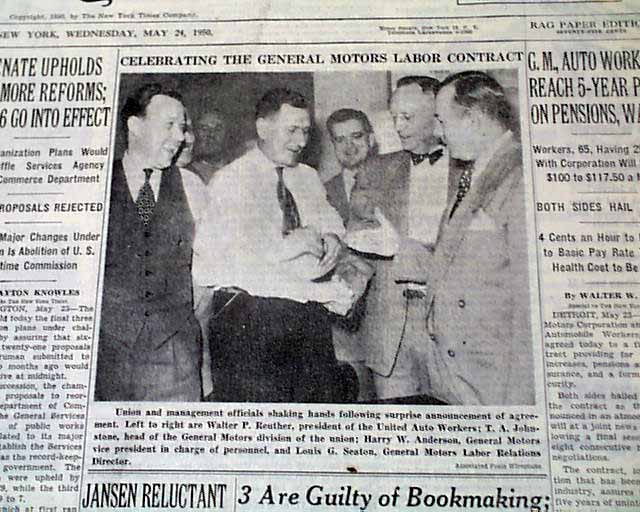
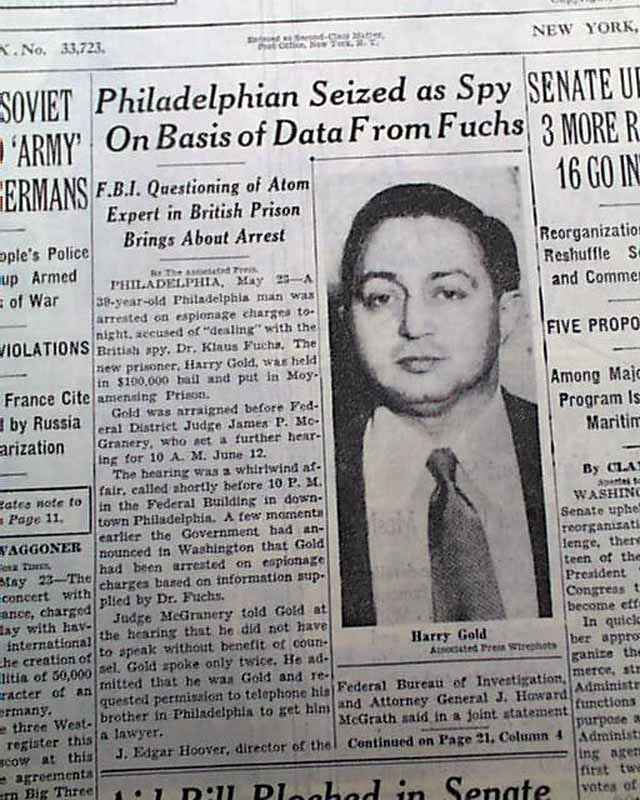
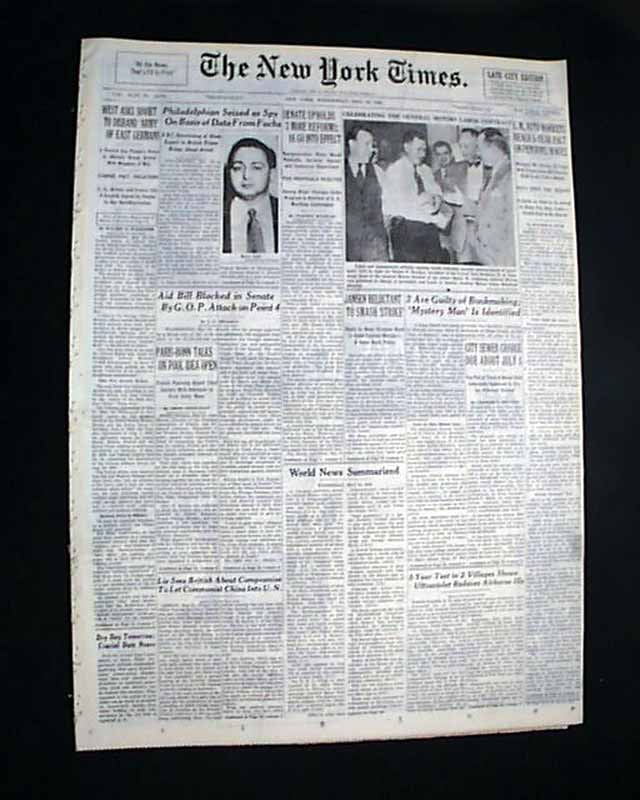
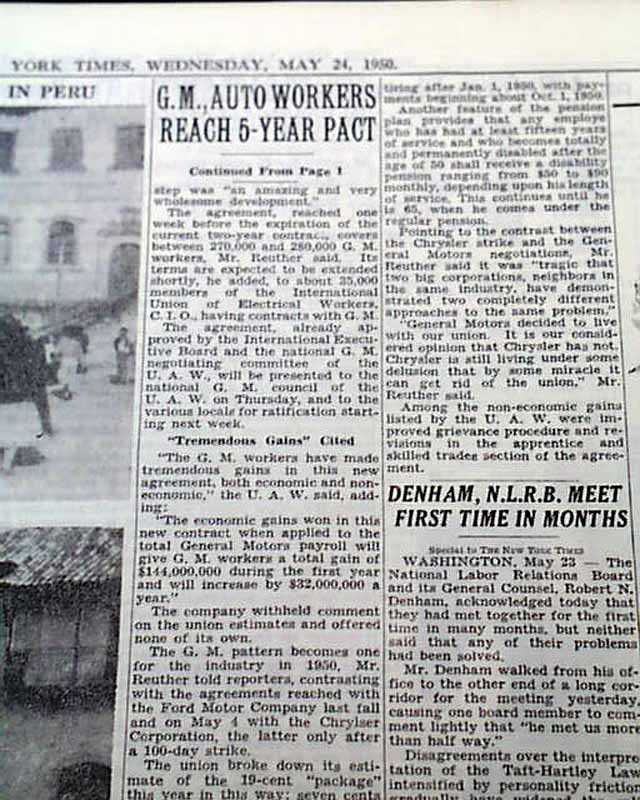
The top of the front page has a one column heading: "G.M. AUTO WORKERS REACH 5-YEAR PACT5 ON PENSIONS, WAGES" with subheads and related photo. (see images)
Complete with all 60 pages, rag edition in very nice condition.
background: The 1950 Treaty of Detroit represented a historic compromise where Walter Reuther traded the UAW’s ambitions for workplace control in exchange for an unprecedented level of middle-class security. By signing this five-year contract with General Motors, Reuther secured "socialized" benefits within a private corporate framework, including company-funded pensions, comprehensive healthcare, and the Cost-of-Living Adjustment (COLA) that tethered wages to inflation. This "treaty" effectively ended the era of radical industrial warfare, as Reuther accepted the "management rights" clause—granting GM total authority over production and technology—in return for the Annual Improvement Factor, which ensured workers shared in the profits of their own productivity. This deal didn't just stabilize the auto industry; it set the "pattern" for the American economy, transforming the blue-collar laborer into a stable consumer and cementing the domestic social contract that defined the post-WWII "Golden Age."
May 24, 1950
THE NEW YORK TIMES, May 24, 1950
* 1950 "Treaty of Detroit" contract signed
* Modern American middle class workers
* Long-term economic stability achieved
* Walter Reuther and General Motors - GM
* "Golden Age" of Capitalism
The top of the front page has a one column heading: "G.M. AUTO WORKERS REACH 5-YEAR PACT5 ON PENSIONS, WAGES" with subheads and related photo. (see images)
Complete with all 60 pages, rag edition in very nice condition.
background: The 1950 Treaty of Detroit represented a historic compromise where Walter Reuther traded the UAW’s ambitions for workplace control in exchange for an unprecedented level of middle-class security. By signing this five-year contract with General Motors, Reuther secured "socialized" benefits within a private corporate framework, including company-funded pensions, comprehensive healthcare, and the Cost-of-Living Adjustment (COLA) that tethered wages to inflation. This "treaty" effectively ended the era of radical industrial warfare, as Reuther accepted the "management rights" clause—granting GM total authority over production and technology—in return for the Annual Improvement Factor, which ensured workers shared in the profits of their own productivity. This deal didn't just stabilize the auto industry; it set the "pattern" for the American economy, transforming the blue-collar laborer into a stable consumer and cementing the domestic social contract that defined the post-WWII "Golden Age."
Category: The 20th Century
Available Now
$52.00