1956 Montgomery, Alabama civil rights movement...
Item # 725130
THE WORKER, New York, March 4, 1956
* Montgomery, Alabama bus boycott
* Civil Rights movement leaders arrested
* Martin Luther King Jr. - African Americans
This publication, The Worker, represents the official voice and ideological "mouthpiece" of the Communist Party USA (CPUSA) during one of the most volatile periods of the Cold War.
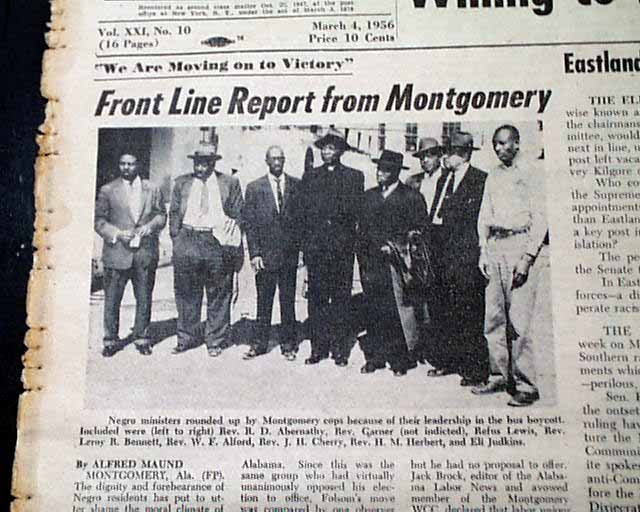
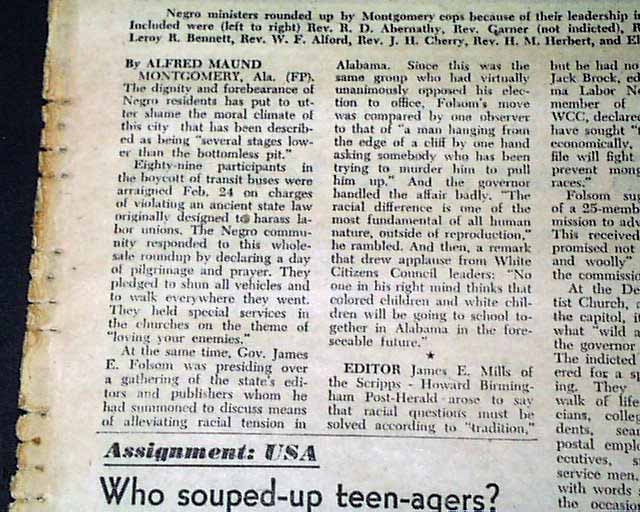
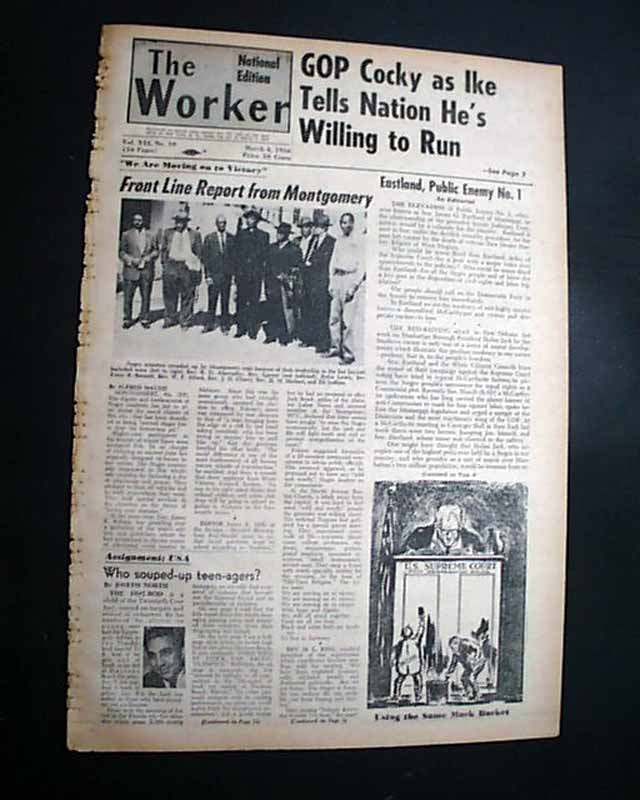
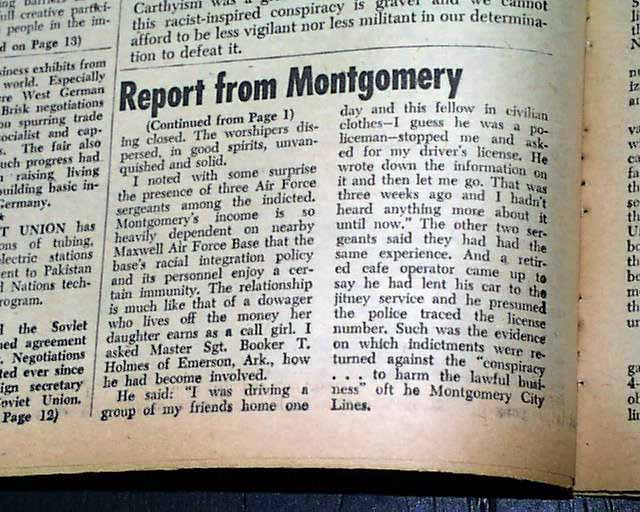
The front page has a photo with heading: "Front Line Report from Montgomery" with lead-in: "'We Are Moving on to Victory'" which shows a group of Negro ministers arrested for supporting the bus boycott.
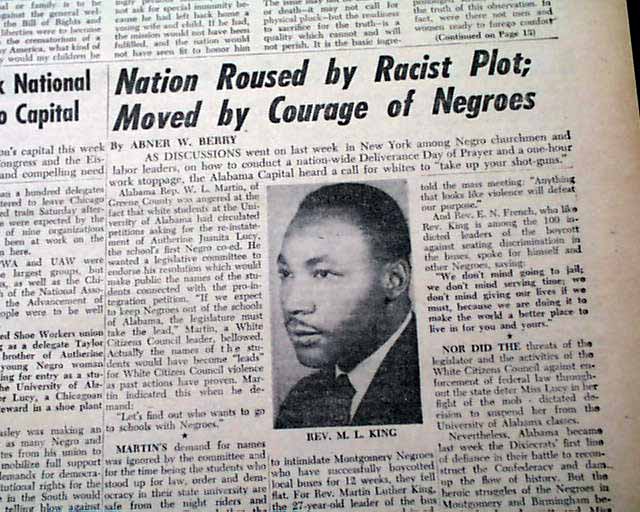
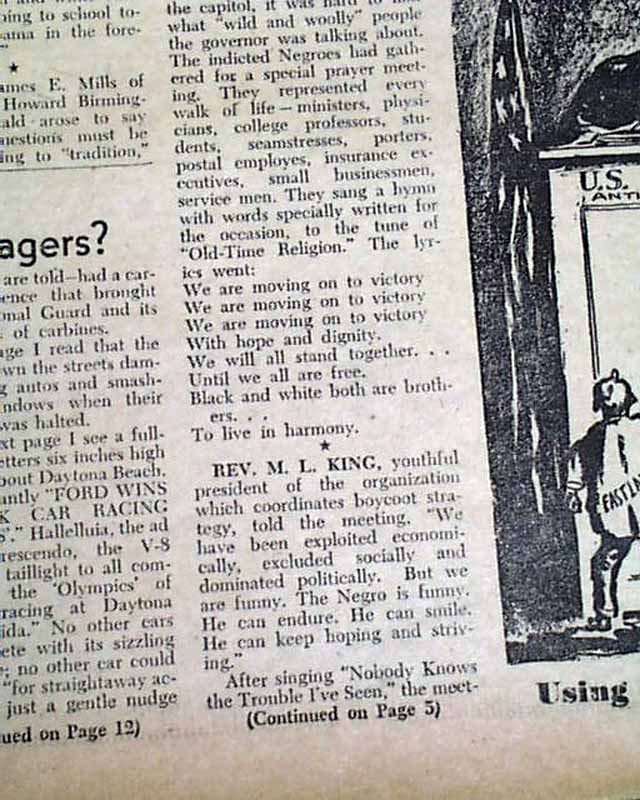
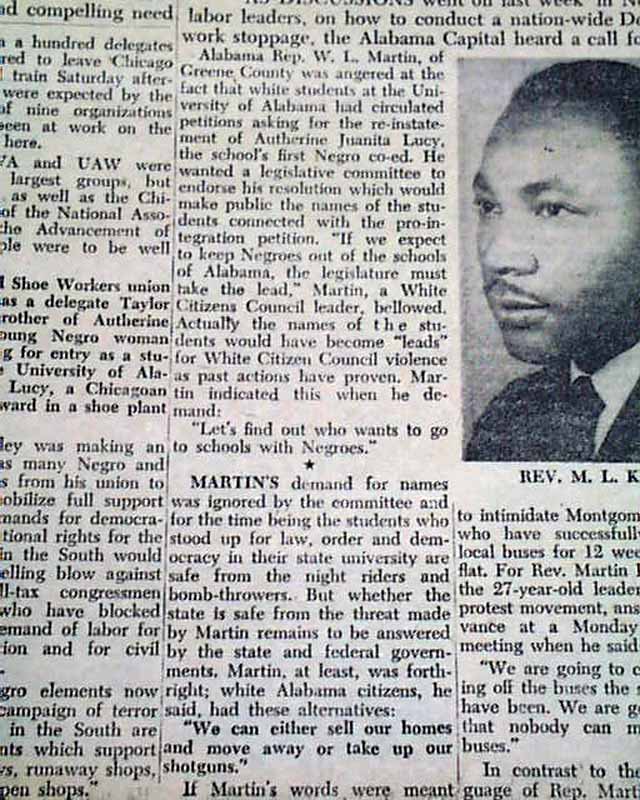
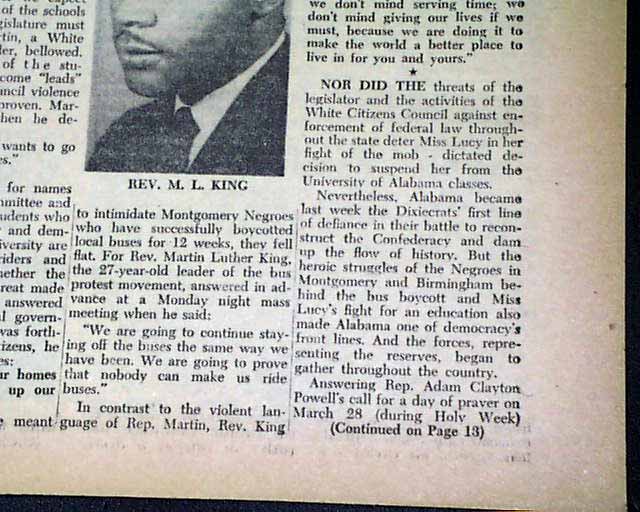
Page 3 has a related report headed: "Nation Roused by Racist Plot; Moved by Courage of Negroes" with a photo of young Martin Luther King Jr. and more. (see images)
Original physical issues of The Worker from the 1950s are exceptionally rare today becuse the political climate of the McCarthy era compelled many subscribers to destroy their copies to avoid FBI surveillance and the professional ruin associated with possessing "subversive" communist literature.
Complete with 16 pages, a little spine wear, otherwise very nice.
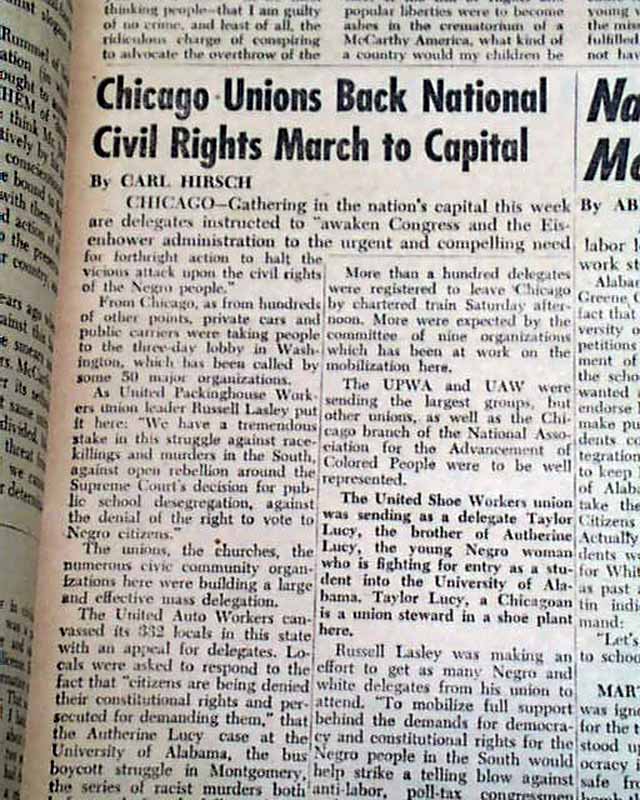
background: The March 4, 1956, issue of The Worker served as a fervent ideological megaphone for the Montgomery Bus Boycott, framing the local struggle as the "front line" of a global class and racial conflict. Reporting in the immediate wake of the mass indictments of nearly 100 leaders—including Dr. Martin Luther King Jr. and Rosa Parks—the paper eschewed the more cautious, legalistic tone of the mainstream press in favor of a "Mass Action" narrative. It explicitly linked the struggle of the 50,000 Black residents in Alabama to the broader labor movement, arguing that the anti-boycott statutes used by Southern authorities were the same "vicious legal weapons" historically deployed to crush trade unions. By highlighting the boycott as a movement powered by domestic workers and laborers, The Worker sought to mobilize Northern labor unions and international observers, portraying the "Dixiecrat" power structure as a failing relic of colonialism that the Eisenhower administration was too cowardly to dismantle. This specific issue is a testament to how the Communist press attempted to bridge the gap between Civil Rights and Marxist theory, long before the mainstream media recognized the movement's full revolutionary potential.
Category: The 20th Century
Available Now