Home >
Review & premiere of "No Way Out", in a Los Angeles newspaper...
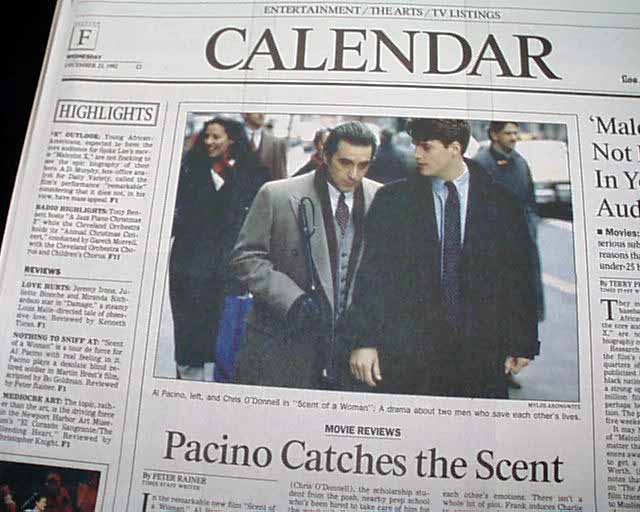
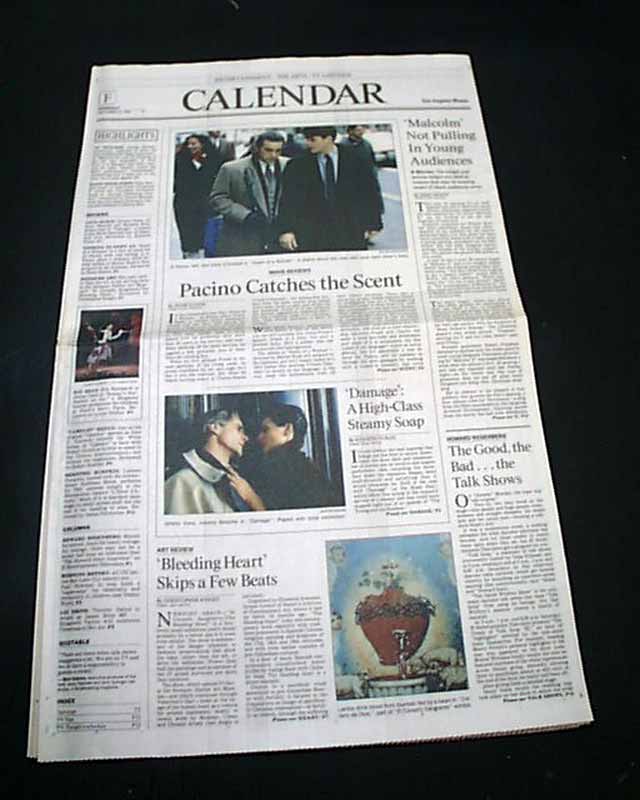

Review & premiere of "No Way Out", in a Los Angeles newspaper...
Item # 725104
December 23, 1987
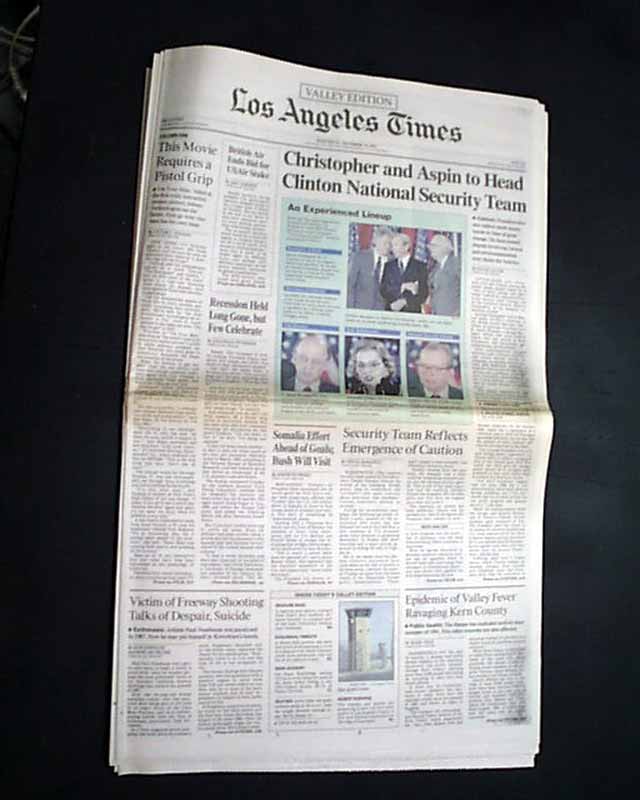
LOS ANGELES TIMES, Dec. 23, 1992
* Best "Scent of a Woman" advertisement
* Grand Opening Day movie premiere & review
* American drama film - Actor Al Pacino
* 1st Academy Award (Oscar) for Best Actor
A terrific issue on the premiere of the motion picture hit "Scent of a Woman" and perhaps no better issue could be found than this, the leading newspaper from the home of the entertainment industry - the Hollywood area's prime publication.
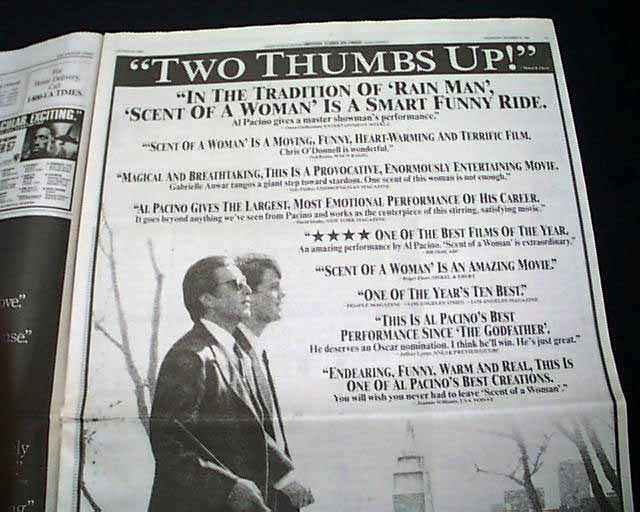
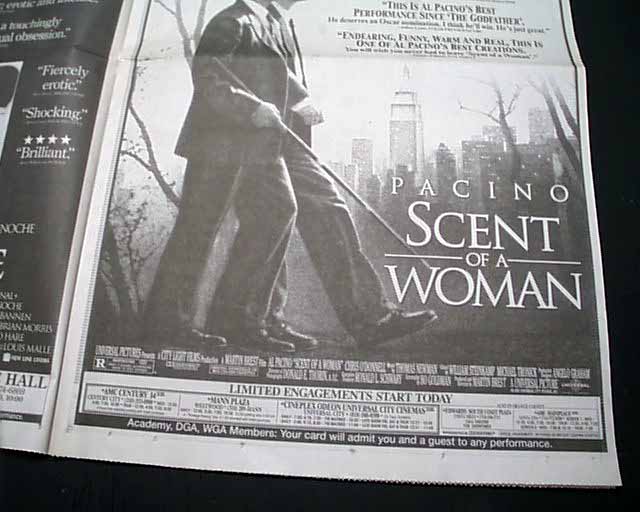
Note: Where else might one find authentic, poster-size ads for Opening Day showings, in the most desirable Hollywood-area newspaper - as we were lucky enough to obtain this (and others) indirectly from the Los Angeles Times' own collection? It simply doesn't get any better! In over 40 years of collecting, we have yet to see such unique & dramatic coverage with truly top-shelf, eye-catching displayability (see images).
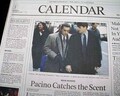
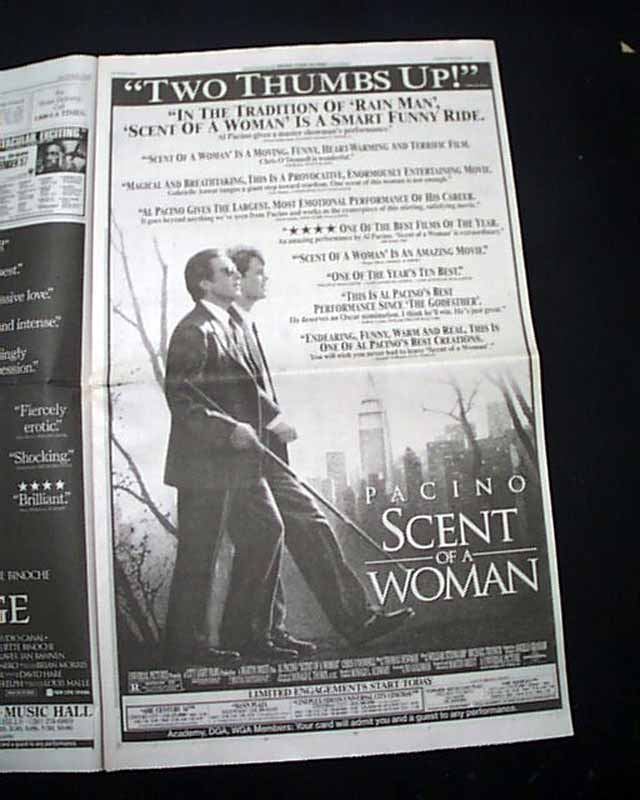
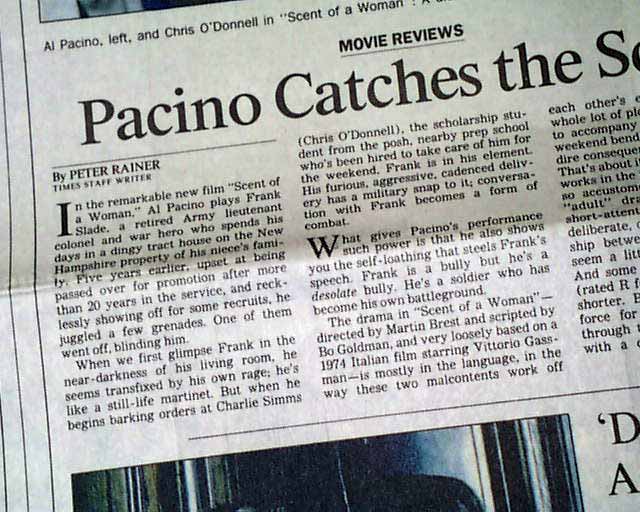
The front page of section F has a review of the film headed: "Pacino Catches the Scent" with related photo. And perhaps more significant is the terrific, full page poster-like advertisement for the film printed on it's opening day. (see images).
A quite rare issue as it would not have been saved since it contains no historically significant content.
Complete with all sections (80+ pages), great condition.
background: Directed by Martin Brest, Scent of a Woman is a sprawling character study that centers on the unlikely bond between Charlie Simms, a scholarship student burdened by an ethical dilemma, and Frank Slade, a blind, retired Lieutenant Colonel who is as charismatic as he is self-destructive. What begins as a straightforward caretaking job evolves into a high-stakes "last hurrah" in New York City, where Slade intends to indulge in the finest luxuries before ending his life. The film’s emotional core is anchored by Al Pacino’s Oscar-winning performance, which balances explosive volatility with quiet vulnerability—most notably during the famous tango at the Pierre Hotel and the roaring "out of order" courtroom climax. Ultimately, the movie is less about the titular sensory experience and more about the reclamation of honor, as the two men save each other from their respective versions of despair.
Category: The 20th Century
Available Now
$68.00