Home >
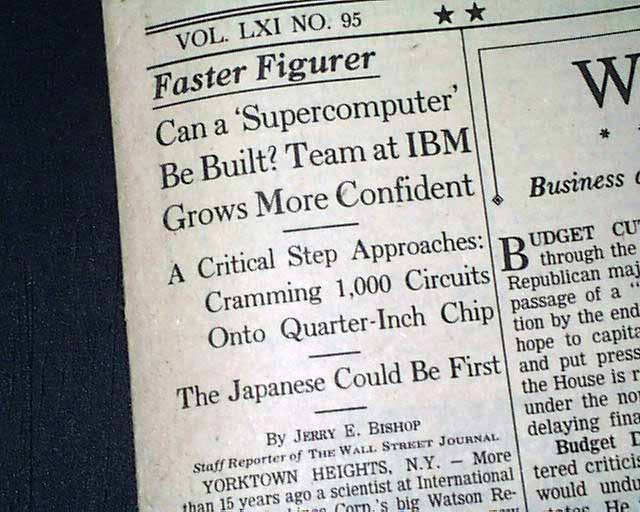
Future "Supercomputer" prediction in 1981...

Future "Supercomputer" prediction in 1981...
Item # 724431
February 27, 1981
THE WALL STREET JOURNAL, Feb. 27, 1981
* Ralph Gomory and IBM
* Future of supercomputers ?
* High-performance computing
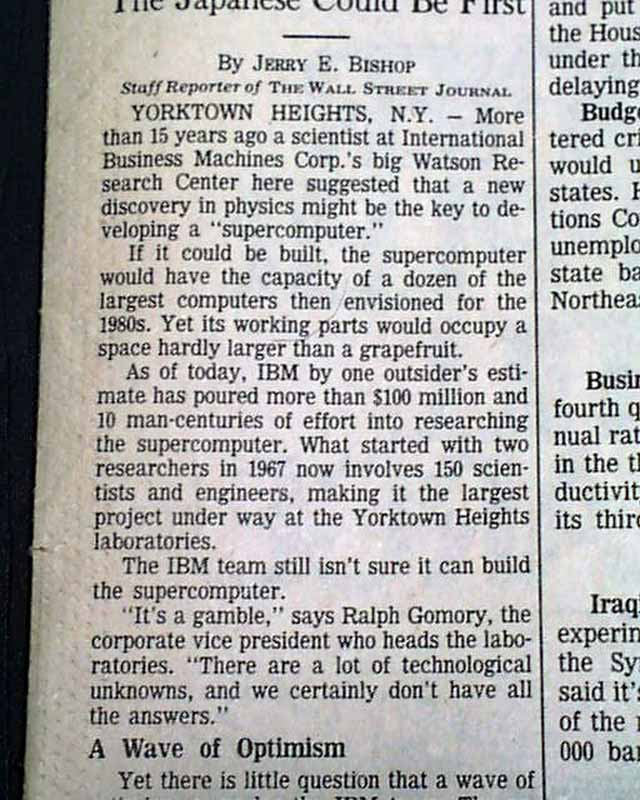
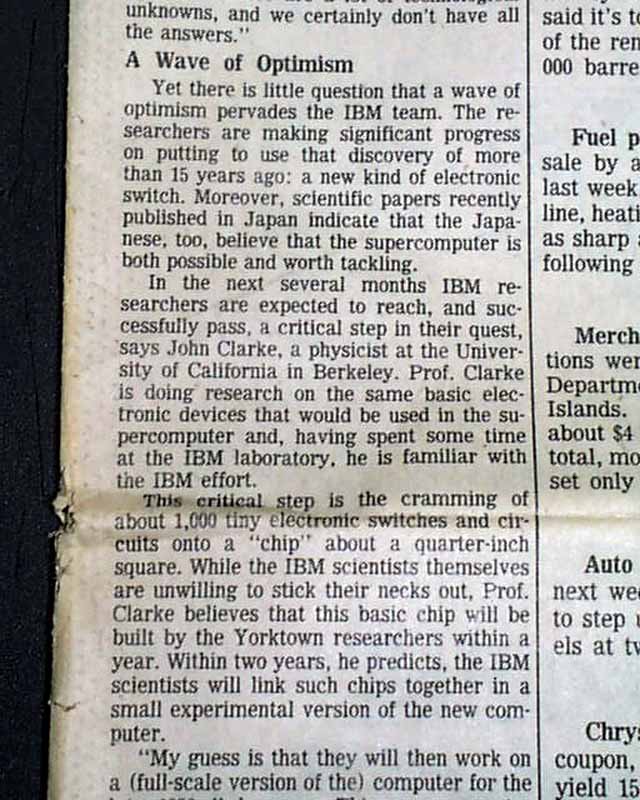
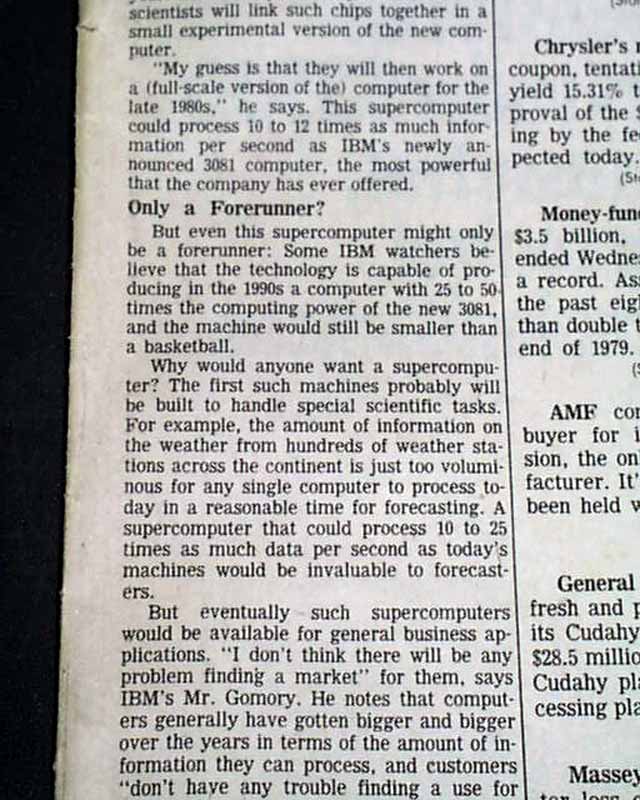
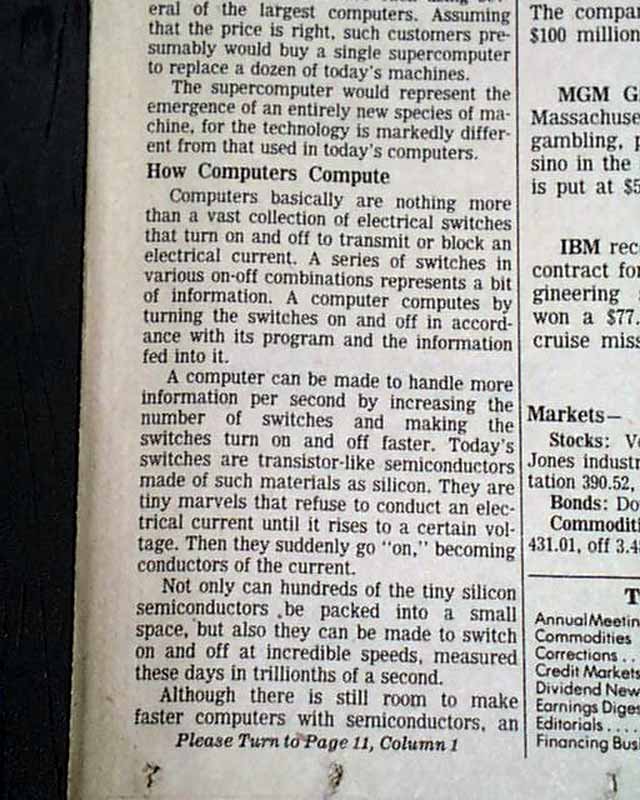
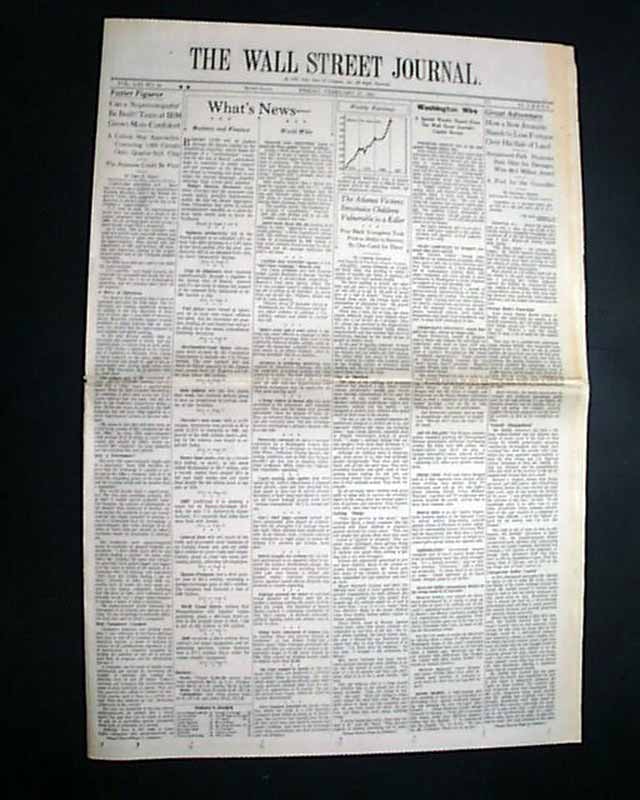
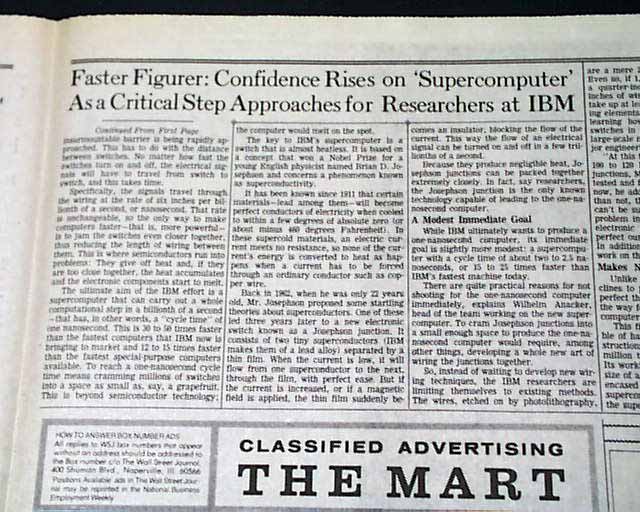
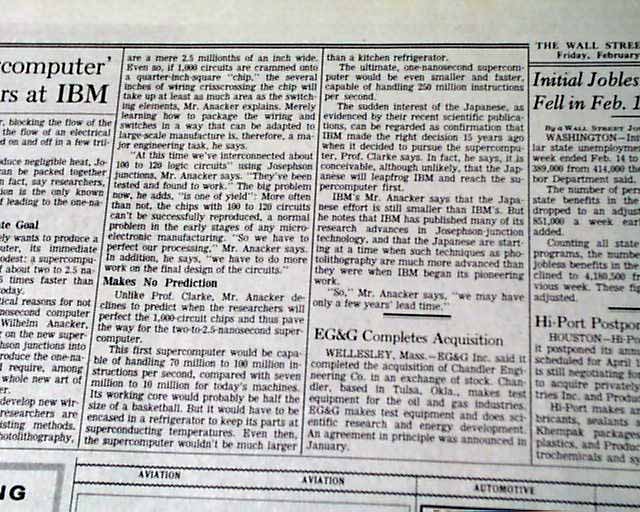
The top of front page has a one column heading: "Can a 'Supercomputer' Be Built? Team at IBM Grows More Confident" with lead-in: "Faster Figurer" and subheads. (see images)
Complete with 36 pages, nice condition.
AI notes: In 1981, Ralph Gomory, then an influential figure at IBM, made a compelling prediction about the future of supercomputers, which proved to be strikingly prescient as computing evolved over the next few decades. He foresaw that the next generation of supercomputers would not follow the path of building ever-larger, single, monolithic processors, but rather focus on the concept of specialization and parallel processing. Specifically, Gomory predicted that supercomputers would become increasingly specialized for particular tasks, moving away from the idea of a one-size-fits-all machine. This insight was a precursor to the later development of highly specialized hardware such as Graphics Processing Units (GPUs), which today dominate fields like artificial intelligence, machine learning, and high-performance computing, as they excel in handling parallel workloads. He also emphasized the importance of parallel computing, suggesting that supercomputers of the future would harness the power of many processors working simultaneously rather than relying on a single powerful processor. This foresaw the rise of multi-core processors and massively parallel architectures that are fundamental to modern supercomputing, where thousands, or even millions, of cores work in unison to solve complex problems. Gomory's insights aligned with the rapid advances in high-performance computing, culminating in systems like IBM’s Blue Gene, which utilized vast parallelism to deliver extraordinary computational power. His prediction of the shift from general-purpose supercomputers to task-specific, parallelized systems laid the foundation for how modern supercomputers are designed today, reflecting a profound understanding of computing's trajectory toward specialization and parallelism, concepts that are now at the heart of cutting-edge technology in fields ranging from scientific research to AI and beyond.
Category: The 20th Century
Available Now
$52.00