

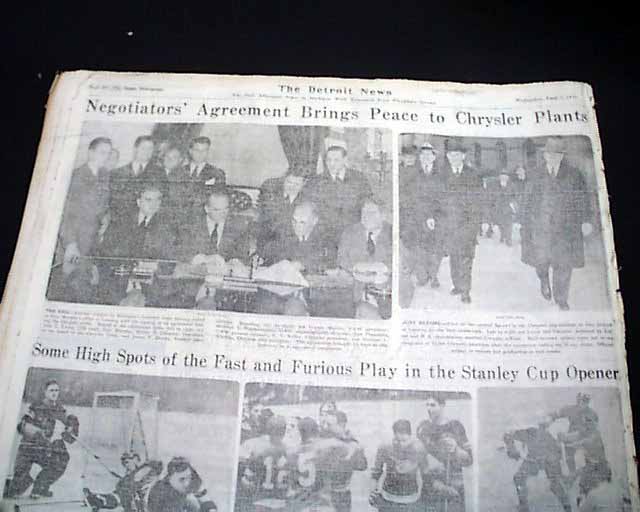
Chrysler agrees w/ United Auto Workers in 1937...
Item # 723538
April 07, 1937
THE DETROIT NEWS, April 7, 1937
* Chrysler Automotive industry strike ending w/ pact
* First of the "Big Three" automobile manufacturers
* United Auto Workers (UAW) in Detroit, Michigan
* Best publication to be had ? - very rare as such
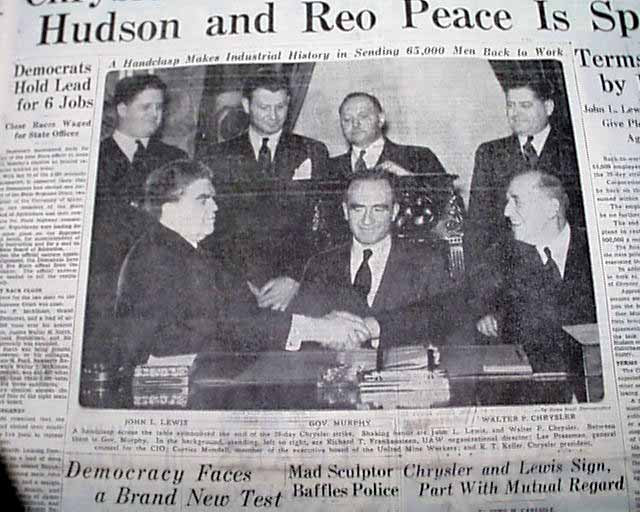
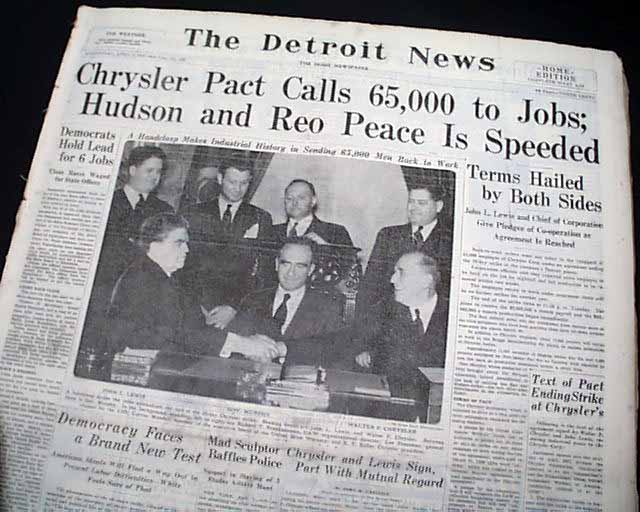
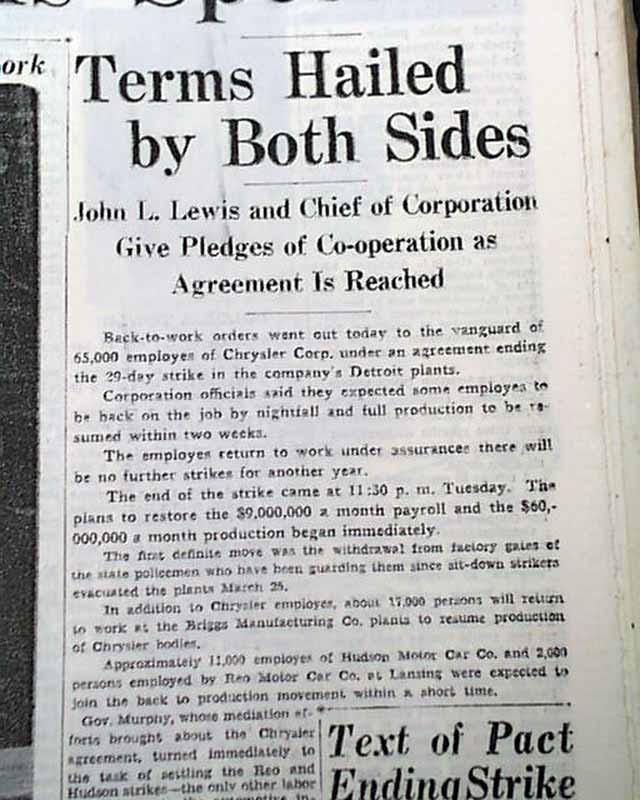
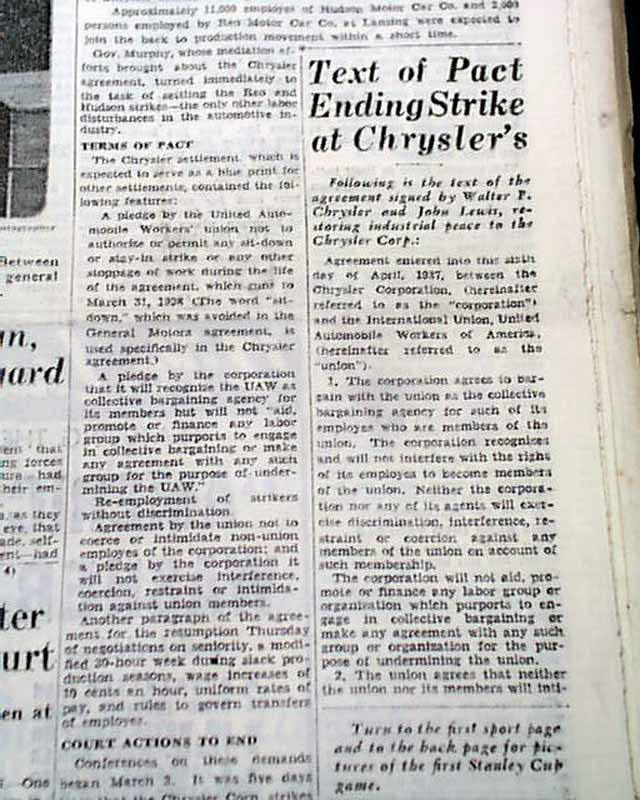
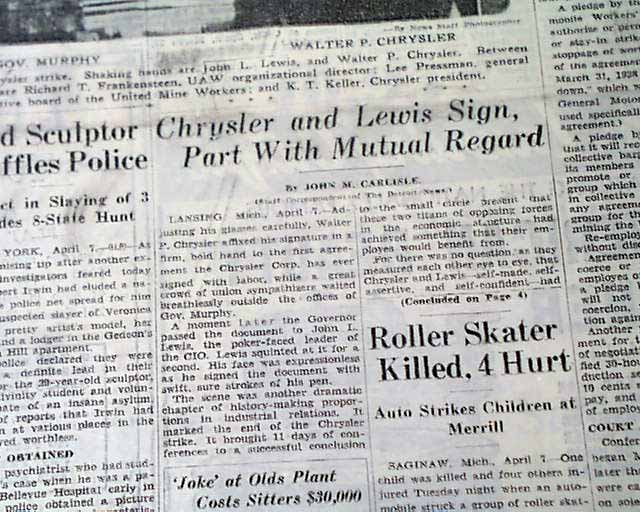
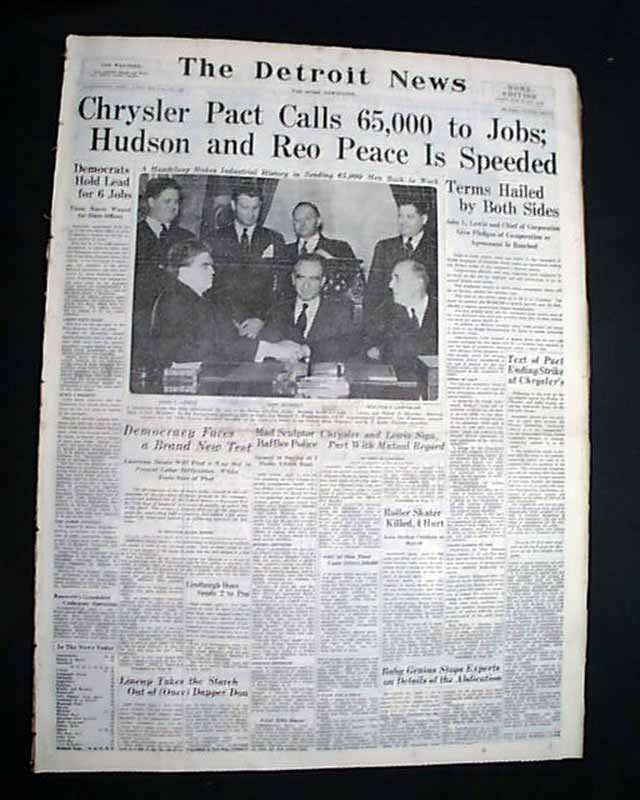
The front page has a nice banner headline: "Chrysler Pact Calls 65,000 to Jobs; Hudson and Reo Peace Is Speeded" with subheads and photo of John L. Lewis and Walter P. Chrysler shaking hands. (see images) Nice for display. Two more related photos are on the back page.
Complete with 44 pages, rag edition in nice condition.
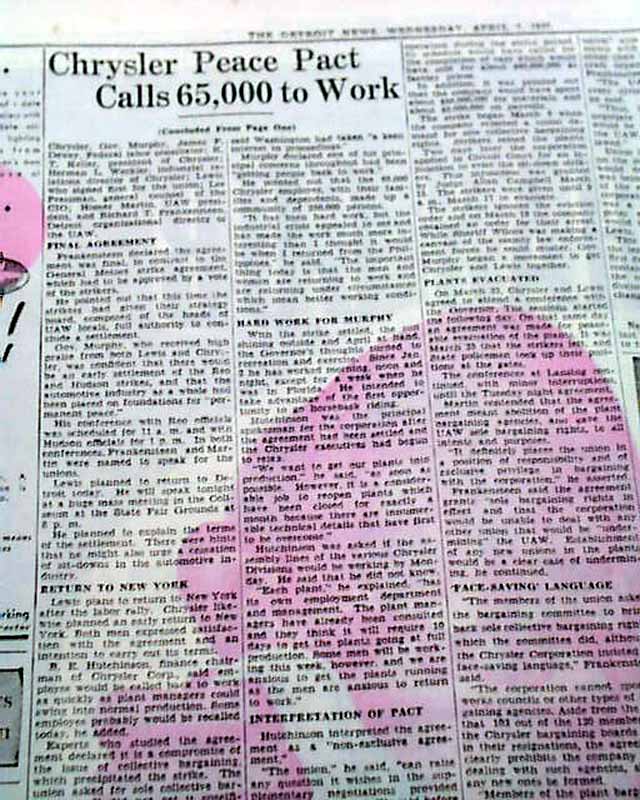
AI notes: On April 6, 1937, Chrysler became the first major American automaker to formally recognize the United Auto Workers (UAW), ending months of tense negotiations and strikes and signaling a pivotal shift in the relationship between labor and management in the automotive industry. The agreement granted the UAW the right to represent Chrysler workers, negotiate wages, establish working conditions, and participate in a formal grievance process, creating a structured avenue for labor disputes that had previously erupted into violent confrontations. Chrysler’s recognition of the union legitimized the UAW as a serious bargaining force and set a precedent that encouraged workers at other automakers, particularly General Motors and Ford, to press for similar recognition. This move helped stabilize labor relations, reduce workplace unrest, and paved the way for the rapid expansion of union power across the industry, particularly after the successful sit-down strikes at GM later in 1937. Economically and socially, the pact empowered workers with higher wages, improved job security, and benefits, contributing to the rise of the American middle class and transforming Detroit into a hub of organized industrial labor. In the broader scope of the automotive industry, Chrysler’s recognition of the UAW marked the beginning of an era in which unions became a permanent and influential force, shaping labor-management dynamics, production practices, and the standard of living for decades to come.
* Chrysler Automotive industry strike ending w/ pact
* First of the "Big Three" automobile manufacturers
* United Auto Workers (UAW) in Detroit, Michigan
* Best publication to be had ? - very rare as such
The front page has a nice banner headline: "Chrysler Pact Calls 65,000 to Jobs; Hudson and Reo Peace Is Speeded" with subheads and photo of John L. Lewis and Walter P. Chrysler shaking hands. (see images) Nice for display. Two more related photos are on the back page.
Complete with 44 pages, rag edition in nice condition.
AI notes: On April 6, 1937, Chrysler became the first major American automaker to formally recognize the United Auto Workers (UAW), ending months of tense negotiations and strikes and signaling a pivotal shift in the relationship between labor and management in the automotive industry. The agreement granted the UAW the right to represent Chrysler workers, negotiate wages, establish working conditions, and participate in a formal grievance process, creating a structured avenue for labor disputes that had previously erupted into violent confrontations. Chrysler’s recognition of the union legitimized the UAW as a serious bargaining force and set a precedent that encouraged workers at other automakers, particularly General Motors and Ford, to press for similar recognition. This move helped stabilize labor relations, reduce workplace unrest, and paved the way for the rapid expansion of union power across the industry, particularly after the successful sit-down strikes at GM later in 1937. Economically and socially, the pact empowered workers with higher wages, improved job security, and benefits, contributing to the rise of the American middle class and transforming Detroit into a hub of organized industrial labor. In the broader scope of the automotive industry, Chrysler’s recognition of the UAW marked the beginning of an era in which unions became a permanent and influential force, shaping labor-management dynamics, production practices, and the standard of living for decades to come.
Category: The 20th Century


