Home >
1942 Stanley Johnston & Battle of the Coral Sea...
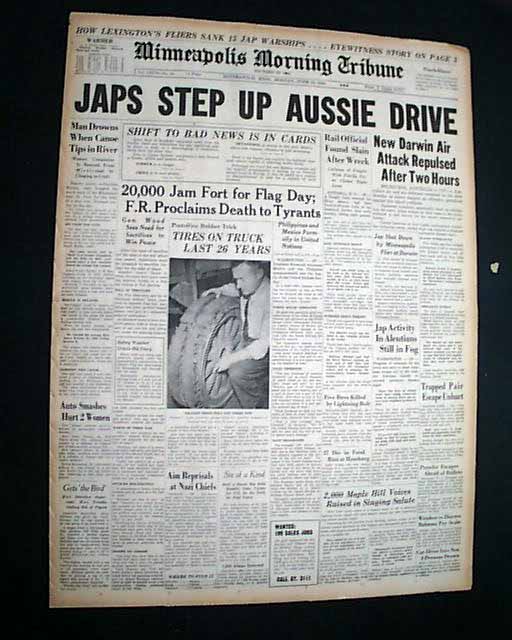
1942 Stanley Johnston & Battle of the Coral Sea...
Item # 723375
June 15, 1942
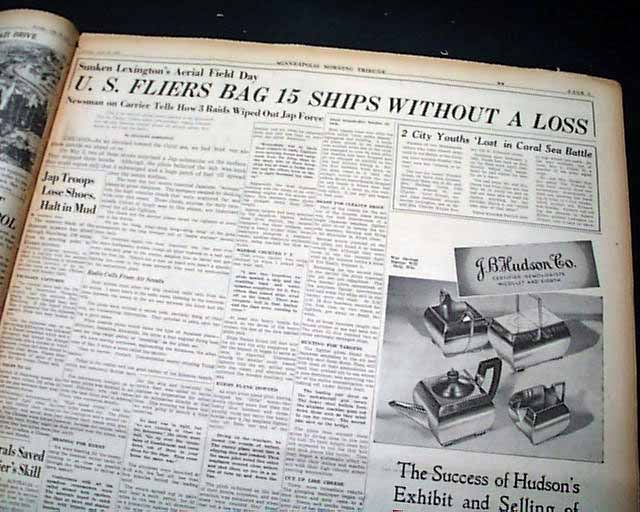
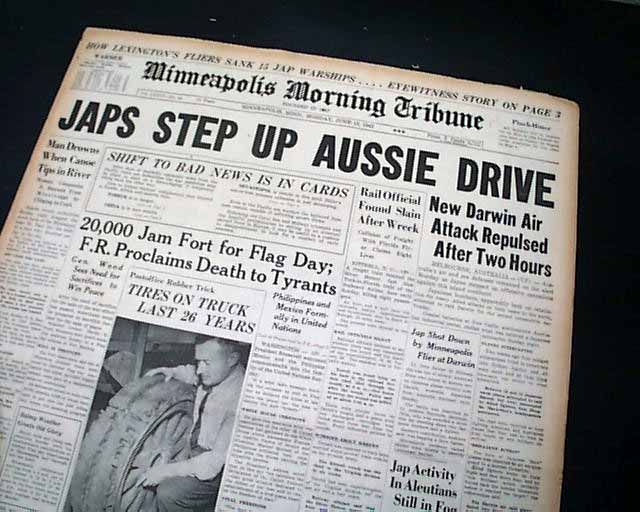
MINNEAPOLIS MORNING TRIBUNE, June 15, 1942
* Life on board United States Navy carrier described
* Chicago Tribune journalist Stanley Johnston
* USS Lexington & the Battle of the Coral Sea
* Imperial Japanese Navy secret coding - codes
Read below for a short biography of Journalist Stanley Johnston who worked for The Chicago Tribune.
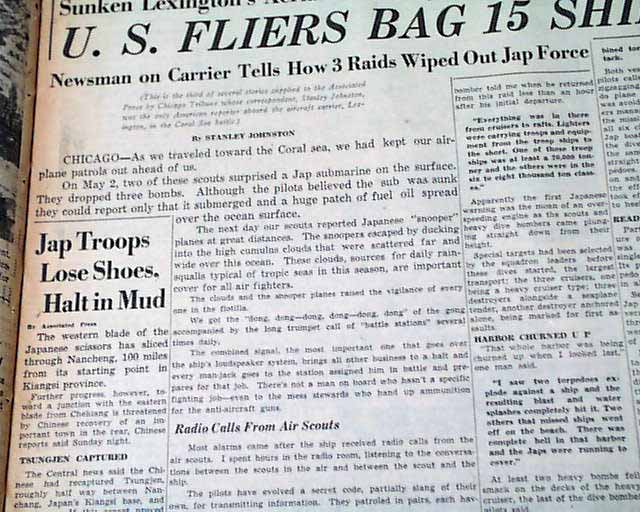
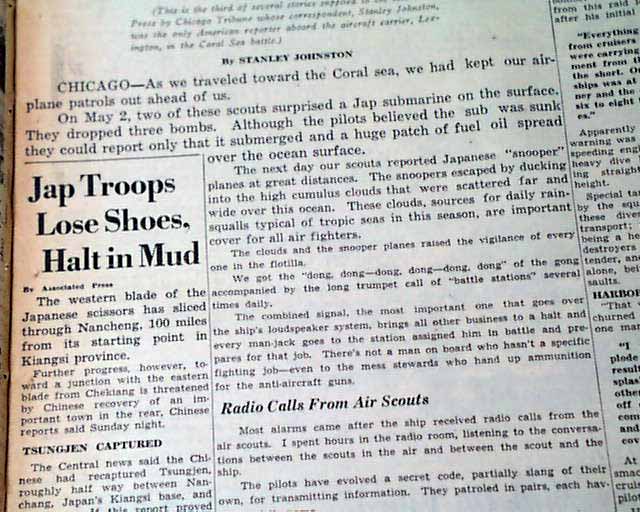
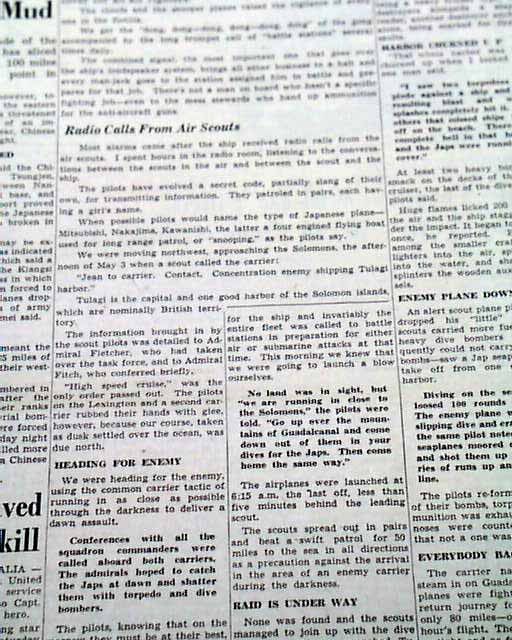
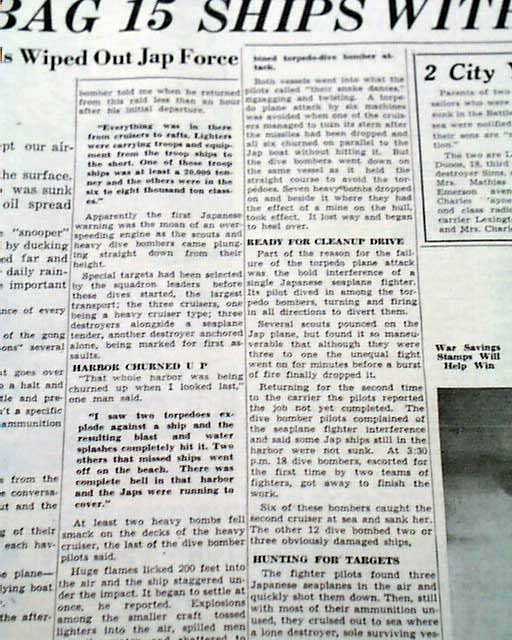
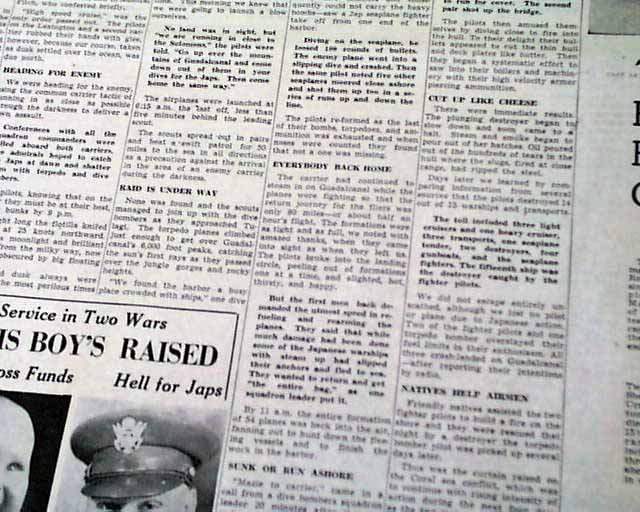
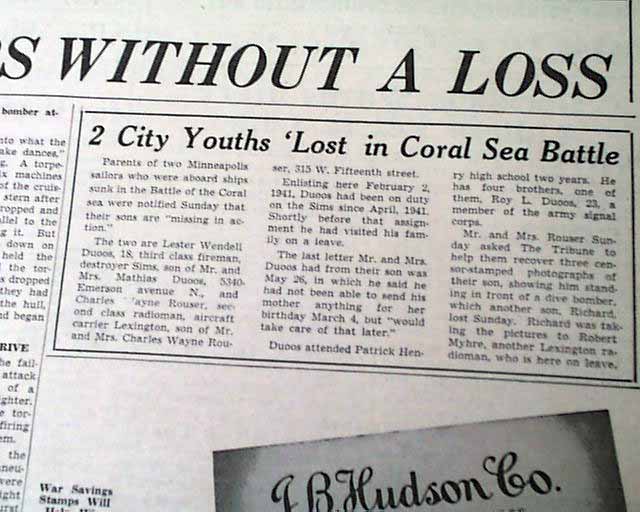
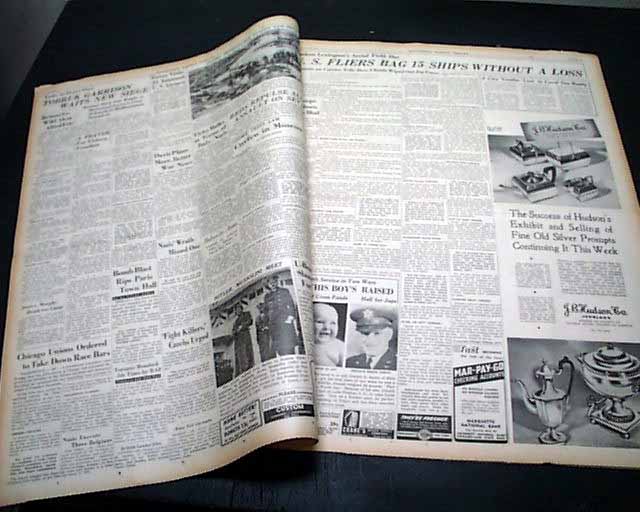
The top of page 3 has a banner heading: "U. S. FLIERS BAG 15 SHIPS WITHOUT A LOSS" with lead-in: "Sunken Lexington's Aerial Field Day" and various subheads. (see images) This is a editorial by Stanley Johnston, eyewitness to the famous sea battle onboard the USS Lexington.
Much more on World War II events of the day. Complete with 14 pages, light toning and a little wear at the margins, generally nice.
wikipedia notes: Stanley Johnston (1900 – September 13, 1962) was an Australian-American journalist who, as a correspondent during World War II, wrote a story for the Chicago Tribune that inadvertently revealed the extent of American code-breaking activities against the Imperial Japanese Navy (IJN). The story resulted in efforts by the United States government to prosecute Johnston and other Chicago Tribune journalists, an effort what remains the only time the Espionage Act was used against journalists in the United States.
Johnston was the only member of the press aboard Lexington when the aircraft carrier took part in the Battle of the Coral Sea in early May 1942. Following the sinking of the aircraft carrier in the battle Johnston was repatriated aboard the USS Barnett with the Lexington's executive officer, Commander Morton T. Seligman. Seligman had access to naval communications. One general dispatch in late May dealt with American appreciations of Japanese naval movements in the weeks leading up to the June 1942 Battle of Midway, that implied American foreknowledge of events. Johnston claimed he saw the dispatch, "a scrap of paper with doodling on it," which he threw away. Johnston returned to Chicago and published 15 first-hand accounts of the events of the battle. He also wrote an account of the prelude to the Midway action that caused fears in the United States Navy that the Japanese would realize that their codes were broken.
Category: World War II
Available Now
$52.00