Home >
1846 anti-slavery publication...
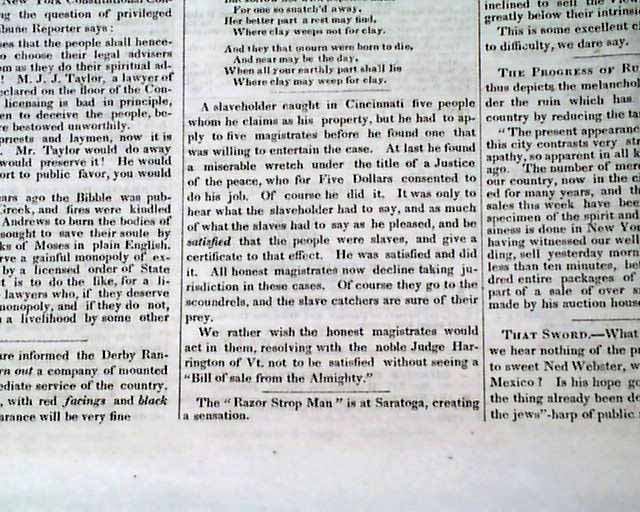
1846 anti-slavery publication...
Item # 723313
Currently Unavailable. Contact us if you would like to be placed on a want list or to be notified if a similar item is available.
September 03, 1846
THE WEEKLY CHRONOTYPE, Boston, Sept. 3, 1846 (currently on eBay)
Note: we offered this for many years but did not learn of its abolitionist significance until recently (see background below).
* American anti slavery movement
* Abolitionists related masthead
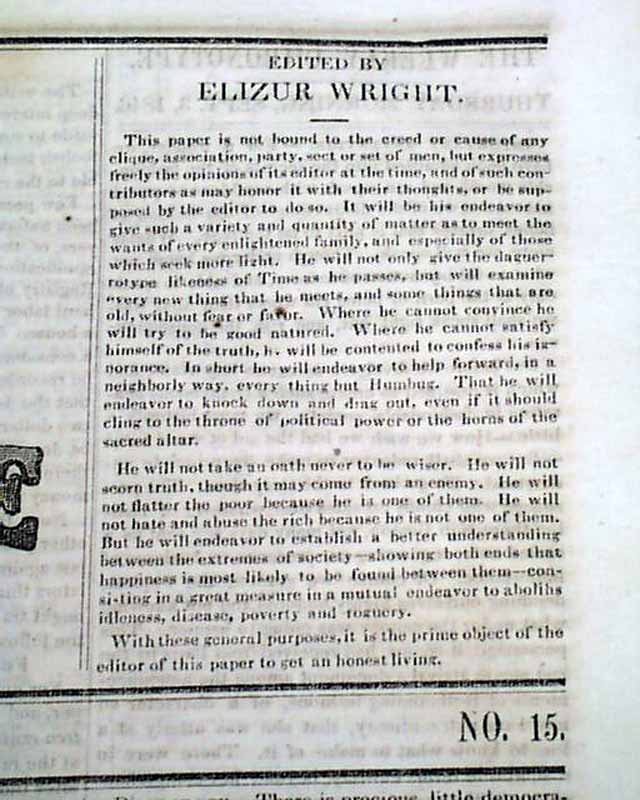
* Reformer Elizur Wright as editor
* 15 years prior to the Civil War outbreak
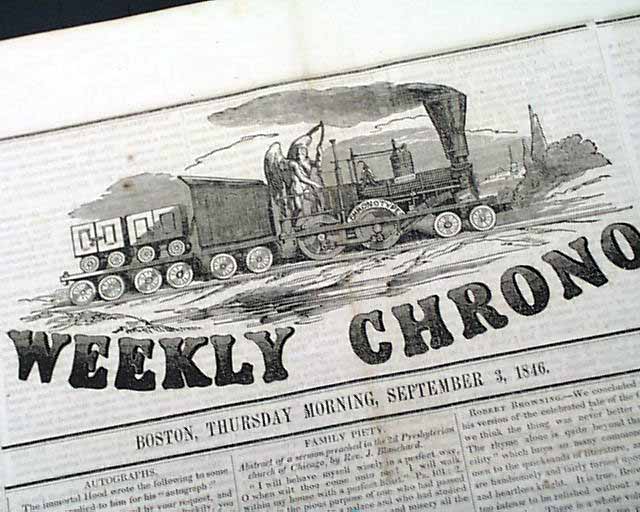
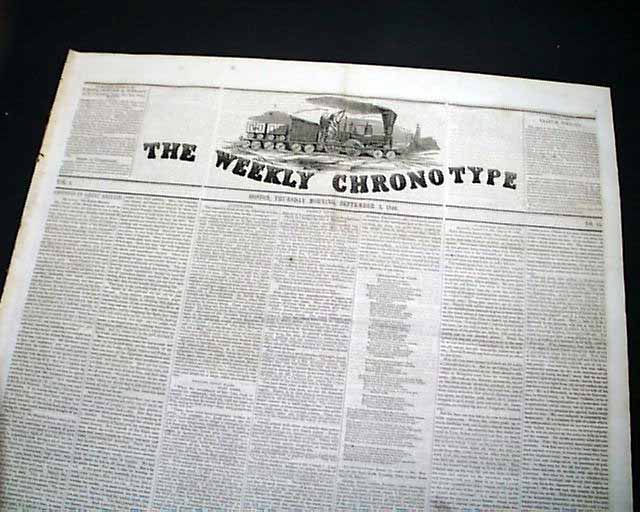
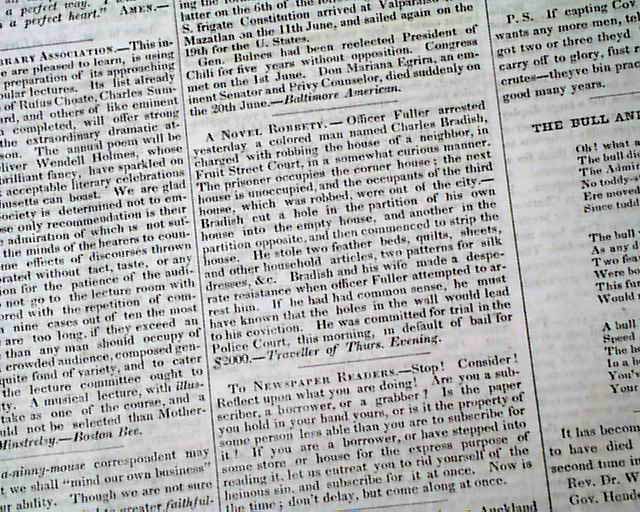
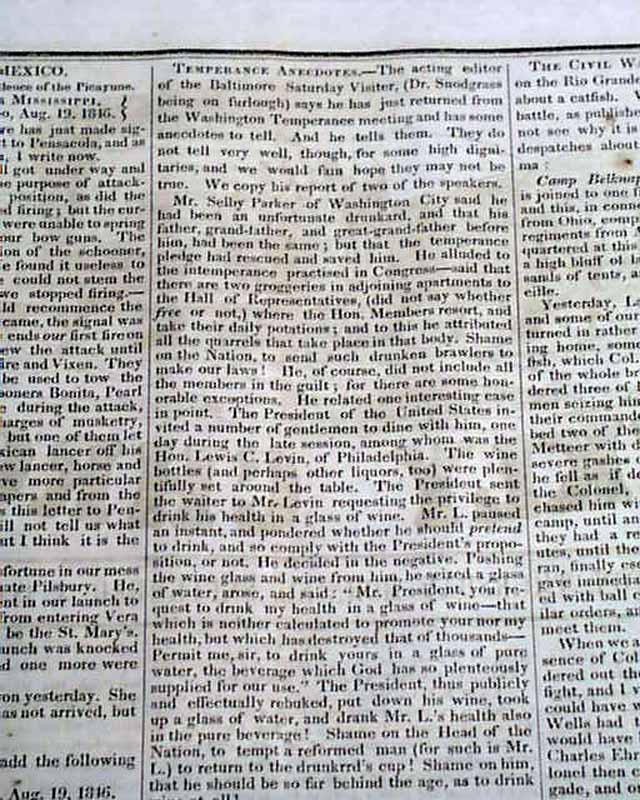
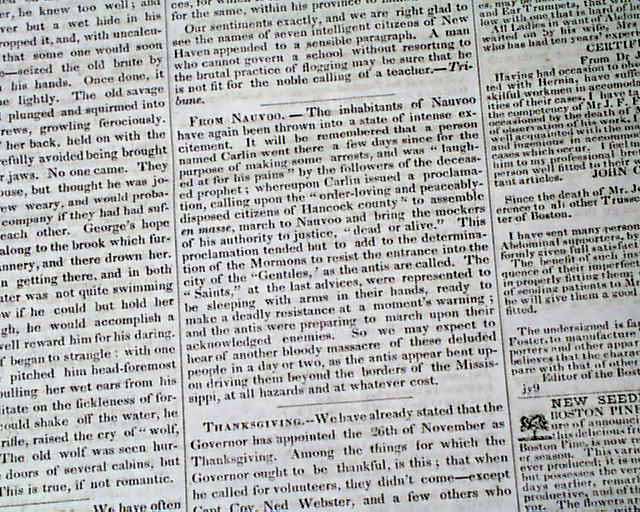
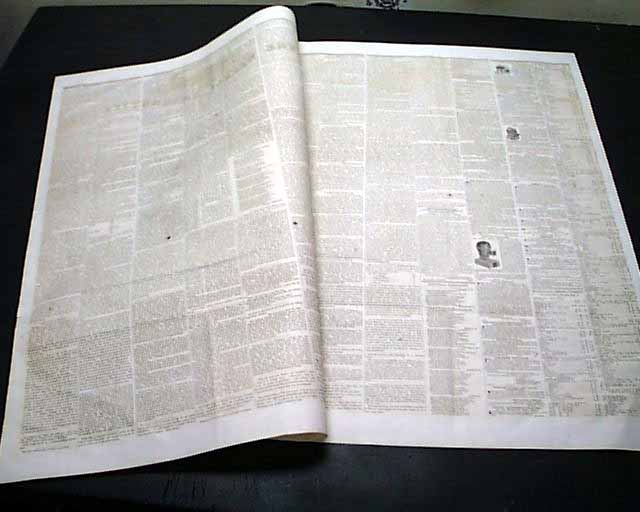
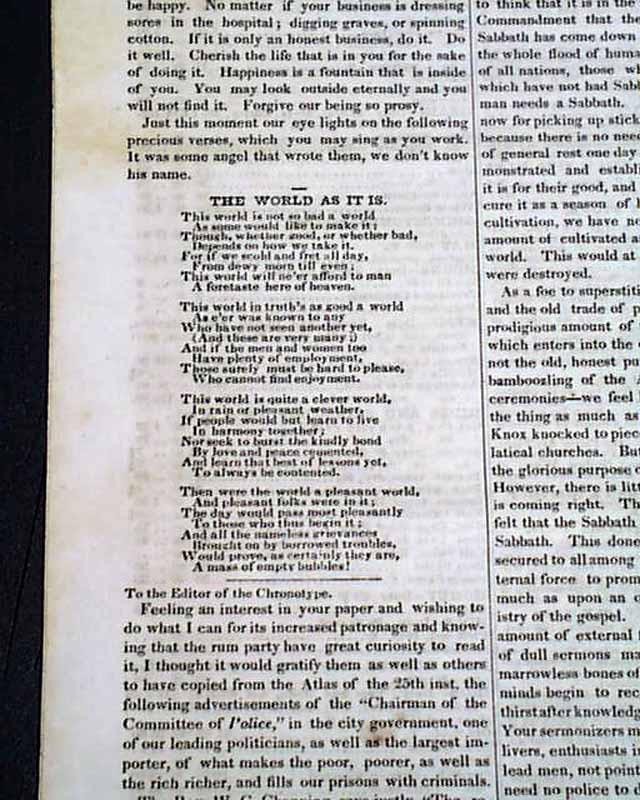
One of the more uncommon anti-slavery publications prior to the Civil War. See the great, early engraving of a railroad train in the masthead which has some historical significance. See below for more details. An interesting array of news tidbits of the day.
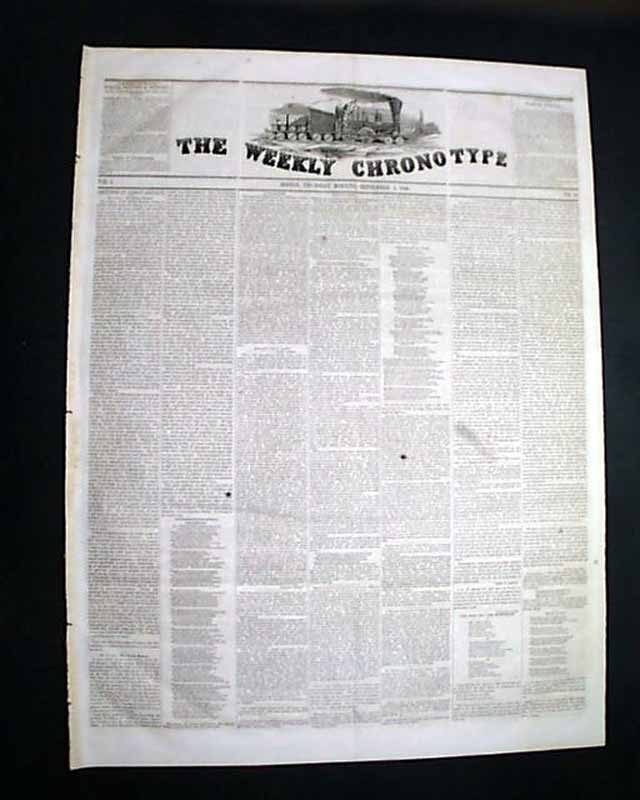
Four pages, nice condition. This is the vol. 1 number 15 issue of a title which lasted about 4 years.
Complete with 4 pages, nice condition.
Background: In the context of the American anti-slavery movement, the Boston Weekly Chronotype’s 1846 masthead engraving operates as a carefully constructed abolitionist allegory: the classical male figure, commonly interpreted as Chronos, the personification of Time, stands in symbolic partnership with a speeding railroad locomotive, visually asserting that history itself was moving inexorably against slavery. Abolitionist writers of the 1840s frequently framed slavery as an institution “out of its age,” morally obsolete and unable to survive the accelerating forces of modern progress, reform, and national integration, and the Chronotype’s imagery gives that argument a visual form. By pairing ancient moral authority (Time) with modern technology (the railroad), the masthead suggested that slavery was not merely unjust but historically doomed, aligning the newspaper with Liberty Party and Free Soil ideals that saw emancipation as both a moral necessity and an inevitable outcome of social advancement. Rather than depicting the brutality of enslavement, the engraving appealed to educated Northern readers through classical symbolism, presenting abolition as part of the natural, forward march of civilization itself.
Elizur Wright was a committed abolitionist who combined moral conviction with practical activism, and he played a significant role in organized anti-slavery efforts in Massachusetts. He was involved in the Massachusetts Anti-Slavery Society, helping to strengthen its local and state networks, and supported other reformist organizations that promoted emancipation, education, and equal rights for African Americans.
Category: Pre-Civil War
No Longer Available