Home >
General Johnston's report on the Battle of Seven Pines...
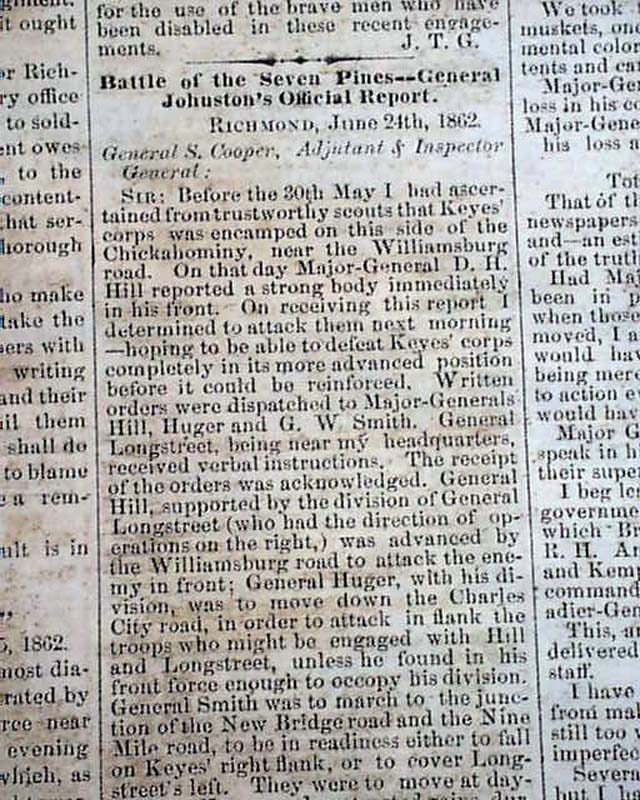
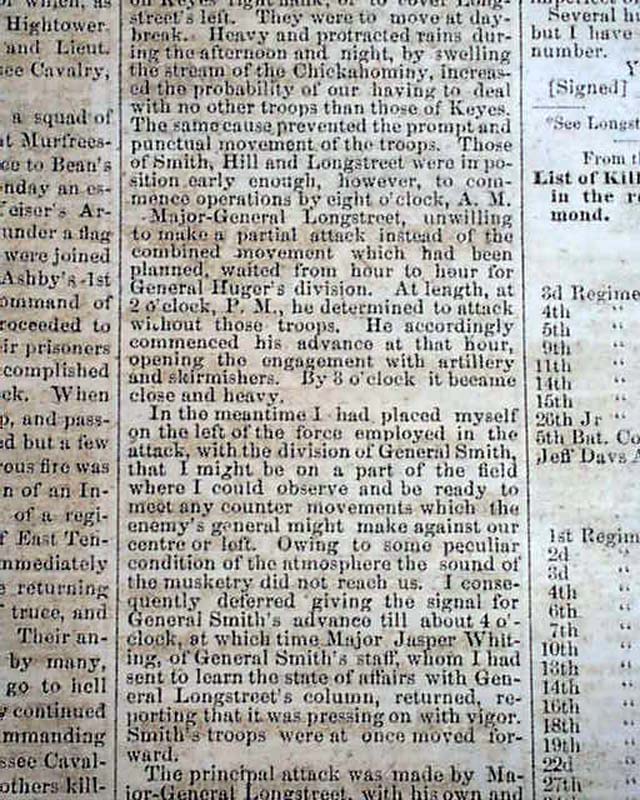
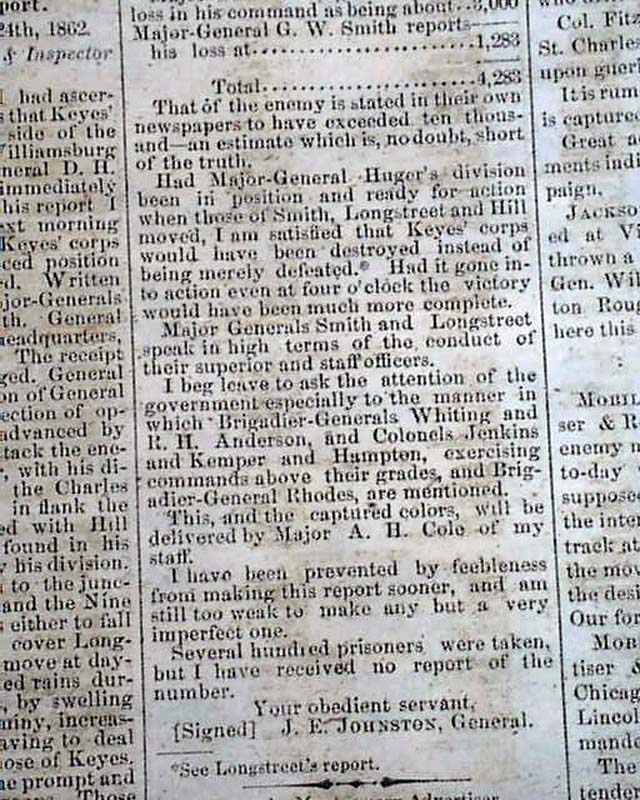
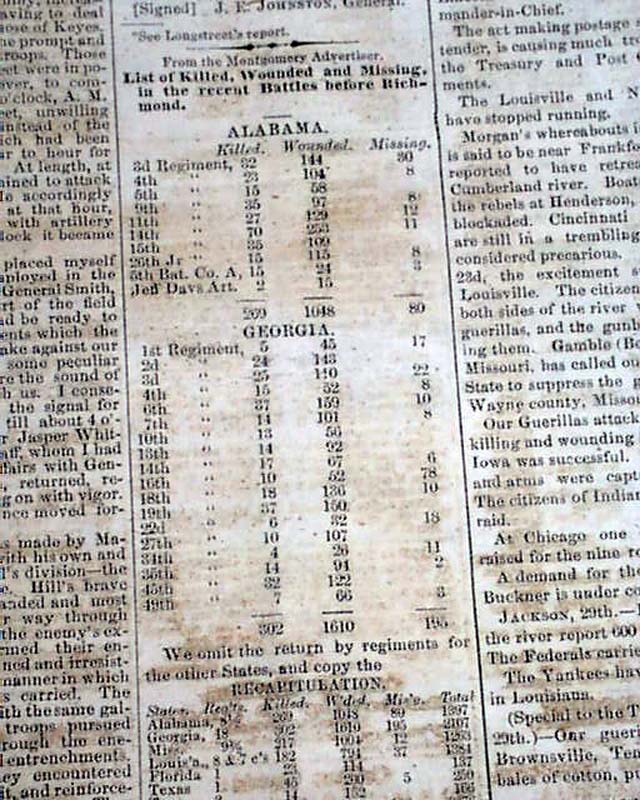
General Johnston's report on the Battle of Seven Pines...
Item # 722692
Currently Unavailable. Contact us if you would like to be placed on a want list or to be notified if a similar item is available.
July 31, 1862
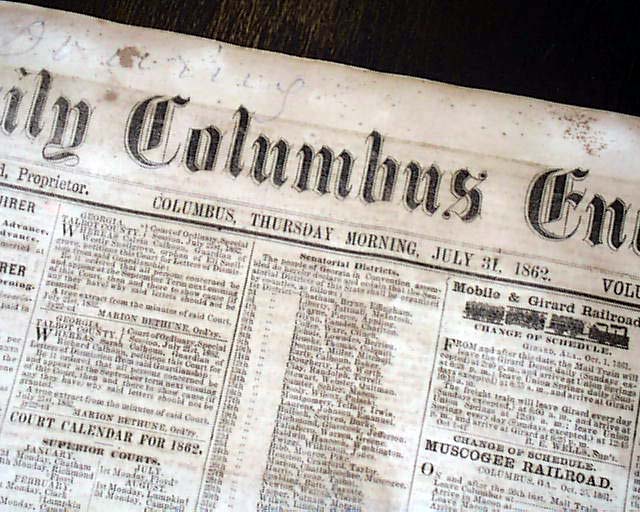
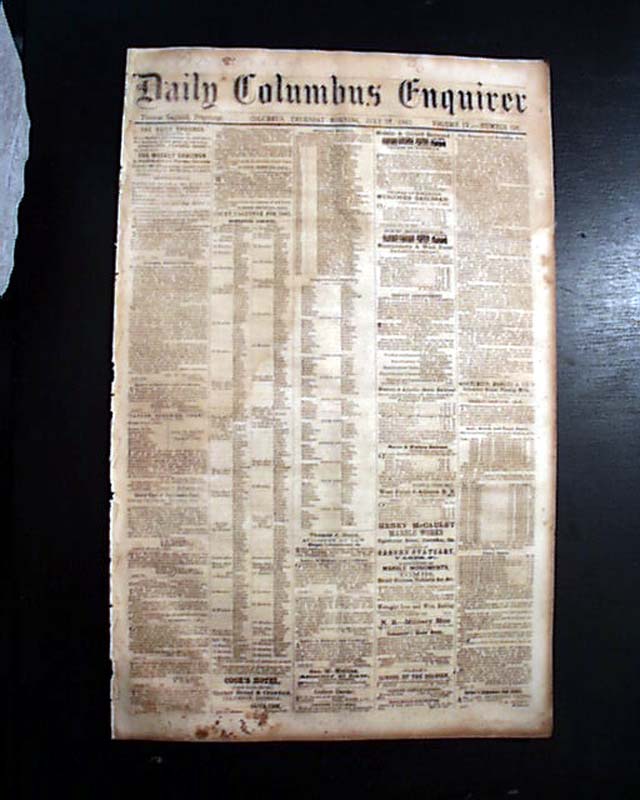
DAILY COLUMBUS ENQUIRER, Georgia, July 31, 1862
* Very rare Confederate publication
* Rebel General Joseph E. Johnston
* Battle of Seven Pines - Fair Oaks
Certainly one of the less common Confederate titles from the Civil War. Columbus is in Southwest Georgia on the Alabama border very near Montgomery.
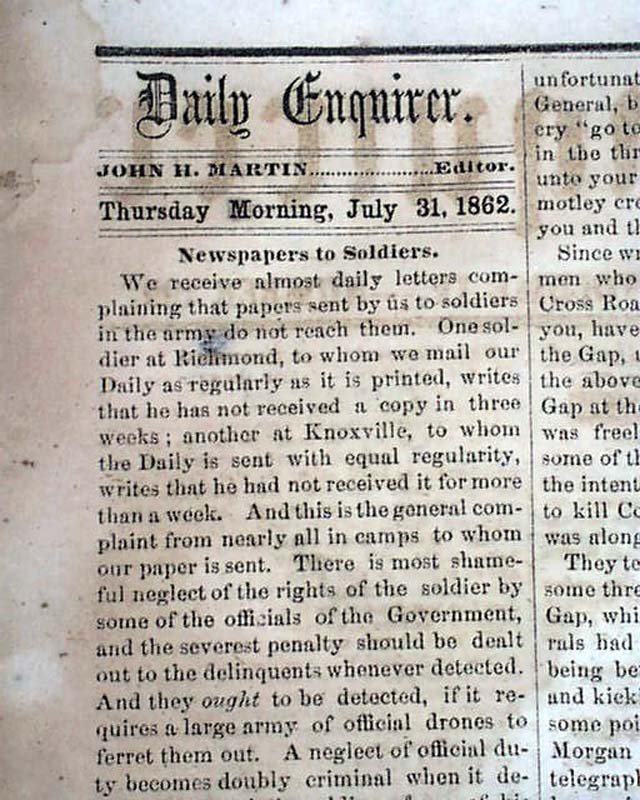
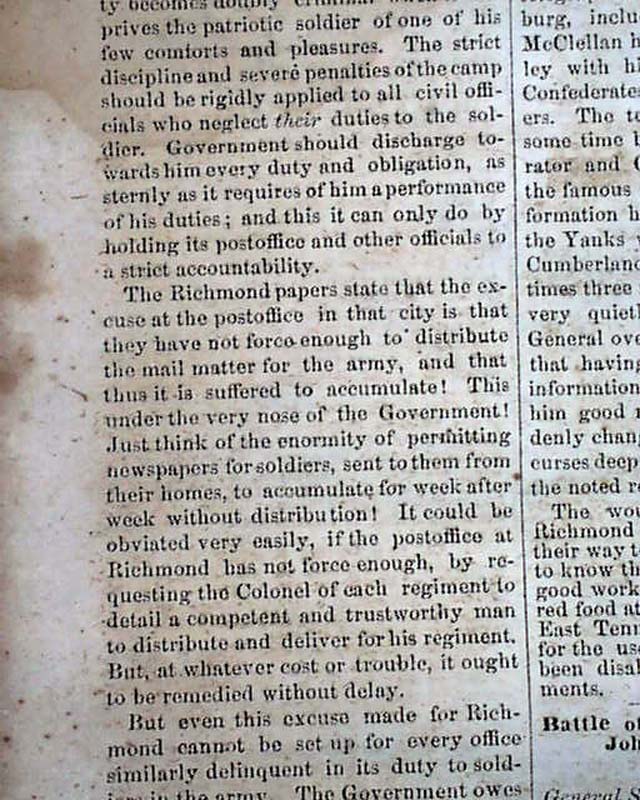
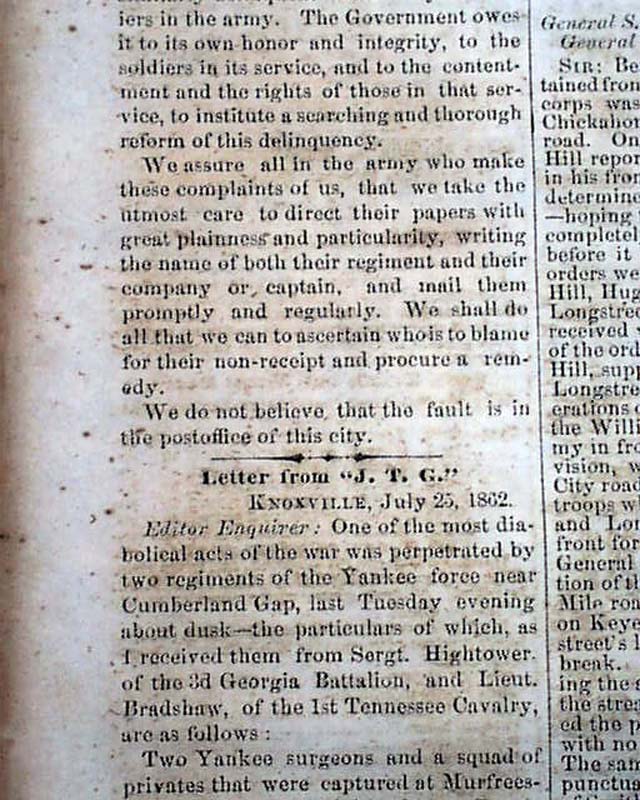
Page 2 begins with an interesting editorial complaining about government abuses in not insuring the delivery of daily newspapers to the soldiers in the field. An interesting item for any newspaper collection. Also inside: "Battle of the Seven Pines--General Johnston's Official Report" which takes over a full column & is signed in type: J. E. Johnston, General. Included is the "List of Killed, wounded and Missing..." by state (see).
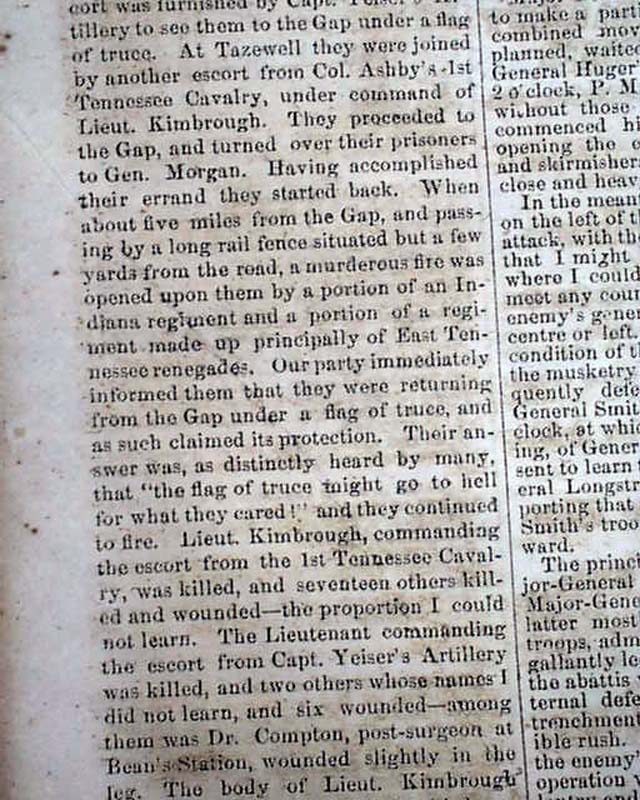
Elsewhere: "Progress & Events of the War" taking over a full column: "Lt. A. H. Rutherford" "The Yankee Canal at Vicksburg a Failure" "From Richmond" "Yankee Movement" and more.
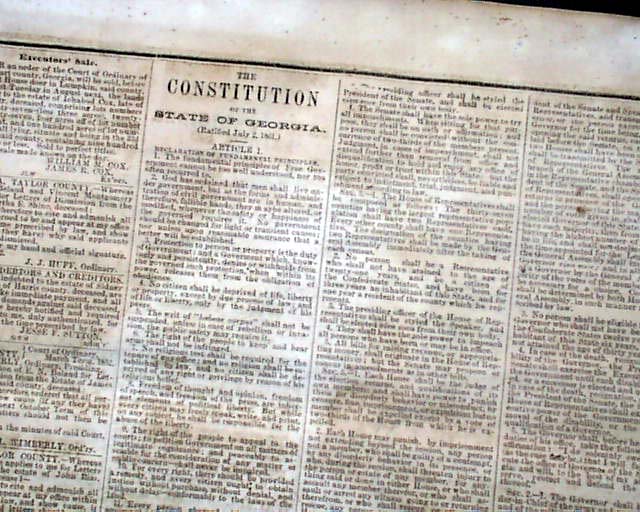
Most of the back page is taken up with the: "Constitution of the State of Georgia, Ratified July 2, 1861".
Four pages, various foxing, nice condition.
It was in Columbus where the last battle of the Civil War was fought. Note: The Battle of Palmito Ranch in Texas actually occurred weeks after the Battle of Columbus, but the engagement at Palmito Ranch happened after the Confederate government had dissolved and the Confederacy was extinct. In the "Official Records", the Battle of Columbus is referred to as the "closing conflict of the war. (see hyperlink)
background: The Battle of Seven Pines served as a chaotic, bloody transition point in the Peninsula Campaign, defined by missed opportunities and a permanent shift in Confederate leadership. On May 31, 1862, General Joseph E. Johnston attempted to exploit a geographic vulnerability in the Union line, where two of George B. McClellan’s corps were isolated south of the rain-swollen Chickahominy River. However, the Confederate attack was plagued by a "quiet" acoustic shadow that prevented commanders from hearing the opening salvos, resulting in a disorganized, piecemeal assault rather than a synchronized strike. While the Union forces were initially driven back toward Seven Pines and Fair Oaks Station, the timely arrival of reinforcements across the treacherous "Grapevine Bridge" stabilized the Northern line. By the time the smoke cleared on June 1, the battle remained a tactical draw, yet its strategic impact was profound: Johnston was seriously wounded during the fighting, leading to the appointment of Robert E. Lee to command. Lee’s subsequent reorganization of the army and his aggressive counter-offensives would ultimately break the Union’s momentum and save Richmond from capture.
Category: Confederate
No Longer Available