Home >
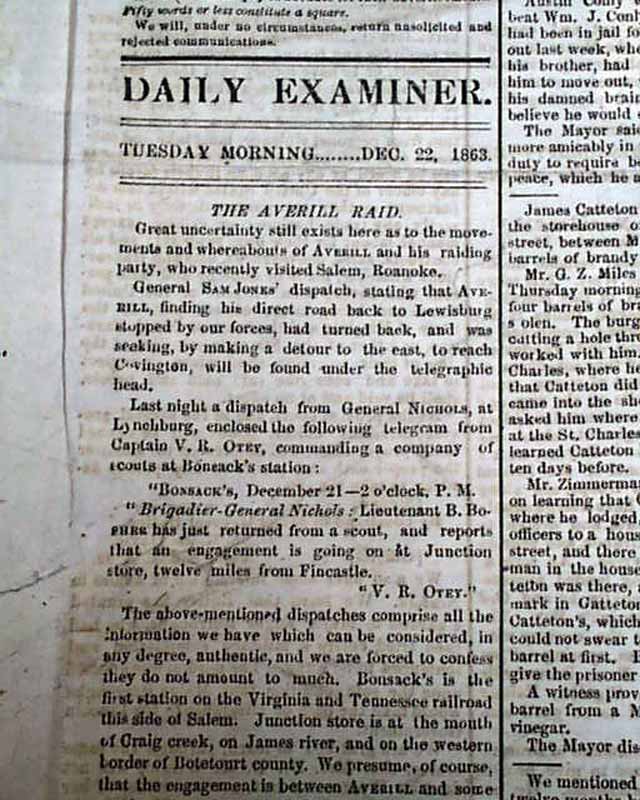
The Siege of Charleston... The Averill Raid...
The Siege of Charleston... The Averill Raid...
Item # 722690
Currently Unavailable. Contact us if you would like to be placed on a want list or to be notified if a similar item is available.
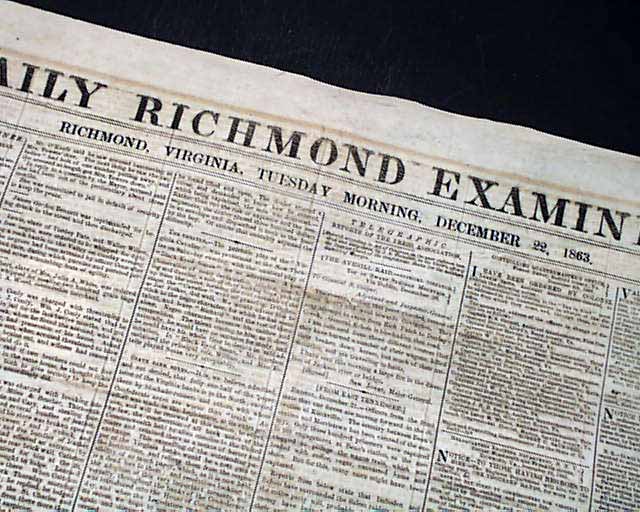
December 22, 1863
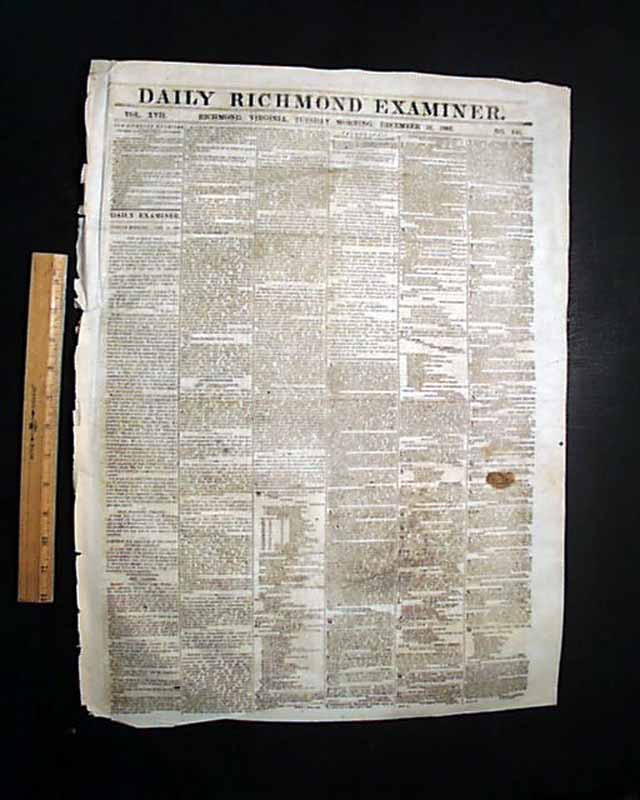
DAILY RICHMOND EXAMINER, Virginia, Dec. 22, 1863
* Charleston, South Carolina siege
* Brigadier General William W. Averell
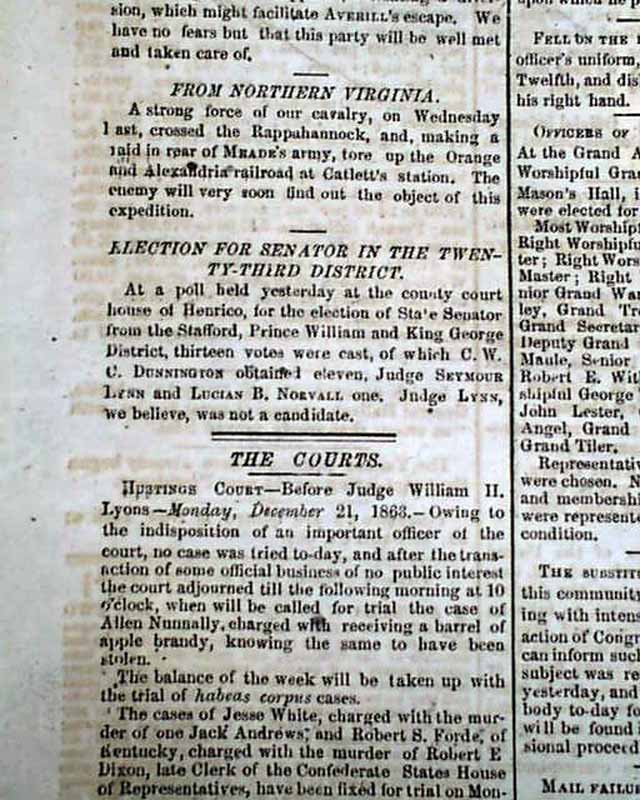
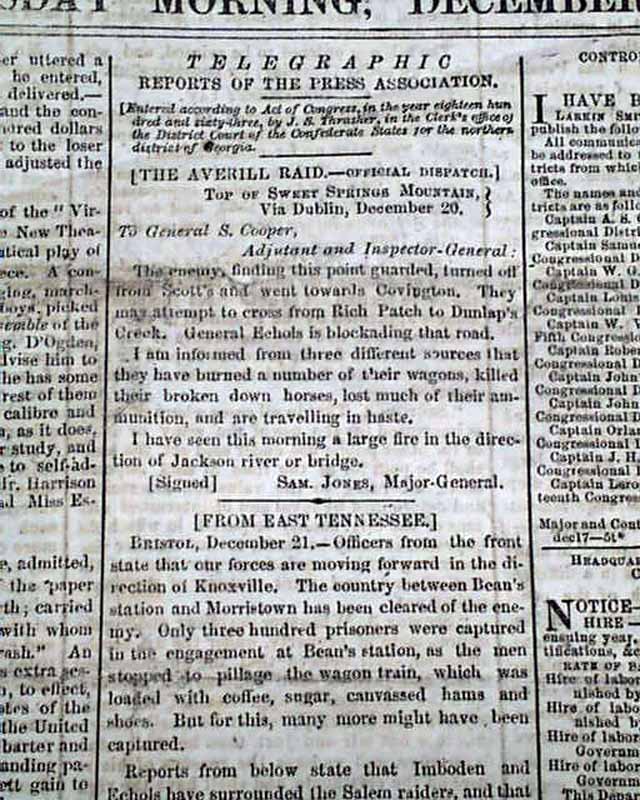
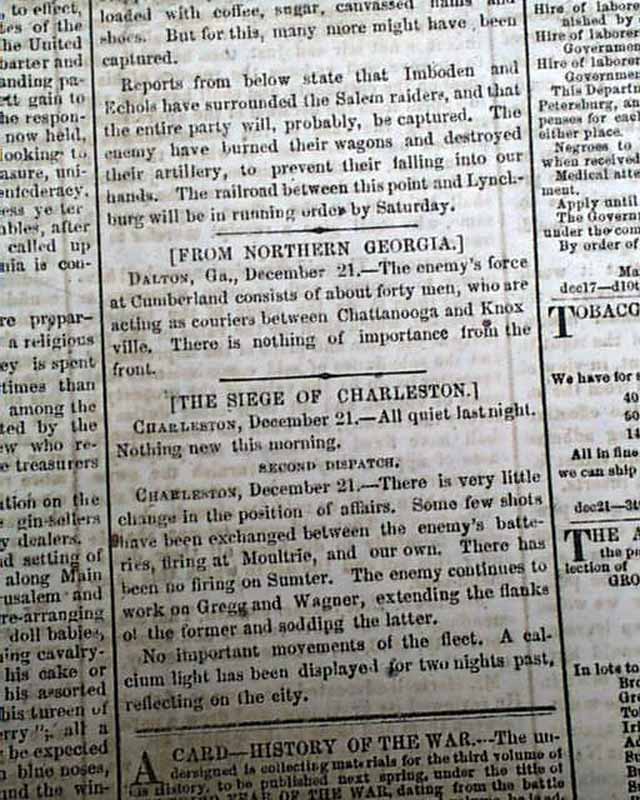
A nice newspaper from the capital of the Confederate States of America. Among the front page items are: "The Averill Raid" "From Northern Virginia" "From East Tennessee--From Northern Georgia--The Siege of Charleston" and other smaller items.
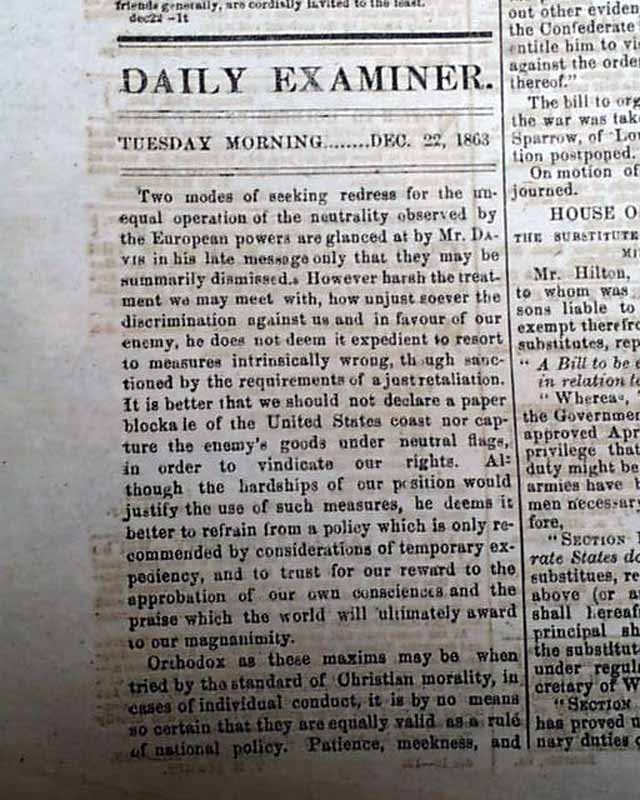
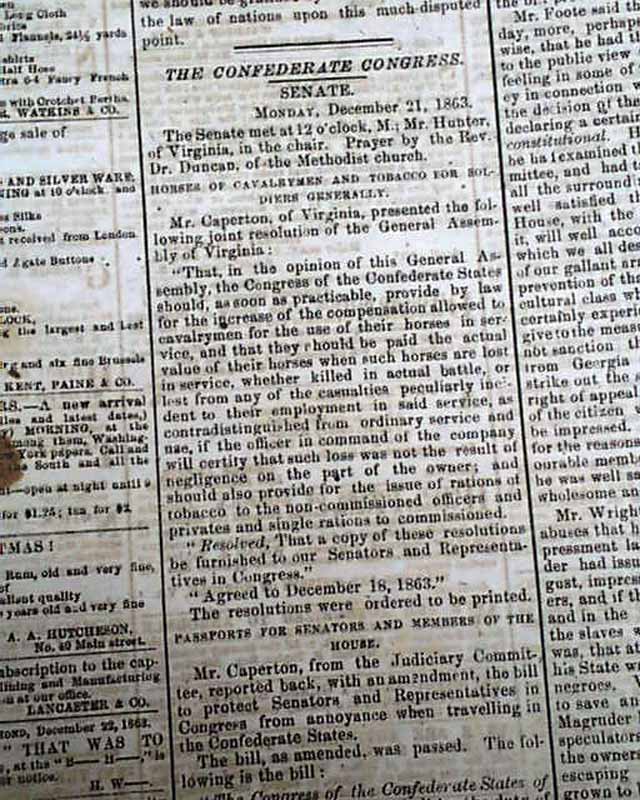
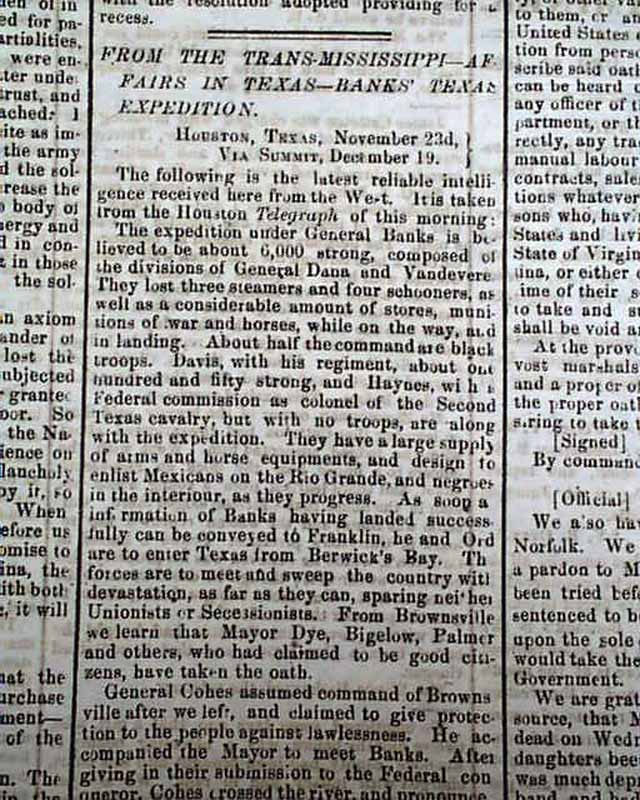
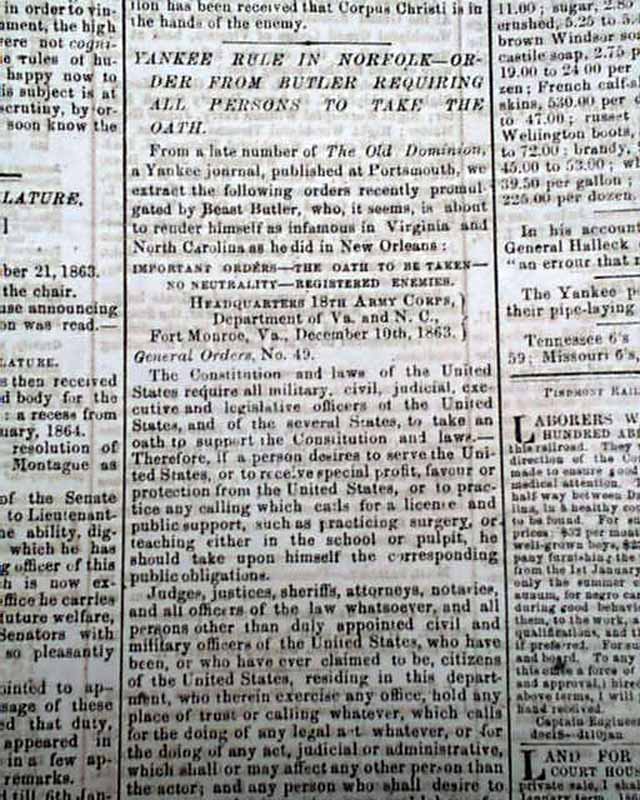
The back page has an editorial concerning the war, as well as much reporting from: "The Confederate Congress" "The Virginia Legislature" and: "From the Trans-Mississippi--Affairs in Texas--Banks' Texas Expedition" "Yankee Rule in Norfolk--Order from Butler Requiring All Persons to Take the Oath" and other smaller items.
Complete as a single sheet newspaper never bound nor trimmed, with a full banner masthead. Minor tears at the margins, generally in very nice condition.
background: The 1863 raids led by Brigadier General William W. Averell, culminating in the daring Salem Raid of December, represented a masterclass in independent cavalry operations that crippled the Confederate logistics engine. Tasked with severing the Virginia and Tennessee Railroad, Averell led 2,500 troopers through 400 miles of rugged Appalachian terrain in sub-zero temperatures, successfully evading four separate Confederate columns sent to intercept him. On December 16, his forces struck Salem, Virginia, destroying miles of track and incinerating massive depots of grain, meat, and clothing intended for General James Longstreet’s starving army in Tennessee. The retreat was even more grueling; the Union troops were forced to swim their horses across the ice-choked Jackson River and haul artillery pieces over frozen mountain passes by hand. While Averell was often criticized for being overly cautious in traditional battles, this specific operation proved that a highly mobile, determined Union force could penetrate deep into the Southern heartland to disrupt the "lifeline of the Confederacy," a strategic precursor to the total war tactics later employed by Sheridan and Sherman.
Category: Confederate
No Longer Available