Home >
1983 invasion of Grenada...
1983 invasion of Grenada...
Item # 722031
Currently Unavailable. Contact us if you would like to be placed on a want list or to be notified if a similar item is available.
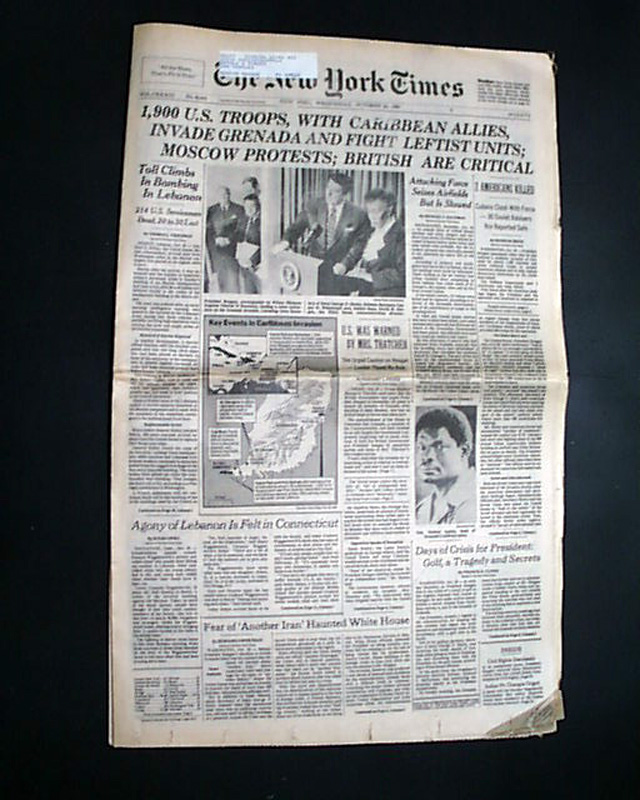
October 26, 1983
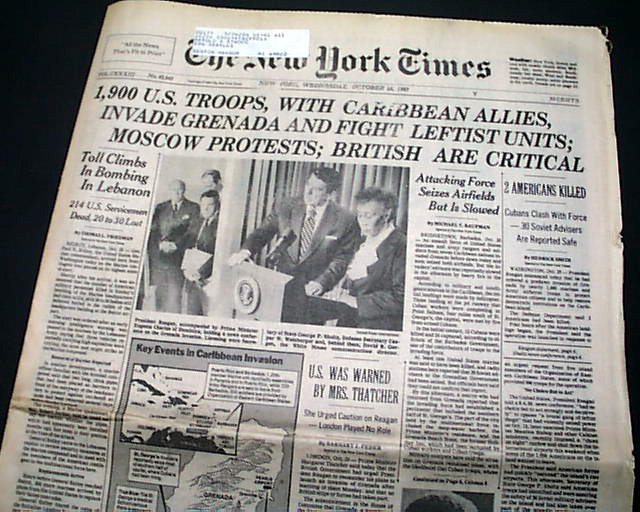
THE NEW YORK TIMES, Oct. 26, 1983
* Invasion of Grenada - "Operation Urgent Fury"
* Grenadian and Cuban forces overwhelmed
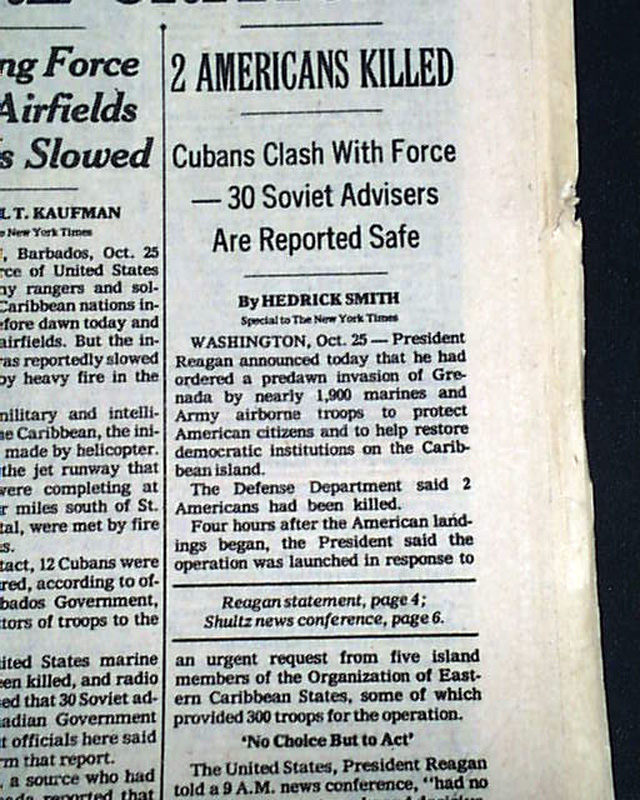
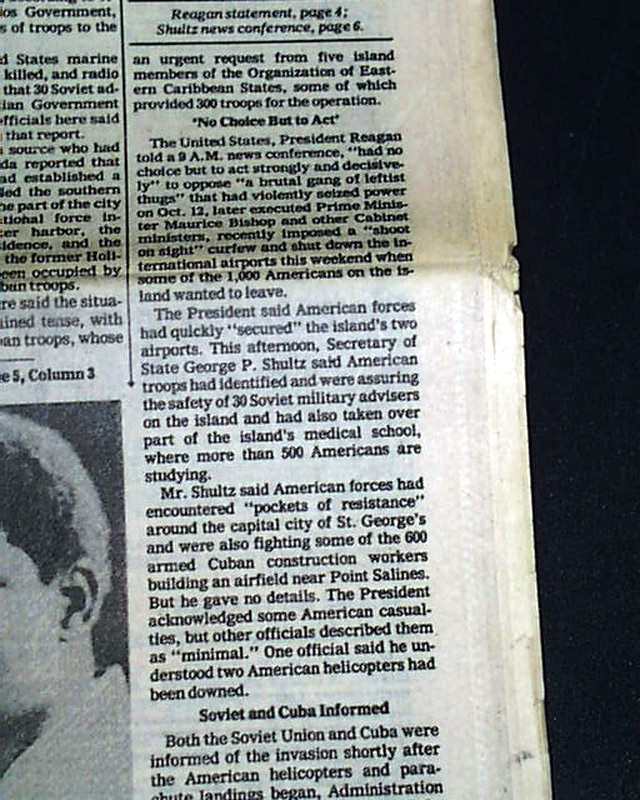
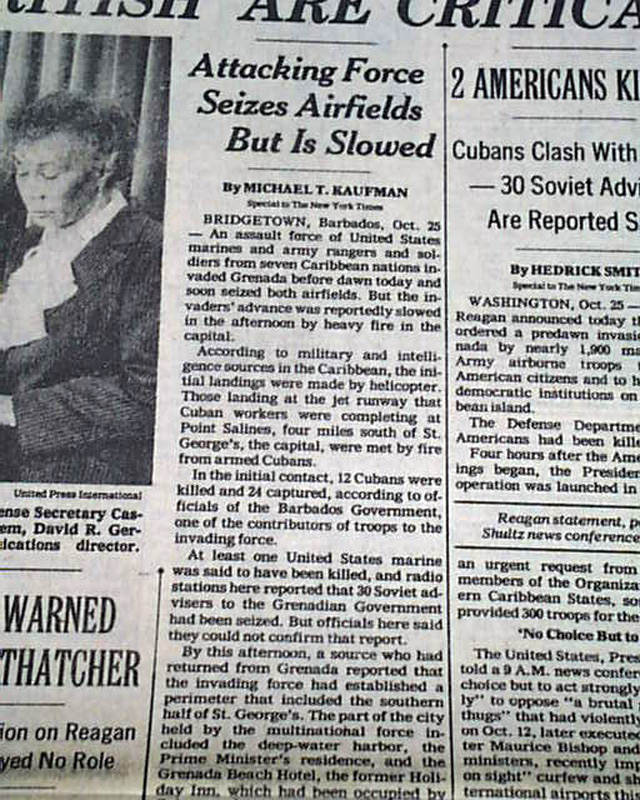
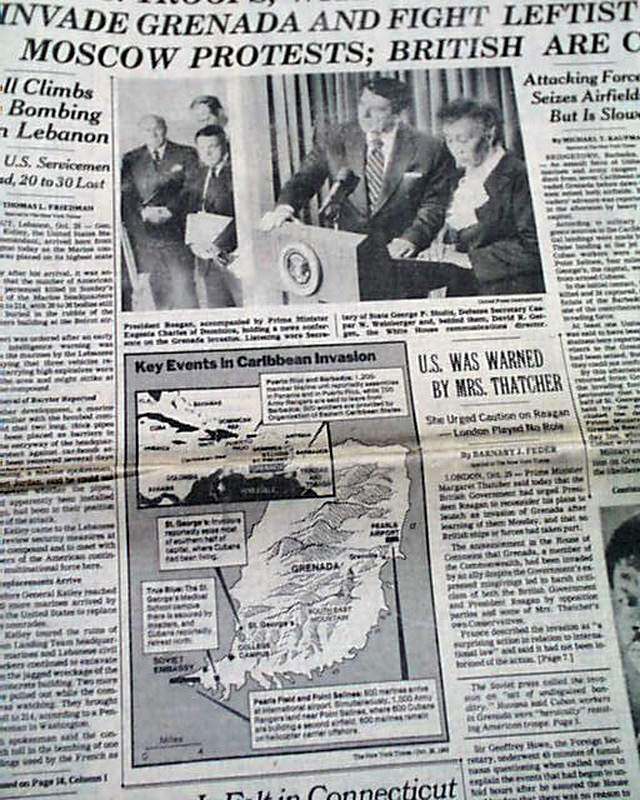
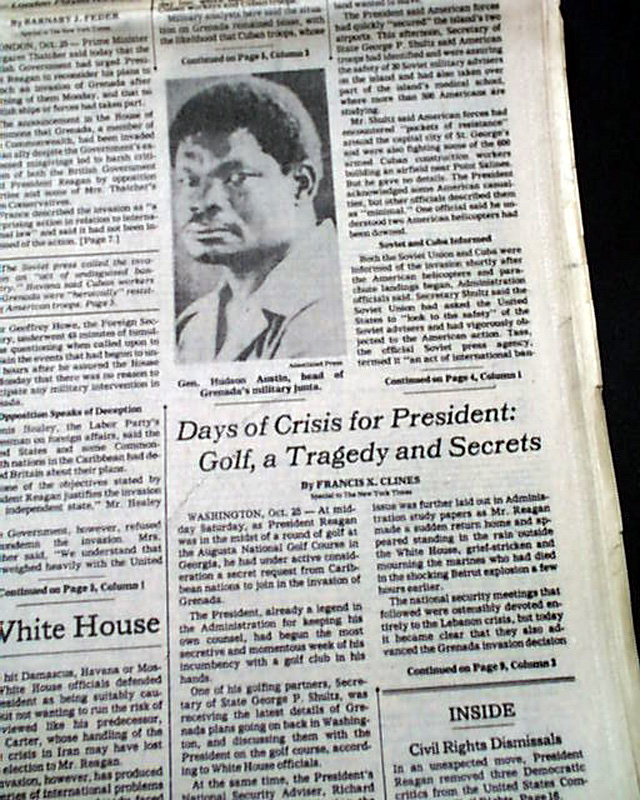
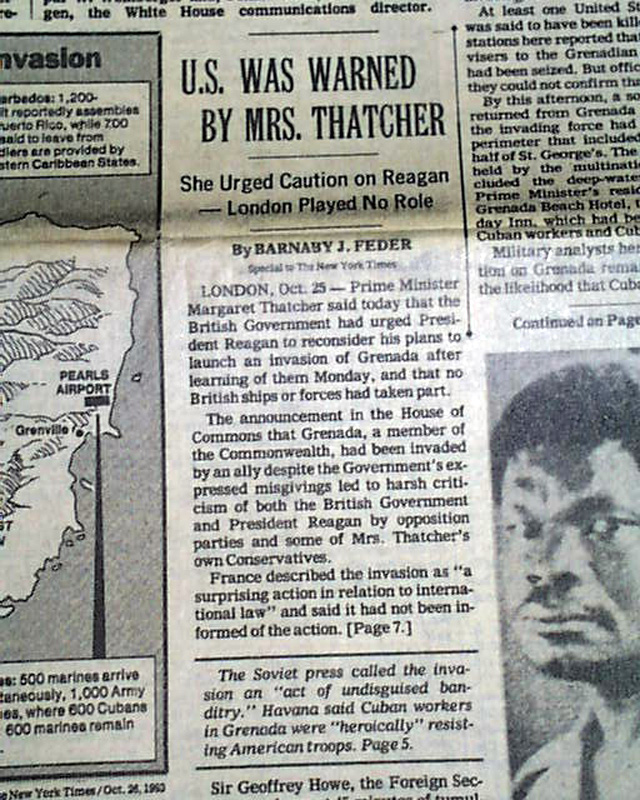
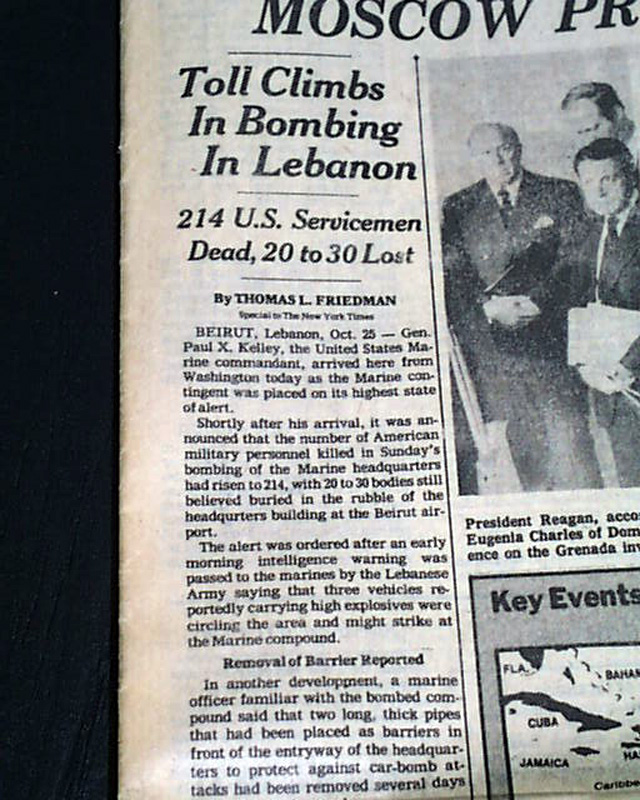
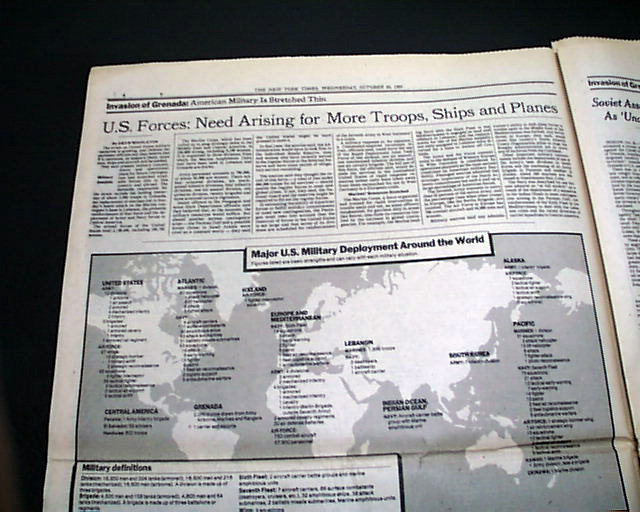
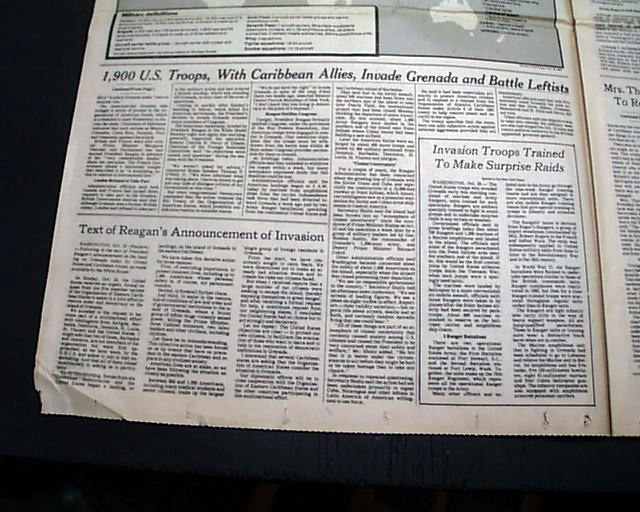
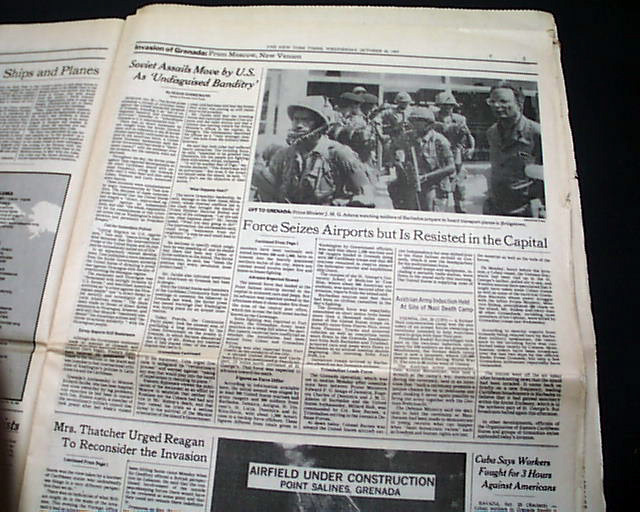
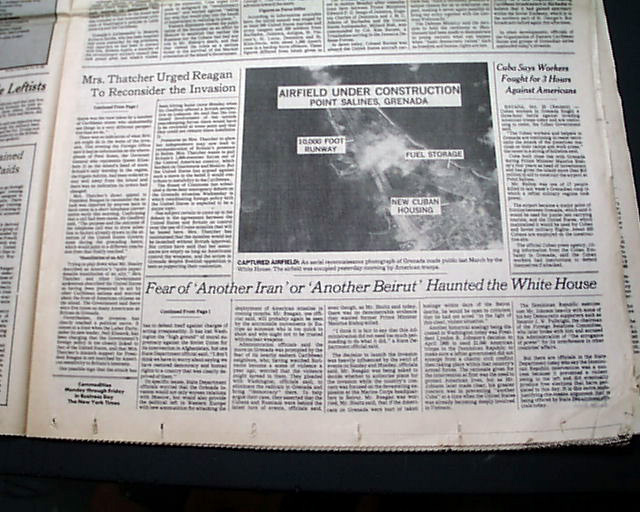
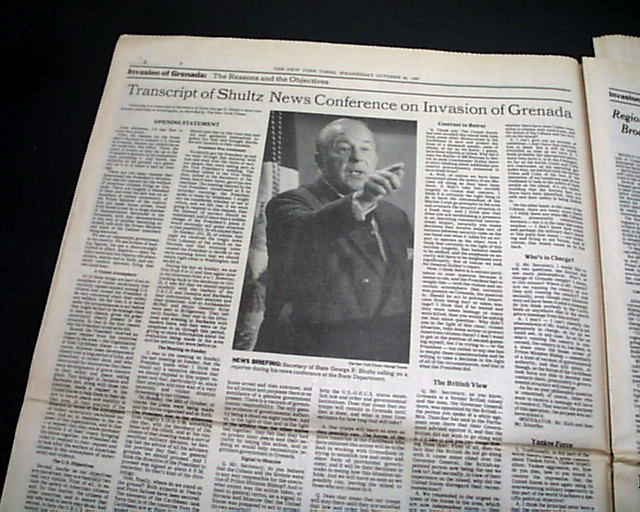
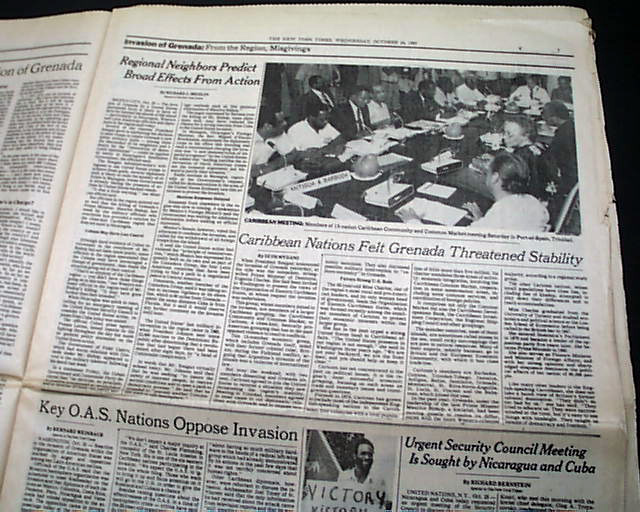
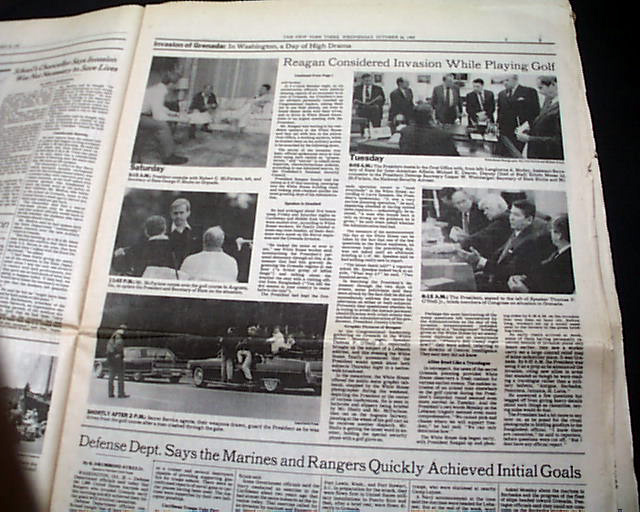
The front page has a banner headline: "1,900 U.S. TROOPS, WITH CARIBBEAN ALLIES, INVADE GRENADA AND FIGHT LEFTIST UNITS; MOSCOW PROTESTS; BRITISH ARE CRITICAL" with subheads, two related photos map. (see images) Nice for display. Much more on the following pages.
Complete with all 48 pages, minor margin wear, address label within the masthead, otherwise in very nice condition.
background: The October 1983 invasion of Grenada, officially called Operation Urgent Fury, was a U.S.-led military intervention in the Caribbean island nation of Grenada. The immediate trigger was the internal political crisis following the violent overthrow and execution of Prime Minister Maurice Bishop by hard-line members of the Marxist-oriented New Jewel Movement. Bishop’s death, along with growing fears for the safety of approximately 600 U.S. citizens on the island (mostly students at St. George’s University School of Medicine), prompted the U.S. and a coalition of Caribbean nations to act. On October 25, 1983, U.S. forces, including Army Rangers, Marines, and Navy units, landed on the island, quickly overwhelming Grenadian and Cuban forces who were assisting in construction projects, including an airstrip. The invasion was controversial internationally, with the United Nations General Assembly later deeming it a violation of international law. Domestically, however, it was largely supported in the U.S. as a decisive action to protect American lives and restore political stability. By November 2, 1983, a U.S.-backed government had been established, led by Governor-General Paul Scoon, effectively ending the crisis. The invasion highlighted Cold War tensions in the Caribbean, U.S. willingness to use military force in the region, and the complex interplay of domestic instability and international intervention. It also exposed gaps in U.S. military coordination, leading to later reforms in joint operations.
Category: The 20th Century
No Longer Available