Home >
Congress rejects the Conciliatory Plan... Much on America... John Hancock is married...
Congress rejects the Conciliatory Plan... Much on America... John Hancock is married...
Item # 720649
October 01, 1775
THE LONDON MAGAZINE, England October, 1775
* Conciliatory plan with the American colonies
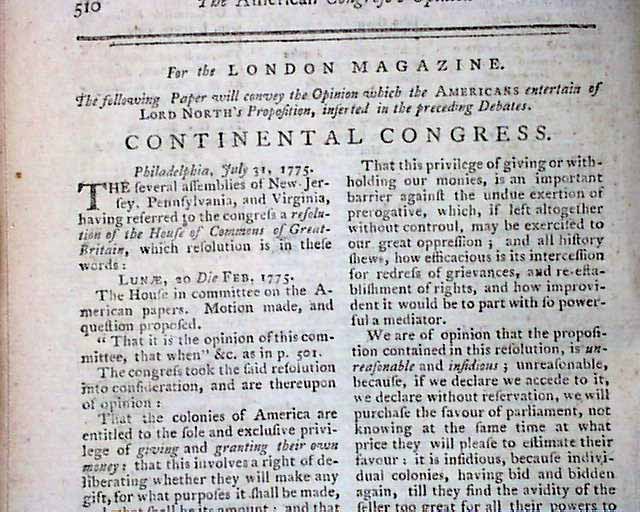
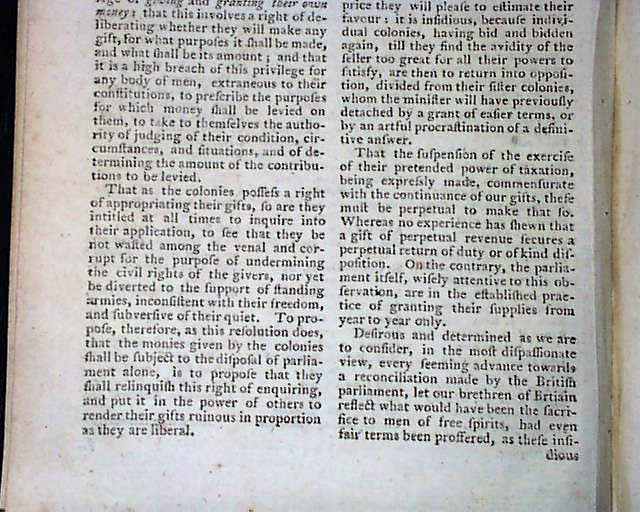
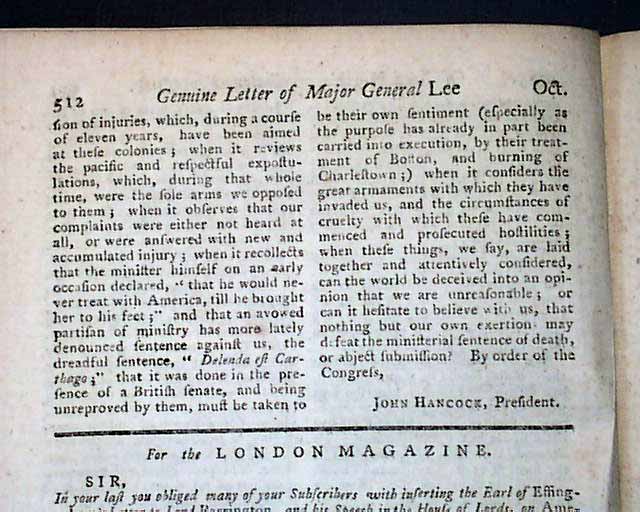
* Continental Congress rejects the offer
* Prelude to the American Revolutionary War
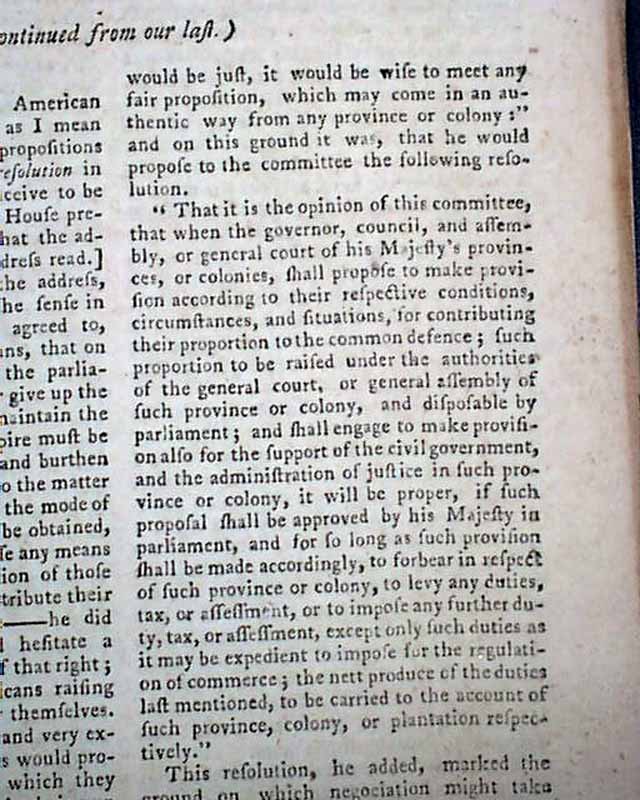
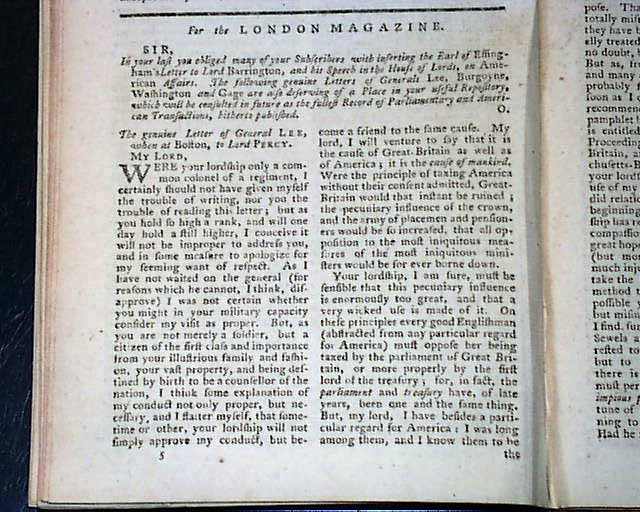
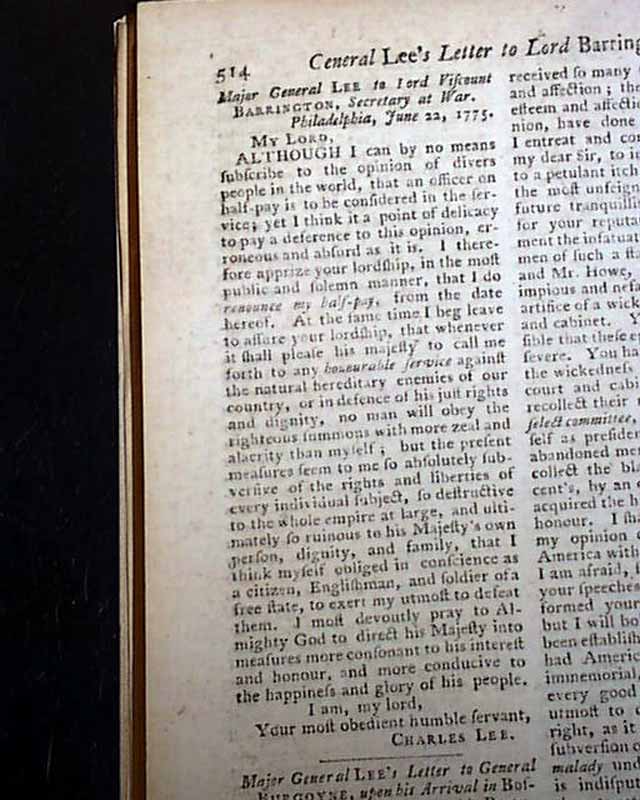
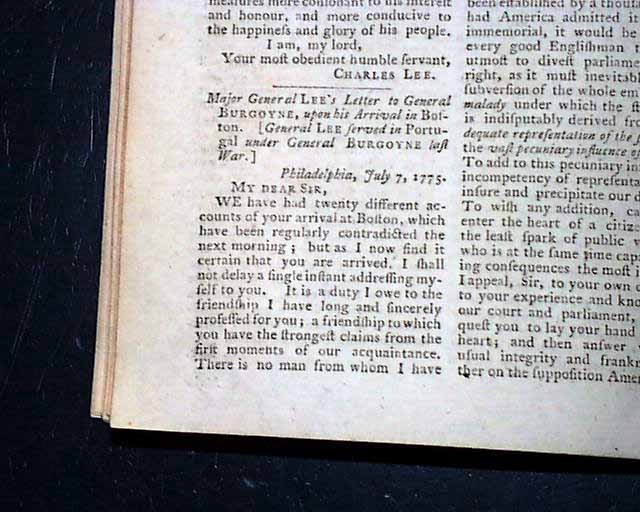
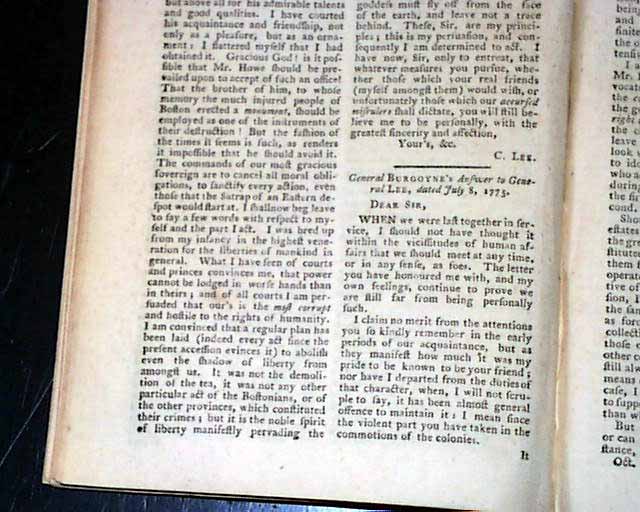
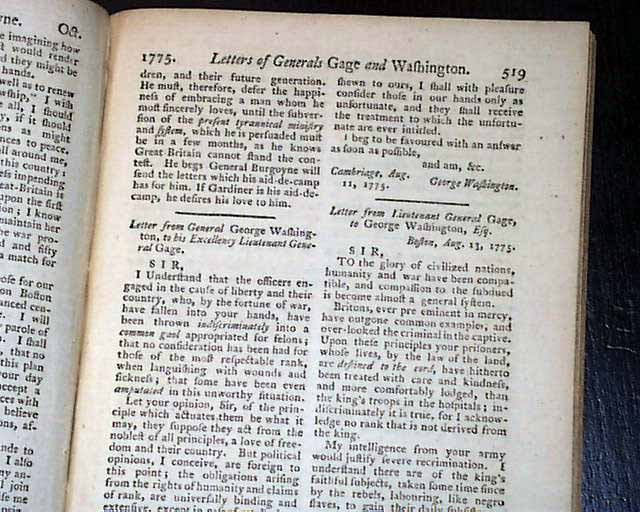
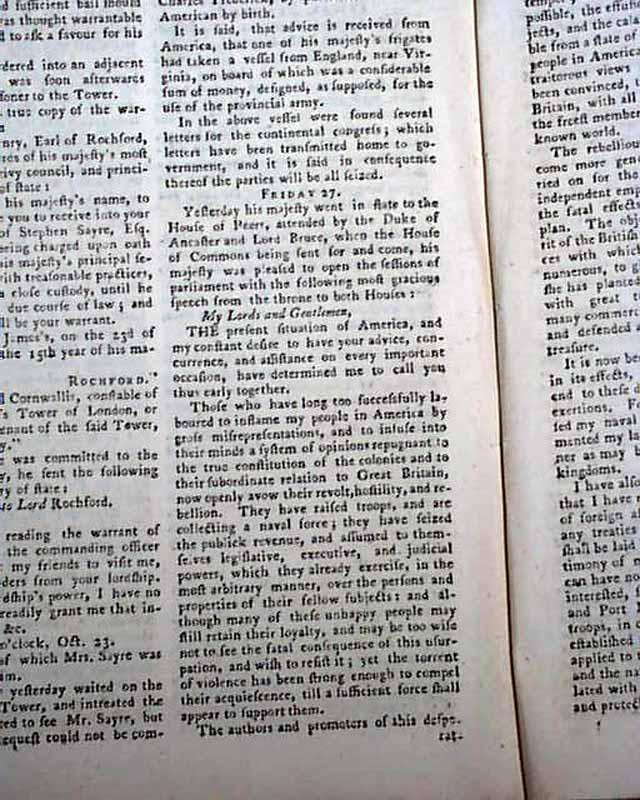
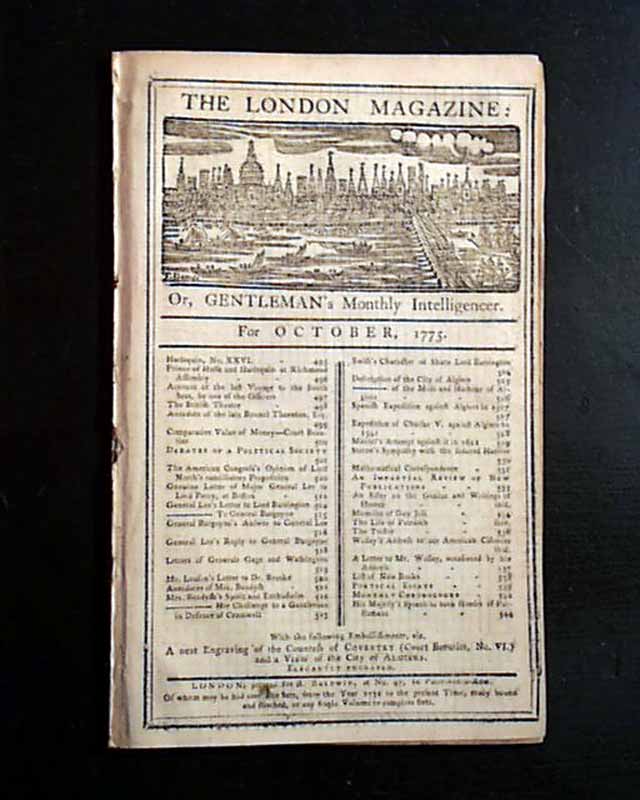
Over 2 pages area taken up with the document--signed in type by John Hancock--in which the Continental Congress rejects the conciliation plan of Lord North. The document is headed: "CONTINENTAL CONGRESS". See for portions. This is followed by a number of letters from notables of the Revolutionary War including one from General Lee (at Boston) to Lord Percy; another letter signed: Charles Lee to Viscount Barrington dated at Phila., another lengthy letter from Lee at Phila. to General Burgoyne; General Burgoyne's Answer to General Lee; General Lee's letter declining a meeting with General Burgoyne; a letter from General George Washington to General Gage, signed in italic type: George Washington; and a letter from General Gage to George Washington datelined at Boston.
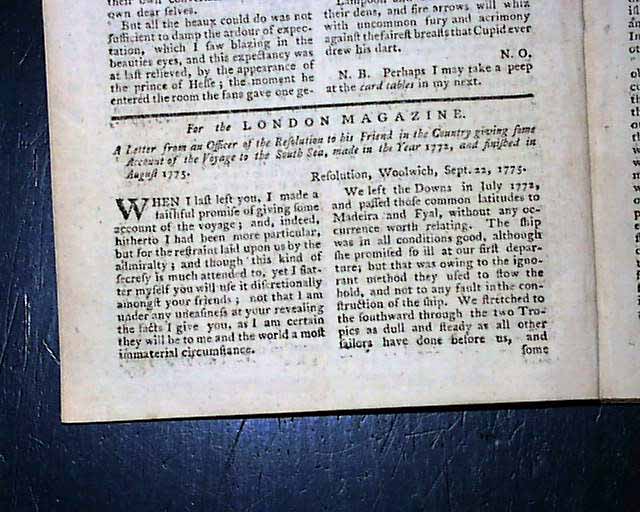
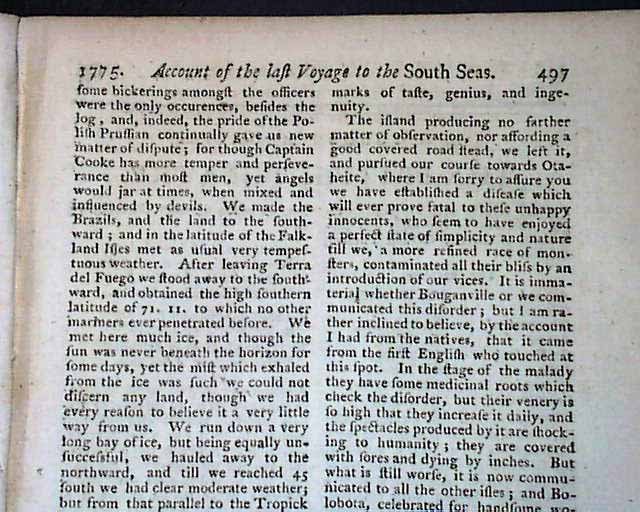
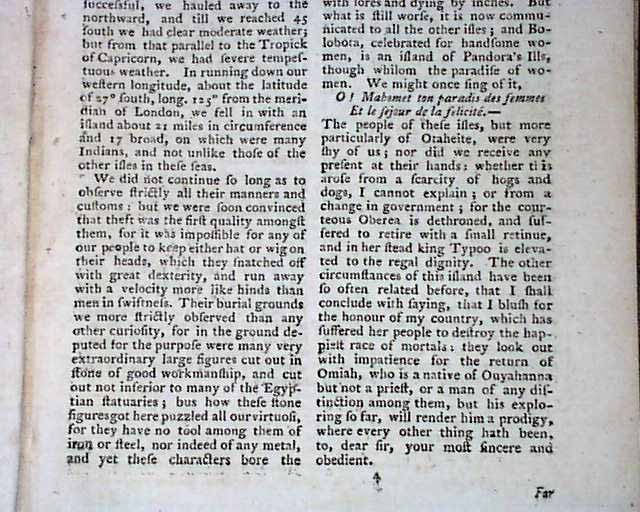
Over a page is taken up with: "A Letter from an Officer of the Resolution...Giving Some account of the Voyage to the South Sea made in the Year 1772 & Finished in August, 1775".
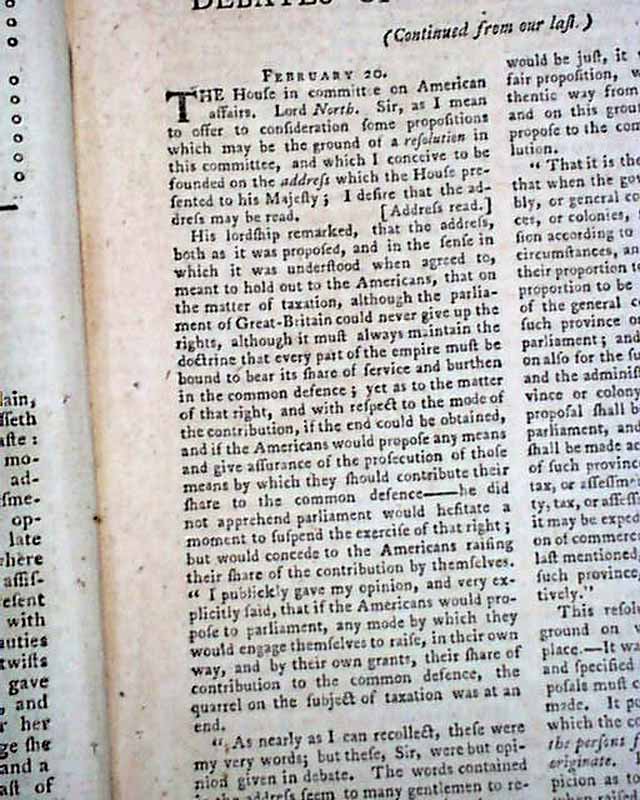
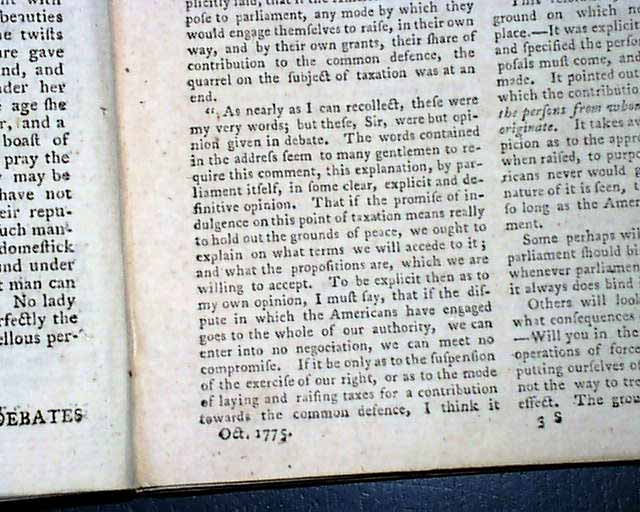
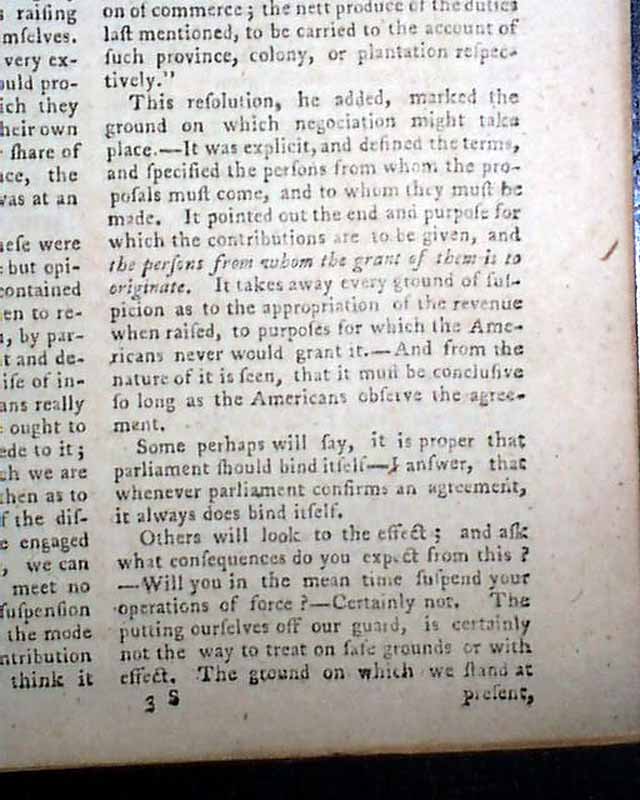
Several pages are taken up with discussions in Parliament concerning the troubles in America.
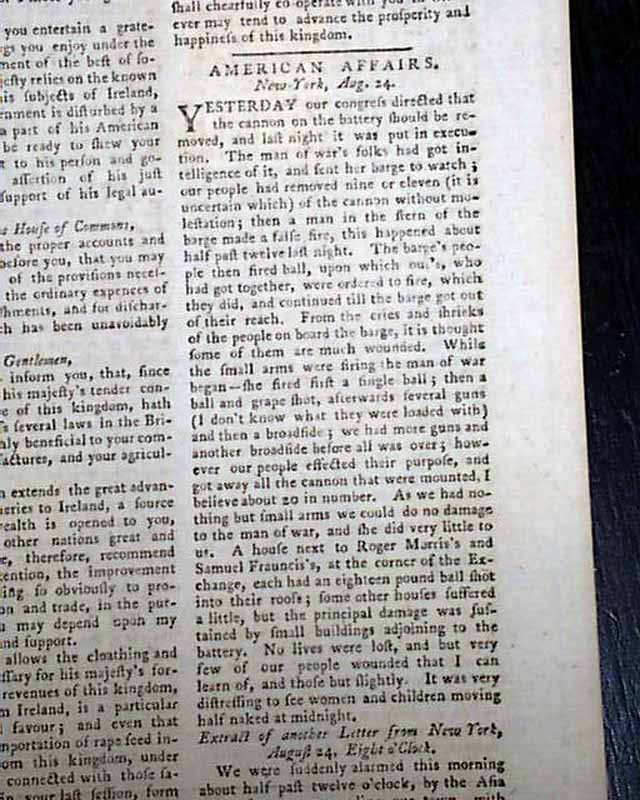
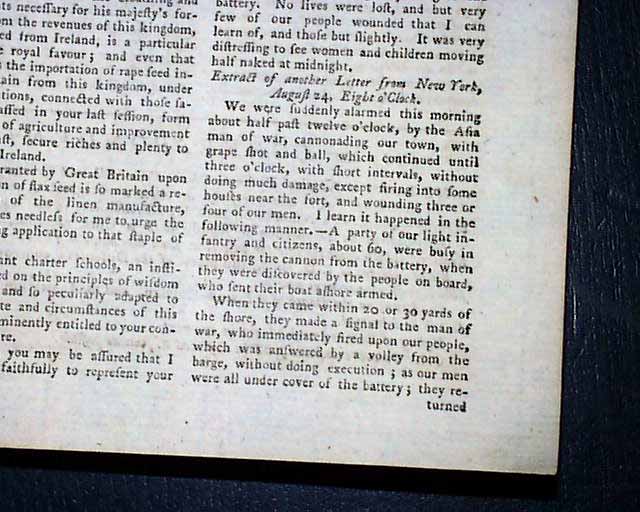
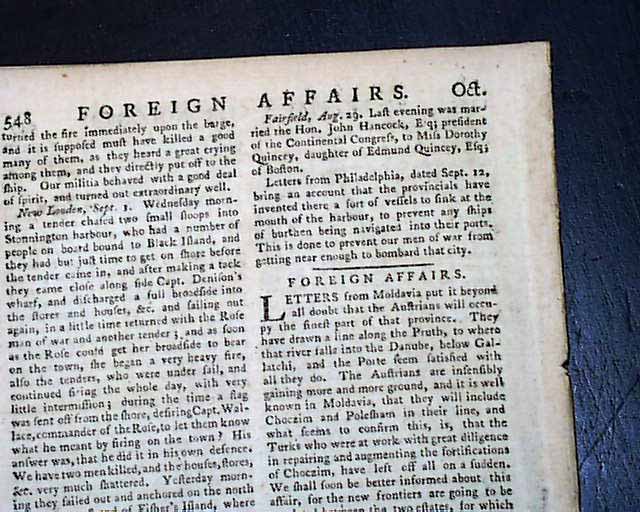
Near the back is additional American reports headed: "American Affairs" including a report that: "Last evening was married the Hon. John Hancock, Esq.; president of the Continental Congress, to Miss Dorothy Quincey, daughter of Edmund Quincey of Boston."
Complete in 56 pages, 5 by 8 1/4 inches, very nice condition. Lacking both plates called for.
AI notes: In early 1775, the British government, seeking to quell rising unrest in the American colonies, proposed the Conciliatory Plan, which offered that Parliament would abstain from taxing the colonies directly and instead allow each colonial assembly to contribute to the costs of imperial defense, provided they acknowledged Parliament’s authority in external matters. The plan was intended as a gesture of compromise to avoid open rebellion, but when it reached the Continental Congress in February, it was met with immediate suspicion and rejection. Colonial leaders viewed it as a too-little, too-late attempt to preserve British control without addressing the fundamental issues of taxation without representation and colonial self-governance. Congress argued that any compliance would undermine the colonies’ claims to autonomy and reward Britain’s previous coercive measures, such as the Intolerable Acts. The rejection of the plan demonstrated the widening gulf between Britain and the colonies and made armed conflict increasingly inevitable, setting the stage for the outbreak of the Revolutionary War just months later at Lexington and Concord.
Formatted very much like the Gentleman's Magazine but a much more scarce title. The title/contents page features a great engraving of the skyline of London.
Category: Revolutionary War
Available Now
$135.00