Home >
Commenting on the Maryland "Jew Bill"...

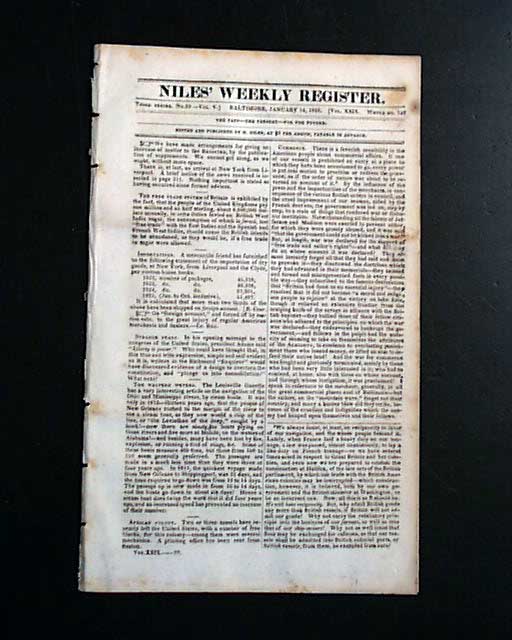
Commenting on the Maryland "Jew Bill"...
Item # 719846
January 14, 1826
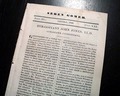
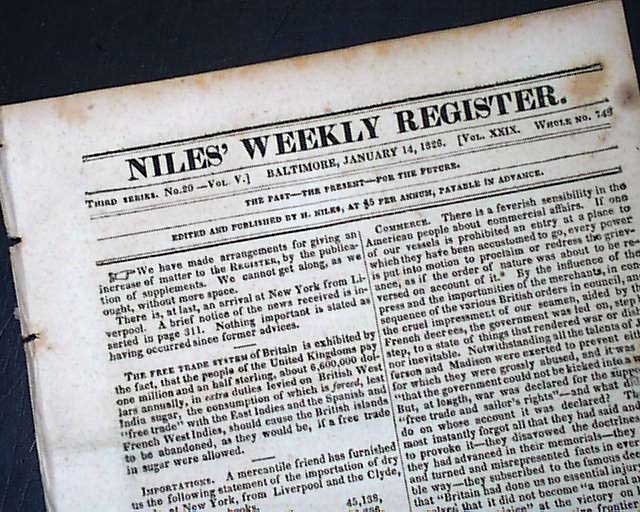
THE NILES WEEKLY REGISTER, Baltimore, Jan. 14, 1826
* Maryland Jew Bill becomes law
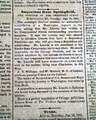
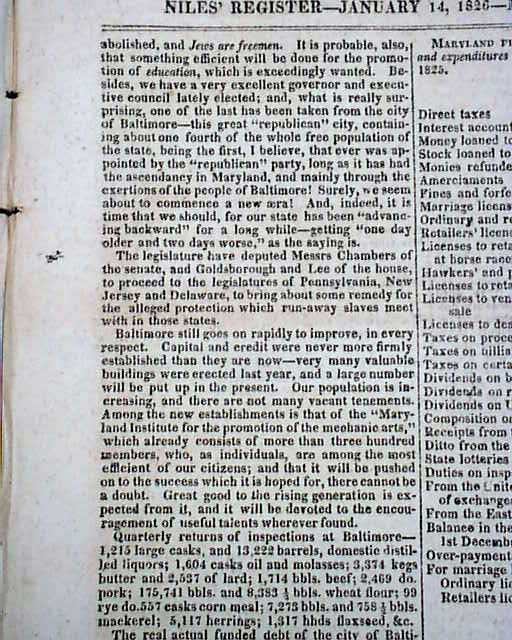
Under the heading "Maryland" is a very nice, editorialized report acknowledging the very recent approval of the "Jew Bill" which allowed--for the first time--Jews to hold public office in the state of Maryland.
The report reads in part: "The affairs of our state begin to have an improving appearance...for the political liberation of persons held in servitude for conscience-sake, has been also passed by the house of delegates 45 to 32, so a late disgraceful part of our constitution is abolished, and Jews are freemen..." with a bit more (see photos). Included also is the list of those who voted "Yea" and "Nay" for the change in the constitution.
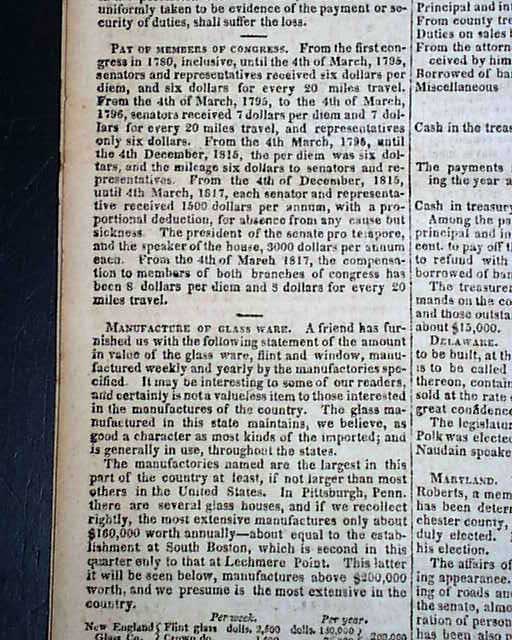
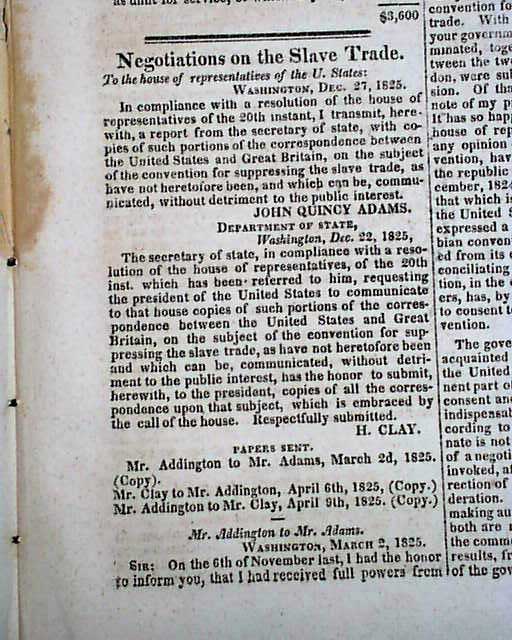
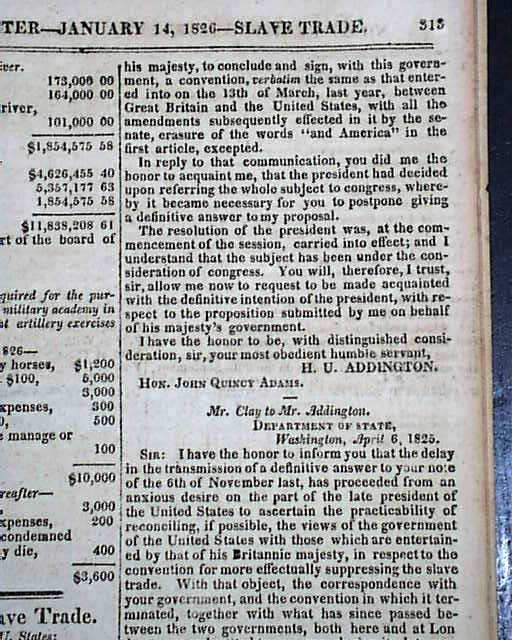
Among the other reports in this issue are: "African Colony" "Pay of Members of Congress" "Negotiations on the Slave Trade" which includes documents signed in type by John Quincy Adams, and H. Clay.
Sixteen pages, 6 by 9 1/2 inches. Only minimal foxing, in very nice condition. See images for details.
AI notes: The 1826 Maryland “Jew Bill” was a pivotal law that granted Jewish citizens in Maryland the right to hold public office by allowing them to take a modified oath that did not require affirming Christian beliefs. Before this legislation, Maryland’s constitution barred Jews from office, reflecting a broader pattern of religious tests that excluded non-Christians from civic participation. The bill’s passage came after persistent advocacy by Jewish leaders such as Jacob I. Cohen Jr. and Solomon Etting, who petitioned the legislature for equal rights, arguing that loyalty to the state was not contingent on religious affiliation. After years of debate and resistance from those who feared undermining the Christian character of government, the law was finally enacted, making Maryland the last state to remove such a religious barrier. The 1826 Jew Bill was historically significant as an early milestone in American religious freedom, setting a precedent for the inclusion of minority faiths in public life and highlighting the gradual expansion of civil rights in the early republic.
As noted in Wikipedia, this title: "...(was) one of the most widely-circulated magazines in the United States...Devoted primarily to politics...considered an important source for the history of the period."
Category: Pre-Civil War
Available Now
$88.00