Home > Back to Search Results >
Frederick Douglass's "Colored Men's Rights in This Republic"...
Frederick Douglass's "Colored Men's Rights in This Republic"...
Item # 719141
May 15, 1857
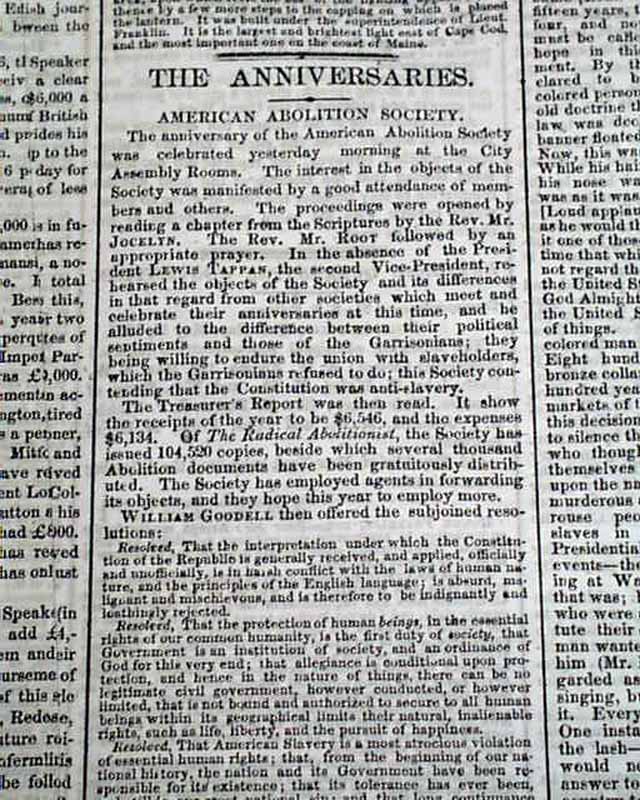
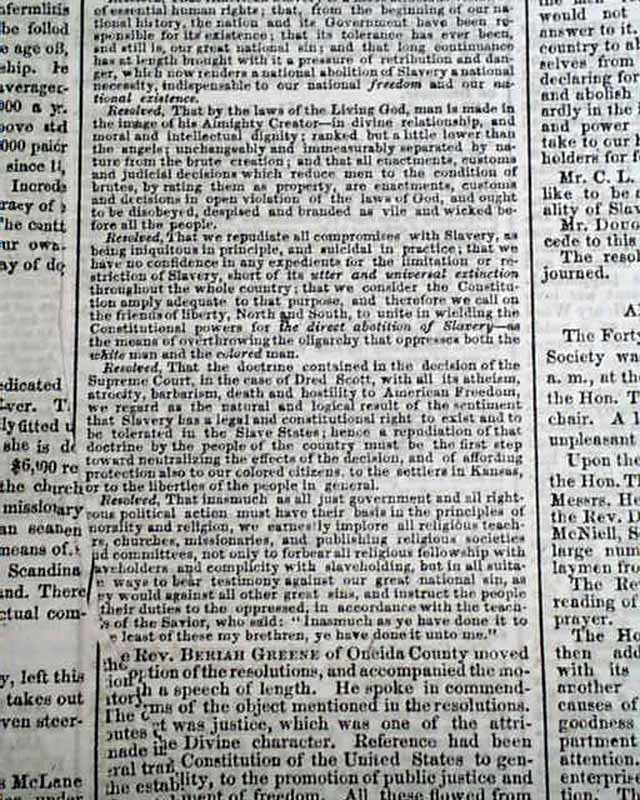
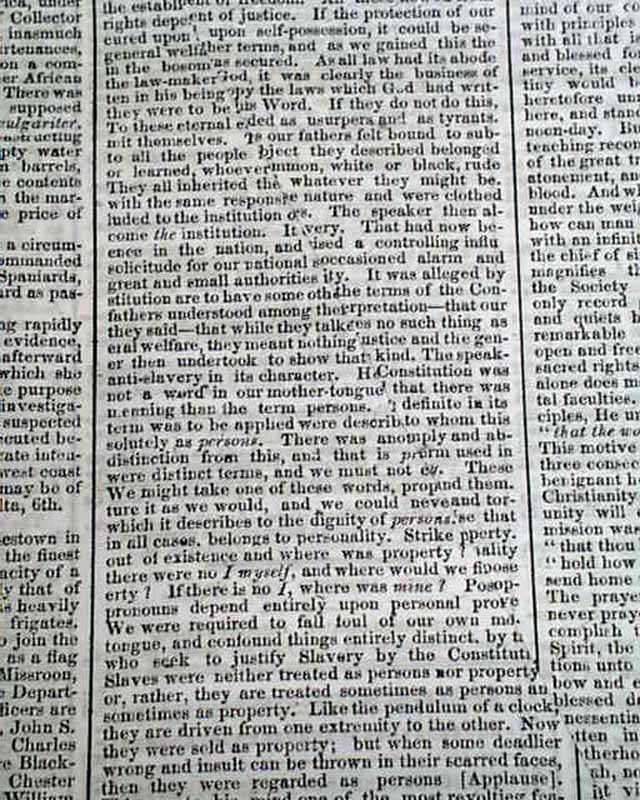
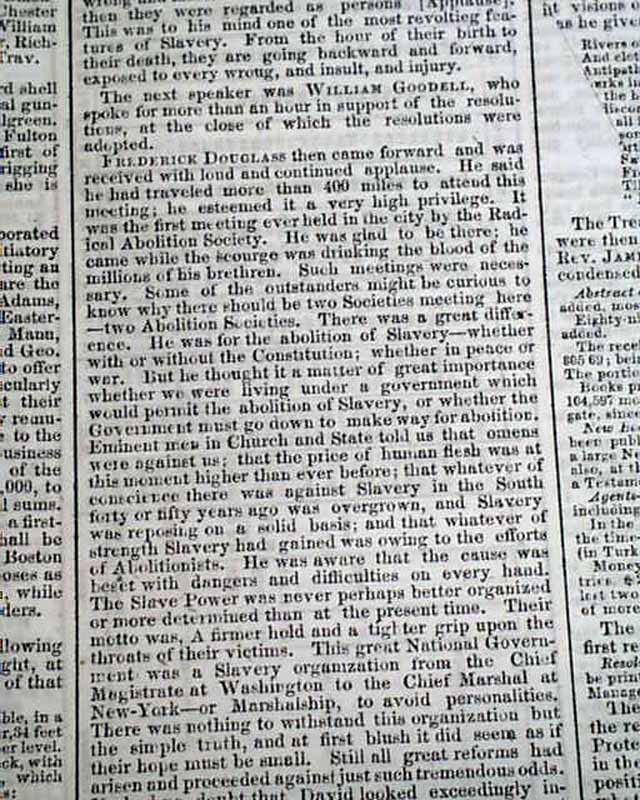
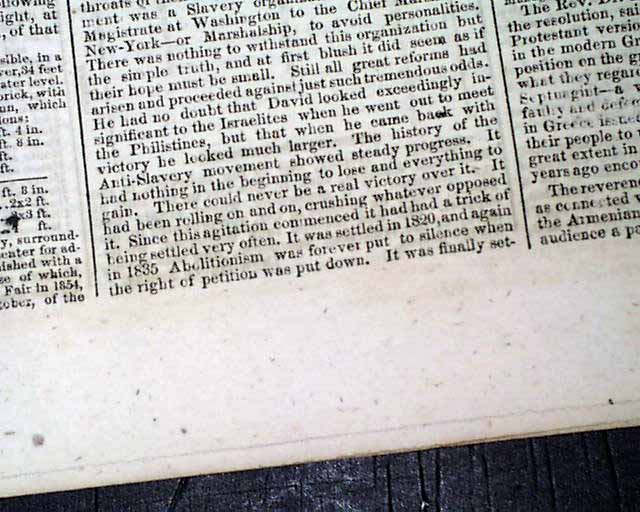
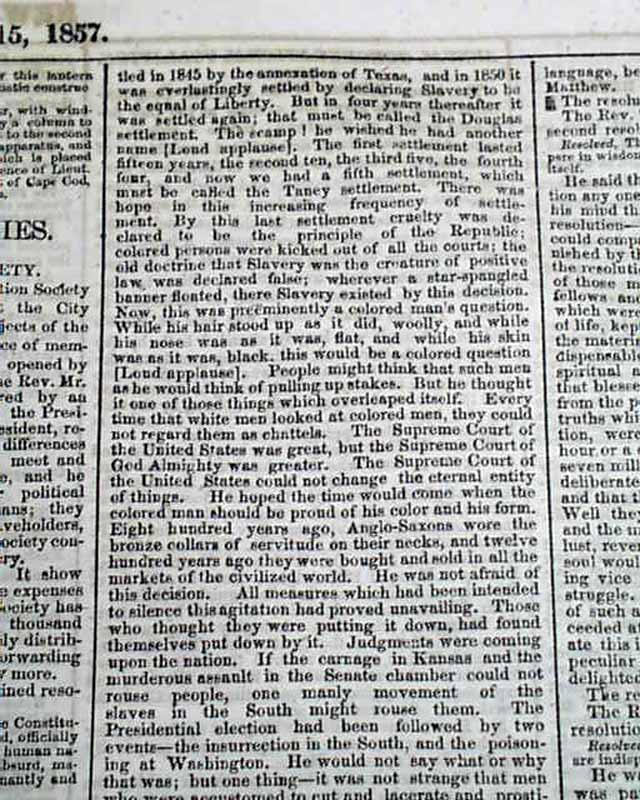
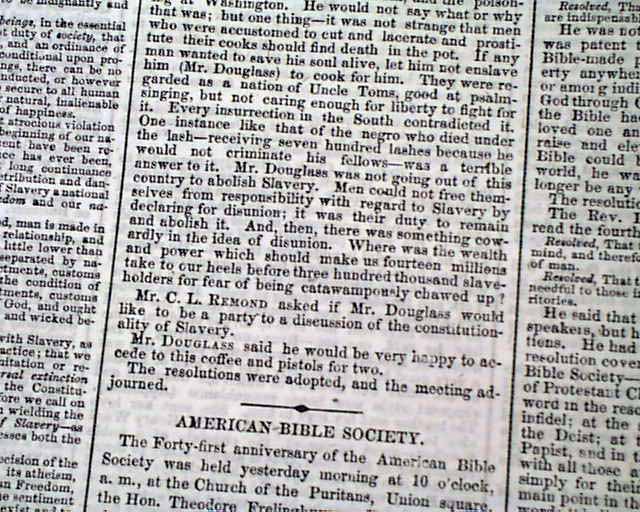
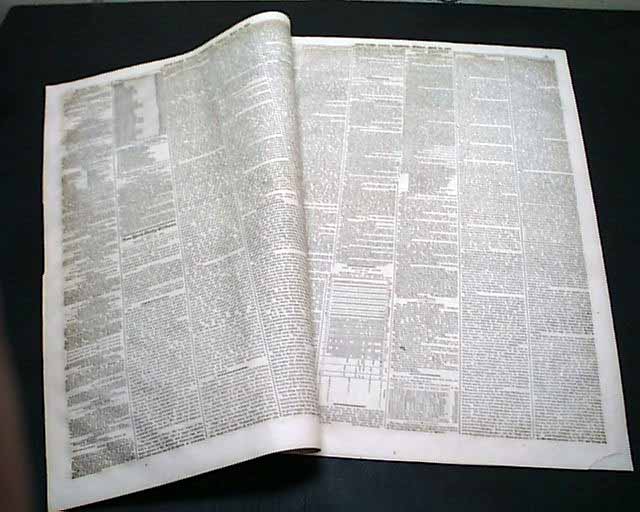
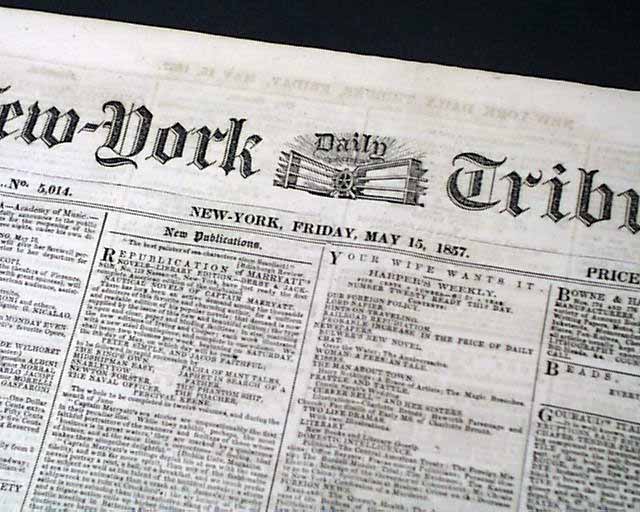
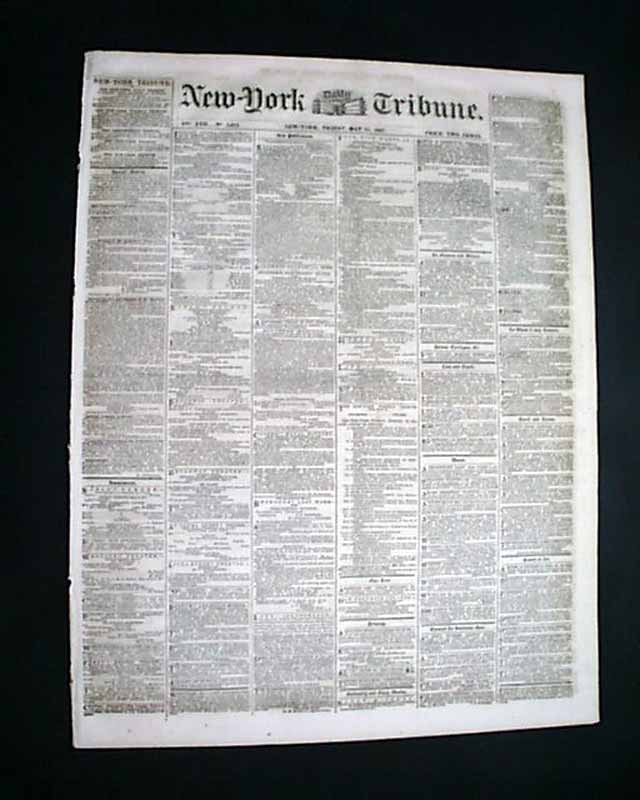
NEW-YORK DAILY TRIBUNE, May 15, 1857 Page 6 has: "AMERICAN ABOLITION SOCIETY", which provides details of the gathering for their 41st anniversary. Most notable is the complete text of what is now identified as Frederick Douglass's "Colored Men's Rights in This Republic".
Also present are Henry Ward Beecher's anti-slavery-themed reply to The Independent , the centennial celebration of the Swedenborgian Church, and more.
Complete in 8 pages, minimal wear, in very good condition.
Background:
Frederick Douglass delivered his 1857 speech, commonly known as “Colored Men’s Rights in This Republic,” in direct response to the Supreme Court’s Dred Scott decision earlier that year, which had ruled that Black Americans possessed no rights that white men were bound to respect and could never be citizens of the United States. In the address, Douglass forcefully rejected both the Court’s reasoning and the broader claim that Black men were inherently excluded from the promises of the Republic. He insisted that the Constitution’s preamble—“We, the people”—was intentionally inclusive and embraced all men without regard to race, and that its text contained no color-based distinctions.
Douglass framed the fight for Black citizenship and equality as both a moral and legal necessity, declaring that while corrupt human institutions might temporarily deny justice, a higher divine law ensured ultimate accountability and equality. He pointed to historical evidence—early voting rights for Black men in several states, persistent anti-slavery voices among religious bodies, and opposition to slavery by certain Founding Fathers—to refute arguments of original exclusionary intent. Though he sharply criticized the federal government for shielding the powerful while abandoning the weak, Douglass closed with unshakable confidence that the nation’s core principles of liberty and justice would eventually triumph, leading to the downfall of slavery and the fulfillment of a moral arc bending toward full equality.
Category: Pre-Civil War
Available Now
$325.00