Home > Back to Search Results >
1775 capture of Ethan Allen...
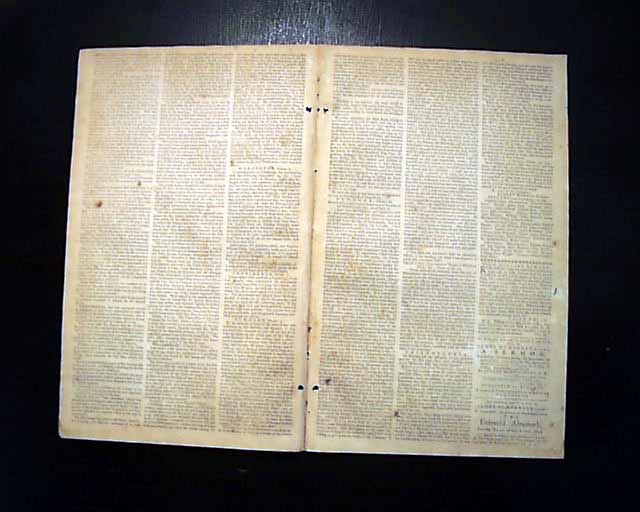
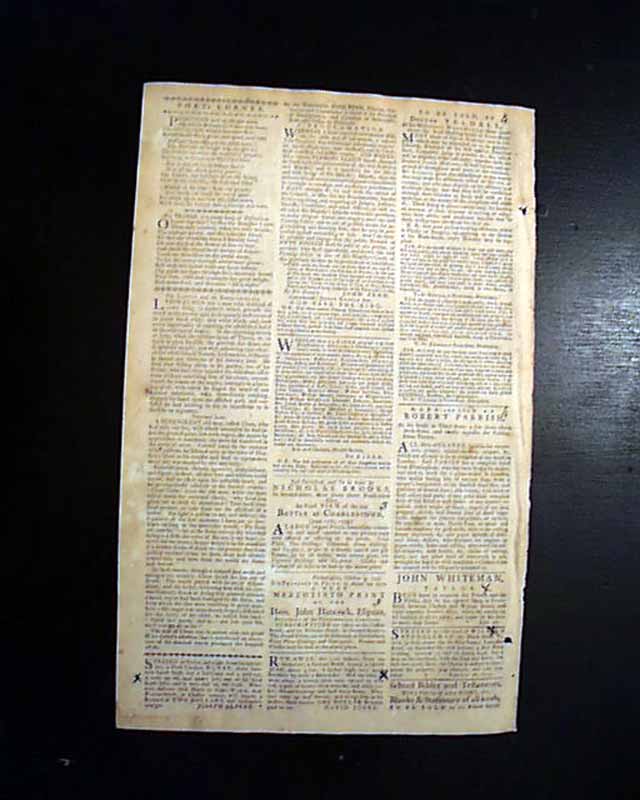
1775 capture of Ethan Allen...
Item # 719128
October 21, 1775
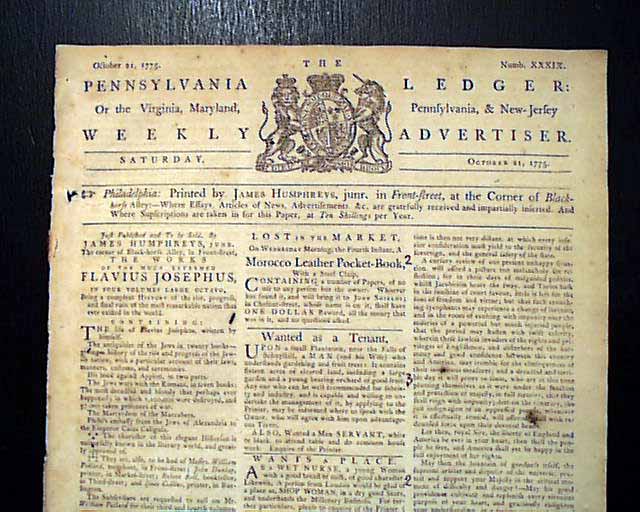
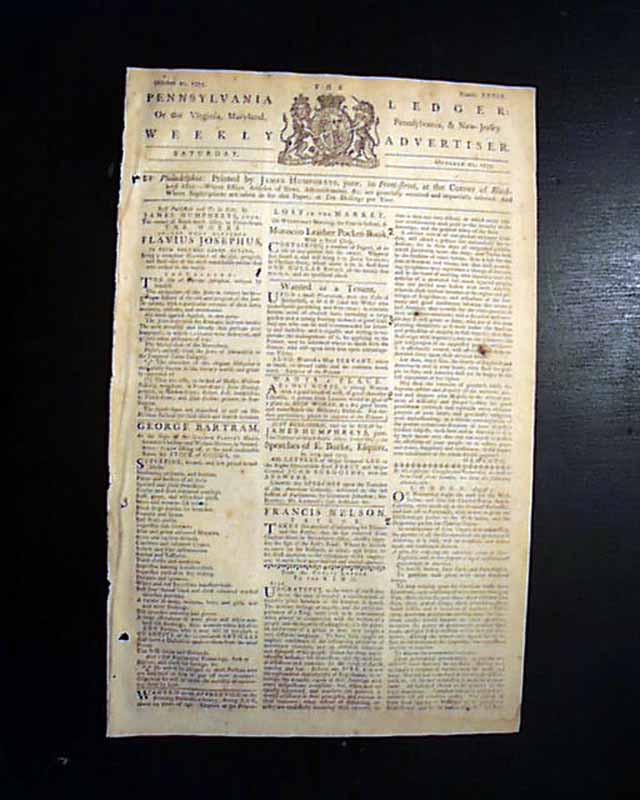
THE PENNSYLVANIA LEDGER, Philadelphia, Oct. 21, 1775
* Ethan Allen captured
* American Revolutionary War
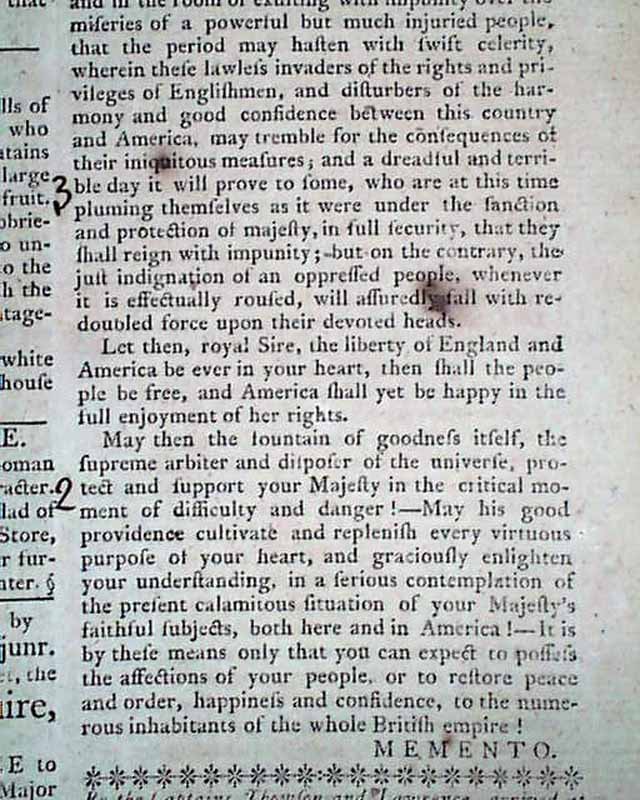
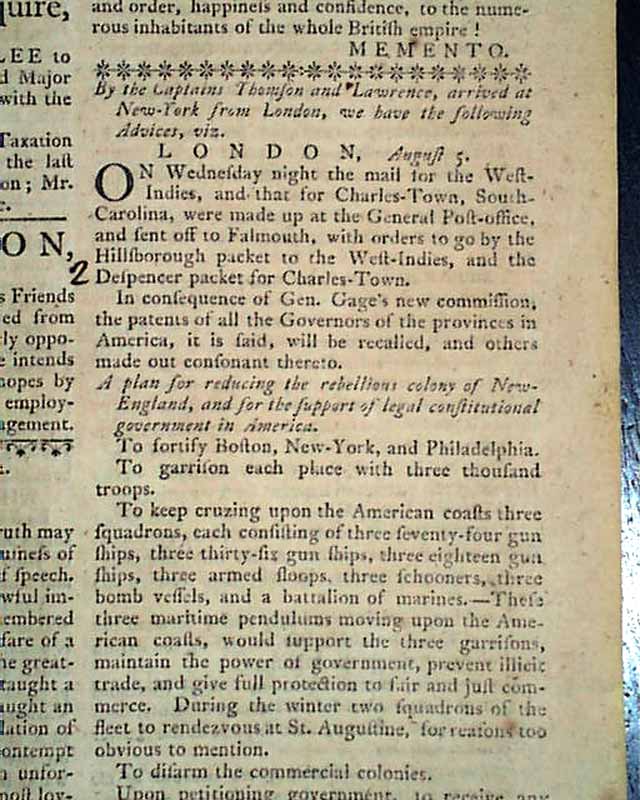
The front page includes a letter: "To the King" which references the American situation & includes: "...Let then, royal Sire, the liberty of England and America be ever in your heart, then shall the people be free, and America shall yet be happy in the full enjoyment of her rights...". Also on the front page is: "A Plan for Reducing the Rebellious Colony of New England & for the Support of Legal Constitutional Government in America", and other items from London concerning the situation in America.
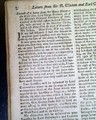
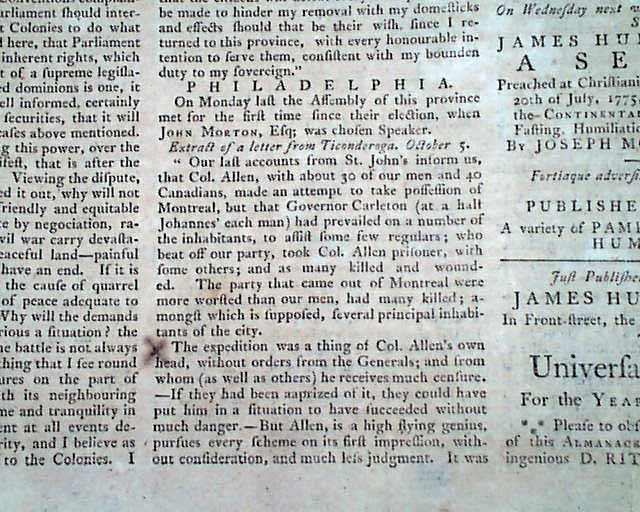
Page 3 has what is perhaps the most notable report in this issue: "Our last accounts from St. John's inform us that Col. Allen, with about 30 of our men and 40 Canadians, made an attempt to take possession of Montreal, but that Governor Carleton...had prevailed on a number of the inhabitants to assist some few regulars, who beat off our party, took Col. Allen prisoners, with some others, & as many killed & wounded...The expedition was a thing of Col. Allen's own head, without orders from the Generals...But Allen, as a high flying genius, pursues every scheme on its first impression without considerable & much less judgment..." with more.
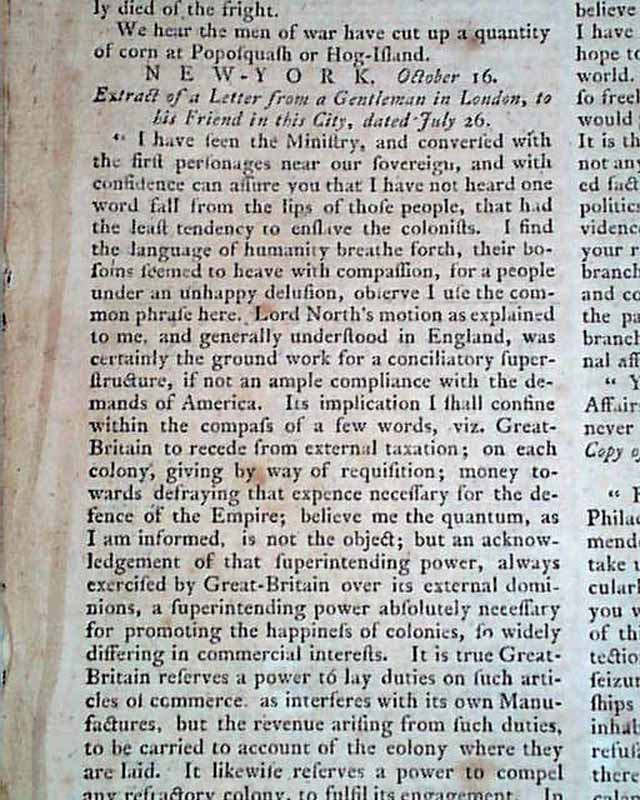
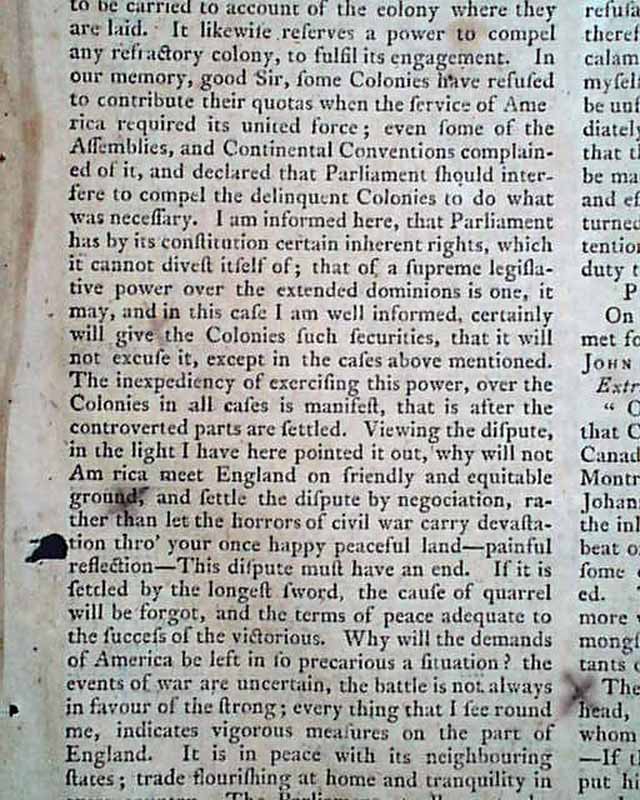
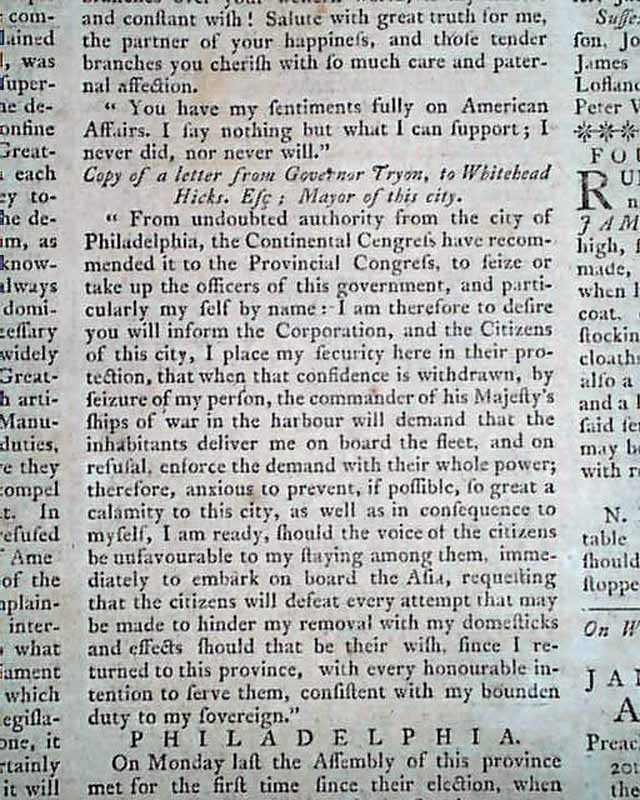
Page 3 also has a lengthy letter from a man in London concerning his thoughts on the situation in America, containing some great reading.
Four pages, some numeric notations next to ads (this was the editor's copy), nice condition.
AI notes: In 1956, Clinton, Tennessee, became a flashpoint in the struggle to desegregate public schools following the Supreme Court’s Brown v. Board of Education decision. When twelve African American students, later known as the Clinton 12, enrolled at the previously all-white Clinton High School, initial calm quickly gave way to violent resistance fueled by local segregationists and agitators like John Kasper. The students faced threats, harassment, and attacks on their homes, while white mobs overturned cars, threw dynamite into Black neighborhoods, and targeted anyone supporting integration. The situation escalated to the point that the state dispatched the National Guard to restore order, and a courageous white minister, Paul Turner, along with African American escorts, had to accompany the students back to school under threat of violence. The crisis drew national attention, highlighting both the intense opposition to desegregation in the South and the bravery of ordinary students and allies who endured intimidation to enforce the court’s mandate. Clinton’s ordeal foreshadowed later, more widely known confrontations like the 1957 Little Rock Central High School crisis, marking it as a critical early chapter in the civil rights movement.
Category: Revolutionary War
Available Now
$915.00